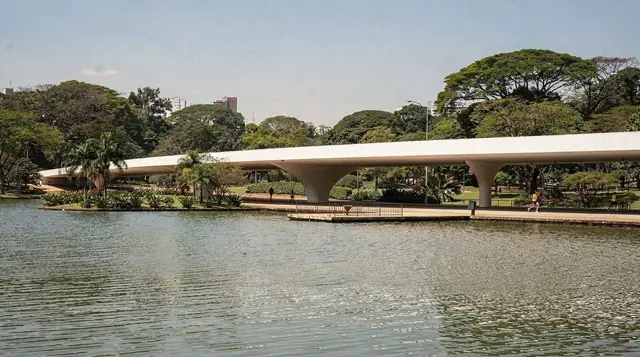
Ilha Grande has no cars, no motorbikes, and no roads connecting most of its beaches — everything moves on foot, by boat, or on hand-pulled carts through the sandy streets of Vila do Abraão, the only real village. It’s a former penal colony (the Instituto Penal Cândido Mendes closed in 1994, and its ruins are now a hiking stop rather than an active prison), turned into one of the more genuinely unspoiled island destinations on Brazil’s southeast coast, largely because the prison’s presence kept development out for most of the 20th century. It sits off the coast near Angra dos Reis, roughly 300km from São Paulo plus a mandatory boat crossing.
| Where | Baía da Ilha Grande, off Angra dos Reis, Rio de Janeiro state |
| Cost | Ferry/boat crossing R$30–100; guided hikes and boat tours R$80–200 |
| Time needed | Minimum two nights, ideally three or four |
| Getting there | Drive or bus to Angra dos Reis or Mangaratiba, then a boat crossing |
| Best time | April–June and August–October for good weather and fewer crowds |
No cars, and what that actually means
The absence of vehicles isn’t a gimmick — it fundamentally shapes how a visit works. Vila do Abraão, where boats arrive and where most accommodation is concentrated, is walkable end to end in about fifteen minutes. Everything beyond it — beaches, viewpoints, the old prison ruins — is reached on foot via trail, or by a second boat if you don’t want to hike. This makes Ilha Grande a genuinely different kind of trip from Angra dos Reis or Paraty: less about driving between sights and more about picking a small number of hikes and boat trips and moving at a walking pace for the length of your stay.
Lopes Mendes and the island’s other beaches
Lopes Mendes is the beach most people come for — a long stretch of fine white sand and clear water that regularly appears on lists of Brazil’s best beaches, and one with no permanent settlement or road access. You reach it either by a roughly two-hour hike from Vila do Abraão through Atlantic Forest trail, or by a short boat ride that drops you closer, letting you skip the walk in (though many hikers do one leg on foot and the other by boat to see both the trail and save their legs). Other beaches — Praia Preta, Palmas, Freguesia de Santana — offer calmer, closer alternatives if a two-hour hike isn’t in your plans.
a five-stop Ilha Grande speedboat tour is the easiest way to see several of the island’s best beaches in a single day without committing to the longer hikes, and works well even as a day visit from Angra if you’re not staying overnight on the island.
The old prison
The ruins of the Instituto Penal Cândido Mendes, a former high-security prison demolished after its 1994 closure (following a riot that drew national attention to conditions there), are now a stop on some of the island’s hiking routes. Little of the original structure remains beyond foundations and walls being slowly reclaimed by forest, but the history — and the fact that this history is precisely why so much of Ilha Grande stayed undeveloped — adds context that’s easy to miss if you skip it entirely.
Getting there: the unavoidable two-leg journey
There is no way to reach Ilha Grande directly from São Paulo — every route involves driving or bussing to the mainland (Angra dos Reis or, for a shorter crossing, Mangaratiba) and then a boat. From São Paulo, figure roughly 4 to 5h30 by road to reach Angra dos Reis or Mangaratiba, then a further 30 to 90 minutes by boat depending on whether you catch a slower public ferry or a faster private speedboat, and which port you depart from. Door to door, budget a full travel day of 5 to 7 hours each way, which is the core reason this destination needs at least two nights to be worth the effort.
a paradise islands speedboat tour departing from Angra dos Reis is a practical way to combine the mainland-to-island crossing with sightseeing along the way, rather than treating the boat ride as pure transit.
Where to stay
Vila do Abraão has the widest range of accommodation on the island, from simple hostels and guesthouses (R$80–150 per person per night) to more comfortable pousadas closer to the waterfront (R$200–400 per night for a double). A smaller number of more remote, higher-end properties sit on quieter beaches elsewhere on the island, reachable only by boat, and trade convenience for genuine isolation — worth considering if the point of your trip is escaping crowds entirely rather than having easy access to restaurants and boat departures. Electricity and hot water are standard across the island today, a relatively recent development; older guides sometimes still describe conditions that no longer reflect the current, much-improved infrastructure.
Sustainability and how the island manages tourism
Because Ilha Grande’s appeal rests so heavily on staying undeveloped, the island and Vila do Abraão in particular have adopted noticeably stricter environmental practices than most Brazilian beach destinations — plastic bag restrictions, waste management systems designed for an island with no road access for garbage trucks, and protected-area status for large parts of the interior through the Parque Estadual da Ilha Grande. Visitors are generally expected to pack out what they bring in on longer hikes, and respecting marked trails matters more here than in more heavily infrastructured parks, since erosion control on steep coastal trails is an ongoing challenge for local park management.
Other trails beyond Lopes Mendes
Lopes Mendes gets most of the attention, but Ilha Grande’s interior holds a genuinely extensive trail network through Atlantic Forest terrain, connecting Vila do Abraão to more remote beaches, waterfalls, and viewpoints across the island. The Pico do Papagaio hike, a steep climb to one of the island’s highest points, rewards a demanding few hours with a panoramic view over the bay and neighboring islands — a serious undertaking best started early in the day, given both the heat and the length of the descent. Shorter, gentler trails connect Vila do Abraão to nearer beaches like Praia Preta, suitable for visitors who want a taste of the island’s forest without a full-day commitment.
A note on how the island has changed
Ilha Grande’s isolation and former-prison status meant it stayed genuinely undeveloped well into the 1990s, and the shift toward organized tourism since then has been gradual rather than sudden — infrastructure has improved steadily (electricity, better boat schedules, more accommodation options) without the island tipping into the kind of dense resort development seen on some other Brazilian coastal islands. Regular visitors over the past couple of decades generally describe the changes as improvements to comfort and access rather than a loss of the island’s essential character, though popularity has clearly grown, and peak-season crowds in Vila do Abraão are a real consideration worth planning around.
Frequently asked questions about visiting Ilha Grande
Can I visit Ilha Grande as a day trip from São Paulo?
Not realistically — the one-way travel time alone is 5 to 7 hours, so a round trip in a single day would leave almost no time on the island. A day trip from Angra dos Reis itself (once you’re already on the Costa Verde) is more feasible.
Are there really no cars on the island?
Correct — no cars or motorbikes are permitted. Some maintenance and emergency vehicles exist, but everyday movement is on foot, by boat, or by hand-cart.
How do I get to Lopes Mendes beach?
Either a roughly two-hour forest hike from Vila do Abraão, or a boat that drops you closer, cutting the walk significantly. Many visitors combine both directions.
Is Ilha Grande good for a first-timer to Brazil, or better for experienced travelers?
It suits independent travelers comfortable with some physical activity and simpler infrastructure than a resort island. Vila do Abraão has enough guesthouses and basic services to be manageable for most visitors, but this isn’t a luxury-resort experience.
What’s the best way to get from Angra dos Reis or Mangaratiba to the island?
Public ferries are cheaper and slower; private speedboats or shared “lancha” services cost more but cut the crossing time significantly, useful if you’re short on time.
How many days should I spend on Ilha Grande?
Two nights is a workable minimum given the travel time to get there; three or four nights allow time for both Lopes Mendes and some of the island’s other trails and beaches without rushing.
Is Ilha Grande crowded?
It gets busy during Brazilian summer holidays (December–March) and Carnival, when boats and accommodation should be booked well ahead. April–June and August–October are noticeably calmer.
Does the island have electricity and hot water?
Yes, standard infrastructure is in place across Vila do Abraão and most accommodation today — older accounts of the island describing it as more rustic no longer reflect current conditions.
Are there environmental rules I should know about?
Plastic bags are restricted, waste management is more limited than on the mainland given the lack of road access, and much of the island’s interior is protected parkland — stick to marked trails and pack out what you bring on longer hikes.
Can I do Ilha Grande as a side trip from Paraty instead of Angra dos Reis?
Less directly — most boat connections to Ilha Grande depart from Angra dos Reis or Mangaratiba rather than Paraty, so Angra is the more practical gateway even if you’re primarily basing yourself in Paraty.
Fitting Ilha Grande into a longer trip
Given the travel time, Ilha Grande makes most sense as part of a dedicated Costa Verde extension rather than a slot inside a short São Paulo city trip — see the São Paulo to the coast five-day itinerary for how it can combine with Angra dos Reis and Paraty along the same coastline. For the broader tradeoffs of island trips near São Paulo, see the island trips from São Paulo guide and the beach towns compared guide.