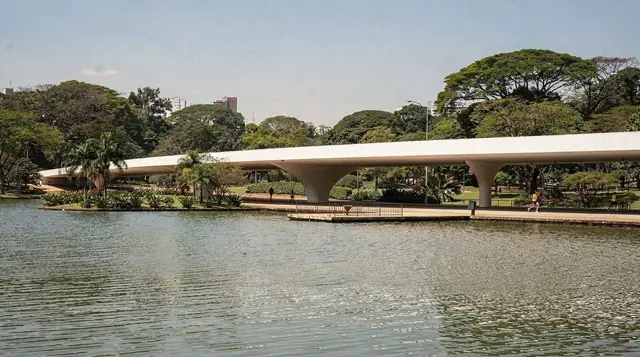
Caraguatatuba sits at the bottom of the Tamoios highway descent, the first town most drivers hit after crossing the Serra do Mar from São Paulo — a route that drops nearly a thousand metres from the plateau to sea level through a stretch of tunnels and viaducts worth noting as road engineering in its own right. That geography makes it the north coast’s practical hub — decent infrastructure, real (not inflated) prices, and quick access to trailheads in the forest behind the bay — without being the scenic highlight of the trip. Most visitors either stop here on the way to somewhere flashier, or choose it deliberately because they want a functional base without Maresias or Ubatuba price tags.
| Where | North coast of São Paulo state, at the base of the Tamoios highway |
| Cost | Bus from Tietê R$ 75-110 one-way; a pousada R$ 150-350/night; a day’s food and beach costs R$ 50-100 |
| Time needed | A day covers the beach and a short trail; use it longer as a base |
| Getting there | Car via Tamoios highway (SP-099), 2.5-4 hours; direct bus from Tietê, roughly 3.5 hours |
| Best time | April-June for calm seas, or any weekday to avoid the highway crush |
The bay and the beach
Caraguatatuba’s main beach runs about 7 km along a wide, gently curving bay, backed by a modest boardwalk and a town centre that functions more like a regional service hub than a resort strip. The water is swimmable and the sand is fine, but this isn’t a beach that photographs like Maresias or the coves further into Ubatuba — it’s a solid, unremarkable urban beach, useful rather than beautiful. Locals and repeat visitors treat it as a base rather than the point of the trip.
The boardwalk itself is well maintained and popular with local runners and cyclists in the early morning and evening, when the heat has eased — a reasonable option if you want some activity beyond sitting on the sand. Weekends bring noticeably more foot traffic from both locals and São Paulo day-trippers than weekdays, following the same pattern as most of this coast.
Beaches beyond the main bay
While the central bay is the default stop, Caraguatatuba’s municipality includes quieter options at either end. Massaguaçu, toward the Ubatuba side, has calmer water and a more residential feel than the busy central strip, and it’s popular enough with regular visitors that a modest cluster of pousadas has grown up around it, an alternative base to the town centre worth considering if the central bay’s weekend crowds aren’t appealing. Martim de Sá, closer to town but slightly removed from the main tourist concentration, is a reasonable middle ground — decent infrastructure without the crowds of the central bay on a busy weekend. Neither will make anyone forget the coves further north in Ubatuba, but both are worth knowing about if the main beach feels too crowded on arrival.
Serra do Mar trails right behind town
The real reason to give Caraguatatuba more than a passing stop is what’s inland: the Serra do Mar rises almost directly behind the bay, and several trailheads into Atlantic rainforest are a short drive or even a walkable distance from the centre, depending on where you’re staying. These trails range from easy waterfall walks to longer forest hikes, and unlike the more famous Cantareira State Park trails inside the city, these run right down to sea level, giving a genuine sense of the rainforest-meets-ocean geography that defines this whole coast.
Serra do Mar State Park’s Caraguatatuba core has a visitor centre with maps and current trail status, worth checking before setting out — sections close periodically after heavy rain, which is common given how steep and forest-covered this part of the range is. Trails here tend to be less crowded than better-known hiking spots closer to São Paulo, simply because most visitors driving through Caraguatatuba are focused on reaching the beaches further north and don’t realise the trailheads exist right off the highway.
A guided rainforest hike experience gives a sense of the terrain if you’d rather not navigate unmarked trailheads alone; ask locally in Caraguatatuba for current trail conditions, as access can shift after heavy rain closes sections of the Serra do Mar.
Why it works as a base rather than a destination
Caraguatatuba’s position — right where the highway meets the coast — makes it a logical overnight stop before continuing north to Ubatuba or south toward São Sebastião and Maresias, all within 30-60 minutes’ drive. Prices here run noticeably lower than in the more established beach towns further along, which makes it a sensible budget anchor for a multi-stop coastal trip even if you don’t spend much time on its own beach.
Where to stay and eat
Accommodation clusters near the centre and along the beachfront, with straightforward pousadas running R$ 150-350/night — meaningfully cheaper than comparable options in Ubatuba or Maresias during the same season. The food scene mirrors the town’s overall character: functional and reasonably priced rather than a destination in itself. A handful of solid seafood restaurants operate along the beachfront, and the town centre has the usual mix of por-kilo lunch spots and bakeries serving residents rather than tourists, which tends to mean better value than the more visitor-oriented restaurants further along the coast.
The port and industrial context
Caraguatatuba has grown in recent decades partly around oil and gas industry infrastructure serving offshore operations, which gives the town a slightly more workaday economic character than the purely tourism-driven beach towns nearby. This isn’t visible from the main beach or trails, but it explains some of the town’s more developed general infrastructure — banks, supermarkets, medical services — relative to smaller beach towns along the same coast, useful to know if you need reliable access to any of those while travelling.
Caraguatatuba versus Ubatuba as a base
| Caraguatatuba | Ubatuba | |
|---|---|---|
| Prices | Noticeably lower | Higher, especially in peak season |
| Beach quality | Functional, less scenic | Wider range, better surf and coves |
| Infrastructure | More developed (banks, supermarkets, healthcare) | More tourist-oriented, less general infrastructure |
| Distance from São Paulo | Slightly closer | About 45-60 minutes further |
| Best for | Budget base, road-trip stopover | The destination itself |
Getting there
The Tamoios highway (SP-099) is the direct route from São Paulo, climbing the Serra do Mar before descending straight into Caraguatatuba — 2.5-4 hours depending on traffic, and prone to slowdowns on Friday evenings and holiday eves when the whole north coast corridor jams up. Direct buses run from Tietê terminal, roughly 3.5 hours.
Once in Caraguatatuba, the town centre and central beach are walkable, but reaching outlying beaches like Massaguaçu or the Serra do Mar trailheads generally requires a car or local taxi — public transport along the coastal road exists but runs infrequently outside peak commuting hours. If you’re using Caraguatatuba purely as a base and plan to explore Ubatuba’s beaches daily, factor the 45-60 minute each-way drive into your planning rather than treating it as a quick hop. A one-way private transfer to Ubatuba is worth considering for the final leg north if you’d rather not drive that stretch yourself.
For more on this stretch, see São Paulo’s north coast beaches and hiking near São Paulo.
Frequently asked questions about Caraguatatuba
Is Caraguatatuba worth visiting on its own?
As a standalone beach destination, not particularly — it’s a functional bay rather than a scenic one. As a base for exploring the north coast’s trails and nearby beaches, it works well.
Is Caraguatatuba cheaper than Ubatuba or Maresias?
Generally yes, for both accommodation and food, which is part of why it works well as a budget base for the same coastline.
What are the Serra do Mar trails like?
Ranging from short waterfall walks to longer rainforest hikes, with trailheads close to town — check conditions locally, as access can be affected by rain.
How far is Caraguatatuba from Ubatuba?
About 45 minutes to an hour by car along the coastal road, making it a realistic base for day trips to Ubatuba’s better beaches.
Is Caraguatatuba busy on weekends?
Less so than Praia Grande, but it does see traffic from São Paulo weekend visitors, particularly given its position right at the Tamoios highway exit.
Is Caraguatatuba a resort town or a working town?
A mix — it has real economic activity tied to offshore oil and gas infrastructure, alongside beach tourism, which gives it more year-round infrastructure (banks, supermarkets, medical services) than smaller purely tourist-driven beach towns nearby.
Should I stop in Caraguatatuba on the way to Ubatuba even if I’m not staying overnight?
It’s worth a short stop for fuel, food or a quick beach break, but the town’s real value is as an overnight base rather than a scenic waypoint — most of the appeal is in what’s just outside town rather than the drive-through experience itself.
Are the Serra do Mar trails near Caraguatatuba open year-round?
Mostly, but sections close periodically after heavy rain given the steep, forest-covered terrain. Check with the park’s visitor centre for current status before planning a specific hike.
Is Caraguatatuba worth choosing over Praia Grande for a similarly budget-friendly beach trip?
If you have a car and more than a day to spend, yes — Caraguatatuba adds trail access and a launch point for Ubatuba that Praia Grande’s south-coast location doesn’t offer.
Fitting Caraguatatuba into a longer trip
Use Caraguatatuba as a one-night waypoint rather than a primary stop within the São Paulo to the coast: a five-day route, bridging the drive between the city and Ubatuba. For a broader trip, it also works as an economical overnight within seven days in São Paulo and the coast, freeing up budget for a nicer stay further along the coast. Travellers building a budget-focused route through beach towns compared will find Caraguatatuba a consistently practical middle point, whichever direction the rest of the trip heads.