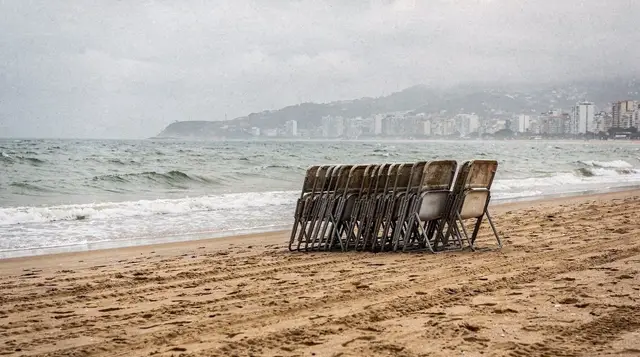
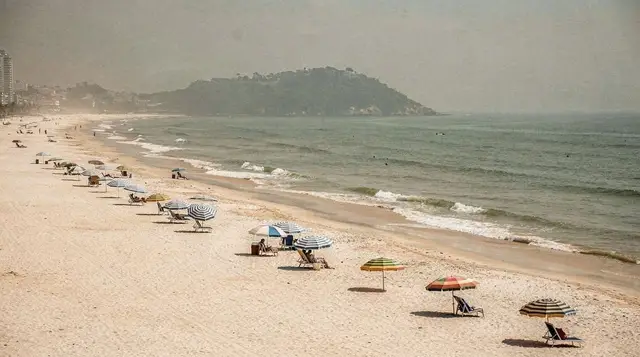
São Paulo's north coast beaches
What is São Paulo's north coast and how far is it?
The litoral norte runs from Bertioga through Maresias, Juquehy, São Sebastião, Ilhabela and Ubatuba, roughly 2.5 to 4.5 hours from São Paulo depending on the exact town. It has the state's cleanest water and best scenery, but it's far enough that a day trip only really works for the closer towns — Ilhabela and Ubatuba deserve an overnight.
The litoral norte — São Paulo’s north coast — is where the state’s beaches shift from the crowded, port-adjacent south coast into something closer to what most people picture when they imagine Brazilian coastline: forested hills running down to the water, cleaner surf, and towns built around tourism and fishing rather than shipping. It’s also considerably further from São Paulo than Santos or Guarujá, which keeps it less overrun on an average weekday but genuinely packed during the December-March summer season and around holiday weekends. This guide runs through the towns in order of distance — Bertioga first, Ubatuba last — with honest notes on what each one is actually good for.
| Where | Bertioga to Ubatuba, along the BR-101 Rio-Santos coastal road |
| Cost | Bus from R$70-130 one-way; car rental plus tolls and fuel roughly R$300-500 round trip; pousadas from R$150/night budget to R$600+ upscale |
| Time needed | Minimum an overnight; 2-3 nights to properly cover Ilhabela or Ubatuba |
| Getting there | Bus from Rodoviária Tietê, private car, or a guided transfer for the Ilhabela/Ubatuba stretch |
| Best time | April-June and August-October for the best weather-to-crowd ratio |
Bertioga: the closest and least developed
Bertioga, about 2 hours from São Paulo, is the north coast’s entry point and its least developed major town — long stretches of beach with comparatively little tourist infrastructure compared to what comes further north, which is either a selling point or a drawback depending on what you want. It has a historic fort dating to the earliest Portuguese colonial period and decent surf conditions, but nightlife and restaurant variety are thin compared to Maresias or Ubatuba. It works well as a quieter, family-oriented alternative to Guarujá for travellers who want a beach that isn’t the closest option but also isn’t a full north-coast commitment.
Maresias and Juquehy: the fashionable stretch
Maresias, roughly 3 hours from the city, is the north coast’s social centre — a compact strip with beach clubs, a lively restaurant scene and a younger, more affluent crowd that shows up heavily on summer weekends. The surf here is genuinely decent, and Maresias has functioned as something of a training ground for Brazilian surfers for decades, a history covered in more depth in the surfing near São Paulo guide. Juquehy, a short drive further along the same stretch, is calmer water and a lower-key, more family-oriented town — a sensible alternative if Maresias’ nightlife-forward reputation doesn’t match what you’re looking for. Both towns get seriously crowded and expensive during peak season; booking accommodation weeks ahead for a December or Carnival visit is close to mandatory.
São Sebastião: the mainland gateway to Ilhabela
São Sebastião itself isn’t usually the destination — it’s the mainland town where the car ferry to Ilhabela departs, and most travellers pass through rather than stay. That said, it has a pleasant, less touristy historic centre and some decent beaches of its own if you’d rather skip the ferry queue and island crowds entirely. The ferry crossing is short, generally 15-20 minutes, but the queue for cars can run considerably longer on weekends and holidays — walk-on foot passengers move through much faster if you don’t need a vehicle on the island.
Ilhabela: the north coast’s scenic highlight
Ilhabela is largely covered by Atlantic Forest and protected as a state park, with beaches ranging from calm, developed bays close to the ferry dock — good for families and casual visits — to wilder, harder-to-reach coves on the island’s less-developed southern half that require a boat, a longer drive, or a hike to reach. Dozens of named waterfalls dot the island’s interior, several reachable on short forest trails from the coastal road, and this combination of beach and rainforest is what sets Ilhabela apart from the rest of the coast. an Ilhabela whale and marine-animal watching tour runs seasonally and is a strong reason to build in an extra day if wildlife is part of your interest — sightings aren’t guaranteed but are reasonably common in the right season. If you’re travelling without a car, a one-way semi-private transfer from São Paulo to Ilhabela removes the need to coordinate bus connections and the ferry crossing yourself.
Ubatuba: more than a hundred beaches
Ubatuba, the furthest town on this list at around 4-4.5 hours from São Paulo, has more than a hundred named beaches spread across a long, deeply indented coastline, which means the town functions less as a single destination and more as an umbrella covering wildly different beach experiences within a 30-40 minute drive of each other. Praia Vermelha and Itamambuca are popular surf spots; Praia da Fortaleza and Praia do Félix are calmer, family-friendly options; several beaches on the town’s south side are reachable only by boat or a genuine hike and stay noticeably less crowded even in peak season. Deciding which stretch of Ubatuba’s coast you actually want, rather than just “going to Ubatuba,” makes a real difference to how the trip feels.
| Maresias | Juquehy | Ilhabela | Ubatuba | |
|---|---|---|---|---|
| Distance from São Paulo | ~3 hours | ~3.5 hours | ~4 hours + ferry | ~4-4.5 hours |
| Character | Lively, surf, nightlife | Calm, family-friendly | Rainforest + beach, waterfalls | Sprawling, over 100 beaches |
| Best for | Younger travellers, couples | Families | Nature and beach combined | Surf, seclusion, variety |
| Crowd in peak season | Very busy | Moderately busy | Busy near the ferry | Spread across many beaches |
Getting there and the traffic reality
The BR-101 Rio-Santos road connects all of these towns, and while it’s a scenic drive along the coast, it’s also a single two-lane road for long stretches, which means holiday-weekend traffic backs up seriously — a 3-hour drive to Maresias can stretch to 6 or more on a Friday afternoon in December, and Brazilian traffic authorities routinely restrict the road to one-direction-only flow during peak holiday exit and return windows. Buses from Rodoviária Tietê serve all these towns but take considerably longer than driving in good conditions, generally 4-6 hours depending on the destination and number of stops. Travelling midweek, or well outside the December-February and Carnival windows, avoids the worst of this almost entirely and is worth prioritising over saving a day if your schedule allows it. The how to get to the beach guide has more detail on specific routes and departure points.
Where these towns fit against the rest of the coast
The north coast is deliberately contrasted here against São Paulo’s south coast beaches — Santos, São Vicente, Guarujá — which are closer but generally more crowded and mixed in water quality. If your priority is minimising travel time, the south coast wins; if scenery, water clarity and a genuine change of pace from the city matter more, the north coast is worth the extra hours. Further still, beyond Ubatuba toward the Rio de Janeiro state line, Paraty, Angra dos Reis and Ilha Grande represent a genuinely different, boat-hopping style of coastal trip — an Angra dos Reis blue lagoon speedboat tour is a strong option if you’re extending a north-coast trip that far, though it’s realistically a separate multi-day leg rather than an add-on to a Maresias or Ubatuba weekend given the extra distance involved.
Why a day trip rarely works for the north coast
It’s worth being blunt about the math: a 3-4 hour drive each way means a genuine day trip to Maresias or Ubatuba burns 6-9 hours in transit alone, leaving only a few hours of actual beach time before you need to turn around and face the return traffic — which, on a Sunday evening in season, is routinely the worst part of the entire trip. Bertioga is the one town on this list where a long day trip is realistic, given its closer 2-hour distance, but even then an early departure and a firm turnaround time matter. For everywhere else on the north coast, the honest recommendation is to budget at least one night; trying to compress Ilhabela or Ubatuba into a single day from São Paulo tends to produce a trip that’s mostly car time with a rushed hour or two of actual beach.
Seasonal differences along the north coast
Southern Hemisphere summer (December-March) brings hot, humid days with dramatic late-afternoon thunderstorms that build over the forested hills behind the coast and can roll in with little warning — locals plan beach days around the morning and early afternoon for this reason. This is also peak season for domestic tourism, meaning the highest prices, the fullest pousadas and the worst holiday traffic on the BR-101. Winter (June-August) is cooler and drier, with air and water temperatures that some visitors find too cool for comfortable swimming, but it’s also the quietest and cheapest time to visit, and July’s school holiday bump aside, a genuinely pleasant window for anyone prioritising space over swimming weather. April-June and September-November tend to split the difference well, and are generally the best months to aim for if your schedule is flexible.
Practical notes: signal, cash and provisions
Mobile signal is generally reliable in the main towns along the north coast but drops out on some of the more remote beach access roads, particularly on Ilhabela’s southern half and Ubatuba’s more secluded beaches — worth downloading offline maps before setting out for the day. ATMs and pharmacies cluster in each town’s centre rather than near the beaches themselves, so it’s worth stocking up on cash and sunscreen before heading out for a beach day rather than assuming a kiosk will have what you need. Restaurant quality is genuinely good along this stretch, particularly for fresh seafood — Ubatuba and Ilhabela both have well-regarded seafood restaurants that draw visitors from São Paulo specifically for a meal, not just the beach.
Food on the north coast
Seafood is the obvious draw, and the north coast delivers on it more reliably than São Paulo’s south coast — Ubatuba and Ilhabela both have long-standing seafood restaurants built around the day’s catch, moqueca (a Brazilian fish stew, distinct from its Bahian cousin in the seasoning) and fresh grilled fish being reliable orders almost anywhere near the water. Maresias’ restaurant scene leans younger and more varied, with a genuine concentration of good casual dining rather than purely seafood-focused menus, reflecting its role as the north coast’s social hub. Prices run noticeably higher than inland São Paulo for anything beachfront, and it’s common practice to walk a block or two back from the main strip for a meal at roughly half the price with barely any drop in quality — a habit worth adopting on this stretch of coast in particular.
Choosing between the north coast towns
If pressed to choose a single town without more context, Maresias suits travellers who want energy and a social scene alongside their beach time; Juquehy suits families or anyone wanting the same general area with a calmer pace; Ilhabela suits anyone who wants nature and hiking alongside the beach, and is arguably the single best all-round choice on this list if you can only pick one; Ubatuba suits travellers with a car and enough time to explore, since its real strength is the sheer range of beaches rather than any single standout stretch. Bertioga, closer and less developed, suits a shorter trip or a first taste of the north coast without committing to the full distance.
The common mistake: trying to see all four towns in one trip
The single most frequent planning error on the north coast is treating Maresias, Juquehy, São Sebastião/Ilhabela and Ubatuba as stops on one continuous road trip rather than genuinely separate destinations. Given the 3-4.5 hour distances involved and the two-lane BR-101 connecting them, moving from one town to the next isn’t a quick hop — a Maresias-to-Ubatuba leg alone can run 1.5-2 hours even with light traffic, on top of whatever time you’ve already spent driving out from São Paulo. A far more realistic approach is picking one, or at most two adjacent towns (Maresias and Juquehy work well together given their short separation), and giving each a genuine two or three nights rather than a rushed half-day each. Trying to compress all four into a five-day trip typically produces a week that’s mostly spent in the car, with each stop reduced to an exhausted evening and a rushed morning before moving on — exactly the kind of trip this guide’s honest-planning approach tries to prevent.
Camping and budget alternatives to pousadas
Pousada prices along the north coast climb fast in peak season, but camping is a genuine, well-established alternative here rather than a fringe option — organised campsites (campings) with basic facilities operate in and around Maresias, Juquehy and several points on Ilhabela and Ubatuba, typically running R$40-80 (~US$8-15) per person per night, a fraction of even a budget pousada rate. Bertioga in particular has a strong campground tradition given its closer distance and less developed tourist infrastructure.
Bring your own gear rather than expecting rentals to be reliably available outside the busiest season, and book ahead for the December-February window specifically, since the same crowding that pushes up pousada rates fills the better-located campsites too. It’s a genuinely popular choice among younger Brazilian travellers and worth considering for anyone prioritising more nights on the coast over private-room comfort. The Santo Amaro island trekking day trip from Bertioga pairs naturally with a budget camping stay in that town, combining the cheapest north-coast base with one of its more distinctive outdoor activities.
Frequently asked questions about São Paulo’s north coast
How far is the north coast from São Paulo?
Between 2 and 4.5 hours depending on the specific town, from Bertioga at the closer end to Ubatuba at the furthest.
Is Ilhabela worth the ferry crossing?
Yes for most visitors — the combination of rainforest, waterfalls and beach is genuinely distinctive on this coastline, though the ferry queue for cars can add significant time on busy weekends.
Which north coast town is best for surfing?
Maresias and Ubatuba’s Itamambuca and Praia Vermelha are the most established surf spots, with a reasonably reliable break for intermediate surfers.
Can I visit the north coast without a car?
Yes, by bus from Rodoviária Tietê, though journeys run longer than driving. A guided transfer, like the one-way Ilhabela transfer, is a middle-ground option that removes the need to plan connections yourself.
Is the north coast crowded?
It’s considerably quieter than Santos or Guarujá on an average weekday, but genuinely packed in December-February and around holiday weekends, particularly in Maresias.
Which is better, Maresias or Juquehy?
Maresias for a livelier, younger scene with better nightlife and restaurants; Juquehy for a calmer, more family-friendly stay with a similar quality of beach.
How many days should I plan for the north coast?
A minimum of one overnight for Maresias or Juquehy; two to three nights if Ilhabela or Ubatuba’s scattered beaches are the goal.
Can I visit more than one north coast town in a single trip?
It’s possible but rarely a good idea given the drive times involved — picking one or two adjacent towns (Maresias and Juquehy, for example) and staying several nights works far better than trying to cover all four across a short trip.
Fitting the north coast into your trip
The São Paulo to the coast five-day route is built specifically around this stretch and is the most direct way to plan a north-coast trip without piecing it together yourself. For a shorter add-on, the seven-day São Paulo and the coast itinerary has room for two or three north-coast nights alongside a full city stay, and the Ilhabela from São Paulo guide covers that specific leg in more logistical detail if Ilhabela is your priority.
Beach tours & day trips from São Paulo on GetYourGuide
Verified deep-linked GetYourGuide tours. Book through these links and we earn a small commission at no cost to you.
These are our own photographs of São Paulo, not the operator's pictures of this tour — open the tour page to see those.