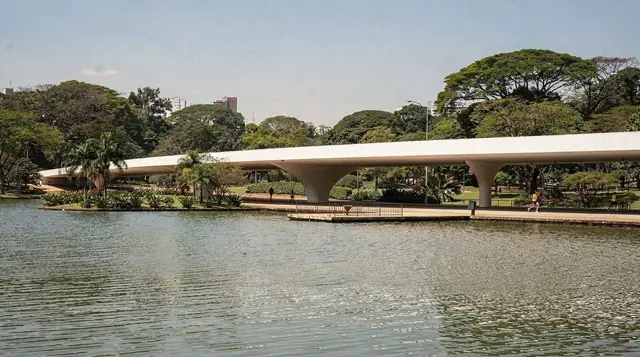
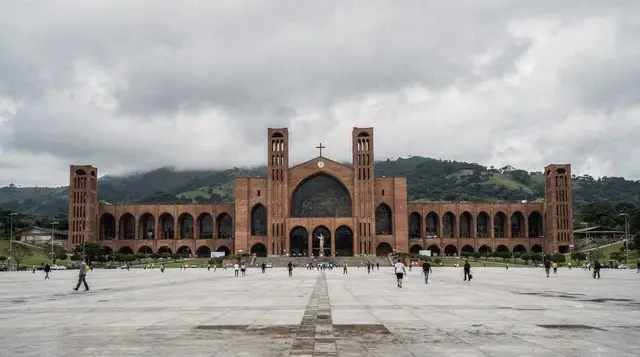
Santo Amaro was its own municipality until 1935, when São Paulo’s expansion absorbed it — and the old town core around Largo Treze still carries a slightly different rhythm from the districts that grew up purely as suburbs of the bigger city. It sits along the Pinheiros river, hemmed in by the Marginal Pinheiros expressway, and functions today mostly as a transit point: the road south toward Santos and the coast (Rodovia dos Imigrantes) begins from around here, which is the main reason most visitors pass through rather than stop.
Before annexation, Santo Amaro was a genuinely separate settlement with its own economy, built originally around Jesuit mission activity and later small-scale agriculture and manufacturing along the river. Traces of that independent history remain in the older street pattern around Largo Treze, even though decades of urban growth have folded the district firmly into greater São Paulo’s fabric. It’s a useful reminder that the modern megacity was, not so long ago, a patchwork of distinct towns — several of which, like Santo Amaro, kept enough of their own identity to still feel subtly different from their neighbours today.
| Where | South zone, on the Pinheiros river, south of Brooklin and Morumbi |
| Cost | Free to walk; no major paid attractions |
| Time needed | Half a day if exploring; often just a pass-through toward the coast |
| Getting there | Metro Largo Treze or Santo Amaro, Yellow Line |
| Best time | Weekday mornings for the old town; avoid the Marginal Pinheiros at rush hour if driving through |
The old town that got absorbed
Around Largo Treze, Santo Amaro’s original street pattern predates São Paulo’s grid-driven expansion, and a handful of older buildings and a historic church give a sense of what an independent Paulista town looked like before the metropolis reached it. It isn’t a preserved historic centre in the way Centro Histórico is — most of it has been rebuilt or modernised over the decades — but the layout and a slower pace still set it apart from purely modern suburbs nearby.
The road south
For most visitors, Santo Amaro’s real relevance is logistical: the Rodovia dos Imigrantes, the main highway connecting São Paulo to Santos, Guarujá and the coast, starts from this part of the city. If you’re heading to the beach by car or organised transfer, you’ll likely pass through or near Santo Amaro on the way out. A structured day trip removes the need to think about any of this — a full-day private wine tour toward São Roque takes a different direction out of the city but shares the same logic of letting someone else handle the road. See our best day trips from São Paulo guide for how these routes compare.
The Pinheiros river and Marginal traffic
The Marginal Pinheiros — the expressway running along the river — is one of São Paulo’s most congested corridors, particularly during rush hour (07h–10h, 17h–20h) when it can back up for kilometres in both directions. If your route to or from Santo Amaro follows the Marginal, build in significant buffer time during those windows; outside them, it moves reasonably freely.
Largo Treze and what’s actually worth a stop
If you do stop rather than pass through, Largo Treze itself is worth a short walk — a busy commercial square that anchors the old town, with a mix of older buildings and everyday shops. The Paróquia Santo Amaro church, dating back centuries in various rebuilt forms, sits nearby and marks roughly where the original settlement centred. None of this rises to must-see status against the city’s major sights, but for visitors with time to spare before a coastal departure, it’s a more interesting stop than a highway service station. If you’d rather see it as part of a wider south-zone overview with a guide who can put the old town’s history in context, a five-hour private city tour can be routed to include a Santo Amaro stop alongside the more central sights.
Business and residential growth along the river
In more recent decades, Santo Amaro has also absorbed some of the corporate office growth spreading south from Faria Lima, with a scattering of business towers appearing along its edges nearest the Marginal Pinheiros. This has brought a modest influx of weekday foot traffic and a handful of new restaurants catering to office workers, layered on top of the older residential core — another example of how thoroughly the district has been folded into the wider city’s economic patterns since losing its independence in 1935, not unlike the shift covered in our Brooklin entry a short ride to the north.
| Getting south from Santo Amaro | Typical time |
|---|---|
| To Santos via Rodovia dos Imigrantes, off-peak | 50–70 minutes |
| To Santos, Friday evening or holiday departure | 2–3+ hours |
| To centro via metro | 20–30 minutes |
This kind of timing table matters more here than in most neighbourhoods, precisely because Santo Amaro’s main function for visitors is as a departure point rather than a destination — knowing when the road south is clear can make the difference between an easy hour-long transfer and a frustrating multi-hour crawl in beach traffic.
Frequently asked questions about Santo Amaro
Is Santo Amaro worth a dedicated visit?
Not usually on its own — it’s more of a transit and residential district than a sightseeing destination. Pair it with a nearby stop like Brooklin or Morumbi if you want to make a fuller half-day of the south zone.
Is this the same Santo Amaro as the island near Bertioga?
No — that’s a separate place (Ilha de Santo Amaro, near Bertioga and Guarujá on the coast) with the same name. This entry covers the São Paulo city district. Don’t confuse tours or transfers referencing “Santo Amaro island trekking” with this urban neighbourhood — they refer to the coastal island, roughly 90 km away.
Does Santo Amaro have any museums or cultural sites?
Nothing on the scale of the centre’s major museums; its interest lies more in its urban history and layout than in any single institution.
How do I get to Santo Amaro by metro?
Largo Treze or Santo Amaro stations on the Yellow Line connect directly to Paulista and the centre. See our São Paulo metro guide for the full network map.
Is Santo Amaro a good place to combine with a beach day trip?
As a through-route, yes — it sits directly on the road south. Compare it against other coastal starting points in our beach towns compared guide.
Is Santo Amaro a good starting point for a coastal day trip?
It’s on the route south, but most organised day trips to Santos or Guarujá pick up from more central hotels rather than requiring you to base yourself in Santo Amaro specifically.
Is Santo Amaro safe?
Reasonably so around the old town core and main streets; standard city caution applies elsewhere, as in most São Paulo neighbourhoods.
What’s the fastest way through Santo Amaro toward the coast?
Rodovia dos Imigrantes is the standard route toward Santos and Guarujá; check current traffic before departing, especially on Friday afternoons or ahead of holiday weekends when congestion builds early.
Is there anywhere to eat in Santo Amaro before a coastal drive?
Yes, a reasonable spread of everyday restaurants and bakeries around Largo Treze and the newer business district, useful for a meal before setting off rather than stopping partway down the highway.
Deciding whether Santo Amaro deserves a stop
Given how little Santo Amaro offers in the way of standalone sights, the honest recommendation for most visitors is to treat it purely as a through-route rather than a planned stop — unless you have a specific interest in São Paulo’s pre-annexation history or you’re already staying nearby for practical reasons like proximity to the Marginal Pinheiros or a business meeting in the district’s office towers. If your schedule is tight and the choice is between an hour in Santo Amaro or an extra hour at the beach in Santos or Guarujá, the beach wins for almost every traveller.
Fitting Santo Amaro into a longer São Paulo trip
Santo Amaro rarely anchors a day plan directly. On a five-day São Paulo-to-coast route, it’s simply part of the road south rather than a stop. On a general five-day trip, pair a short visit here with neighbouring Morumbi or Brooklin before heading toward Santos. For the fuller road-trip picture south, our guide to driving in São Paulo covers what to expect on the Rodovia dos Imigrantes and the city’s rodízio circulation rules before you set off.