Instituto Butantan
What is Instituto Butantan, and is it worth the trip out from central São Paulo?
It's a working snake and venom research institute in the Butantã district, best known for producing antivenom serums since the early 1900s, with a public museum covering snakes, spiders, scorpions, and the institute's own history. It's worth the trip for anyone genuinely curious about reptiles or medical science, but it sits far enough from the centre that it needs a dedicated half-day rather than a quick add-on.
The Instituto Butantan is one of the stranger stops on a São Paulo itinerary and also one of the most genuinely respected — this is a working biomedical research institute, not a tourist attraction dressed up as one, and its public museum exists as a byproduct of research that’s saved a real number of lives across Brazil. Founded in 1901, Butantan has spent over a century milking venomous snakes to produce antivenom serums, and it remains one of the most important venom-research institutions in the world. The public museum, in the Butantã district near the USP university campus, covers live snakes, spiders and scorpions, alongside the institute’s own scientific history — genuinely fascinating for anyone curious about reptiles, and understandably not for everyone.
| Where | Butantã, near the USP university campus, west São Paulo |
| Cost | Around R$10 (~US$2); check current pricing before you go |
| Time needed | 2–2.5 hours |
| Getting there | Metro Butantã (Line 4 Yellow), then a bus or a 20–25 minute walk |
| Best time | Weekday mornings, avoiding school-group visits |
What the institute actually does
Butantan’s core mission has never really been about tourism — it’s a biomedical research centre that extracts venom from snakes, spiders, and scorpions to produce antivenom serums distributed across Brazil’s public health system, and it’s been doing this continuously since the early 1900s. The scale of that mission is easy to underestimate until you see it in person: this is one of the largest snake and venom research operations anywhere in the world, and Brazil’s high biodiversity of venomous species makes the work more consequential here than almost anywhere else. The public museum grew out of this research rather than the other way around, which shapes the whole visit — expect exhibits that feel closer to a science institution than a zoo.
What’s inside the museum
The main draw is the collection of live snakes, displayed in enclosures organised by species and region, alongside spiders and scorpions in a separate section that’s arguably more unsettling for most visitors than the snakes themselves. A historical section covers the institute’s founding and its role in Brazilian public health over more than a century, including how antivenom is actually produced — a process most visitors have never thought about in any detail before walking through this section. It’s a smaller museum than MASP or the Pinacoteca, but the density of genuinely unusual content per room is high.
Why Brazil needed an institute like this in the first place
Brazil has one of the highest concentrations of venomous snake species anywhere in the world, and in the late 19th and early 20th centuries, snakebite was a genuinely serious public health problem, particularly for rural agricultural workers with limited access to treatment. Instituto Butantan was established in 1901 specifically to address this by producing serums locally rather than relying on imported antivenom, which was expensive and often mismatched to the specific species found in Brazil. Over more than a century, the institute expanded well beyond snakebite treatment into broader vaccine and biopharmaceutical research — it played a role in vaccine production during multiple public health emergencies in Brazil’s modern history — but the snake and venom work that made its name remains the core of what the public museum presents.
How antivenom is actually produced
This is the part of the visit that tends to surprise people most: antivenom isn’t synthesised chemically the way most modern medicines are. It’s produced by injecting small, carefully controlled amounts of venom into horses, whose immune systems generate antibodies in response; those antibodies are then harvested from the horses’ blood plasma and processed into the antivenom used to treat human snakebite victims. The museum’s historical section explains this process in detail, including the institute’s own horse facilities that have supported this work for generations — a genuinely unusual piece of applied biology that most visitors have never encountered explained this clearly, in person, anywhere else.
What else is on the grounds
Beyond the main snake, spider, and scorpion exhibits, Instituto Butantan’s grounds include a biological museum covering the institute’s broader research history, and the wider campus — shared partly with public green space — has a low-key, semi-academic character quite different from a typical zoo or tourist attraction. It doesn’t have the polish or scale of MASP or Ibirapuera Park, and that’s arguably part of the appeal: this feels like visiting a working scientific institution that happens to let the public in, rather than an attraction built primarily for tourism.
Which snake species you’ll actually see
Brazil is home to a genuinely high number of venomous snake species relative to most other countries, and the collection at Instituto Butantan reflects that diversity — expect enclosures dedicated to jararaca species (responsible for the majority of snakebite cases treated across Brazil), coral snakes, and rattlesnakes, alongside a range of non-venomous native species included for comparison and broader educational context. Signage explains not just what each species looks like but where in Brazil it’s typically found and what makes its venom medically significant, which is a level of practical detail most zoos elsewhere don’t bother with, since it ties directly back to the institute’s actual antivenom research rather than being purely educational for its own sake.
Comparing Instituto Butantan to a standard zoo
It’s worth setting the right expectations before you go: this isn’t a general zoo with a wide range of unrelated animals, and visitors expecting that broader experience sometimes come away slightly underwhelmed by the narrower, more specialised focus. What Instituto Butantan offers instead is depth rather than breadth — a genuinely unusual, research-grounded look at one specific and consequential area of biology, presented by people actually doing that research rather than a general-purpose zoological institution. If narrow-but-deep appeals more to you or your travelling companions than broad-but-shallow, this is a strong fit; if you’re looking for a wide variety of animals in one visit, a different attraction would serve that better.
Who should — and shouldn’t — make the trip
This isn’t a museum for everyone, and it’s worth being honest about that rather than oversell it. If snakes or spiders trigger real discomfort, this probably isn’t the stop for you, even from behind glass. If you or your kids have any curiosity about reptiles, venom, or how vaccines and antivenoms are actually made, it’s one of the more memorable stops in the city — memorable in a way MASP or a city walking tour won’t replicate. Older children in particular tend to respond well here, more so than at some of the city’s quieter art museums.
Getting there: budget more time than you’d expect
Butantã sits well west of the centre, near the USP campus, and while metro Line 4 Yellow reaches the neighbourhood, the institute itself is a further bus ride or 20–25 minute walk from the station — not the seamless metro-to-door experience you get with MASP or the Pinacoteca. A rideshare direct from central São Paulo takes 30–50 minutes depending on traffic, longer during the morning and evening peaks (roughly 7am–10am and 5pm–8pm). Build this travel time into your plans rather than treating Instituto Butantan as a quick add-on to a day that’s already packed with central sights.
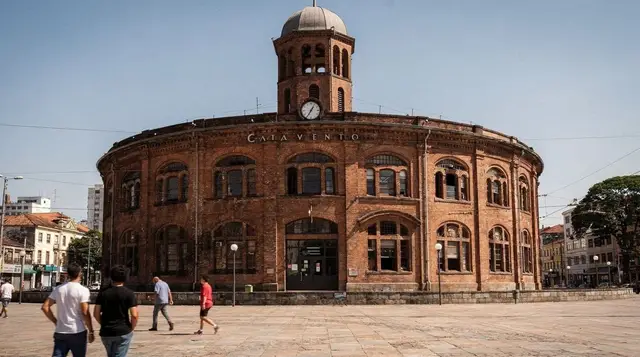
| Instituto Butantan | Catavento | |
|---|---|---|
| Distance from centre | ~12km west | Central, downtown |
| Focus | Live snakes, spiders, venom research | Hands-on physics, biology, engineering |
| Best for | Curious kids and adults, not squeamish visitors | Younger kids, easy downtown add-on |
| Travel time | 30–50 minutes each way | Walkable from Centro Histórico |
Prices, hours, and current status
Entry runs around R$10, though pricing and the specific sections open to the public shift periodically as the institute balances research access with visitor access — check current information before you go rather than relying on an old guidebook figure. The museum is generally closed Mondays like most of the city’s cultural institutions.
Butantan’s role in Brazil’s COVID-19 response
Instituto Butantan’s relevance extends well beyond snakes, and its most recent high-profile chapter had nothing to do with venom at all. During the COVID-19 pandemic, Butantan partnered with the Chinese biopharmaceutical company Sinovac to conduct clinical trials and manufacture CoronaVac, one of the vaccines used most widely across Brazil’s national immunisation campaign, with production based at the institute’s own São Paulo facilities.
This partnership, driven partly by São Paulo state’s government at the time, made Butantan a central, highly visible institution in Brazil’s pandemic response, a role that surprised many Brazilians who associated the institute primarily with its historical snake and antivenom work rather than cutting-edge vaccine manufacturing. It’s a useful reminder, walking through the museum’s exhibits, that the institution’s mission has always been broader than the public-facing snake displays suggest — vaccine and biopharmaceutical research has been part of Butantan’s work for decades, with the COVID-19 response simply being the most globally visible recent example of a research capacity that’s been developing continuously since the institute’s founding in 1901.
Snakebite in Brazil, by the numbers
The scale of the problem Butantan was built to address is worth stating directly rather than left implicit. Brazil records tens of thousands of snakebite cases annually, with the exact figure varying year to year but consistently placing it among the countries with the highest snakebite burden in the world, a consequence of the country’s exceptional biodiversity of venomous species combined with a large agricultural workforce operating in rural areas where bites are most common.
Bothrops species, commonly known as jararaca, account for the clear majority of these cases nationally, which is why jararaca antivenom remains one of Butantan’s most consistently produced serums. Fatality rates have dropped substantially over the institute’s more than a century of operation, a direct consequence of wider antivenom availability through Brazil’s public health system rather than any change in snake behaviour or distribution — a concrete, measurable public health outcome that gives the museum’s historical exhibits real weight beyond abstract scientific interest.
Comparing Instituto Butantan to research-institute museums elsewhere
For visitors who’ve encountered similar working-research-institution museums elsewhere, it’s a useful category to place Butantan within rather than treating it as a one-off oddity. The model — a serious research institution that opens part of its work to public visitors as essentially a byproduct of its actual mission — has parallels in institutions like the Pasteur Institute in Paris or various natural history museums attached to universities worldwide, though Butantan’s specific focus on live, dangerous animals as both research subjects and museum exhibits is more unusual even within that category.
What distinguishes Butantan from a typical science museum is that nothing on display is created for exhibition purposes — the snakes are there because they’re part of active antivenom production, not because someone assembled a collection for public education first. This gives the whole visit a different texture from a purpose-built science museum: less polished in places, but with a directness and authenticity that comes from watching an actual, ongoing scientific operation rather than a curated presentation of finished research.
Visiting during vaccine or serum production periods
Because Instituto Butantan is an active research and production facility rather than a museum built purely for visitors, the specific sections open to the public can shift periodically depending on what the institute’s research and manufacturing priorities are at a given time — a detail worth knowing rather than assuming the museum experience is fixed and unchanging year to year. This is uncommon among visitor attractions generally but makes sense given what the institute actually is: production schedules, biosafety considerations and research priorities occasionally affect which areas are accessible, though the core public museum sections covering live snakes, spiders and scorpions have remained the consistent centrepiece through the institute’s various operational phases. Checking current visitor information immediately before your trip, rather than relying on older guidebook details, is the sensible approach given this occasional variability.
The institute’s role in broader Brazilian scientific education
Beyond its research and the public museum, Instituto Butantan runs education and outreach programmes aimed at Brazilian schoolchildren, and it’s common to see organised school groups moving through the exhibits on weekday mornings, particularly earlier in the school year. This is worth knowing if a quieter visit matters to you — timing around school holiday periods or early afternoon rather than mid-morning can mean a noticeably calmer visit. It also reflects something genuine about the institute’s civic role in Brazil beyond tourism: for generations of paulistano schoolchildren, a Butantan field trip has been a standard part of growing up in the city, giving the institute a place in local memory and identity that goes well beyond its function as a visitor attraction for international travellers.
Frequently asked questions about visiting Instituto Butantan
Is Instituto Butantan safe to visit?
Yes — all venomous animals are kept securely behind glass or in enclosures built for a research institution, and there’s no direct contact with live snakes as part of a standard visit.
How long should we budget?
2 to 2.5 hours covers the main museum sections at a comfortable pace, plus travel time, which is substantial given the distance from the centre.
Is it good for kids?
For curious kids who aren’t afraid of snakes and spiders, genuinely one of the more memorable stops in the city. For younger or more squeamish children, Catavento is a gentler and more central alternative.
How do I get there without a car?
Metro Line 4 Yellow to Butantã station, then either a local bus toward the institute or a 20–25 minute walk. A rideshare from the centre is more comfortable if traffic allows.
Is Instituto Butantan worth it if I only have one full day in São Paulo?
Probably not — the travel time doesn’t fit well into a single tightly packed day. It’s a better fit for a trip of three days or more where you can dedicate a half-day specifically to this without cutting into central sights.
Does the institute still produce antivenom for public use?
Yes — this remains an active part of its mission, not just historical context, and it’s a significant part of Brazil’s public health infrastructure for treating venomous bites.
Can I combine this with anything else nearby?
The USP university campus is adjacent and has some pleasant green space, though it isn’t a major visitor attraction in its own right. Most visitors treat Instituto Butantan as a standalone half-day rather than combining it with other stops.
Did Instituto Butantan play a role in COVID-19 vaccine production?
Yes — it partnered with Sinovac to produce and trial CoronaVac, one of the vaccines used widely in Brazil’s national immunisation campaign, drawing on biopharmaceutical research capacity the institute has built up over more than a century alongside its snake and antivenom work.
Fitting Instituto Butantan into a longer trip
This isn’t a fit for a rushed one-day itinerary — the travel time alone makes it impractical alongside central sights. On a five-day itinerary or longer, or specifically on the four-day itinerary for families, it works well as a dedicated half-day for anyone genuinely curious about the subject matter. Pair it with a relaxed lunch back toward Pinheiros on the way back into the centre rather than trying to add another major sight to the same day.
Museum & art tours on GetYourGuide
Verified deep-linked GetYourGuide tours. Book through these links and we earn a small commission at no cost to you.
These are our own photographs of São Paulo, not the operator's pictures of this tour — open the tour page to see those.