Catavento: science museum for families
Is Catavento worth visiting with kids, and how much time should we budget?
Yes — it's a genuinely hands-on science museum with exhibits kids can touch and operate rather than just look at, organised into four themed wings. Budget 2 to 3 hours, more if your children are the type to linger at every interactive station, and go on a weekday morning if you want to avoid school-group crowds.
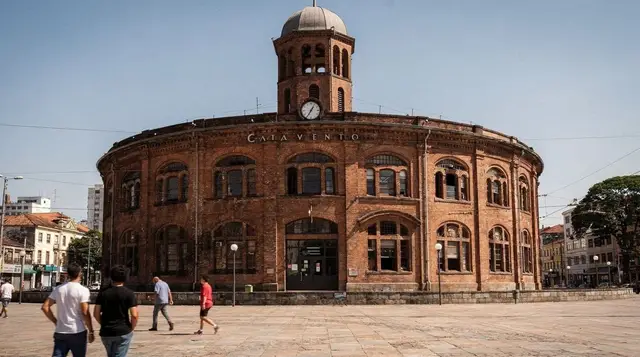
Catavento Cultural e Educacional is São Paulo’s best answer to the question every parent eventually asks on a city trip: where can the kids actually touch things instead of standing quietly in front of glass cases. Housed in the Palácio das Indústrias, a grand early-20th-century building near Parque Dom Pedro II and the Mercado Municipal end of downtown, Catavento is a genuinely hands-on science museum organised into four themed wings, and it’s inexpensive enough that it’s an easy add to a downtown day even if science museums aren’t usually your thing. This guide covers what’s actually inside, how it compares to a standard art-museum visit, and where it fits around the rest of Centro Histórico.
| Where | Palácio das Indústrias, Parque Dom Pedro II, downtown |
| Cost | Around R$6 (~US$1.20); often free or discounted on specific days |
| Time needed | 2–3 hours |
| Getting there | Metro Pedro II (Line 3 Red) or a short walk from São Bento (Line 1 Blue) |
| Best time | Weekday mornings, avoiding school field-trip groups |
The four wings, and what’s actually worth stopping for
Catavento organises its exhibits into four themed sections — Universe, Life, Ingenuity, and Society — spread across the palace’s grand old halls, which is part of the charm: you’re exploring interactive science displays inside a building that was originally built for something entirely different. The Universe wing covers astronomy and space with hands-on models; Life covers biology and the human body; Ingenuity is the most popular with kids specifically, full of physics and engineering demonstrations you can crank, spin, or trigger yourself; and Society covers technology’s role in daily life. If you’re short on time, Ingenuity is the wing to prioritise — it has the highest concentration of genuinely interactive stations per room.
Why the building itself is worth a look
The Palácio das Indústrias was built in the early 1920s as an industrial exhibition hall, and its scale is unusual for a museum aimed mostly at kids — soaring ceilings, grand staircases, and a facade that looks more like a government ministry than a children’s science centre. It’s worth pointing this contrast out to older kids or teenagers who might otherwise dismiss the museum as “for little kids” — the building’s own history, tied to São Paulo’s early-20th-century industrial boom, is a decent hook if the science exhibits alone don’t land.
Managing a visit with a mix of ages
Catavento skews toward younger children in terms of what draws the most enthusiastic reaction, but the physics and engineering demonstrations in the Ingenuity wing genuinely hold up for older kids and even adults who enjoy a good hands-on puzzle. If you’re travelling with a wide age range, plan to split time — younger children will want to linger at the more playful stations, while teenagers and adults may move through faster and want to circle back to the Society wing’s technology exhibits. There’s no strict route through the museum, so backtracking between wings is easy.
What makes Catavento different from a typical science centre abroad
Visitors who’ve been to well-funded science museums in North America or Europe sometimes arrive at Catavento expecting the same level of polish and are surprised — the exhibits are genuinely interactive and well maintained, but the museum operates on a public-sector budget inside a preserved historic building rather than a purpose-built, corporately sponsored facility. Some stations show real wear from decades of enthusiastic use, and the overall presentation feels a notch more modest than the newest science centres elsewhere in the world. This isn’t a criticism so much as a fair expectation to set — the content and hands-on engagement hold up well, but don’t come expecting the gloss of a brand-new facility, and the very low admission price reflects that positioning rather than a lesser experience.
Toilets, food, and stroller access
Catavento has restrooms on multiple floors and a small snack area, though it isn’t set up as a full meal stop — most families treat it as a pre-lunch or post-lunch activity rather than planning to eat there. The building’s grand old stairways mean stroller access is manageable but not seamless in every section; lifts exist for the main circulation, but expect to navigate around some original architectural features that weren’t designed with modern accessibility in mind. If you’re travelling with a stroller, ask staff at the entrance for the most direct accessible route through all four wings rather than trying to follow the standard walking route, which occasionally backtracks through older stairwells.
Comparing Catavento to other family activities in central São Paulo
Central São Paulo doesn’t have an enormous number of dedicated kids’ activities within easy walking distance of the historic centre, which is part of what makes Catavento such a reliable anchor for a family day downtown.
| Catavento | Mercado Municipal | Farol Santander | |
|---|---|---|---|
| Best for | Hands-on science, ages 4–14 | Food, sensory experience for all ages | Skyline views, quick stop |
| Time needed | 2–3 hours | 1–1.5 hours | 45 minutes–1 hour |
| Indoor/outdoor | Fully indoor | Mostly indoor | Indoor with outdoor deck |
| Cost | ~R$6 | Free to browse, pay for food | Ticketed entry |
Combining all three in a single downtown day is realistic if you start early — Catavento in the morning while energy is highest, lunch at the Mercado Municipal, and Farol Santander’s observation deck as a lighter afternoon finish that doesn’t demand much focus from tired kids.
The Palácio das Indústrias’ own history, for older kids and adults
Beyond the science exhibits, the Palácio das Indústrias building itself is worth a mention to older children or curious adults in your group. Built in the early 1920s during a period of rapid industrial growth for São Paulo, it originally served as an exhibition hall showcasing the city’s manufacturing output — part of the same industrial boom that drew waves of immigrant labour into the city and reshaped neighbourhoods across the centre. It later housed city government offices before its conversion into Catavento in the 2000s. Pointing out this layered history — a 1920s industrial showcase turned government building turned children’s science museum — can turn a quick pass through the entrance hall into a small history lesson, and it connects usefully to the broader story told in the short history of São Paulo guide about the city’s rapid early-20th-century growth.
Managing a visit on a tight schedule
If your family day in São Paulo has limited time and Catavento is competing with other downtown priorities, it’s worth knowing which wings to cut first rather than rushing through all four. The Society wing, covering technology’s role in daily life, tends to resonate least with younger children compared to the more visceral, hands-on Ingenuity and Life wings — if you’re pressed for time, this is the section to skip or shorten first. Universe, covering astronomy, sits in between: strong visual appeal but less physically interactive than Ingenuity’s crank-and-lever style stations. Prioritising Ingenuity and Life first means that even a truncated 90-minute visit still hits the museum’s strongest material.
Prices, hours, and avoiding the school-group crush
Entry is genuinely cheap by museum standards, usually around R$6, and it’s often free or discounted on specific promotional days — check the current schedule before you go since these shift periodically. The one real timing consideration: Catavento is a popular field-trip destination for São Paulo schools, and weekday mornings during the school term can mean navigating large groups of uniformed schoolchildren moving through the same wings you’re in. If that sounds like a lot, aim for early afternoon instead, or visit on a weekend when it’s mostly families rather than organised groups.
| Weekday morning (term time) | Weekend or afternoon | |
|---|---|---|
| Crowds | School groups, can be loud | Families, generally calmer |
| Best for | Seeing exhibits with fewer other visitors around each station | Avoiding organised-group bottlenecks |
| Cost | Same | Same |
Combining Catavento with the rest of downtown
Catavento’s location near Parque Dom Pedro II puts it within reasonable walking distance of the Mercado Municipal and the wider Centro Histórico district, which makes it easy to build a full family day: museum in the morning, lunch at the Mercado, then an easy afternoon walking São Bento or the cathedral area. A downtown walking tour with Farol Santander entry is a reasonable add-on for older kids if they’ve got energy left after Catavento — the observation deck at Farol Santander gives a rewarding skyline payoff after a morning indoors.
How Catavento came to be, and why the low price matters
Catavento opened in its current form in the 2000s, converting the historic Palácio das Indústrias into a public science museum as part of a broader municipal push to expand accessible cultural and educational institutions for São Paulo families who might not otherwise have easy access to hands-on science education. The deliberately low admission price isn’t an oversight or a sign of a lesser institution — it reflects a specific public-sector mission to keep the museum genuinely accessible to families across the city’s full economic range, in a city where many paid attractions sit well out of reach for lower-income households. Understanding this civic mission helps frame the more modest presentation and occasional wear described earlier in this guide: Catavento is functioning exactly as intended, prioritising broad access over polish, and it draws visitor numbers from across São Paulo’s full social spectrum as a direct result, not just tourists and wealthier local families.
How Catavento compares to other science museums in Brazil and abroad
Within Brazil, Catavento is generally considered one of the country’s stronger interactive science museums, comparable in ambition to similar public-sector science centres in Rio de Janeiro and other major Brazilian cities, though each institution has its own thematic focus and building history. Compared internationally to well-funded institutions like the Exploratorium in San Francisco or the Science Museum in London, Catavento’s exhibits are simpler in production value and technology but hold their own in terms of genuine hands-on engagement, which is the core metric that actually matters for a family visit — kids don’t generally notice or care about production budgets, they care whether they can touch, turn and trigger things themselves, and Catavento delivers reliably on that front across all four wings.
Mistakes families make when planning a Catavento visit
A few recurring errors are worth flagging. Visiting during peak school term without checking for field-trip bookings, rather than aiming for early afternoon or a weekend as advised earlier, is the most common source of frustration for families expecting a quiet visit. Assuming the museum has a full restaurant on site and skipping breakfast or lunch beforehand leaves families relying on a limited snack area that isn’t built for a proper meal — plan to eat before or after, not during, as covered above.
Underestimating how much time engaged kids will want to spend at the Ingenuity wing’s crank-and-lever stations specifically, and therefore under-budgeting the overall visit length, is another common miscalculation; if your children respond well to hands-on physics demonstrations, budget toward the longer end of the two-to-three-hour range rather than the shorter end. And bringing very young children (under about three) expecting the same level of engagement as older kids sets unrealistic expectations, since much of the content assumes a level of reading and motor coordination that toddlers haven’t yet developed.
A concrete example: what the Ingenuity wing actually contains
To make the “physics and engineering demonstrations” description more tangible, the Ingenuity wing typically includes hands-on stations covering basic mechanics (levers, pulleys, gears visitors can operate directly), simple electricity and magnetism demonstrations, optical illusions and light-based exhibits, and sound and acoustics stations where visitors can experiment with pitch and resonance. Nothing here requires reading extensive wall text to understand — the stations are built to be self-explanatory through direct manipulation, which is exactly why this wing tends to hold the attention of a wider age range, including teenagers and adults who might otherwise find a museum visit with younger siblings tedious. If you’re combining a Catavento morning with an afternoon at a more traditional museum visit elsewhere in the city, the contrast in engagement style between the two is itself worth pointing out to kids as an interesting difference in how museums can work.
Budgeting a full family day around Catavento
Given the museum’s very low entry price, a Catavento-anchored family day is one of the most budget-friendly full days available in central São Paulo. A realistic full-day budget for a family of four might run: roughly R$25 total for museum entry, R$150–250 for lunch at the Mercado Municipal, and R$100–200 for transport (metro fares plus a rideshare or two if needed), putting a genuinely full and engaging family day within reach for well under R$500 total, excluding accommodation. This makes Catavento a particularly strong anchor for a lower-cost day within a longer trip, worth keeping in mind if your itinerary needs a budget-friendly day to balance against a more expensive one elsewhere, such as the MASP skip-the-line private tour on a different day of the same trip.
Frequently asked questions about visiting Catavento
How much time should we budget for Catavento?
2 to 3 hours covers all four wings at a reasonable pace, longer if your kids want to repeat their favourite interactive stations.
Is Catavento good for a rainy day?
Yes — it’s entirely indoors and one of the better rainy-day options in the city for families specifically. See the what to do in São Paulo when it rains guide for other indoor options to pair with it.
What age range is Catavento best for?
Roughly 4 through young teens get the most out of the interactive stations, though the Ingenuity wing’s physics demonstrations hold genuine appeal for adults too.
Is the area around Catavento safe for a family visit?
Yes, during the day — Parque Dom Pedro II and the immediate downtown area around the museum are busy with regular foot traffic. Stick to well-populated streets, as you would anywhere in central São Paulo.
Do I need to book tickets in advance?
Not usually for a standard visit, though it’s worth checking current booking policy before you go, especially during school holidays when demand is higher.
How does Catavento compare to Instituto Butantan for a kids’ science day?
They’re quite different — Catavento is hands-on physics, biology, and engineering inside a grand old building downtown; Instituto Butantan is a working snake and venom research institute further from the centre. See the Instituto Butantan guide if live animals interest your kids more than interactive machines.
Is there anywhere to eat nearby?
Yes — the Mercado Municipal is a short walk away and is a genuinely good lunch option after the museum, with far more variety than anything inside Catavento itself.
Fitting Catavento into a longer trip
Catavento is a natural fit for the São Paulo with kids guide and works well on any itinerary that includes a downtown day, since it sits close enough to Centro Histórico to combine without extra cross-town travel. On the four-day itinerary for families, Catavento anchors a downtown morning that flows naturally into lunch at the Mercado Municipal and an easy afternoon exploring the historic centre on foot.
Museum & art tours on GetYourGuide
Verified deep-linked GetYourGuide tours. Book through these links and we earn a small commission at no cost to you.
These are our own photographs of São Paulo, not the operator's pictures of this tour — open the tour page to see those.