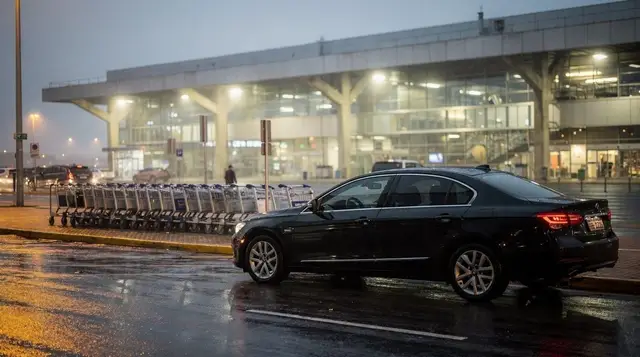
Taxis and ride apps in São Paulo
Should I use Uber, 99 or a traditional taxi in São Paulo?
Uber and 99 (a Brazilian equivalent) both operate extensively and are the default choice for most visitors — reasonable pricing, no cash-handling uncertainty, and an English-language interface for Uber. Traditional taxis remain reliable via official ranks at hotels and airports, with regulated metered fares, and are a fine backup if an app has no available drivers nearby.
Ride apps have become the default way most visitors get around São Paulo outside the metro, and for good reason — they’re reliable, reasonably priced by international standards, and remove the language and cash-handling friction that can make traditional taxis feel like more of a hurdle in an unfamiliar city, especially for a first-time visitor still finding their footing. But they’re not a perfect solution to São Paulo’s traffic, and understanding when an app works well, when a traditional taxi is the better call, and how surge pricing actually behaves here will save both money and frustration.
| Where | Citywide |
| Cost | R$10-40+ per ride depending on distance, time and surge |
| Time needed | Variable — subject to São Paulo’s traffic |
| Getting there | Download Uber and 99 before you arrive |
| Best time | Outside 7-10am and 5-8pm, and outside rain, for the lowest prices |
Setting up before you land
Download both Uber and 99, and add a payment card to each, before you arrive rather than trying to set up accounts on unfamiliar airport wifi with a long flight’s worth of fatigue working against you. If your home country’s phone number requires verification through a text message, confirm this works with international roaming or your new eSIM before departure — a surprising number of visitors discover account setup issues only once they’re already at the airport trying to book their first ride. A few minutes of setup at home avoids a genuinely stressful first hour in the country.
Uber versus 99: is there a real difference?
Uber and 99 (pronounced “noventa e nove,” a Brazilian-owned app that operates almost identically to Uber) both cover São Paulo extensively, and most visitors get the best results installing both and comparing price and wait time in real time before booking, since one occasionally beats the other on a given route or at a given moment. Neither requires a subscription or membership to use as a visitor — download, add a card, and you’re ready to book. Uber’s interface is more familiar to international visitors and defaults to English more reliably; 99 sometimes has a larger driver pool in certain neighbourhoods given its stronger domestic market share. Neither is clearly “better” across the board — having both installed is the practical answer.
How surge pricing actually behaves here
Surge pricing in São Paulo responds predictably to a few triggers worth knowing: the 7-10am and 5-8pm rush hours, any rain (demand spikes the moment a storm starts, particularly during the December-March wet season’s frequent afternoon downpours), and major events letting out simultaneously, like a football match or a concert. If a price looks unusually high, waiting ten to fifteen minutes, or walking a couple of blocks away from a dense surge zone, often brings it back down. It’s rarely worth paying triple surge for anything but a genuine emergency — reschedule or use the metro instead if it’s a viable alternative for your route.
Ride categories and larger vehicles
Both Uber and 99 offer multiple vehicle tiers — a standard economy option, a slightly larger or higher-comfort tier, and an XL or van option for groups of five or more or extra luggage. For a family or group arriving with substantial baggage, it’s worth defaulting to the larger category from the airport specifically, since a standard car genuinely struggles with four large suitcases plus passengers, and a driver arriving to find the trip won’t fit adds real delay and frustration on both sides. The price difference between tiers is usually modest relative to the convenience gained.
Traditional taxis: still a reasonable option
Regulated taxis, recognisable by their white paint and rooftop signage, remain a legitimate option, particularly from official ranks at hotels, airports and major attractions, where a taxi is often faster to hail than waiting for an app driver to navigate to a busy pickup zone. Fares run on a regulated meter, and while cash is still accepted, most taxis now take cards too. It’s a reasonable backup when app wait times are unusually long, or for visitors who simply prefer not to depend on a smartphone app for every single trip, or whose home banking setup makes app-based payment awkward.
Communicating with drivers across a language barrier
Most ride-app drivers in São Paulo speak limited English, and it’s worth having your destination address saved in Portuguese, or simply relying on the app’s built-in GPS routing rather than trying to give verbal directions, since the app itself handles the vast majority of communication needed for a standard trip. A translation app on your phone smooths over any confusion about specific pickup points, particularly at a large venue or a spot with multiple entrances. Drivers are generally patient and used to navigating this with international visitors, so a quick “Aqui, por favor” (here, please) with a pointed finger resolves most in-the-moment confusion perfectly well without needing fluent Portuguese.
Booking a transfer instead, for specific situations
For airport transfers, late-night arrivals, or moving with a group and substantial luggage, a pre-booked private transfer often beats both taxis and ride apps on predictability, particularly on a trip’s first and last day when things going smoothly matters most. A private GRU airport transfer removes the uncertainty of finding a ride app driver in an unfamiliar arrivals hall after a long flight, with a fixed price agreed before you land. The São Paulo airport transfers compared guide covers when this is worth the premium over a standard ride app.
Safety in ride apps and taxis
Both ride apps and regulated taxis are genuinely safe in São Paulo for the large majority of trips, day or night — this isn’t a city with a notable pattern of transport-related crime targeting app or taxi passengers specifically, and millions of trips happen without incident every week. Standard precautions apply: confirm the licence plate and driver name match the app before getting in, share your trip status with someone if travelling alone late at night, and sit in the back seat rather than the front. The is São Paulo safe guide covers the wider safety picture beyond transport.
Getting around at night
After the metro closes around midnight, ride apps and taxis become the primary way to move around the city, and both remain reliable through the night, though wait times can lengthen in the small hours (roughly 2-5am) when fewer drivers are active. If you’re planning a night out in Vila Madalena or around Itaim Bibi’s bars, it’s worth checking app availability before committing to a venue far from your accommodation, since a long wait at 3am is a more frustrating problem than the same wait at a more sociable hour. Bars and clubs in these areas are generally used to guests waiting just inside or near the entrance for a car rather than out on the street, a small but genuinely useful habit late at night. A private layover tour with airport pickup illustrates the kind of pre-arranged, fixed-schedule transport worth considering for any trip stage where timing genuinely can’t slip, including an early-morning flight after a late night out.
Staying connected for app-based transport
An eSIM data plan for Brazil set up before you land is close to essential for using ride apps effectively — real-time GPS tracking, live pricing, and driver communication all depend on a working data connection. The eSIM and internet in Brazil guide covers setup, and it’s worth having this sorted before your first ride out of the airport rather than relying on unreliable arrivals-hall wifi.
How costs compare to home
For visitors from North America or Western Europe, São Paulo’s ride-app fares generally come in noticeably cheaper than an equivalent trip at home, even accounting for occasional surge pricing — a 20-minute cross-town ride that might cost US$25-35 in a major North American city often runs the equivalent of US$8-15 here outside peak surge. This can lead to over-reliance on ride apps simply because they feel like a bargain, worth balancing against the genuinely good and much cheaper metro for routes it covers directly.
Comparing your options
| Best for | Predictability | Payment | |
|---|---|---|---|
| Uber / 99 | Most day-to-day trips | High outside surge | App-based, card on file |
| Traditional taxi | Ranks at hotels, airports | Moderate, metered fare | Cash or card |
| Private transfer | Airport runs, groups, night arrivals | Very high, fixed price | Pre-paid or on arrival |
What to avoid
Don’t hail an unmarked, unofficial “taxi” offered by a tout, particularly around tourist areas and the airport arrivals halls — stick to official ranks or a booked app. Don’t assume a short-looking trip on the map will be quick during rush hour; check the app’s live estimate rather than your own guess. Don’t pay in cash to an app driver who requests it outside the app’s normal payment flow — this isn’t standard practice and is worth declining. And don’t leave account setup — payment cards, phone verification — until you land; sort it out before departure so your first ride isn’t also your first troubleshooting session.
Tolls and extra charges you might not expect
Rides that use São Paulo’s toll roads — most commonly airport runs via the Ayrton Senna/Carvalho Pinto corridor or any trip that crosses one of the city’s tolled expressway sections — add the toll (pedágio) cost automatically to the fare within the app, rather than requiring a separate cash payment at the booth the way it might in a taxi. This is usually a modest addition, generally R$5-15 depending on the route, but it explains why an airport trip sometimes prices noticeably higher than a same-distance trip within the city that doesn’t cross a toll point. There’s no way to opt out of a toll route if it’s genuinely the fastest option the app has selected, and drivers won’t take a longer toll-free alternative on request in most cases, since the app’s routing and pricing are generated automatically rather than negotiated with the driver directly.
Travelling with young children: the car seat gap
One genuine limitation worth knowing before you land: neither Uber nor 99 reliably offers a car-seat option in São Paulo the way some services do in North America or parts of Europe, and Brazilian law technically requires a car seat for young children in private vehicles. In practice, most visiting families either bring a lightweight, foldable travel car seat from home, or accept that ride-app trips with a young child involve a legal grey area that many locals and visitors alike navigate without a seat available. For a family without their own portable seat, a private transfer or car rental company that can supply one directly, booked in advance, is a more reliable solution for at least the airport legs of a trip than hoping an ordinary ride-app booking happens to accommodate the request.
Frequently asked questions about taxis and ride apps in São Paulo
Is Uber safe to use in São Paulo?
Yes, widely used and generally safe — confirm the licence plate and driver details match the app before getting in, standard practice anywhere in the world, not a São Paulo-specific concern.
Should I install both Uber and 99?
Yes — having both lets you compare price and wait time in real time, and one occasionally beats the other depending on the specific route and moment. It costs nothing to have both installed and ready.
How much does a typical ride cost?
Short trips within a neighbourhood run roughly R$10-20; cross-city trips or airport transfers run R$30-100+ depending on distance and surge conditions. Check the app’s live estimate before booking rather than relying on a rough rule of thumb.
Is it normal to tip ride-app or taxi drivers?
Not required and not commonly expected, unlike restaurant service — rounding up or a small tip for exceptional help with luggage is appreciated but not the norm. See the tipping in Brazil guide for the fuller picture across restaurants, hotels and transport.
What should I do if a ride app shows extreme surge pricing?
Wait ten to fifteen minutes if you can, or check whether the metro covers part of your route as an alternative — surge typically eases once the trigger (rain, rush hour, an event ending) passes. Comparing Uber against 99 before booking is also worth the extra thirty seconds during a surge spike.
Are traditional taxis more expensive than ride apps?
Roughly comparable outside surge periods, sometimes slightly more for a metered taxi versus a normal-priced app ride, though during surge, a taxi’s regulated meter can actually work out cheaper, worth remembering during a sudden downpour when app prices spike fastest.
Can I pay for rides in cash?
Ride apps are primarily card- or wallet-based, though cash options exist in some cases. Traditional taxis accept both cash and card at most ranks — check the money in Brazil guide for the wider picture on cash versus card here.
Is it safe to take a ride app alone at night?
Yes, generally — this remains one of the safer ways to move around the city after dark. Share your trip details with someone if it makes you more comfortable, standard practice in any city.
How do ride-app costs in São Paulo compare to my home country?
Generally noticeably cheaper — a cross-town trip that might cost US$25-35 in a major North American city often runs the equivalent of US$8-15 here outside surge periods, though this can encourage over-reliance on apps for trips the metro would cover just as well for less.
What vehicle category should I choose with luggage?
Default to the larger XL or van category from the airport if you have more than two large suitcases for your group — a standard car often can’t fit everything, and mismatched luggage causes real delay at pickup.
Do drivers speak English?
Limited, in most cases — rely on the app’s GPS routing rather than verbal directions, and have your destination address saved in Portuguese as a backup for any pickup-point confusion.
Building this into your trip
Understanding when to use a ride app versus the metro versus a pre-booked transfer is worth thinking through at the itinerary stage, particularly for time-sensitive moments like airport departures or an early tour pickup. The getting around São Paulo guide covers the full transport picture, and the São Paulo metro guide and Bilhete Único guide cover the public transit alternative for trips where an app isn’t the best fit. For a night out specifically, the São Paulo nightlife guide factors realistic late-night transport into its recommendations.
Transport passes & transfers on GetYourGuide
Verified deep-linked GetYourGuide tours. Book through these links and we earn a small commission at no cost to you.
These are our own photographs of São Paulo, not the operator's pictures of this tour — open the tour page to see those.