Most people who’ve heard of Campinas know it as the location of Viracopos International Airport (VCP), the low-cost alternative to Guarulhos used by budget carriers flying into the São Paulo region. That reputation undersells the city: Campinas is the largest city in São Paulo’s interior, home to Unicamp — one of Brazil’s top research universities — and a 19th-century historic center built on the same coffee wealth that shaped much of the region. About 100km northwest of São Paulo, it’s rarely a primary destination, but it’s a legitimate half-day stop if you’re passing through or building a broader interior itinerary.
| Where | São Paulo state interior, via Anhanguera or Bandeirantes highway |
| Cost | Mostly free to walk the historic center; museum entries R$0–20 |
| Time needed | Half a day for the center |
| Getting there | Car easiest; frequent buses from Tietê terminal; VCP airport is in Campinas itself |
| Best time | April–September for cooler, drier weather; avoid the worst of summer humidity |
The historic center, built on coffee
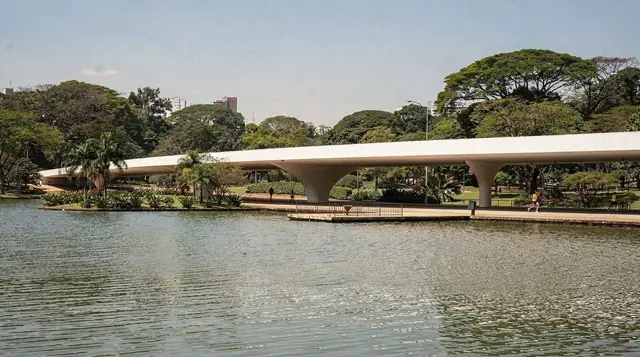
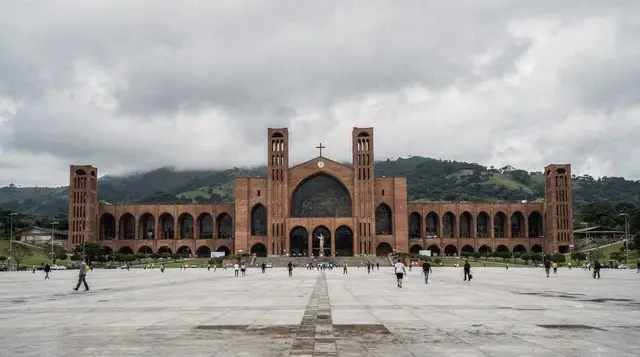
Campinas grew wealthy in the 1800s as a coffee hub before São Paulo city eclipsed it, and the historic center still shows it — the Catedral Metropolitana de Campinas anchors a square of period buildings, and the Bosque dos Jequitibás, a forested park with some of the oldest trees in the region, sits a short walk away. The Centro de Convivência Cultural, a striking round modernist building, adds a different architectural note if you’re interested in Brazil’s 20th-century public architecture alongside the 19th-century coffee-era core.
It’s a smaller, denser center than São Paulo’s own Centro Histórico, walkable in an hour or two without feeling rushed, and considerably calmer — Campinas doesn’t get the tourist volume of coastal or wine-route destinations, so the streets and squares feel local rather than staged for visitors.
Unicamp and the university energy
Unicamp (Universidade Estadual de Campinas) is one of the most research-productive universities in Latin America, and its presence gives the city a younger, more academic feel than its “airport town” reputation suggests — decent bars, a stronger independent food scene than you’d expect, and a level of cultural programming (small venues, student theater, the occasional touring act) that outpaces most interior cities of similar size.
Viracopos: the practical reason most visitors are here
If you’re flying a budget or long-haul carrier into VCP rather than Guarulhos, Campinas is worth treating as more than a transit point. A few hours before or after your flight is enough to see the historic center without risking a missed connection, and it beats sitting in the airport.
a private transfer to or from Viracopos airport is worth booking directly rather than relying on finding a taxi cold at the terminal, especially for early-morning or late-night flights when ride-app availability in Campinas can thin out.
The food scene
Campinas has a noticeably stronger independent restaurant and café scene than most interior cities its size, partly a byproduct of Unicamp’s student and academic population and partly the general prosperity of a large, industrialized city that isn’t purely a bedroom community for São Paulo. The area around Cambuí, a well-off residential neighborhood, has become the city’s de facto dining district, with a concentration of cafés, bakeries, and mid-range restaurants that outpaces what the “airport city” reputation suggests. Expect to pay roughly what you would in a mid-range São Paulo neighborhood — R$40–90 per person for a casual meal, more for a proper sit-down dinner.
Where to stay
If you’re overnighting near Viracopos for an early or late flight, hotels cluster both near the airport itself (convenient but generic) and in the Cambuí and central areas (a longer transfer to the airport, roughly 20–30 minutes depending on traffic, but a considerably more pleasant place to spend an evening). Airport-adjacent hotels run roughly R$180–350 per night; central options span a wider range depending on category.
Getting there
Two highways connect São Paulo to Campinas — the Anhanguera and the Bandeirantes — and both run reasonably fast outside peak hours, with the trip taking 1h15 to 1h30 in light traffic. Rush hour (07:00–10:00 and 17:00–20:00) on either route, especially close to São Paulo’s own city limits, can push the drive past 2 hours. Frequent buses run from Tietê terminal to Campinas’s own rodoviária, making this one of the easier interior cities to reach without a car.
a coffee culture and farm lunch tour in the surrounding countryside connects naturally with Campinas’s own coffee-wealth history if you want to extend the day beyond the city itself.
A city that outgrew its own shadow
For most of the 20th century, Campinas existed somewhat in São Paulo’s shadow despite its own considerable size and wealth — a common fate for large interior cities near an even larger capital. That’s shifted somewhat in recent decades as Campinas developed its own significant tech and research industry, partly anchored by Unicamp and a cluster of technology companies that have made the region a genuine secondary hub rather than purely a satellite of the capital. This matters for visitors mainly in that Campinas doesn’t feel like a sleepy interior town the way some other destinations on this list do — traffic, real estate prices, and the general pace of the city are closer to a mid-size Brazilian metropolis than a quiet countryside stop.
Getting around once you’re there
Central Campinas and the Cambuí district are both walkable in sections, but the city overall is spread out enough that a car or ride-app is useful for covering distances between the historic center, Cambuí, and the university area if you’re spending more than a couple of hours. Traffic within Campinas itself can be surprisingly heavy given the city’s size, particularly around rush hour on weekdays, so factor that into timing if you’re trying to fit in a flight connection at Viracopos.
Nightlife and evenings
If you’re staying overnight rather than passing through, Campinas has a more active bar and live music scene than most interior cities, again driven substantially by the university population — Cambuí and the areas near Unicamp’s campus both have a reasonable concentration of bars, some with live música ao vivo on weekends. It’s a notch below São Paulo’s own nightlife in scale and variety, as you’d expect, but a genuine option for an evening rather than a city that shuts down after dinner.
Business travelers passing through
A meaningful share of Campinas’s visitors aren’t leisure travelers at all — the city’s tech and industrial base means a steady flow of business travel, and the hotel and dining infrastructure reflects that, with a solid range of mid-range and business-oriented hotels near both the airport and the city’s commercial districts. If you’re combining a business stop with a bit of sightseeing, the historic center and Cambuí district are both easily reached from most business hotel locations without needing to relocate for the leisure portion of your stay.
A quick comparison with Itu and Holambra
If you’re weighing Campinas against the other interior stops on this list, the distinction is fairly clean: Itu offers denser, more concentrated colonial architecture in a smaller, more walkable center; Holambra offers a genuinely unusual cultural theme (the Dutch flower town) but demands a longer drive; Campinas offers the least “single attraction” appeal of the three but the most substance if you’re already there for practical reasons like a flight, a business trip, or simply passing through toward Holambra or the rest of the interior.
Frequently asked questions about visiting Campinas
Is Campinas worth visiting if I’m not flying through Viracopos?
It can be, especially combined with Holambra or Itu on the same day — the historic center and university atmosphere offer more than most visitors expect, though it’s not a must-see on its own.
How far is Campinas from Guarulhos airport?
Roughly 90–100km, and it’s a different airport region entirely — don’t confuse Campinas/Viracopos (VCP) with Guarulhos (GRU) when booking flights or transfers.
Is Campinas safe?
Broadly yes, especially the central and university areas frequented by visitors; standard urban caution applies as in any Brazilian city of its size.
How much time do I need in Campinas?
Half a day covers the historic center comfortably; a full day allows time to add Unicamp’s campus or a countryside coffee tour.
Is public transport good in Campinas?
The city has its own bus network, but for a short visitor stop, walking the compact historic center is easier than navigating local transit.
Can I combine Campinas with Holambra in one day?
Yes, they sit roughly on the same route, though it makes for a long day — splitting them across two days is more comfortable if your schedule allows.
Where should I stay if I have an early Viracopos flight?
Hotels near the airport itself are the most convenient for an early departure, though they’re fairly generic. Staying in the Cambuí district gives you a better evening but adds 20–30 minutes to your transfer time the next morning.
Is Campinas worth visiting for its food alone?
For most visitors coming from São Paulo, probably not on its own — but if you’re already there for the airport or the historic center, the Cambuí district’s café and restaurant scene is a pleasant surprise worth building an extra hour or two around.
How does Campinas compare to São Paulo for cost?
Generally somewhat cheaper across restaurants and hotels, though not dramatically so — Campinas is a wealthy, developed city, not a budget destination in the way some smaller interior towns are.
Is Campinas a good base for exploring the wider interior region?
It can be, given its central location relative to Holambra, Itu, and São Roque, along with its own more developed hotel infrastructure. Some visitors use it as a one-night base rather than commuting from São Paulo for a multi-stop interior itinerary.
Fitting Campinas into a longer trip
Campinas works well as a half-day addition inside a five-day São Paulo itinerary, especially if it lines up with a Viracopos flight, or as a stop alongside Holambra and Itu on an interior-focused day. For the airport logistics specifically, see the Viracopos VCP airport guide and the São Paulo airport transfers compared guide. For other nearby stops, the day trips from São Paulo guide puts Campinas alongside the rest of the interior region.