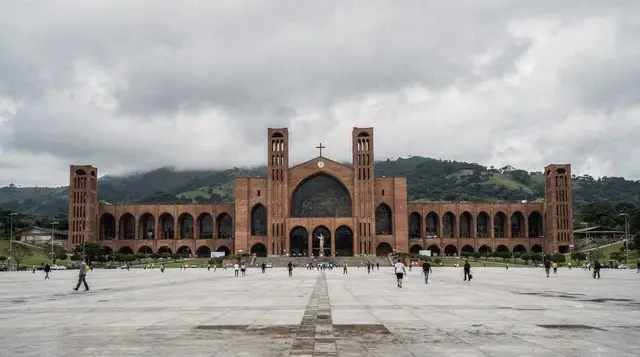
Holambra is short for Holland-America-Brazil, and the name is not a marketing flourish — it was founded in 1948 by Dutch immigrant farming families, mostly Catholic, who left a flooded and war-damaged Netherlands to grow flowers in the red soil of São Paulo’s interior. Windmills, gabled brick houses, and street names like Van Gogh and Rembrandt sit incongruously among mango trees and Brazilian license plates, about 140km northeast of São Paulo near Campinas. The town has grown into one of the largest flower and ornamental plant producers in Latin America, and for a few weeks each September, it puts on a show worth the drive.
| Where | Interior of São Paulo state, near Jaguariúna and Campinas |
| Cost | R$40–70 Expoflora entry; R$0 to wander the town and windmill |
| Time needed | Full day, given the distance from São Paulo |
| Getting there | Car recommended; limited direct public transport |
| Best time | September for Expoflora and tulips; quieter but pretty April–August |
Expoflora: the reason most people come
Expoflora is Holambra’s flagship event, typically running for about three weeks in September, and it is genuinely one of the more surprising things you can see near São Paulo: fields and pavilions of cultivated flowers, a floral parade, and — the headline attraction — thousands of tulips planted specifically for the festival, since tulips don’t grow naturally in Brazil’s climate and have to be forced with imported, pre-chilled bulbs. Entry runs roughly R$40–70 depending on the day and how far in advance you book, and weekends get considerably busier than weekdays. If your trip dates are flexible, a weekday morning during Expoflora gives you the flowers without the crowds.
Outside the festival window, the fields are still working nurseries — Holambra supplies a large share of Brazil’s cut flowers — but there’s no festival infrastructure, and a visit becomes more about the town itself than a big single attraction.
The town beyond the flowers
Holambra’s small historic center is built around a windmill (a working replica, not an original) and a set of Dutch-style buildings that house cafés, a cheese and chocolate shop or two, and a church with a distinctly European silhouette against a very Brazilian sky. It takes about an hour to walk the compact center properly. The town is genuinely calm — this is not a place with nightlife or much beyond a pleasant lunch and a stroll — which is either the appeal or the limitation, depending on what you’re looking for.
a guided day trip to Holambra’s flower farms handles the long drive for you and typically includes a stop at one of the working nurseries, which is worth doing even outside Expoflora season since it’s the actual industry the town is built on.
Getting there and the honest drive-time math
Holambra sits far enough from São Paulo — about 140–150km via the Anhanguera and Bandeirantes highways — that this is a genuine full-day commitment, not a quick half-day detour like São Roque or Embu das Artes. Budget 2 to 2h45 each way outside rush hour, and expect the return leg to be slower if you’re leaving in late afternoon, when traffic converging back toward São Paulo on both highways backs up from around 17:00. Public transport exists but involves a bus to Campinas or Jaguariúna and a local connection onward, which eats most of a day before you’ve seen a single flower — a car, rented or via tour, is the practical choice here.
a coffee culture and farm lunch tour covers similar interior countryside and can work as an alternative or a add-on if you’re building a longer trip through the region rather than a single-purpose flower run.
The Dutch immigration story, in more depth
The families who founded Holambra arrived through a Catholic immigration cooperative that resettled Dutch farmers displaced by the flooding, war damage, and rural economic collapse that followed the Second World War in the Netherlands. Rather than scattering individually, the group deliberately bought land together and planned a cooperative agricultural town from scratch — an unusually organized approach to immigration that shows in how tidy and planned Holambra still feels compared to organically grown Brazilian interior towns.
Early crops were more varied, but the founders’ horticultural background gradually steered the local economy toward ornamental flowers, and by the 1980s Holambra had become one of Brazil’s largest flower-producing regions, a position it still holds. The Dutch Reformed and Catholic churches both maintain a presence in town, and a small museum near the center covers the settlement’s founding in more detail than most visitors expect to find in an interior farming town.
Where to stay
Given the distance from São Paulo, an overnight stay is worth considering, especially if you’re visiting during Expoflora, when a full day rarely feels like enough and traffic on the return drive peaks in the evening. Holambra has a modest but genuine set of small hotels and pousadas, several styled with Dutch architectural touches to match the town, running roughly R$180–350 per night for a double room. Staying over also means you can catch the flower fields in the softer early morning light, before day-trip buses from São Paulo and Campinas start arriving mid-morning.
Shopping for plants and flowers
Beyond the festival, Holambra runs a permanent flower and plant retail circuit — the Cooperativa Veiling Holambra operates a large flower auction and retail complex that’s open to visitors even outside Expoflora, worth a stop if you’re interested in the industrial side of the flower business rather than just the festival spectacle. Serious gardeners sometimes plan a Holambra trip purely around buying orchids, bromeliads, and other plants at prices well below what the same specimens cost in São Paulo nurseries — though if you’re flying internationally, check phytosanitary import rules in your home country before buying live plants.
What to bring home
Cut flowers don’t travel well on a long car ride in Brazilian heat, but several shops sell dried arrangements, seeds, and bulbs (with phytosanitary paperwork if you’re taking them internationally — check requirements before buying). Local cheese and chocolate, made by descendants of the original Dutch families, are the more practical souvenirs.
Photography tips
Holambra rewards an early start: the windmill and Dutch-style buildings catch soft morning light before the day gets hazy, and during Expoflora the tulip fields are least crowded and most photogenic in the first hour or two after opening. Overcast days, common enough outside the peak of summer, actually flatter the flower fields better than harsh midday sun, which washes out color saturation in photos. If you’re chasing a specific shot of the windmill against a clear sky, aim for a weekday visit — the small plaza around it gets busy with tour groups on weekends.
A note on how Holambra differs from other flower destinations
It’s worth being clear about what Holambra is not: it isn’t a manicured botanical garden with year-round show gardens, and outside the Expoflora window, the “flower capital” framing can oversell what’s actually a working agricultural and horticultural town. What makes it worth the drive is the combination of the Dutch immigration story, the tulip-forcing spectacle during the festival, and the genuine scale of the flower industry here — not a curated, always-blooming display garden. Visitors expecting the latter sometimes come away underwhelmed if they’ve timed their trip outside September.
Frequently asked questions about visiting Holambra
When exactly is Expoflora?
Dates shift year to year but it generally runs for about three weeks in September; check the current year’s official dates before planning, since they aren’t fixed to a specific calendar date.
Is Holambra worth visiting outside Expoflora season?
It’s a pleasant, quiet half-day of windmills, nurseries, and a Dutch-style town center, but it’s a much smaller experience without the festival. Combine it with Campinas or another nearby stop if you’re visiting off-season.
How do I get to Holambra without a car?
Public transport means a bus to Campinas or Jaguariúna followed by a local connection, which is slow. A tour with direct pickup or a rental car is far more practical given the distance.
Are the tulips real?
Yes, real tulip bulbs are imported and pre-chilled to trick them into blooming outside their natural climate — a labor-intensive process specifically for the festival, which is part of why Expoflora only runs for a few weeks each year.
Is Holambra good for kids?
Yes — the flower fields, windmill, and open space work well for families, and Expoflora usually has activities aimed at children during the festival period.
Can I combine Holambra with Campinas in one day?
It’s possible since Campinas sits roughly on the route, but it makes for a long day. Splitting them across two days, or choosing one, is more comfortable.
Is there anywhere to stay overnight in Holambra?
There are a handful of small inns and pousadas, mostly useful during Expoflora when day-trip crowds make an early return less appealing. Most visitors still do it as a day trip from São Paulo.
Can I buy plants and flowers to take home?
Yes, the Cooperativa Veiling Holambra and various nursery outlets sell plants year-round at prices below São Paulo retail, though live plants crossing international borders usually need phytosanitary documentation — check your destination country’s import rules first.
Is Holambra safe?
Yes, it’s a small, low-crime town with a strong tourism-oriented economy; standard travel common sense applies as anywhere.
What language do people speak in Holambra?
Portuguese, as everywhere in Brazil — the Dutch heritage shows in architecture, street names, and some surnames, but it’s not a Dutch-speaking community today.
Fitting Holambra into a longer trip
Given the distance, Holambra makes most sense inside a seven-day São Paulo and around itinerary, where a full day can be set aside without compressing the rest of the trip. It pairs naturally with Campinas, roughly on the same route, and with Itu if you’re building an interior-focused loop. For the broader picture of what else is reachable, see the day trips from São Paulo guide and the coffee farm tours near São Paulo guide, which covers similar interior countryside. If you’re driving yourself, the guide to driving in São Paulo covers the rodízio rule and highway basics before you set off.