Aparecida basilica day trip
Is Aparecida worth a day trip from São Paulo, even if I'm not religious?
Yes, for the scale and atmosphere alone — the basilica holds around 45,000 people, making it one of the largest church buildings in the world, and the pilgrimage energy is striking even as a secular visitor. It's about 170 km from São Paulo via the Dutra highway, a 2 to 2h45 drive outside rush hour, and works well either as a standalone day trip or a stop en route toward Rio de Janeiro.
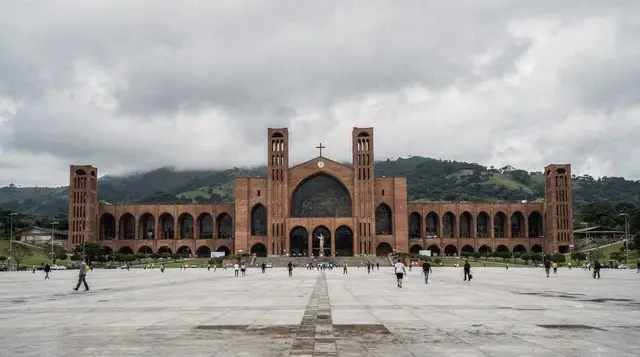
Aparecida is home to the Basílica de Nossa Senhora Aparecida, one of the largest Catholic sanctuaries in the world by capacity, holding roughly 45,000 worshippers and drawing millions of pilgrims annually to see Brazil’s patron saint, a small terracotta statue found in a river in 1717 and now the country’s most significant religious icon. You don’t need to be Catholic, or religious at all, to find the basilica genuinely impressive — the scale of the building alone, combined with the visible devotion of pilgrims from across Brazil, makes for one of the more unusual day trips near São Paulo, whether approached as a spiritual visit, an architectural one, or simply a stop on the way toward Rio de Janeiro.
| Where | Interior, ~170 km northeast of São Paulo via Rodovia Presidente Dutra (BR-116) |
| Cost | Free entry to the basilica; donations welcome; parking and food R$30–60 |
| Time needed | Half a day for the basilica alone, a full day combined with the old town |
| Getting there | Car (2h–2h45 outside rush hour), long-distance bus, or organised tour |
| Best time | Any time, but expect major crowds around October 12 and Catholic holidays |
The scale of the basilica
The current basilica, consecrated in 1980 after decades of construction, is built to accommodate the sheer volume of pilgrims Aparecida draws — its capacity of roughly 45,000 places it among the largest church buildings anywhere, and walking through the main nave gives a genuine sense of that scale in a way photographs don’t quite capture. The building’s modern, circular design differs from the older, smaller basilica nearby (now known as the Basílica Velha), which still stands as a reminder of the sanctuary’s more humble origins before it grew into its current form. Inside, the statue of Nossa Senhora Aparecida itself sits at the centre of continuous devotional activity — visitors lighting candles, praying, or simply observing — regardless of the day or time you visit.
Peak pilgrimage days and how they change a visit
October 12, the feast day of Nossa Senhora Aparecida and a national holiday in Brazil, is by far the busiest day of the year, drawing crowds so large that visiting specifically to avoid them, rather than to experience the peak devotional atmosphere, is worth planning around. Other Catholic holidays and weekends near major religious dates also bring noticeably larger crowds than an average weekday. If your interest leans more toward architecture and atmosphere without the crush of a peak pilgrimage day, a regular weekday visit gives a much more comfortable experience of the building itself, still with a steady, genuine flow of pilgrims rather than the overwhelming crowds of the feast day.
The old town and Basílica Velha
Beyond the main basilica, Aparecida’s older town centre and the Basílica Velha (Old Basilica) offer a smaller-scale, more historic counterpoint to the modern building’s scale — worth an extra hour if you’re not pressed for time. The streets around both basilicas are lined with religious souvenir shops selling everything from rosaries to statues of the saint, a genuine local economy built almost entirely around pilgrimage tourism, and browsing them gives a sense of the town’s identity beyond just the basilica building itself.
Getting there: the real tour options
Because Aparecida sits along the Dutra highway roughly midway between São Paulo and Rio de Janeiro, some visitors treat it purely as a stopover rather than a dedicated destination, which works well logistically but means budgeting less time than a dedicated day trip to the basilica with transport included deserves. For a dedicated day trip, the Aparecida cathedral tour covers the basilica directly with transport included, avoiding the need to navigate parking around the site, which can be genuinely difficult on any day with elevated pilgrim numbers. If your schedule has room to pair Aparecida with a mountain stop, some operators combine a version of this route with Campos do Jordão — see the Campos do Jordão guided tour and full-day private tour if a longer combined itinerary interests you, though note this makes for a genuinely long day given the distances involved on both legs.
Aparecida versus other interior and religious-interest day trips
| Aparecida | Holambra | São Roque | |
|---|---|---|---|
| Distance | ~170 km, 2h–2h45 | 140–150 km, 2h–2h45 | ~60 km, 1h–1h45 |
| Best for | Basilica, pilgrimage, en route to Rio | Flowers, windmills (best in September) | Wine, cachaça, countryside |
| Crowds | Heavy on Oct 12 and Catholic holidays | Heavy during Sept Expoflora weekends | Moderate, mostly Feb–Apr |
| Public transport | Reasonable — regular bus connections | Impractical — car needed | Impractical — car needed |
Etiquette and what to expect
Aparecida remains an active site of religious devotion, not a museum, and visitors — religious or not — should dress modestly and behave respectfully inside the basilica, particularly near the statue itself, where continuous prayer and candle-lighting take place regardless of the time of day, weekday or weekend. Photography is generally permitted in most areas but avoid using flash near worshippers, and be mindful of pilgrims who may be visiting under genuinely emotional or significant personal circumstances. Outside the basilica, the surrounding town operates like any other tourist-facing Brazilian town, with standard shops, cafés and casual restaurants, and normal conversational etiquette applies once you step outside the sanctuary grounds themselves.
The story behind the statue
The small terracotta statue at the centre of Aparecida’s significance was pulled from the Paraíba do Sul river in 1717 by fishermen who, according to tradition, had struggled for hours without a catch until the statue appeared in their net, followed immediately by an unusually large haul of fish. That founding story has grown into one of Brazil’s most significant religious narratives over the following three centuries, and the statue itself — small, dark, unassuming — sits in striking contrast to the vast modern basilica built specifically to house it and accommodate the millions of pilgrims who now visit annually. Understanding this origin story adds real context to what can otherwise feel like an abstractly large building to visitors without prior familiarity with the site’s history.
Aparecida’s role in Brazilian Catholicism
Nossa Senhora Aparecida was formally declared Brazil’s patroness in 1930, and the sanctuary has since grown into the most significant pilgrimage site in the country, drawing comparisons to other major global Marian shrines in terms of annual visitor numbers. Brazilian presidents and other national figures have historically made public visits to Aparecida, particularly around the October 12 feast day, reflecting the site’s significance beyond purely religious circles into broader national culture and identity. For visitors interested in understanding Brazilian culture more broadly, Aparecida offers a window into a dimension of the country — devotional Catholicism at genuinely enormous scale — that’s easy to miss entirely if your trip stays within São Paulo’s more secular, cosmopolitan core.
Shopping for religious souvenirs
The streets immediately surrounding both basilicas are lined with shops selling religious items — rosaries, statues of Nossa Senhora Aparecida in various sizes and materials, framed images, and candles — priced modestly and clearly aimed at the steady stream of pilgrims rather than casual tourists specifically. Even visitors without religious interest often find these shops worth a browse simply for the density and variety of devotional craft on display, a genuine local industry that’s grown up entirely around the sanctuary’s pilgrimage economy over the past century.
Food near the basilica
Casual restaurants and food stalls cluster around both the new and old basilicas, serving straightforward Brazilian fare aimed at day-trippers and pilgrims rather than a food-tourism crowd — reliable rather than remarkable, and reasonably priced at roughly R$30–60 (US$6–12) per person for a full meal. If you’re combining the visit with a longer drive toward Rio de Janeiro, this is a sensible stop for a proper meal before continuing rather than relying on highway service-station food further along the Dutra.
Aparecida for photography
The basilica’s scale and the natural light filtering through its stained-glass and modern architectural elements make it a genuinely rewarding subject for photography, particularly the wide, uninterrupted view from the main entrance looking down the nave. As with any active religious site, be considerate of worshippers in frame and avoid flash near the statue itself; the building’s ambient lighting is generally sufficient without it.
Accessibility at the basilica
The modern basilica was built with wide, level entrances and ramped access throughout its enormous circular nave, making it genuinely one of the more accessible major religious sites covered anywhere on this site — wheelchair users and visitors with limited mobility can move through the main worship space and reach the statue area without navigating steps. The older Basílica Velha, by contrast, reflects its 18th-century origins with narrower doorways and some uneven flooring, though it’s small enough that most of it can still be seen without extensive walking. The bigger accessibility challenge on a busy day is crowd density rather than the building itself — on October 12 or a major Catholic holiday, navigating the sheer volume of pilgrims can be difficult regardless of mobility, which is one more reason a regular weekday makes for a more comfortable visit if accessibility is a significant factor in your planning.
Aparecida with kids, and as a solo traveller
Families with children generally find Aparecida a manageable, low-key day — the basilica’s scale is genuinely impressive to most kids, there’s plenty of open space to move around without the tight crowding of a typical museum, and the surrounding town has straightforward, unfussy food options that don’t require any special planning. The one thing worth preparing children for in advance is the religious solemnity of the space itself — it’s an active site of devotion, not a playground, and a brief conversation beforehand about quiet, respectful behaviour near worshippers goes a long way.
Solo travellers find Aparecida equally easy: public buses run reliably from São Paulo, the town itself is safe and oriented entirely around pilgrim foot traffic during daylight hours, and there’s no particular need for a guide or group to get the most out of the visit, unlike some of the more spread-out interior day trips covered elsewhere on this site where a car genuinely changes what’s practical to see.
Frequently asked questions about an Aparecida day trip
Is Aparecida worth visiting if I’m not Catholic or religious?
Yes — the scale of the basilica and the visible devotion of pilgrims make for a genuinely striking visit regardless of personal belief, more architectural and cultural than strictly religious for a secular visitor. Many non-religious visitors describe it as one of the more memorable stops on a wider São Paulo-area trip precisely because it’s so different from everything else on a typical itinerary.
What’s the best way to avoid crowds?
Visit on a regular weekday outside major Catholic holidays; October 12 specifically draws the largest crowds of the year by a significant margin, with traffic on approach roads backing up for hours in both directions.
How long does the drive take?
2 to 2h45 outside rush hour via the Dutra highway (BR-116); longer during holiday periods when the route sees heavier long-distance traffic toward Rio de Janeiro, and significantly longer around October 12 given the volume of pilgrims making the same trip.
Can I combine Aparecida with a trip toward Rio de Janeiro?
Yes — its position roughly midway along the Dutra highway makes it a natural stopover for anyone driving or busing between São Paulo and Rio, worth building into that route rather than treating purely as a round trip. Budget an extra hour or two beyond a straight-through drive to do the basilica justice rather than a rushed five-minute stop.
Is there an entry fee for the basilica?
No, entry is free, though donations are welcomed and support the sanctuary’s operations; some smaller side chapels or exhibits may have modest fees.
Is Aparecida a reasonable stop for travellers planning a broader multi-day trip?
Yes — it fits naturally as a waypoint for anyone road-tripping or bus-travelling between São Paulo and Rio de Janeiro, rather than requiring a separate dedicated trip if your itinerary already covers that route.
Is public transport realistic for this trip?
Yes, more so than most interior day trips in this guide — regular long-distance buses connect São Paulo to Aparecida, making it one of the more accessible options without a car. See long-distance buses from São Paulo for schedules and terminal information.
What should I wear?
Modest, respectful clothing given the basilica’s active religious function — avoid very casual beachwear-style clothing, even though the rest of the day may otherwise feel like a standard sightseeing trip.
How does Aparecida compare to other major pilgrimage sites globally?
It draws visitor numbers comparable to some of the world’s largest Marian shrines, and the basilica’s capacity places it among the largest church buildings anywhere — a genuinely significant site by international standards, not just a regional curiosity.
Can I visit both the old and new basilicas in a single trip?
Yes, easily — they’re a short walk apart, and most visitors cover both within a half-day visit, with the newer basilica taking up the bulk of the time simply given its scale.
Combining with a longer road trip
For visitors continuing on to Rio de Janeiro rather than returning to São Paulo, Aparecida works naturally as a planned stop along the way rather than a dedicated round trip — the Dutra highway connecting the two cities passes close enough that a detour of only a few kilometres brings you to the sanctuary. This is a genuinely efficient way to see Aparecida without sacrificing a full day purely to the round-trip drive from São Paulo, and it’s worth factoring into your planning if your itinerary already includes a leg toward Rio. For visitors interested in comparing the two cities more broadly as part of a longer Brazil trip, see São Paulo vs Rio de Janeiro.
Practical tips for the day
Parking near the basilica can be genuinely difficult on any day with elevated pilgrim numbers, including most weekends, so arriving early or using a tour with transport arranged solves a real logistical headache. Comfortable shoes matter given the amount of walking involved between the new and old basilicas and the surrounding shopping streets. Cash is useful for the smaller religious-souvenir shops and food stalls, many of which don’t reliably accept cards, similar to the pattern described in money in Brazil.
Fitting Aparecida into your trip
Aparecida fits well into a five-day itinerary or seven-day itinerary, and its position along the Dutra highway makes it a natural stop if your broader trip includes a leg toward Rio de Janeiro. For the wider comparison of every day trip near São Paulo, see the best day trips from São Paulo and which day trip from São Paulo to choose.
Best day trips from São Paulo on GetYourGuide
Verified deep-linked GetYourGuide tours. Book through these links and we earn a small commission at no cost to you.
These are our own photographs of São Paulo, not the operator's pictures of this tour — open the tour page to see those.