Cachaça and caipirinha explained
What is cachaça and how is a proper caipirinha made?
Cachaça is Brazilian spirit distilled from fresh sugarcane juice, distinct from rum, which is made from molasses. A proper caipirinha is muddled lime, sugar, ice and cachaça — nothing else. Expect R$18–35 for a well-made one at a bar; anything much cheaper near a tourist zone is likely cutting corners.
Cachaça is Brazil’s national spirit and the caipirinha is its most famous export, but both get flattened into a single tourist-menu idea abroad that doesn’t match how either is actually treated in São Paulo. This guide covers what makes cachaça distinct, how to tell a properly made caipirinha from a lazy one, and where in the city to drink both without overpaying.
| Where | Bars city-wide; best versions in Vila Madalena, Pinheiros and Jardins |
| Cost | R$18–35 for a well-made caipirinha; premium aged cachaça flights run higher |
| Time needed | No dedicated time — fits into any evening out |
| Getting there | Wherever you’re already having dinner or drinks |
| Best time | Any evening; happy hour (roughly 5pm–8pm) often has better pricing |
What cachaça actually is
Cachaça is distilled from fresh-pressed sugarcane juice, which is what separates it from rum, typically distilled from molasses, a byproduct of sugar refining. That difference in raw material gives cachaça a distinct grassy, vegetal character that rum doesn’t have. Brazil produces thousands of brands, ranging from industrial mass-market bottles to artisanal, single-estate cachaças aged in native Brazilian wood (amburana, jequitibá) that develop complexity closer to a fine spirit than the generic image most visitors arrive with. If you only know cachaça from a bad hostel-bar caipirinha, it’s worth trying a proper aged one neat to reset expectations — the difference is significant.
The caipirinha, made properly
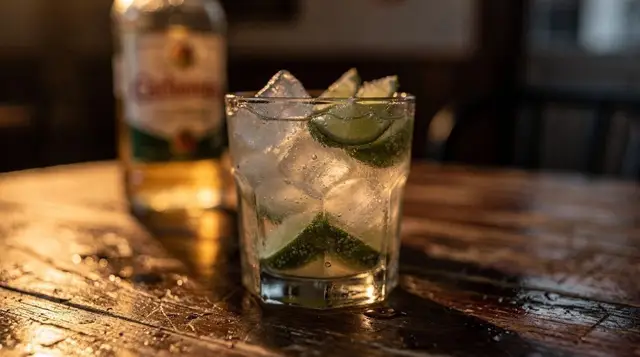
A correct caipirinha is exactly four ingredients: fresh lime (quartered, muddled to release oils without pulverising the peel into bitterness), sugar, ice and cachaça, shaken or stirred together. There’s no juice concentrate, no syrup substitute, no pre-made mix involved in a properly made one. The most common shortcut that ruins a caipirinha is using bottled lime juice instead of fresh limes muddled to order — it’s faster for a bar to make but noticeably flatter in flavour. If a caipirinha arrives looking suspiciously uniform or costs R$10–12 in a touristy area, that’s usually the tell.
Cachaça in Brazilian culture beyond the bar
Cachaça isn’t purely a cocktail base — it carries real cultural weight in Brazil, historically tied to sugarcane’s role as the country’s original colonial cash crop and, less pleasantly, to the labour history of enslaved workers who built that industry. It also shows up in religious and folk contexts, offered as part of Afro-Brazilian religious practices like Candomblé and Umbanda, where specific cachaças are associated with specific orixás (deities). None of this is something you’ll necessarily encounter directly as a visitor, but it’s worth knowing that the spirit carries more cultural depth than its casual, party-drink image abroad suggests — a useful bit of context if a bartender or guide brings it up, since it’s a genuine point of national pride rather than a footnote.
Variations worth trying
Caipiroska swaps cachaça for vodka — common, but not the traditional version and generally considered inferior by Brazilians who take the drink seriously. Caipifruta adds other muddled fruit (maracujá/passion fruit and morango/strawberry are the most common) alongside or instead of lime, a good option if straight lime is too sharp for you. Some of the city’s better cocktail bars now build entirely original drinks around aged, single-estate cachaças rather than defaulting to the classic caipirinha format — worth seeking out if you’re already familiar with the standard version and want to see what serious bartenders do with the spirit.
How cachaça is actually made
Sugarcane is harvested, pressed for its juice, and that juice is fermented and distilled directly — a shorter, more direct process than rum’s route through molasses, and one that preserves more of the plant’s original character in the final spirit. Industrial cachaça, made in large-scale column stills, accounts for the vast majority of what’s exported and sold internationally, and it’s what built cachaça’s somewhat rough, low-quality reputation abroad.
Artisanal cachaça, distilled in smaller pot stills often on family-run estates, is a genuinely different product — more expensive, more variable batch to batch, and increasingly the version serious bars and shops focus on. Brazil has over 40 native wood species used for aging cachaça, each imparting a different character: amburana brings warm cinnamon and vanilla notes, jequitibá is softer and rounder, and carvalho (oak) gives a profile closer to what whisky or rum drinkers might expect. This range of aging woods is unique to cachaça and doesn’t have a direct equivalent in rum or whisky production.
Regional differences worth knowing
Cachaça production varies meaningfully by region, similar to how tequila production differs across Mexico or whisky differs by Scottish region. Minas Gerais is generally considered the country’s premium cachaça-producing state, with a long artisanal tradition and legal protections (similar to a denomination of origin) for cachaça produced there. Pernambuco and other north-eastern states have their own distinct styles, often associated with sugarcane-growing regions with centuries of production history. São Paulo state produces cachaça too, though it’s less internationally recognised than Minas Gerais specifically. If a bar’s cachaça list names specific states or estates rather than generic brand names, that’s usually a signal of a more serious selection worth exploring.
Where to drink one properly
Vila Madalena has the highest concentration of bars taking cachaça seriously, from casual botecos to dedicated cocktail bars with extensive cachaça lists. The bars in Vila Madalena guide covers specific recommendations. Pinheiros and Jardins have a smaller but growing number of serious cocktail bars doing the same. The São Paulo cocktail bars guide covers the higher end specifically, including bars building original drinks around Brazilian spirits.
Wine tasting with live jazz and blues is a good evening option if you want a broader drinks experience beyond cachaça specifically, set in a relaxed live-music environment rather than a standard bar crawl.
| Casual boteco | Neighbourhood cocktail bar | Tourist-zone restaurant | |
|---|---|---|---|
| Caipirinha quality | Good, straightforward | Best — fresh, well-balanced | Often cut with concentrate |
| Price | R$15–25 | R$25–40 | R$18–30 (often worse value) |
| Atmosphere | Casual, local | Curated, sometimes upscale | Generic |
What to look for on a bottle label
If you’re buying cachaça to take home or just want to understand what you’re being poured, a few label terms are worth recognising. “Cachaça artesanal” (artisanal) signals pot-still, smaller-batch production rather than industrial column-still output. “Envelhecida” or “ouro” (aged/gold) means it’s spent time in wood; “prata” or “branca” (silver/white) means unaged, the standard base for cocktails. A specific wood name (amburana, carvalho, jequitibá) on the label indicates a more premium, deliberately crafted product worth trying neat rather than mixed. Alcohol content typically runs 38–48%, similar to most spirits, though it can vary slightly by producer.
Tasting cachaça beyond the cocktail
If you want to understand cachaça as a spirit rather than just a cocktail ingredient, look for a bar or shop offering a flight of aged cachaças — comparing an unaged (branca/prata) cachaça against one aged in amburana wood shows the range the spirit is capable of, similar to comparing an unaged tequila against a reposado. A Brazilian drinks tasting kit is a convenient way to sample a curated range without needing to hop between multiple bars.
The history behind the drink: sugar, gold, and Paraty
Cachaça’s story starts earlier than most visitors assume — sugarcane spirit was being distilled in Brazil within decades of Portuguese colonisation in the 1500s, making it one of the oldest distilled spirits in the Americas, older than most rum production in the Caribbean. Its old folk nickname, “pinga,” comes from the drip of the still during distillation, and it was for centuries the drink of enslaved workers and the rural poor, looked down on by the colonial elite who preferred imported Portuguese wine. That class association lingered for generations and is part of why cachaça had to work harder than other national spirits to earn the premium reputation the best artisanal producers now command.
The coastal town of Paraty, roughly four hours from São Paulo, became a genuine historic centre of cachaça production during the colonial period, and the Caminho do Ouro (Gold Trail) that once carried gold and goods between the coast and the interior passed directly through cachaça-producing estates. Several of those historic engenhos (sugar and cachaça mills) around Paraty still operate and offer tastings today, and it’s a legitimate reason on its own to add Paraty to an itinerary — see the Paraty destination guide and the Paraty from São Paulo day-trip guide for how to fit it in.
Classic cachaça drinks beyond the caipirinha
The caipirinha dominates outside Brazil, but it’s far from the only cachaça drink worth knowing. A batida blends cachaça with fruit juice or pulp — maracujá (passion fruit), coco (coconut) and limão (lime) are the most common — and often a splash of condensed milk, producing something closer to a creamy, dessert-like cocktail than the sharp, citrus-forward caipirinha. Quentão is a hot, spiced cachaça drink with ginger, cinnamon and cloves, traditionally served during the Festa Junina winter festivals in June; if you’re visiting São Paulo during the cooler months, it’s worth seeking out at a Festa Junina event rather than a regular bar, since it’s seasonal and tied to that specific celebration. There’s also a home-remedy tradition of cachaça mixed with honey and lime as a folk treatment for a sore throat or cold — not something a bar will serve, but a detail that comes up often enough in conversation with Brazilians that it’s worth knowing the reference when you hear it.
Making a caipirinha properly at home
If you want to recreate a proper caipirinha after the trip, the ratio that most serious Brazilian bartenders use is one whole lime (quartered), one to two teaspoons of sugar, and 50ml of cachaça per drink, built directly in the glass rather than shaken separately. Muddle the lime and sugar together first, gently — enough to release the juice and oils from the peel without crushing the white pith, which turns bitter if over-worked. Add crushed or cubed ice, pour the cachaça over the top, and stir rather than shake. The most common mistake people make trying this at home is using bottled lime juice instead of fresh limes, or over-muddling the peel — both flatten the balance that makes a well-made caipirinha work. A mid-range artisanal cachaça, rather than the cheapest bottle available, makes a noticeably bigger difference to the final result than most other ingredient choices in the drink.
Bringing bottles home: what to know
Cachaça is one of the more practical spirit souvenirs, since it travels well and isn’t especially fragile if packed properly in checked luggage, ideally wrapped in clothing inside a sealed bag in case of breakage. Most countries allow one to two litres of spirits per adult traveller through duty-free allowances, though this varies by destination — check your home country’s specific limit before assuming a full bottle is automatically fine. Buying at a proper liquor store or the airport’s duty-free section, rather than an unlabelled bottle from an informal market stall, is worth the small price difference for both quality assurance and a label your customs declaration will actually recognise. A mid-range artisanal bottle in the R$60–150 range travels well as a gift and represents genuinely better quality than most cachaça available outside Brazil, where the export market skews heavily toward cheaper industrial brands.
Cachaça’s export push, and why it lags behind tequila
For decades, cachaça producers and Brazilian trade bodies have pushed to build the spirit’s international profile the way Mexico built tequila’s, and it’s a useful comparison for understanding where cachaça currently sits on the world stage. Tequila benefited from decades of sustained marketing investment, Hollywood visibility, and a legal designation of origin recognised well beyond Mexico’s borders; cachaça has comparable legal protections domestically and a genuinely comparable production tradition, but far less international marketing muscle behind it, and export volumes remain a fraction of what leaves Mexico annually.
That gap is closing slowly as premium, artisanal producers gain attention from international bartenders and spirits critics, but it means a curious visitor in São Paulo is still getting meaningfully ahead of where most of the rest of the world currently stands with this spirit — trying a well-made aged cachaça here is a genuine discovery in a way that trying a good tequila abroad generally isn’t anymore.
Where to buy bottles to take home
Beyond the general souvenir advice already covered, a few specific shopping options are worth knowing if cachaça is a priority purchase. Specialty liquor shops in Jardins and Pinheiros carry a curated range of artisanal producers well beyond what a supermarket or airport duty-free stocks, with staff generally able to talk through regional differences and recommend a bottle based on your budget and whether you want something to sip neat or mix into cocktails at home. The Rua 25 de Março guide covers a very different, bulk-oriented shopping experience where cachaça sometimes turns up at low prices, though quality assurance is far less reliable there than at a dedicated liquor shop — fine for a cheap bottle to use in cocktails, not the place to buy something you plan to drink neat as a serious spirit.
Frequently asked questions about cachaça and caipirinhas
Is cachaça the same as rum?
No — cachaça is distilled from fresh sugarcane juice; rum is typically distilled from molasses. The production difference gives cachaça a distinct flavour profile.
What’s a fair price for a caipirinha in São Paulo?
R$18–35 at a proper bar or restaurant. Significantly cheaper in a tourist zone is a warning sign for quality; significantly more at an upscale cocktail bar reflects premium ingredients and setting, not necessarily a rip-off.
Should I try aged cachaça, or is unaged fine?
Both are legitimate — unaged (branca) cachaça is what most cocktails use and is meant to taste bright and grassy. Aged cachaça, sipped neat, shows a completely different, more complex side of the spirit and is worth trying at least once.
What’s the difference between caipirinha and caipiroska?
Caipirinha uses cachaça; caipiroska substitutes vodka. Caipirinha is the traditional, more respected version among Brazilians.
Can I buy cachaça to bring home?
Yes — it’s a genuinely good souvenir, and quality bottles are available at reasonable prices compared to what specialty imported cachaça costs abroad. See the what to bring home from São Paulo guide.
Is it rude to order a caipirinha with vodka instead of cachaça?
Not rude, just understood as a different, less traditional drink — bartenders will make it without issue, but don’t expect it to be treated as equivalent to the real thing.
Are there non-alcoholic versions?
Some bars offer a “caipirinha sem álcool” using just lime, sugar and soda water, though it’s a less common request — ask directly if you want one.
What’s the difference between cachaça from Minas Gerais and other regions?
Minas Gerais has the strongest artisanal tradition and legal protections similar to a denomination of origin, generally considered the country’s premium cachaça-producing state. Other regions, including Pernambuco and São Paulo state itself, have their own distinct but less internationally recognised production traditions.
What does aging in different woods actually change?
It changes flavour significantly — amburana wood gives warm cinnamon and vanilla notes, jequitibá is softer and rounder, and carvalho (oak) produces a profile closer to whisky or rum. Brazil uses dozens of native wood species for aging, a range unique to cachaça production.
Is industrial cachaça worth avoiding entirely?
Not necessarily for cocktails — a decent industrial cachaça works fine in a caipirinha, where lime and sugar balance the spirit. For sipping neat, an artisanal, pot-distilled cachaça is a meaningfully better experience and worth the higher price.
Fitting this into your trip
A caipirinha or two fits into any evening out rather than needing dedicated time — pair it with a Vila Madalena bar crawl on the São Paulo weekend itinerary, or work it into any evening of a three-day or longer trip.
São Paulo food & drink tours on GetYourGuide
Verified deep-linked GetYourGuide tours. Book through these links and we earn a small commission at no cost to you.
These are our own photographs of São Paulo, not the operator's pictures of this tour — open the tour page to see those.