Three days in São Paulo
Three days is the itinerary most first-time visitors should actually plan for — enough to cover the historic centre, the Japanese immigrant neighbourhood of Liberdade, the modern spine of Avenida Paulista, the green expanse of Ibirapuera, and a full day in Vila Madalena, without turning every afternoon into a race against traffic. This plan groups neighbourhoods that sit close together on the same day, which is the single biggest lever for keeping a São Paulo itinerary realistic. For a faster version, see the two-day itinerary; for a slower one that adds a day trip outside the city, see the four-day itinerary.
| Where | Centro Histórico, Liberdade, Avenida Paulista, Ibirapuera, Vila Madalena |
| Cost | R$500–900 per person over three days (about US$100–180), excluding tours |
| Time needed | Three full days |
| Getting there | Metro Lines 1 Blue, 2 Green and 4 Yellow cover almost the entire route |
| Best time | Any weekday; Sunday works for Liberdade specifically, since its street market runs Saturdays and Sundays |
Day one: Centro Histórico and Liberdade
Morning, 9am–1pm: the historic centre
Start at Praça da Sé (metro Sé, Lines 1 Blue and 3 Red). The cathedral, the short walk to Pateo do Collegio — the reconstructed chapel marking the city’s 1554 founding — and the Farol Santander observation tower (R$30–40, about US$6–8) form the core of the morning. A São Paulo city tour is a reasonable way to cover this ground plus Paulista later if you’d rather have one guided thread running through the whole trip. Full detail, including the Galeria do Rock detour, is in the Centro Histórico walking guide.
Afternoon, 2pm–6pm: Liberdade
This is the easiest neighbourhood transition in the entire itinerary — Liberdade sits one metro stop south of Sé on Line 1 Blue, five minutes door to door, no traffic risk at all. Liberdade is the historic heart of São Paulo’s Japanese immigrant community, the largest outside Japan, marked by red torii-style lampposts along Rua Galvão Bueno and a weekend street market in Praça da Liberdade selling food, crafts and small antiques. A guided walking tour of Liberdade and Templo Lohan gets you into a working Buddhist temple most visitors walk past without noticing. If your three days include a Saturday or Sunday, prioritise Liberdade for that day — the market is a genuinely different experience from a quiet weekday visit. Full detail is in the Liberdade guide.
Dinner: stay in Liberdade for a set-menu Japanese meal, R$40–70 per person — noticeably better value here than the Japanese restaurants scattered elsewhere in the city. If you’d rather eat before heading into Liberdade, Famiglia Mancini in nearby Bela Vista is a reasonable alternative for a sit-down Italian trattoria meal, R$50–80 per person, though it’s a genuinely different register from the neighbourhood you’ve just spent the afternoon in.
A note on the Farol Santander queue
Go up the Farol Santander before midday if you can — the queue for the observation deck is manageable in the morning and grows noticeably through the early afternoon as tour groups arrive. If you’re travelling with a private guide, ask about skip-the-line access; without one, budget an extra 20–30 minutes of waiting if you arrive after 1pm.
Day two: Avenida Paulista and Ibirapuera
Morning, 9:30am–1pm: Avenida Paulista
Metro to Consolação or Trianon-MASP on Line 4 Yellow, 15–20 minutes from most central hotels and reliably the fastest option, since surface traffic around Paulista is heavy from mid-morning. MASP’s collection is the anchor here; a skip-the-line MASP entrance with a guided tour saves real time versus the walk-in queue, which grows through the afternoon. Full detail on the avenue and its side streets is in the Avenida Paulista guide and the MASP visiting guide.
Lunch near Paulista: Ritz on Alameda Franca, a short walk into Jardins, R$60–90 per person, is a reliable choice if you want a proper sit-down meal without wandering far. If you’d rather eat faster and get back to sightseeing, the food court in Shopping Cidade São Paulo, directly on the avenue, runs R$25–45 and saves the walk into Jardins entirely.
Afternoon, 2:30pm–6pm: Ibirapuera Park
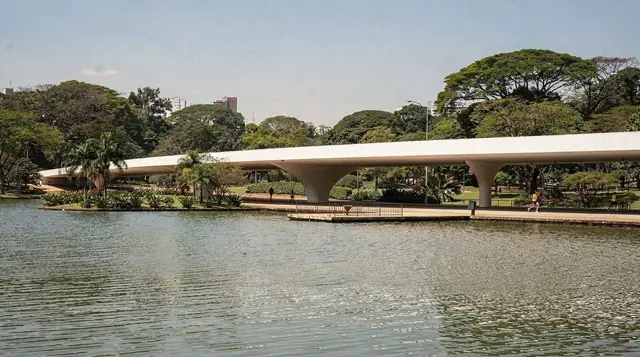
Ibirapuera has no direct metro station — take Line 1 Blue or 2 Green to Ana Rosa, then a 15–20 minute walk, a short bus, or a rideshare from Paulista, which runs 15–25 minutes in the early-to-mid afternoon but stretches badly if you delay past 5pm, when Avenida 23 de Maio backs up. The park’s Marquise — the long concrete canopy connecting several Oscar Niemeyer buildings — anchors a slower walk than the morning’s museum pace; the Bienal pavilion and the Auditório Ibirapuera are both along it. If you have energy left by late afternoon, the boating lake and the wide paths around the Obelisco are a pleasant, unstructured way to close out the day before heading back for dinner. Full detail is in the Ibirapuera Park guide.
Day three: Vila Madalena
All day, 10am–late
Vila Madalena deserves the least rushed day of the three. Take Line 4 Yellow directly to Vila Madalena station — a straightforward, traffic-free trip from anywhere else on this itinerary. Spend the morning and early afternoon on the neighbourhood’s murals and the Beco do Batman alley; a street art bike tour is a good option if you want to cover Vila Madalena and adjacent Pinheiros streets in a single guided loop. Full walking detail is in the Vila Madalena guide and the Beco do Batman guide.
By early evening, the neighbourhood shifts character — this is where the city’s most concentrated bar scene lives, on and around Rua Aspicuelta and Rua Wisard. See the Vila Madalena bars guide for where to go rather than wandering in on a Friday or Saturday night, when the best spots fill early.
Where to stay for this itinerary
Given the geography above, a hotel near Avenida Paulista or in Jardins is the most central choice for this specific three-day route — it sits roughly between the day one and day two neighbourhoods, and Vila Madalena on day three is a short, direct metro ride away on Line 4 Yellow. Staying in Vila Madalena itself works too, especially if you’d rather end each day close to dinner and drinks, but factor in a slightly longer commute back from Centro Histórico on day one.
Three days, side by side
| Day one | Day two | Day three | |
|---|---|---|---|
| Character | Colonial and immigrant history | Corporate and modernist | Bohemian and residential |
| Pace | Steady, two clear blocks | Museum morning, park afternoon | Slow morning, social night |
| Weekend note | Best on a Saturday or Sunday for the Liberdade market | Works any day | Best on a Friday or Saturday night |
Weather and closures: the honest plan B
Three days is enough to reshuffle around one bad-weather afternoon without losing the whole trip. December through March brings sharp, predictable thunderstorms most days, usually building from around 2pm and clearing by early evening — the risk window overlaps directly with day two’s Ibirapuera afternoon and day three’s Vila Madalena street art walk. If the forecast looks rough for a specific afternoon, swap it with whichever other day still looks dry: MASP and the Pinacoteca are both fully indoor and can absorb an extra hour if you need to wait out a storm, while Liberdade’s covered market stalls on day one hold up reasonably well under light rain, if less so under a genuine downpour.
Mondays cut into this plan more than the weather does. MASP and the Pinacoteca both close on Mondays, along with most of the city’s other major museums. If day two lands on a Monday, treat MASP as an outside-and-plaza stop only and spend the recovered hour on a slower walk of Paulista’s side streets into Jardins instead — the avenue itself and its architecture don’t depend on the museum being open. The Farol Santander tower on day one and the parks and markets throughout this itinerary run daily, Mondays included.
Three days, real costs by day
| Day one | Day two | Day three | |
|---|---|---|---|
| Transport | R$10–15 | R$10–15 | R$5–10 (mostly walking once there) |
| Food | R$90–160 (lunch, Liberdade dinner) | R$85–150 (lunch, dinner in Jardins) | R$80–150 (bar-heavy evening) |
| Entries | R$30–40 (Farol Santander) | R$0–70 (optional MASP) | R$0–40 (optional bike tour) |
| Daily total | R$130–215 | R$95–235 | R$85–200 |
This lands within the R$500–900 range from the summary table, with day two carrying the widest swing depending on whether MASP’s galleries are part of the plan.
What to sacrifice if a day runs long
Day one: cut the Galeria do Rock detour before cutting Liberdade — the neighbourhood transition is effortless and the afternoon there is the more memorable half of the day. Day two: if you’re behind by mid-afternoon, see MASP’s building and plaza only rather than skipping Ibirapuera entirely; the park doesn’t have a closing-time cutoff the way a museum queue does, so it absorbs a later start better. Day three: if Vila Madalena’s murals eat more time than planned, that’s fine — this is the one day in the itinerary built with slack, since there’s nothing scheduled after it.
Rush-hour timing, leg by leg
The metro legs in this itinerary barely change with the clock — that’s the whole point of relying on it. The rideshare and walking legs are a different story:
| Leg | Off-peak | 7am–10am or 5pm–8pm |
|---|---|---|
| Sé to Liberdade (metro) | 5 min | 5 min — the metro barely slows during rush hour |
| Consolação/Trianon-MASP to Ana Rosa (rideshare) | 15–25 min | 30–45 min |
| Ana Rosa to Ibirapuera entrance (walk) | 15–20 min | 15–20 min — walking pace doesn’t change with traffic |
| Vila Madalena to a Jardins-area hotel (rideshare) | 15–25 min | 25–40 min |
The pattern holds across this whole site: metro legs are close to fixed, walking legs are always fixed, and anything involving a car or rideshare during the 7am–10am or 5pm–8pm windows should get real padding. If you’re deciding when to schedule the one flexible transition in this itinerary — Paulista to Ibirapuera on day two — an early-afternoon departure beats both a rushed lunch and a post-5pm departure by a wide margin.
Frequently asked questions about three days in São Paulo
Is this the best order to do these five neighbourhoods in?
It’s the most traffic-efficient order, since Centro Histórico and Liberdade are a five-minute metro hop apart, and Paulista and Ibirapuera are the only pairing that requires real transit planning. You can swap day three to the start if you’d rather ease into the trip with a slower neighbourhood first.
Should I visit Liberdade on a weekday or a weekend?
Weekend if you can arrange it — the Praça da Liberdade street market runs Saturdays and Sundays and is a genuinely different experience from a quiet weekday walk past shuttered market stalls.
How much walking does this itinerary involve?
A moderate amount each day, roughly 5–8km, mostly flat except for Vila Madalena’s hilly streets. None of it is strenuous, but comfortable shoes matter more than in most cities given São Paulo’s uneven pavements.
Can I add a day trip to this three-day plan?
Yes — the natural add is Santos or Embu das Artes as a fourth day. See the four-day itinerary, which adds exactly that.
Is three days enough to understand São Paulo’s food scene?
No — three days covers geography, not food depth. If eating well matters more to you than sightseeing, consider swapping this plan for the dedicated food lover’s São Paulo itinerary, which covers different but overlapping ground.
What’s the single biggest mistake to avoid on this itinerary?
Trying to add a sixth stop, usually squeezed between Paulista and Ibirapuera on day two. The traffic between those two alone is the tightest part of this plan; adding another leg risks losing the whole afternoon.
Do I need cash, or does everything take cards?
Cards and Pix work almost everywhere, including small stalls at the Liberdade market and street food vendors. Carry some small cash regardless, since a handful of informal vendors are cash-only.
Is this itinerary suitable in the rainy season?
It’s manageable — December through March brings warm temperatures and sharp afternoon thunderstorms rather than all-day rain, so mornings are usually fine and afternoons are the risk. MASP and the Pinacoteca are useful indoor fallbacks if a storm hits during the Paulista day; see the what to do in São Paulo when it rains guide for more.
How far in advance should I book guided tours for this trip?
A few days ahead is usually enough for the tours referenced in this itinerary, though popular time slots — especially MASP skip-the-line entry on weekends — can sell out closer to the date. Booking a week ahead removes the risk entirely.
Extending this plan
If three days becomes four or five, the natural additions are a coast day trip to Santos or a crafts-focused stop in Embu das Artes — see the four-day itinerary and five-day itinerary for how those slot in. If you’re specifically drawn to the museums and modernist buildings touched on here, the art and architecture itinerary goes considerably deeper into the same territory.
tours.3 days
Verified deep-linked GetYourGuide tours. Book through these links and we earn a small commission at no cost to you.
These are our own photographs of São Paulo, not the operator's pictures of this tour — open the tour page to see those.