Brazilian fruit you should try
What Brazilian fruits should I try in São Paulo?
Jabuticaba, cupuaçu, graviola, açaí in its unsweetened savoury form, and caju (cashew fruit) are the ones that don't travel abroad and are worth prioritising. Feiras livres (weekly street markets) and juice bars are the easiest places to find them, typically R$5–15 per portion.
Brazil has one of the widest ranges of edible fruit in the world, much of it from the Amazon and Atlantic Forest biomes and genuinely rare to find outside the country because it doesn’t survive export well. São Paulo, as Brazil’s largest consumer market, pulls in fruit from across the country — this is one of the easiest, cheapest ways to experience something distinctly Brazilian on a trip, and it barely requires planning.
| Where | Feiras livres (weekly street markets), juice bars, supermarkets |
| Cost | R$5–15 for a portion or juice; R$3–10/kg at markets |
| Time needed | No dedicated time needed — fits into any walk or market visit |
| Getting there | Feiras livres rotate by neighbourhood and day |
| Best time | Peak season varies by fruit; markets are freshest in the morning |
The fruits worth prioritising
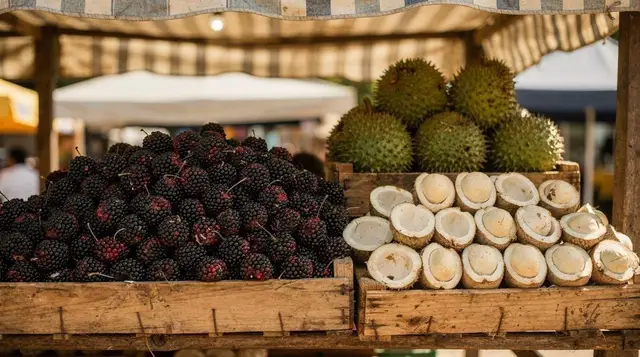
Jabuticaba — a small, dark grape-like fruit that grows directly on the tree trunk rather than on branches, with a thick skin and a sweet-tart pulp similar to a lychee. Season runs roughly September to March; when in season it’s sold fresh at feiras livres, and it also appears as juice and liqueur year-round. Cupuaçu — related to cacao, with a strong tropical-tart flavour, most commonly found as juice, ice cream or in desserts rather than eaten raw, since the pulp is fibrous and intense. Graviola (soursop) — a large, spiky-skinned fruit with soft, custardy white flesh, usually blended into juice; genuinely one of the best fruit juices available anywhere, worth seeking out specifically. Caju — the cashew fruit (the nut is a separate, smaller attachment), tart and slightly astringent, common as juice. Açaí, in its authentic Amazonian form, is a savoury, unsweetened purple pulp traditionally eaten with fish and manioc flour — a completely different product from the sweetened dessert bowls sold internationally as a health food, and worth trying at least once in its original context if you can find it.
More fruit worth knowing
Beyond the headline five, a few more are worth recognising if you see them at a market or on a juice menu. Pitanga (Surinam cherry) — a small, ridged red or dark fruit with a sharp, slightly resinous sweetness, usually eaten fresh in season (roughly October to December) or blended into juice. Umbu, more common in the north-east but occasionally found in São Paulo markets, has a tart, plum-like flavour and is often turned into a sweet-savoury pulp used in sauces and desserts. Buriti, an orange-fleshed palm fruit from the Cerrado and Amazon regions, has an earthy, slightly nutty sweetness and shows up as juice, ice cream and in traditional sweets, particularly in restaurants leaning into native Brazilian ingredients. Maracujá (passion fruit) is common enough internationally that it needs less introduction, but the Brazilian version, sold fresh and used constantly in juices, mousses and caipirinha variations, is worth trying here regardless — the quality and ubiquity make it a genuinely everyday fruit rather than a specialty item.
Fruit at the supermarket versus the market
For a lower-effort way to sample fruit without navigating a feira livre’s schedule, supermarkets across São Paulo — particularly larger stores in Jardins and Pinheiros — stock a wide range of the fruits covered here, both fresh and as frozen pulp, which is worth knowing about since frozen pulp (polpa de fruta) is a normal, high-quality product in Brazil rather than a lesser substitute. It’s what many home juice bars actually use, blended with water or milk, and it’s a practical way to try fruit like cupuaçu or graviola if you’re staying somewhere with a blender and want to make your own juice rather than buying it out. Fresh fruit at supermarkets tends to be reliably good quality but slightly more expensive and less variety-rich than a feira livre, which draws directly from smaller producers and seasonal availability.
Where to actually find them
Feiras livres — the weekly neighbourhood street markets — are the best source for fresh, seasonal fruit at fair prices, and stallholders are generally happy to let you try something before buying if you ask. The São Paulo’s street markets guide covers how these work and how to find the one running nearest you on a given day. Juice bars (usually attached to padarias or standalone kiosks) are the easiest way to try fruit you can’t easily eat raw — cupuaçu and graviola especially work better blended than whole. The padaria culture guide covers ordering juice at a padaria counter specifically.
A Brazilian food tour with a chef and photographer typically includes a fruit-tasting stop as part of a broader food survey, useful if you’d rather have a guide identify and explain unfamiliar fruit than work it out yourself at a market stall.
Fruit as part of the street food scene
Fresh coconut water, sold straight from the shell by street vendors, is the most ubiquitous fruit product in the city and a reliable hot-day option at R$6–10. Mango, papaya and pineapple are common and excellent quality by international standards, sold pre-cut in small bags at markets for a few reais. The São Paulo street food guide covers where fruit fits alongside the pastel-and-coxinha classics.
| Fruit | Best form | Approx. price | Season |
|---|---|---|---|
| Jabuticaba | Fresh, juice | R$8–15/portion | Sept–March |
| Cupuaçu | Juice, ice cream | R$8–15 | Year-round (processed) |
| Graviola | Juice | R$8–15 | Year-round (processed) |
| Caju | Juice | R$6–12 | Nov–Jan peak |
| Coconut water | Fresh from shell | R$6–10 | Year-round |
Fruit and Brazil’s biodiversity, briefly
Part of why this fruit range is so wide comes down to geography: Brazil spans multiple distinct biomes — Amazon rainforest, Atlantic Forest, Cerrado savanna, and more — each with its own native fruit species that evolved independently and rarely overlap. São Paulo, as the country’s largest consumer market, pulls fruit in from all of them, meaning a single city market can plausibly stock Amazonian, Cerrado and Atlantic Forest fruit side by side in a way that’s genuinely unusual anywhere else in the world. Much of this biodiversity remains commercially undeveloped outside Brazil simply because these fruits don’t ship or store well — which is exactly why trying them fresh, in the country where they grow, is worth the modest effort compared to encountering a diluted export version, if one exists at all, back home.
What not to expect
Not every exotic-sounding fruit is actually good raw — several, like cupuaçu, are genuinely too intense or fibrous to eat plain and are meant to be processed. Don’t feel obligated to power through a whole fresh cupuaçu expecting a mango-like experience; ask for it as juice or in a dessert instead. Some feira livre vendors sell pre-cut fruit that’s been sitting out for a while on a hot day — if in doubt, pick whole fruit or a freshly blended juice over anything pre-prepared and exposed.
A note on açaí specifically
Most visitors already know açaí as a sweetened, granola-topped dessert bowl, and that version exists in São Paulo too, sold at kiosks throughout the city, especially near parks and gyms. It’s worth knowing this is a modernised, export-friendly adaptation — the traditional Amazonian version is savoury and unsweetened, eaten as a meal component rather than a treat. Both are legitimate; just know which one you’re ordering, since prices and expectations differ (a sweet açaí bowl runs R$15–30 depending on size and toppings).
How açaí went from Amazonian staple to global export
Açaí’s journey from a traditional Amazonian food to an internationally recognised health product is worth understanding, since it explains why the fruit means such different things depending on where you encounter it. In its home region of Pará state, açaí has been eaten for generations in its traditional form — a thick, unsweetened, savoury purple pulp, typically served with fish, shrimp or manioc flour as a meal component rather than a treat. Its introduction to international audiences traces largely to Brazilian surfers and businesspeople who brought frozen açaí pulp to Hawaii and California in the 1990s, where it was reintroduced as a sweetened, granola-topped “açaí bowl” aimed at a health-and-wellness market completely disconnected from its original Amazonian context.
That version became a global phenomenon through the 2000s and 2010s, eventually cycling back into Brazil itself as a recognisable format sold at kiosks in cities like São Paulo, alongside, not replacing, the traditional savoury preparation still found in the Amazon region and among some traditional communities and specialty restaurants elsewhere in Brazil. The result is a genuinely unusual case of a food product being exported, transformed, and reimported as something close to a different dish under the same name — worth knowing before you order, since asking for “açaí” in São Paulo will almost always get you the sweetened bowl rather than the traditional version.
Fruit prices: São Paulo market versus specialty imports abroad
For visitors used to paying a premium for “exotic” fruit back home, São Paulo’s prices are worth stating explicitly, since the gap is substantial.
| Fruit | São Paulo feira livre price | Typical specialty-import price abroad |
|---|---|---|
| Graviola (soursop) | R$8-15/portion (~US$1.50-3) | Often US$8-15 or more, if available at all |
| Jabuticaba (in season) | R$8-15/portion | Rarely available fresh outside South America |
| Cupuaçu (as pulp) | R$8-15 | Specialty import, often US$10+ |
| Fresh coconut water | R$6-10 | US$4-8 for a bottled equivalent |
This price gap exists because these fruits genuinely don’t travel well — short shelf lives and delicate skins make export logistics expensive or impossible for several of them, which is exactly why trying them fresh in São Paulo, at a fraction of what an import would cost, is one of the better value experiences available on a Brazil trip regardless of budget level.
A common mistake: skipping the feira livre for supermarket convenience
A mistake worth flagging directly: visitors staying somewhere without easy feira livre access sometimes default entirely to supermarket fruit out of convenience, missing what’s actually the better experience for a similar or lower price. Feiras livres offer noticeably fresher produce, since it typically moves from smaller producers to market stall within a day or two rather than sitting in a supermarket supply chain, and stallholders are generally happy to let you taste something before buying — a level of direct interaction a supermarket simply can’t offer. The convenience trade-off is real; a feira livre only runs on its scheduled day in a given neighbourhood, while a supermarket is open every day. But for anyone with even one morning free to time around a local market’s schedule, it’s worth the modest extra planning over defaulting to supermarket shelves for the full trip, particularly for the fruits that taste most different fresh versus processed, like jabuticaba and mango.
Fruit-based desserts beyond juice and raw eating
Beyond drinking fruit as juice or eating it fresh, several classic Brazilian desserts are worth trying as another way into the same fruit range. Sorvete (ice cream) shops across São Paulo routinely stock flavours built around jabuticaba, cupuaçu and graviola alongside more familiar options, a low-effort way to sample an unfamiliar fruit’s flavour profile without committing to a full juice or fresh portion. Doce de leite variations sometimes incorporate native fruit purées. Paçoca and other traditional sweets occasionally use cashew (caju) byproducts. None of these are essential stops on their own, but they’re worth keeping in mind as a backup option if a specific fresh fruit didn’t appeal on its own — the same flavour, reframed as dessert, sometimes lands better with a hesitant palate than the raw or juiced version does.
Fruit as a gift or souvenir for a Brazilian host
If you’re visiting Brazilian friends, family or colleagues as part of your trip, arriving with a small selection of good fruit from a feira livre is a genuinely well-received, low-cost gesture — more personal than a generic souvenir and in keeping with how central fresh produce is to everyday Brazilian hospitality. A small box of good-quality mango, a bag of fresh jabuticaba in season, or a couple of graviola for the household to juice communicates real thoughtfulness without the awkwardness of an expensive or overly formal gift. This isn’t a strict social rule the way some gift-giving customs are in other cultures, but it’s a reliable, low-risk option if you’re unsure what to bring and want something that reads as genuinely local rather than an imported or generic choice.
Frequently asked questions about Brazilian fruit in São Paulo
What’s the single fruit I should prioritise trying?
Graviola (soursop) juice — it’s distinctive, widely available, and rarely found fresh outside South America and Southeast Asia.
Is it safe to eat fruit from street vendors?
Generally yes at busy stalls with good turnover; choose whole fruit or freshly blended juice over pre-cut fruit that’s been sitting exposed on a hot day.
Where can I find a feira livre?
Every neighbourhood has one on a scheduled day each week — ask your accommodation or check locally, since the schedule varies by area. See the São Paulo’s street markets guide.
Is açaí actually a superfood, or is that marketing?
It’s nutritionally dense (antioxidants, healthy fats), but the sweetened dessert-bowl version sold internationally, loaded with granola and syrup, is a different nutritional profile from the traditional savoury Amazonian preparation.
Can I bring fresh fruit home with me?
No — most fresh fruit can’t be brought through customs into most countries. Dried fruit, fruit-based sweets or frozen pulp (if properly packaged and permitted) are more realistic souvenirs.
What’s a good juice bar order if I don’t know what to try?
Ask for a “suco misto” (mixed juice) or ask the vendor to recommend something seasonal — most are happy to suggest based on what’s freshest that day.
Is jabuticaba available year-round?
No, it has a defined season (roughly September to March) when fresh — outside that window you’ll mostly find it as juice, jam or liqueur rather than fresh fruit.
What’s frozen fruit pulp (polpa de fruta) and is it worth trying?
It’s a normal, high-quality Brazilian product — fruit frozen shortly after processing, sold in supermarkets and used at home to make juice with a blender. It’s a practical way to try fruit like cupuaçu or graviola if you have kitchen access, and not a lesser substitute for fresh.
Is buriti worth seeking out specifically?
Yes if you come across it — it’s a native palm fruit with an earthy, nutty sweetness rarely found outside Brazil’s Cerrado and Amazon regions, and it appears on some fine-dining menus leaning into native ingredients, as well as at specialty markets.
Are there fruit varieties I should avoid or approach carefully?
Not for safety reasons, but manage expectations on texture — several native fruits (cupuaçu especially) are fibrous or intense when eaten raw and are genuinely better in a processed form like juice or ice cream.
Fitting this into your trip
Fruit tasting fits naturally into any market visit or food-focused stretch of a trip — see the food lover’s São Paulo itinerary for how it slots in alongside bigger meals, or simply build it into a three-day itinerary as part of a feira livre morning.
São Paulo food & drink tours on GetYourGuide
Verified deep-linked GetYourGuide tours. Book through these links and we earn a small commission at no cost to you.
These are our own photographs of São Paulo, not the operator's pictures of this tour — open the tour page to see those.