São Paulo street food
What is São Paulo street food and where do you find it?
Deep-fried salgados (pastel, coxinha, kibe), the mortadella sandwich at the Mercadão, and weekend feira livre stalls are the core of it. Most items cost R$6–15. The best concentrations are the Mercadão, Liberdade's Saturday market, and any neighbourhood feira livre street market.
São Paulo’s street food isn’t concentrated in a single night market or food-truck strip the way some cities organise it — it’s woven through padarias, feiras livres (neighbourhood street markets) and a handful of landmark spots, and finding the good version means knowing what to order rather than just following a crowd. This guide covers the essentials: what the classics actually are, where they’re reliably good, and what’s overpriced for tourists specifically.
| Where | Padarias everywhere; Mercadão; weekend feiras livres by neighbourhood |
| Cost | R$6–15 per item; a full street food meal rarely exceeds R$40 |
| Time needed | An hour or two, grazing |
| Getting there | Feiras livres rotate by neighbourhood and day — check which one runs near you |
| Best time | Weekday mornings for a fresh padaria coxinha; weekend mornings for feiras livres |
The core lineup
Pastel — a thin, deep-fried pastry pocket, usually filled with cheese, ground beef or hearts of palm, crisped in hot oil to order. The best version at the São Paulo Mercadão comes from stalls that have been frying them for decades; expect R$15–25 for a large one, best shared. Coxinha — shredded chicken bound in creamy dough, shaped like a teardrop, breaded and fried; sold at every padaria in the city, R$6–12 depending on size. Kibe — a Lebanese-Brazilian hybrid, bulgur wheat and ground meat, fried into a torpedo shape, reflecting the size of São Paulo’s Lebanese community. Pão de queijo — Brazilian cheese bread, more Minas Gerais in origin but sold everywhere, R$4–8. These four cover most of what you’ll be offered at any padaria counter, and trying all four across a few days is a reasonable way to get the full picture without committing to a big meal each time.
The Mercadão and its mortadella sandwich
The Mercado Municipal (Mercadão) in Centro is the city’s most famous single food destination, and its mortadella sandwich — a towering pile of thinly sliced mortadella stacked between two slices of bread — is close to an institution. It’s genuinely good, and it’s also genuinely a tourist price point: stalls inside the market charge considerably more than a similar sandwich would cost elsewhere in the city, partly because of foot traffic and partly because several stalls compete for the same photo-worthy stack. It’s worth doing once for the experience, but go in knowing the mark-up, and consider splitting one between two people rather than ordering individually. The Mercado Municipal guide covers exactly what’s worth ordering there and what to skip, and the mortadella sandwich story goes deeper into whether it’s worth the queue.
Beyond the mortadella sandwich: the rest of the Mercadão
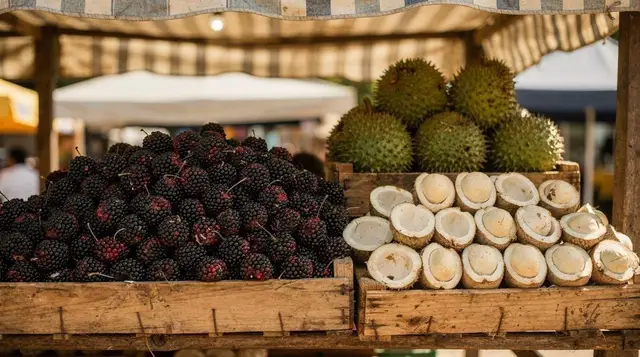
The Mercado Municipal is worth more time than a single sandwich stop suggests. The upper mezzanine, where most of the food stalls sit, gets the attention, but the ground floor is a serious produce and specialty goods market in its own right — stalls piled with dried fruit, nuts, spices and Brazilian fruit varieties you won’t find in a regular supermarket, some sold specifically for tasting before you buy. It’s also one of the better places in the city to see the sheer range of Brazilian produce in one place: dozens of banana varieties, tropical fruit most visitors have never encountered, and enormous displays of dried codfish (bacalhau), a legacy of Portuguese immigration that remains a fixture of the market’s identity. Walking the ground floor before heading up for the sandwich gives a much fuller sense of what the building actually is, rather than treating it as a single-photo stop.
Feiras livres: the real weekend street food
Every neighbourhood in São Paulo has a scheduled weekly feira livre — a street market that takes over a specific stretch of road for one morning, selling fresh produce alongside hot food stalls: pastel, tapioca crepes, grilled corn, açaí bowls and coconut water straight from the shell. These are where locals actually shop and eat, with far less tourist pricing than the Mercadão. Praça Benedito Calixto’s Saturday market in Pinheiros combines this with an antiques fair, making it a good entry point if you’re not sure which feira to try first. The Praça Benedito Calixto market guide has the details, and the São Paulo’s street markets guide covers feiras livres across the city more broadly.
A guided Liberdade street food tour covers the Japanese-Brazilian side of the street food spectrum specifically — yakisoba, gyoza, temaki — which sits alongside but distinct from the pastel-and-coxinha classics covered here.
| Padaria snacks | Mercadão | Feira livre | |
|---|---|---|---|
| Price | R$4–12 per item | R$25–45 for the sandwich | R$6–15 per item |
| When | Any time, daily | Daily, busiest weekends | One scheduled morning per week, by neighbourhood |
| Best for | Quick, cheap, everywhere | The classic tourist experience | The real local version |
| Crowd | Locals | Mostly tourists | Locals |
Regional Brazilian street food, transplanted to São Paulo
Because São Paulo pulls migrants from every part of Brazil, its street food scene includes dishes with no local origin at all — brought by internal migration the same way Japanese and Italian food arrived through international immigration. Acarajé, a deep-fried black-eyed pea fritter stuffed with vatapá and dried shrimp, comes from Bahian street food tradition and shows up at dedicated stalls, usually run by Bahian vendors who’ve built a loyal following regardless of neighbourhood. Pamonha, a sweet or savoury corn paste steamed in the husk, and tapioca crepes (made from cassava starch rather than wheat flour, naturally gluten-free) both trace back to the interior and north-east and are common at feiras livres and dedicated tapioca stands. None of these are uniquely São Paulo dishes, but the fact that they’re all available within the same city, often within walking distance of each other, says something real about how much of Brazil funnels through this one metro area.
Espetinho and evening street eating
At night, espetinho stands — grilled meat skewers, R$8–15 each — appear near bar districts like Vila Madalena and Bixiga, functioning as the city’s closest equivalent to a food truck culture. They’re informal, cash-friendly and a reasonable way to eat cheaply between bars. The bars in Vila Madalena guide covers where these tend to cluster.
What’s not worth your time
Not every street food stop is worth prioritising. Food stalls set up directly outside major tourist attractions — right at the entrance to Ibirapuera Park or along Avenida Paulista near MASP — tend to charge a premium for convenience without necessarily being better than a stall two blocks away. Pre-packaged snacks sold at kiosks near metro stations are fine in a pinch but not representative of what makes São Paulo street food interesting; they’re closer to convenience-store fare than the padaria and feira livre tradition this guide is about. If you have a choice between a stall with a visible queue of locals and one that’s empty despite a good location, the queue is almost always the better signal.
Fruit you’ll see everywhere
Street stalls and feiras livres are also the easiest place to try Brazilian fruit that doesn’t travel well enough to export — jabuticaba, cupuaçu, graviola, and açaí in its unsweetened, more savoury Amazonian form rather than the dessert-bowl version sold internationally. The Brazilian fruit you should try guide covers what to look for and how to eat each one.
Street food etiquette and practical tips
Most stalls and padaria counters expect payment either on ordering or immediately after — card readers are common even at small stalls now, but it’s worth carrying some cash for older or more informal vendors, especially at feiras livres where card machines aren’t universal. Portions are generally sized for one person per item rather than sharing, so a “street food crawl” naturally becomes several small stops rather than one big meal. Napkins aren’t always provided automatically — ask if you don’t see any, since fried food gets messy fast. Queue discipline is casual at most stalls; if it’s unclear who’s next, a quick “quem é o último?” (who’s last in line?) sorts it out the way locals do.
Timing matters more than it might seem. Padarias are freshest early morning when the day’s batch of pastries has just come out; by late afternoon, some items have been sitting under a heat lamp for hours. Feiras livres wind down by early afternoon on their scheduled day, and the best selection is available in the first couple of hours after the market opens, before the most popular stalls sell out of their daily-made items.
Where pastel and coxinha actually come from
Pastel’s origins trace back to Chinese and Japanese immigrant communities in São Paulo in the early 20th century, who adapted fried dumpling traditions using locally available ingredients and wheat-flour wrappers — it evolved from those origins into the thin, crisp, distinctly Brazilian snack sold today, a good example of how thoroughly immigrant food traditions get absorbed and transformed rather than simply transplanted intact.
Coxinha’s popular origin story ties it to 19th-century Minas Gerais, supposedly created for a young prince who preferred chicken thigh meat, with the teardrop shape meant to evoke a drumstick — a charming legend more than a rigorously documented fact, but one that’s repeated widely enough to be part of the snack’s identity regardless of how literally true it is. Both dishes migrated to São Paulo along with the same waves of immigration and internal Brazilian migration that shaped the rest of the city’s food landscape, becoming so thoroughly embedded in everyday eating that most locals don’t think of either as having a specific point of origin at all.
Street food safety and hygiene standards
São Paulo’s food vendors, including padarias and market stalls, operate under municipal health inspection (vigilância sanitária) requirements, and the more established, higher-traffic vendors — the ones with visible queues and steady turnover recommended throughout this guide — are generally the most reliably inspected and consistent. Informal or newly set-up stalls at feiras livres vary more in how rigorously they’re monitored, which is part of why the “look for a queue of locals” rule of thumb matters as much as any official rating system you could check as a visitor. Basic precautions apply here as they would in any food city: favour hot, freshly cooked items over anything that’s been sitting at ambient temperature for an extended period, and don’t hesitate to walk past a stall that looks inconsistent with the busy, high-turnover pattern the rest of this guide describes.
Festa Junina: São Paulo’s street food calendar highlight
June brings Festa Junina, a countrywide harvest-festival tradition with rural, agricultural roots that shows up in São Paulo through community parties, school events and dedicated food stalls selling a specific seasonal menu you won’t find the rest of the year — pamonha (fresh corn paste steamed in the husk), canjica (a sweet corn and coconut milk pudding), curau (a creamy sweet corn dessert) and quentão (a warm, spiced cachaça drink suited to the cooler winter evenings this festival coincides with). If your trip lands in June, seeking out a Festa Junina event, even a modest neighbourhood one, is a genuinely different and specifically seasonal street food experience layered on top of the year-round classics covered elsewhere in this guide.
A guided introduction if you’d rather not navigate alone
a Brazilian food tour with a chef and photographer is a useful option if you’d rather have an expert steer you toward the best specific stalls and padarias rather than relying on the general guidance in this guide — particularly valuable at the Mercadão and feiras livres, where the sheer number of options can be overwhelming on a first visit without local context.
Street food and the weather
Rain changes São Paulo’s street food landscape more than most other activities covered on this site, simply because so much of it happens outdoors or under minimal shelter. Feiras livres, entirely outdoor by nature, wind down fast or shut early if a summer storm rolls through, and vendors pack up rather than waiting it out the way a covered restaurant might. The Mercadão, fully enclosed, is the reliable rainy-day fallback for street-food-style eating, and it’s worth defaulting there specifically on a day when the forecast looks uncertain rather than planning a feira livre visit and hoping the weather holds. See the what to do in São Paulo when it rains guide for the fuller wet-weather picture beyond food specifically.
Frequently asked questions about São Paulo street food
Is São Paulo street food safe to eat?
Generally yes — stick to stalls with steady turnover and visible hot cooking (frying, grilling) rather than food that’s been sitting out, the same rule that applies anywhere. Padarias and established market stalls are reliable.
What’s the single best-value street food item?
Coxinha from a neighbourhood padaria — consistently good, cheap (R$6–10), and available literally everywhere, no planning required.
Is the Mercadão mortadella sandwich overrated?
It’s good, but priced for tourists and best treated as a one-time experience rather than a benchmark for value. Split one between two people.
What day should I visit a feira livre?
It depends entirely on the neighbourhood — each has its own scheduled day, usually a weekday or Saturday morning. Ask your hotel or check locally, since schedules shift.
Is street food vegetarian-friendly?
Partially — hearts of palm pastel, tapioca crepes and grilled corn are all common vegetarian options, though most classic salgados (coxinha, kibe) are meat-based by default. See the vegetarian and vegan São Paulo guide.
Can I do a street food crawl without a guide?
Yes, particularly at padarias and the Mercadão, both low-stakes and easy to navigate. A guided tour adds the most value in Liberdade, where the market’s scale and language barrier make context genuinely useful.
What should I drink with street food?
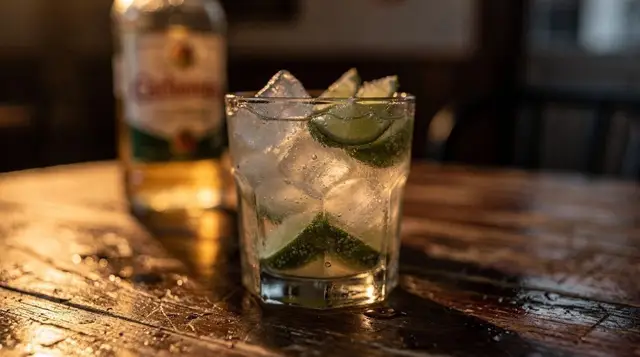
Guaraná (a Brazilian soda), fresh coconut water, or a cold beer if you’re at an espetinho stand in the evening. Caipirinhas are more of a bar drink than a street food pairing.
What is acarajé and where do I find it?
A deep-fried black-eyed pea fritter from Bahian tradition, stuffed with vatapá and dried shrimp. It’s not native to São Paulo but is sold by Bahian vendors at markets and dedicated stalls across the city, reflecting internal migration from Brazil’s north-east.
Is tapioca crepe gluten-free?
Yes — it’s made from cassava starch rather than wheat flour, making it a naturally gluten-free option that’s widely available at feiras livres and dedicated tapioca stands.
Do I need cash for street food, or does card work everywhere?
Card readers are increasingly common even at small stalls, but carry some cash as backup, especially for feiras livres and more informal vendors where card machines aren’t universal.
Fitting this into your trip
Street food grazing works as a flexible half-day slot in any itinerary — pair the Mercadão with a Centro Histórico morning on the two-day or three-day itinerary, or build a full day around it with the food lover’s São Paulo itinerary, which sequences markets and meals across multiple days.
São Paulo food & drink tours on GetYourGuide
Verified deep-linked GetYourGuide tours. Book through these links and we earn a small commission at no cost to you.
These are our own photographs of São Paulo, not the operator's pictures of this tour — open the tour page to see those.