São Paulo's east zone
Is São Paulo's east zone worth visiting as a tourist?
For most visitors, only for one specific reason: a Corinthians match at Neo Química Arena in Itaquera. Beyond that, the east zone is a vast, mostly residential and working-class part of the city with few conventional sights, though Parque do Carmo and the historic church at São Miguel Paulista reward a more curious visitor with time to spare.
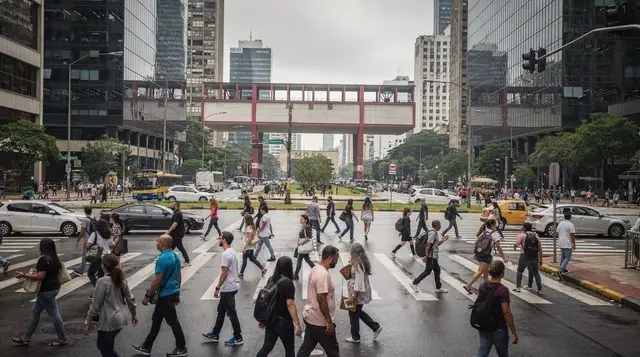
São Paulo’s Zona Leste is, by population, the largest single part of the city — several million people across dozens of districts, stretching from Tatuapé and Mooca near the centre out to Itaquera and beyond toward the city’s edge. It’s overwhelmingly residential and working-class, shaped heavily by internal migration from Brazil’s northeast over the twentieth century, and it gets a fraction of the guidebook attention that Jardins or Vila Madalena receive. That’s mostly fair — this isn’t a district built around sightseeing — but it’s worth being specific about what the east zone actually offers rather than writing it off entirely, because a couple of things here are genuinely worth the trip.
| Where | East of the centre, along Metro Line 3 Red toward Itaquera and beyond |
| Cost | Free to walk; match tickets R$60–350 depending on opponent and seat |
| Time needed | An afternoon for Parque do Carmo; a full evening for a match |
| Getting there | Metro Line 3 Red runs the length of the corridor |
| Best time | Matchday evenings for Corinthians; weekday mornings for the park |
Neo Química Arena, and why most visitors come here at all
Corinthians’ stadium, Neo Química Arena, sits at the far end of Line 3 Red at Corinthians-Itaquera station, and it’s the single clearest reason most tourists ever set foot in the east zone. Corinthians is one of São Paulo’s four major clubs and has one of the largest, most passionate fan bases in Brazilian football — a matchday here is loud, dense with vendors and flags outside the ground, and a genuinely good introduction to Brazilian football culture beyond the more internationally famous Rio clubs.
A Corinthians game experience with ticket, beer and guide is the simplest way to do this without navigating ticket resale sites, and a broader Corinthians football experience covers similar ground with slightly different logistics depending on the fixture. The stadium sits right at the metro station, so unlike a Morumbi matchday, getting there and away is genuinely straightforward. See the full guide to watching Corinthians at Neo Química Arena and the broader football in São Paulo guide for the wider context.
Matchday logistics in detail
Getting to Neo Química Arena is straightforward by São Paulo standards — Line 3 Red runs directly to Corinthians-Itaquera station, which sits right beside the stadium, so there’s no need for a taxi transfer at the far end the way a Morumbi visit requires. Arrive at least 90 minutes before kickoff on a high-stakes fixture; the plaza outside fills quickly with vendors selling club merchandise, grilled meat and beer, and it’s part of the experience rather than something to rush through. Security checks at the gates are thorough but move efficiently in normal circumstances; bring only what you need, since bag restrictions are stricter here than at most other venues in the city. After the match, the metro station can back up significantly as the crowd disperses — budget extra time rather than assuming an immediate train.
Tatuapé and Mooca: the east zone’s more accessible edge
Not all of the east zone is as far-flung as Itaquera. Tatuapé and Mooca, both destinations covered elsewhere on this site, sit much closer to the centre and function as a gentler introduction to the east zone for visitors who want a taste of it without committing to the full trip out to Itaquera. Mooca in particular carries its own strong immigrant heritage — Italian, in this case, distinct from Bixiga’s — with a quieter, more residential character. If the idea of the east zone interests you but the distance to Itaquera doesn’t appeal, these two neighbourhoods are a reasonable middle ground.
Parque do Carmo, a real park most visitors never hear about
A short distance from the stadium, Parque do Carmo is one of the largest parks in São Paulo, with lakes, forested walking trails, an equestrian centre, and enough space that it never feels as crowded as Ibirapuera. It’s not polished or manicured the way the city’s more famous parks are, and that’s part of its appeal — it feels like a genuine neighbourhood park rather than a tourist attraction, used by locals for exactly what a park is for. It’s a reasonable stop if you’re already out this way for a match and have a free morning or afternoon.
Cemitério da Vila Formosa
One of the largest cemeteries in Latin America by number of burials, Vila Formosa is a striking, sobering place to walk through if cemetery architecture and social history interest you — a scale that says something real about the size of the city itself. It’s not a typical tourist stop, and it doesn’t need to be one, but it’s worth knowing it exists if you’re the kind of traveller drawn to this kind of place.
São Miguel Paulista and the colonial-era church
Further out, in the district of São Miguel Paulista, the Igreja de São Miguel Arcanjo dates back to the early 1600s, making it one of the oldest surviving religious buildings in the city — a genuine curiosity given how comprehensively São Paulo’s growth has erased most of its colonial-era architecture elsewhere. It’s a long way from the centre and really only worth the trip if you have a specific interest in the city’s earliest history and time to spare; don’t build a first-time itinerary around it.
Nordestino culture and the Festa do Bom Jesus de Penha
The east zone has one of the strongest concentrations of Nordestino (northeastern Brazilian) culture in the city, a legacy of the mid-twentieth-century migration that built much of this part of São Paulo — forró music, regional food, and community festivals with roots that go back generations rather than being staged for visitors. In the Penha district, the traditional Festa do Bom Jesus de Penha religious festival draws large crowds annually and has been part of the neighbourhood’s calendar for well over a century; if your visit happens to coincide with it, it’s a genuinely interesting window into a side of the city most tourism never touches. See the São Paulo street food guide for more on the regional dishes this migration brought to the city.
How the east zone was actually built
The scale of the east zone’s growth over the twentieth century is easy to underestimate from the centre or the west side. As the northeastern migration described above accelerated from the 1950s through the 1980s, entire districts were built up rapidly, often informally, to house workers arriving faster than the city’s formal infrastructure could keep pace with — a pattern echoed on a smaller scale in the favelas of the west zone, but playing out here across a vastly larger geographic area of formal, if modest, housing rather than concentrated informal settlements. Understanding this history helps explain both the east zone’s strong regional cultural identity, distinct from the rest of the city, and why it developed with less of the civic and cultural infrastructure that older, wealthier districts accumulated over a longer period.
East zone versus north zone: two less-visited halves of the city
| East zone | North zone | |
|---|---|---|
| Main draw | Corinthians at Neo Química Arena | Parque da Cantareira |
| Character | Dense, working-class, Nordestino heritage | More residential, closer to nature |
| Typical visitor reason | A football match | A hiking day trip |
| Metro access | Line 3 Red | Line 1 Blue |
See the guide to São Paulo’s north zone for the comparison.
Being realistic about safety and time
The east zone is not more dangerous than the rest of São Paulo in any blanket sense, but it is less geared toward visitors — fewer English signs, fewer obviously tourist-facing businesses, and neighbourhoods that function primarily for the people who live in them. Ordinary city precautions apply: stay aware, especially after dark, and don’t wander into unfamiliar residential streets without a reason to be there. For most travellers with limited time, a Corinthians match is a perfectly good, self-contained reason to make the trip, without needing to explore much beyond the stadium and metro corridor.
Shopping Aricanduva and the east zone’s commercial scale
Most visitors don’t associate the east zone with shopping, but Shopping Aricanduva, sitting roughly midway along the Zona Leste corridor, is one of the largest shopping centres in Latin America by leasable area — a genuinely enormous complex that locals from across the east zone treat as a de facto town centre rather than a special-occasion destination. It’s not a tourist attraction in any conventional sense, but it’s a useful data point for understanding the scale of the population this part of the city actually serves: a mall this size doesn’t exist to serve visitors, it exists because several million residents need somewhere to shop, eat and spend a Saturday afternoon. If you’re curious about how the “real,” non-touristic majority of São Paulo actually lives day to day, a short stop here says more than most conventional sightseeing would.
Getting around within the east zone once you’re out there
Line 3 Red is the spine of the corridor, but the east zone’s district centres — Tatuapé, Anália Franco, Penha, Itaquera — each function as their own local hub rather than a single continuous strip, and moving between them often means a bus or rideshare rather than a direct walk, since distances between district centres are considerably larger than they look on a schematic metro map. Budget more transfer time than you would moving between two stops in the centre or the Paulista corridor: this is a genuinely vast area, and treating it as a single compact “neighbourhood” the way you might treat Vila Madalena is a planning mistake. If your day out here involves more than one stop — say, Neo Química Arena plus Parque do Carmo — check the specific route in advance rather than assuming a quick walk will connect them.
The scale of the population, and why it changes how you should think about the east zone
It’s worth putting a number on what “largest part of the city by population” actually means here: several million people live across the Zona Leste’s dozens of districts, more than the total population of many entire countries’ capital cities, spread across an area that dwarfs the compact, tourist-dense western and central neighbourhoods most guidebooks focus on. That scale is exactly why treating the east zone as a single sightseeing district misses the point — it’s not one neighbourhood with a handful of attractions, it’s a vast, internally varied section of a megacity, most of which genuinely has no reason to appear on a tourist itinerary at all. Understanding this reframes the honest advice given elsewhere in this guide: the east zone isn’t “underrated” in the way a hidden neighbourhood gem might be — it’s simply not built around visitor sightseeing, in the same way most of any megacity’s residential expanse isn’t, anywhere in the world.
East zone district centres compared
| District | Distance from centre (metro) | Main draw for visitors |
|---|---|---|
| Tatuapé | 15–20 minutes | Shopping, restaurants, closer-in option |
| Mooca | 15–20 minutes | Italian heritage, quieter residential character |
| Penha | 30–40 minutes | Festa do Bom Jesus de Penha, local commerce |
| Itaquera | 40–60 minutes | Neo Química Arena, Parque do Carmo |
| São Miguel Paulista | 50–70 minutes | Colonial-era church, furthest out |
This table is a useful planning tool on its own: the closer districts (Tatuapé, Mooca) are realistic add-ons to a normal day, while the further ones (Itaquera, São Miguel Paulista) genuinely need a dedicated reason — a match, a specific festival, a particular historical interest — to justify the travel time involved.
A note on seasonal timing for a matchday visit
Corinthians’ domestic season runs across most of the year with a break around the turn of the year, and match scheduling shifts week to week depending on competition and broadcast requirements — check the fixture list for your specific travel dates rather than assuming a match will be available, since there’s no guaranteed weekly home game the way some European leagues offer. Weather matters less here than it does for outdoor sightseeing elsewhere in the city, since the stadium experience itself is largely unaffected by rain, though the walk to and from the metro station is worth planning around if a summer storm (December–March) is forecast for matchday evening.
Frequently asked questions about São Paulo’s east zone
Is the east zone safe for tourists?
It’s safe with the same ordinary precautions you’d use anywhere in São Paulo — stay aware, avoid unfamiliar residential streets after dark. It’s not more dangerous than the city average, just less set up for casual sightseeing.
How do I get to Neo Química Arena?
Metro Line 3 Red runs directly to Corinthians-Itaquera station, right at the stadium — the easiest stadium to reach by public transport of any of the city’s major grounds.
Is Parque do Carmo worth visiting outside of a matchday?
If you’re specifically drawn to large, less-manicured city parks, yes. It’s not worth a special trip on its own for a first-time visitor with limited time.
How far is Itaquera from the city centre?
Roughly 40–60 minutes by metro from Praça da Sé, longer by car in traffic, particularly during rush hour (7–10am, 5–8pm).
What’s the best way to see a Corinthians match as a visitor?
A bundled experience with ticket, transport guidance and a guide removes most of the friction — see how to buy football tickets in São Paulo for the full picture.
Is there anything to eat in the east zone worth trying?
Yes — the Nordestino food scene here, built around northeastern Brazilian regional dishes, is genuinely distinct from what you’ll find in the centre or the wealthier south and west zones.
Should I plan a full day for the east zone?
Only if you’re combining a match with Parque do Carmo or have a specific interest in the further-out sights. For most visitors, a single evening around a match is the right amount of time.
Can I visit Tatuapé or Mooca without going all the way to Itaquera?
Yes — both sit much closer to the centre than the far east zone and offer a gentler taste of the region’s character, particularly Mooca’s Italian immigrant heritage, without the longer trip out to the stadium corridor.
Fitting the east zone into a longer trip
On the football fan’s São Paulo itinerary, a Corinthians match at Neo Química Arena is one of the anchor stops. On a general five-day itinerary, the east zone only earns a slot if there’s a match scheduled during your stay — otherwise, your time is better spent in the centre, Paulista corridor, or west-side neighbourhoods covered elsewhere on this site.
São Paulo neighborhood tours on GetYourGuide
Verified deep-linked GetYourGuide tours. Book through these links and we earn a small commission at no cost to you.
These are our own photographs of São Paulo, not the operator's pictures of this tour — open the tour page to see those.