A guide to Bixiga
What is Bixiga known for, and when's the best time to go?
Bixiga (part of the wider Bela Vista district) is São Paulo's historic Italian immigrant neighbourhood, known for its Sunday-lunch cantina culture and as home to Vai-Vai, one of the city's most decorated samba schools. Weekend evenings, especially Sunday, are the best time — that's when the cantinas fill up and the neighbourhood's social life is most visible.
Bixiga is the informal name for a slice of the Bela Vista district, settled overwhelmingly by Italian immigrants from the late 1800s onward, and it still functions like an old-world Italian neighbourhood dropped into a Brazilian megacity — family-run cantinas, a strong Catholic parish life around Praça Dom Orione, and a genuine sense of continuity that’s rare in a city this size. What makes it more than a heritage curiosity is the layer built on top: Bixiga is also home to Vai-Vai, one of São Paulo’s most successful and decorated samba schools, and to Teatro Oficina, one of the most architecturally significant theatres in the country. Few neighbourhoods in São Paulo pack this much into so few blocks.
| Where | Bela Vista district, between Avenida Paulista and Liberdade |
| Cost | Free to walk; a cantina meal runs R$50–90 per person (about US$10–18), served family-style |
| Time needed | 3–4 hours, longer on a Sunday evening |
| Getting there | Metro Brigadeiro (Line 2 Green) or a 10-minute walk from Paulista |
| Best time | Sunday evening, when the cantinas are busiest |
The cantina tradition, and how it actually works
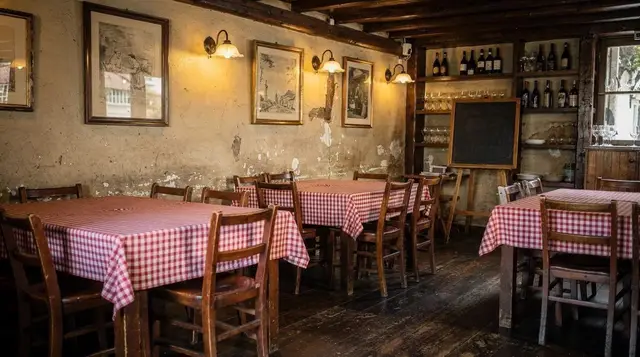
Bixiga’s cantinas serve family-style Italian-Brazilian food — big shared platters of pasta, roasted meats, and house wine, priced per person rather than per dish, usually R$50–90 depending on the spot. This isn’t fine dining; it’s loud, communal, and meant to be shared across a full table, closer to a Sunday family gathering than a restaurant meal. Several of the longest-running cantinas are along and around Rua Treze de Maio, and the culture is strongest on Sunday evenings, when local families still treat it as a weekly ritual rather than a tourist activity. Go hungry and go with people — a cantina meal for one misses the point entirely.
Teatro Oficina, an architectural landmark
Teatro Oficina, redesigned in the 1980s and 90s by the Italian architect Lina Bo Bardi (also responsible for MASP), is one of the more radical theatre spaces in Brazil — a long, narrow, open-tiered structure built almost like a street itself, with the audience arranged along both sides of a central performance strip rather than facing a conventional stage. It’s still an active, respected experimental theatre company, and even without catching a performance, the building is worth seeking out if you have any interest in Brazilian modernist architecture. A private architecture tour covering the city’s modernist landmarks can include this stop if you book ahead and mention it specifically.
How Italian Bixiga actually formed
Italian immigration to São Paulo peaked between the 1880s and the 1920s, driven largely by the same coffee-economy labour demand that brought Japanese immigrants to Liberdade a few decades later. Bixiga specifically grew as a working-class settlement for immigrants who couldn’t afford the wealthier areas closer to the centre, built up the hillside in cramped, self-organised housing that in some ways prefigured the informal settlement patterns you see in the city’s favelas today, though it formalised and gentrified over the following century in a way most favelas never did. The neighbourhood’s name is popularly said to derive from “bixiga,” an old regional word connected to the area’s original swampy, low-lying terrain, though like a lot of São Paulo neighbourhood etymology, the exact origin is debated locally rather than settled fact. See the Italian São Paulo guide and how immigration built São Paulo for the wider context this neighbourhood fits into.
São Paulo’s unlikely theatre district
Beyond Teatro Oficina, Bixiga has one of the highest concentrations of small independent theatres anywhere in Brazil — a legacy of both the neighbourhood’s working-class immigrant creative energy and its proximity to Avenida Paulista’s larger cultural institutions. Most of these are modest black-box spaces staging Brazilian playwrights and experimental work rather than anything aimed at tourists, and very little of it has English surtitles, but even a walk past a handful of small marquees on a weekend evening gives a sense of a genuinely active local arts scene operating well outside the mainstream cultural circuit most visitors encounter elsewhere in the city. See the theatre and cinema in São Paulo guide for the wider picture.
Vai-Vai and the samba-school year
Vai-Vai, founded in 1930, is one of São Paulo’s most successful samba schools, with numerous Carnival championship titles to its name — a genuine point of neighbourhood pride that most visitors have no idea sits here, since São Paulo’s Carnival gets far less attention internationally than Rio’s. Outside of Carnival season, some schools open rehearsal nights to visitors on a paid or donation basis; check current schedules locally rather than assuming, since these change year to year. If your visit lands during Carnival itself, a Carnival parade seating package is the most reliable way to see a samba school in full spectacle. More on the wider scene is in the guide to where to hear samba in São Paulo.
Praça Dom Orione and the parish core
The square in front of the Igreja Nossa Senhora Achiropita, a working Catholic parish, is the social anchor of the old Italian community, and the church’s annual summer festival — a street party with food stalls, live music and the parish itself at the centre — is one of the neighbourhood’s most authentic yearly events, distinct from anything organised for tourists. Even outside festival season, the square is a pleasant place to sit, and it’s a useful orientation point since most of the streets described in this guide radiate out from it.
Getting around and combining with nearby neighbourhoods
Bixiga sits an easy 10–15 minute walk from Avenida Paulista, and roughly the same from Liberdade in the other direction, which makes it an efficient add-on rather than a separate half-day trip. A private welcome walking tour with a local guide is a reasonable way to see Bixiga alongside Paulista in a single guided afternoon if you’d rather not plan the connection yourself.
Food beyond the cantinas
The cantinas get the reputation, but Bixiga’s Italian-Brazilian delis and bakeries are worth a stop in their own right — cured meats, imported cheeses and fresh pasta sold by weight, the kind of shop most tourists walk straight past on the way to dinner. A few of the older bakeries still make traditional Italian-Brazilian sweets around Christmas and Easter that draw queues from across the city, a small but telling sign of how seriously the neighbourhood’s older residents still take these traditions. See the where to eat in São Paulo guide for how this fits into the wider dining scene. A broader São Paulo food tour covering the flavours of Brazil sometimes includes a Bixiga stop alongside other neighbourhoods, a reasonable option if Italian-Brazilian food is one interest among several rather than the whole reason for your visit.
Budgeting a visit
A realistic per-person budget: nothing for the walk itself, R$50–90 for a proper cantina dinner split across a shared table, and R$10–20 if you stop at a bakery or deli along the way — call it R$60–110 (roughly US$12–22) for a full evening done properly. This is genuinely better value than a comparable dinner in Jardins or Itaim Bibi, particularly given the portions are built for sharing rather than individual plates.
Bixiga versus Liberdade: São Paulo’s two immigrant food quarters
| Bixiga (Bela Vista) | Liberdade | |
|---|---|---|
| Heritage | Italian | Japanese, Korean, Chinese |
| Signature food | Cantina-style pasta and roasted meats | Yakisoba, temaki, udon |
| Best day to visit | Sunday evening | Sunday, for the fair |
| Distinctive extra | Vai-Vai samba school, Teatro Oficina | Sunday fair, Templo Busshinji |
See the guide to Liberdade for the other half of this comparison.
Bixiga at Carnival, beyond the parade itself
Most visitors who think about São Paulo Carnival at all picture the parade route downtown, but the weeks leading up to it are when Bixiga is genuinely at its most alive — samba school rehearsals, informal street gatherings, and a level of neighbourhood energy that the parade night itself, watched from grandstand seating, doesn’t fully capture. If your trip lands in the run-up to Carnival rather than during the parade itself, this is arguably the more interesting time to be in Bixiga specifically, even though it’s harder to plan around precisely because rehearsal schedules shift week to week. Ask locally or check with your accommodation for what’s currently happening rather than assuming a fixed calendar.
What’s overrated here
A handful of the more heavily marketed cantinas on the main tourist-facing strip have inflated their prices well past what the food justifies, trading on the neighbourhood’s reputation rather than earning it. Ask locally, or in your accommodation, which spots are still genuinely run by the founding families rather than assuming the busiest-looking storefront is the best one.
The hillside geography, and why it shaped the neighbourhood
Bixiga sits on notably uneven ground for central São Paulo, built up a hillside rather than on the flatter terrain that defines much of the surrounding Bela Vista and Paulista corridor — a topography that directly shaped how the neighbourhood developed. Early Italian immigrant housing climbed the slope in dense, informally laid-out streets rather than a planned grid, producing the tighter, more irregular street pattern that still distinguishes Bixiga from its more orderly neighbours today. Walking Bixiga means genuine uphill and downhill stretches rather than the flat wandering of Jardins or Vila Madalena, worth knowing if you’re planning a longer loop through the neighbourhood on a hot day — pace accordingly, and treat the climb as part of the neighbourhood’s character rather than an inconvenience.
Talian: the dialect that still echoes here
Older residents and some of the longest-running cantinas occasionally use words and phrases from Talian, a Venetian-derived Italian dialect that Italian immigrant communities across Brazil (and neighbouring Argentina and Uruguay) developed and preserved, distinct from standard Italian and largely unintelligible to a modern Italian speaker. It’s a fading linguistic layer rather than something you’ll hear constantly, concentrated mostly among the oldest generation still connected to the original immigrant families, but a menu item name or a phrase overheard at a cantina counter occasionally reflects this heritage rather than standard Portuguese or Italian. It’s a small detail, but a genuine one — a linguistic fingerprint of exactly how specific and regional the wave of Italian immigration that built Bixiga actually was, rather than a generic “Italy” the neighbourhood’s cantina culture might suggest at first glance.
Bixiga and the Pacaembu, an easy pairing
Bixiga sits within reasonable reach of the historic Pacaembu stadium and the Museu do Futebol housed inside it, making a Bixiga afternoon and a football museum stop a realistic single-day combination for anyone interested in both the neighbourhood’s food culture and São Paulo’s football history — Pacaembu itself, opened in the 1940s, is one of the city’s most architecturally significant stadiums, worth a look even without a match on. See the São Paulo museums guide for the Museu do Futebol’s specific visiting details and how it pairs with a wider museum day.
A typical Sunday in Bixiga, hour by hour
If you want a concrete sense of how a Sunday in Bixiga actually unfolds rather than a list of individual stops: late morning brings quiet streets and an active Praça Dom Orione, worth an early wander before the crowds build. Early-to-mid afternoon is when the parish and square activity peaks, especially if a festival happens to coincide with your visit. By early evening, the cantinas begin filling — arriving by 7pm gets you a table without a wait at most of the popular spots, while arriving after 8:30 or 9pm on a busy Sunday can mean a genuine queue at the longest-running, most locally loved addresses. The night winds down earlier than Vila Madalena’s — Bixiga is a dinner destination rather than a late-night one, and most cantinas and the surrounding streets quiet down well before midnight.
Seasonal notes for planning a visit
Bixiga’s cantina culture runs year-round, but a few seasonal details are worth knowing. The Achiropita summer festival at Praça Dom Orione, held during the warmer months, draws the neighbourhood’s biggest annual crowds and is worth timing a visit around specifically if a lively street-party atmosphere appeals more than a quieter evening. Winter (July–August) brings cooler, drier evenings that make the walk between Avenida Paulista and Bixiga genuinely pleasant rather than sticky, and it’s a comfortable season for lingering outdoors around the square before heading into a cantina for dinner. Whatever the season, Sunday remains the single best day to visit regardless of month, since the weekly cantina ritual described throughout this guide holds steady across the calendar year in a way the festival calendar doesn’t.
Frequently asked questions about visiting Bixiga
What’s the difference between Bixiga and Bela Vista?
Bixiga is the informal, historically Italian core of the wider Bela Vista district — locals use the name interchangeably with parts of Bela Vista, and you’ll see both names used for roughly the same area.
Is Bixiga worth visiting outside of Carnival season?
Yes — the cantina culture and Teatro Oficina are year-round draws independent of Carnival, which is really the icing rather than the whole reason to come.
Can I visit a Vai-Vai rehearsal as a tourist?
Some samba schools open rehearsal nights to visitors, often for a small entry fee, but schedules vary by season — confirm locally rather than planning around it in advance.
How much does a cantina meal cost?
Roughly R$50–90 per person for a shared, family-style meal — better value split across a group than eaten solo.
Is Bixiga safe to walk around at night?
Generally yes on the main streets around Praça Dom Orione and the cantina strip, which stay busy into the evening, especially on Sundays.
How do I get to Bixiga from Avenida Paulista?
It’s a 10–15 minute walk, or a short ride via Brigadeiro metro station on Line 2 Green.
Is Teatro Oficina open to casual visitors, or only ticket holders?
The building is most fully appreciated during a performance, but it’s worth walking past even without tickets — the open, street-like structure is visible from outside.
Are there other theatres in Bixiga worth a look besides Teatro Oficina?
Yes — the neighbourhood has one of the highest concentrations of small independent theatres in Brazil, though most performances are in Portuguese without English surtitles, so this is more of an atmosphere-and-architecture interest than a full evening’s entertainment for non-Portuguese speakers.
Fitting Bixiga into a longer trip
On a three-day itinerary, Bixiga fits naturally as a Sunday-evening dinner stop after an afternoon on Avenida Paulista. Music-focused travellers should also check the Carnival in São Paulo guide if the timing lines up, since Bixiga’s samba-school connection is one of the least-known angles on the city’s Carnival scene. For a longer stay, the five-day itinerary has room to pair Bixiga with Liberdade for a full immigrant-heritage food day.
São Paulo neighborhood tours on GetYourGuide
Verified deep-linked GetYourGuide tours. Book through these links and we earn a small commission at no cost to you.
These are our own photographs of São Paulo, not the operator's pictures of this tour — open the tour page to see those.