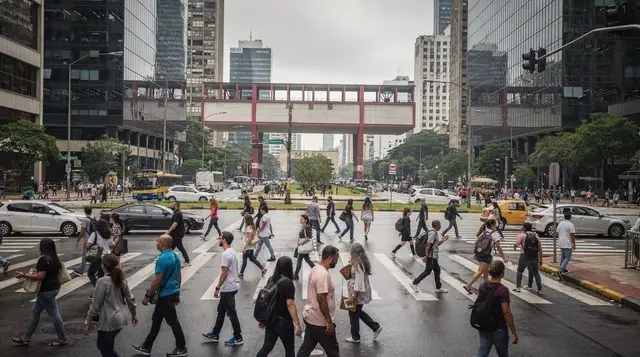
São Paulo's north zone
What's the main reason to visit São Paulo's north zone?
Parque Estadual da Cantareira, widely described as the largest urban forest in the world — genuine Atlantic Forest hiking within reach of the city centre by metro and a short taxi ride. Beyond the park, the north zone is mostly residential and doesn't reward much further exploration for a first-time visitor.
São Paulo’s Zona Norte runs from Santana, a settled middle-class district close to the centre, out through Tucuruvi and further districts toward the city’s northern boundary. It’s mostly residential, with far fewer conventional sights than the west and south zones, but it holds one genuinely exceptional feature: Parque Estadual da Cantareira, a huge stretch of preserved Atlantic Forest reaching almost to the edge of the built-up city. For hikers or anyone who wants a real forest experience without leaving the metropolitan area, this is one of the best reasons to head north — everything else here is more of a curiosity than a destination.
| Where | North of the centre, along Metro Line 1 Blue toward Tucuruvi |
| Cost | Free to walk in most areas of the park; guided hikes R$100–250 |
| Time needed | Half a day for the park; an hour or two for anything else |
| Getting there | Metro Line 1 Blue to Santana or Tucuruvi, then a short taxi to the park entrance |
| Best time | Weekday mornings, to avoid weekend crowds and afternoon heat |
Parque Estadual da Cantareira
Cantareira is regularly cited as the largest urban forest in the world, a vast stretch of preserved Atlantic Forest — the ecosystem that once covered this entire region before the city existed — with several access points around the northern edge of São Paulo. Trails range from easy, well-marked walks to longer, steeper hikes with genuine elevation gain, waterfalls, and views back over the city skyline from within the forest canopy. This isn’t a manicured city park; it’s a real protected ecological reserve, and the contrast between hiking here and being back in the middle of a 20-million-person metropolis within the hour is genuinely striking.
A guided rainforest hike in Cantareira is the more thorough option, running most of a day and covering more challenging terrain with a knowledgeable guide. For a shorter, more accessible outing, a Cantareira hiking day trip covers a well-marked route without requiring advanced hiking fitness. Either is a far better use of a free day than trying to explore the wider north zone on foot.
The Pedra Grande trail and what to expect on the ground
The best-known single hike within Cantareira leads to Pedra Grande, a large rock outcrop that opens out above the forest canopy with a genuinely wide panoramic view back over the city — a strange, striking sight after an hour or more surrounded by dense forest with no sense of how close you still are to a metropolis of over 20 million people. The trail itself is moderate rather than extreme, doable by a reasonably fit hiker without technical experience, though the terrain is uneven enough that proper footwear matters. Most access points into the park run through Horto Florestal, a forested nursery-and-park area that functions as the main gateway and typically has the clearest signage and easiest orientation for a first-time visitor arriving without a guide.
Wildlife in the forest
Cantareira is genuinely wild enough to support real Atlantic Forest wildlife within city limits — capuchin monkeys are a realistic, if not guaranteed, sighting on quieter trails, along with a wide range of native birdlife that draws birdwatchers specifically for this reason. It’s not a wildlife park with staged sightings; encounters are opportunistic, quieter on weekday mornings when trail traffic is lower, which is one more reason to prioritise that timing over a busier weekend visit.
Practical hiking tips
Bring more water than you think you’ll need — humidity inside the forest is high even when the city outside feels dry, and there are no reliable refill points once you’re past the main entrance areas. Trail markings vary in quality between sections, which is part of why a guided option is worth considering if you want to reach specific viewpoints like Pedra Grande without backtracking or missing a turn. Mobile signal drops out in parts of the deeper trail network, so download an offline map or stick to a guided tour if you’re not confident navigating without connectivity.
Santana, the closest and calmest district
Santana, right at the southern edge of the north zone and well connected by metro, is a settled, unremarkable-in-a-good-way residential and commercial district — decent local restaurants, ordinary shopping streets, and none of the tourist infrastructure of Jardins or Centro. It’s not a destination in itself, but it’s a useful, calmer base if you’re staying nearby for practical reasons like proximity to Guarulhos airport, and it gives a more accurate sense of how most paulistanos actually live day to day than any of the city’s headline neighbourhoods do.
Parque da Juventude, built on a demolished prison
A more unusual stop: Parque da Juventude sits on the site of the former Carandiru penitentiary, one of Latin America’s most notorious prisons, demolished in the early 2000s after decades of severe overcrowding and a violent 1992 police intervention that killed over a hundred inmates — a defining and painful moment in Brazil’s modern history. The park that replaced it is a deliberate act of civic reinvention: sports facilities, green space, and a public library, built directly over what the city wanted to leave behind. It’s not marketed as a tourist attraction and there’s minimal on-site interpretation of the history, but knowing the context changes how you read the space entirely. See the short history of São Paulo for how this fits into the city’s wider modern history.
Shopping Center Norte
One of the larger shopping malls in the north zone, useful mainly as a practical rainy-day fallback or if you’re staying nearby, rather than as a destination worth crossing the city for. It’s a fair example of how ordinary, functional São Paulo operates away from the postcard neighbourhoods, if that’s of interest.
Why Cantareira exists at all, so close to the city
It’s worth understanding why such a large protected forest survived directly against the edge of one of the world’s biggest cities rather than being developed like almost everything else around it: the range was protected specifically for its role in São Paulo’s water supply, with several of the reservoirs feeding the metropolitan region sitting within or near the park’s boundaries. That practical, infrastructural origin — protecting the watershed, not primarily preserving scenery — is part of why the forest survived intact through a century of otherwise relentless urban expansion, and it’s a genuinely interesting piece of context for understanding how the city’s relationship with its surrounding environment actually works.
What the north zone doesn’t have
Unlike the west and central zones, the north zone has no major museums, no comparable street art scene, and no neighbourhood with the bar-and-restaurant density of Vila Madalena or Itaim Bibi. Be realistic about this before planning a full day here — outside Cantareira, there isn’t enough conventional sightseeing to fill an afternoon for most visitors.
North zone versus east zone: two less-visited halves of the city
| North zone | East zone | |
|---|---|---|
| Main draw | Parque da Cantareira | Corinthians at Neo Química Arena |
| Character | Residential, closer to nature | Dense, working-class, Nordestino heritage |
| Typical visitor reason | A hiking day trip | A football match |
| Metro access | Line 1 Blue | Line 3 Red |
See the guide to São Paulo’s east zone for the comparison, and the broader hiking near São Paulo guide for how Cantareira compares to other trail options around the city.
The park’s four núcleos, and why only one matters for most visitors
Parque Estadual da Cantareira is divided into four separate entry areas, known as núcleos, spread across the forest’s full extent rather than one continuous entrance — Núcleo Pedra Grande (accessed via Horto Florestal near Tucuruvi), Núcleo Engordador, Núcleo Águas Claras and Núcleo Cabuçu, the latter three reached from different, more peripheral points around the forest’s edge, some in neighbouring municipalities rather than São Paulo proper. For a visitor without a car and without several days to dedicate purely to hiking, Núcleo Pedra Grande is overwhelmingly the practical choice — it’s the closest to the metro, the best signposted, and the one every guided tour and taxi driver already knows how to reach. The other three núcleos exist and are genuinely worth knowing about if you’re a committed hiker planning a longer, more independent trip, but they add real transport complexity that isn’t worth taking on for a first visit to the park.
Rainy season and when hiking gets genuinely difficult
São Paulo’s summer (December–March) brings intense, often sudden afternoon thunderstorms, and Cantareira’s trails respond to this weather pattern more dramatically than anything in the city itself — a dry morning can turn into slick, muddy, occasionally hazardous terrain within an hour if a storm rolls in, and some sections close temporarily after heavy rain for safety. If a hike here is a real priority, autumn and winter (roughly April–August) offer far more reliable trail conditions, with the added benefit of cooler temperatures that make the elevation gain toward Pedra Grande noticeably more comfortable than during the humid summer months. If you’re visiting during the summer regardless, a morning start isn’t just about avoiding weekend crowds — it’s a genuine safety margin against the storm risk that builds through most summer afternoons.
Getting there in practice: cost and traffic reality
The taxi or rideshare leg from Santana or Tucuruvi metro station to the Horto Florestal entrance typically runs R$15–35 (roughly US$3–7) depending on traffic and exact pickup point, a short enough ride that it’s rarely worth arranging in advance — rideshare apps work reliably in this part of the city. That said, this stretch of the north zone isn’t immune to São Paulo’s traffic patterns, and a ride that takes eight minutes on a quiet weekday morning can stretch past twenty on a Sunday when local traffic to the park itself builds up alongside the city’s usual weekend patterns; see the São Paulo traffic guide for the wider picture. Driving yourself is an option if you already have a car for the trip, though parking directly at the Horto Florestal entrance fills up by mid-morning on weekends, another reason a weekday visit is the more reliable plan.
Tucuruvi and the north zone’s own transit history
Tucuruvi, the metro line’s northern terminus and the usual jumping-off point for Cantareira, has a more interesting backstory than its current function as a transit hub suggests. Metro Line 1 Blue reached this far north only in the 1980s, decades after the original line opened, and the neighbourhood’s growth from a relatively minor outer district into a fully connected part of the metropolitan transit network tracks the city’s broader mid-to-late-20th-century expansion outward from the historic centre. That expansion is part of why the north zone reads today as solidly residential rather than commercial or touristic — it grew up around the metro as a bedroom community for a growing middle class, not as a district built around sights or attractions, which is precisely why Cantareira’s forest, protected long before that residential growth arrived, feels so distinct from everything immediately around it.
Comparing a Cantareira hike to hiking options further from the city
For hikers weighing whether Cantareira is worth prioritising over a longer day trip further from São Paulo, it’s worth being clear about what it offers relative to the alternatives. Cantareira’s advantage is pure convenience — genuine Atlantic Forest reachable within an hour or so of central São Paulo by metro and a short taxi, with no overnight stay or long drive required.
Destinations like Campos do Jordão or the trails around Serra da Mantiqueira, covered in the broader hiking near São Paulo guide, offer more dramatic elevation, cooler mountain air, and generally more spectacular views, but require a half-day or more of travel each way, effectively consuming a full day or an overnight stay rather than a half-day outing. For a visitor with limited time who still wants a genuine forest experience, Cantareira is the clear practical choice; for a longer trip with a free day or two to dedicate specifically to hiking further afield, the mountain destinations offer a meaningfully different, more dramatic experience worth the extra travel.
A quieter alternative: Horto Florestal without the full hike
For visitors who want a taste of Cantareira’s forest environment without committing to a full hike toward Pedra Grande, the Horto Florestal grounds themselves — the main gateway area into Núcleo Pedra Grande — offer shorter, flatter walking trails and picnic areas that require far less time and physical effort than the full trek to the summit viewpoint. This is a reasonable option for families with young children, visitors with limited mobility, or anyone who wants forest atmosphere without a multi-hour commitment, and it still delivers the core experience of standing inside real Atlantic Forest a short distance from one of the world’s largest cities. Ask at the entrance about which shorter loop trails are currently open, since options here are more flexible and less fixed than the marked routes toward Pedra Grande itself.
Frequently asked questions about São Paulo’s north zone
Is Parque da Cantareira worth a full day?
A half-day covers a solid hike; committed hikers with a full day can go further and combine multiple trail sections. Either way, budget transport time to and from the entrance.
How do I get to Parque da Cantareira without a car?
Metro Line 1 Blue to Santana or Tucuruvi, then a short taxi or rideshare to the park entrance — there’s no direct metro stop at the park itself.
Is the north zone safe for tourists?
Yes, with the same ordinary city precautions that apply anywhere in São Paulo. It’s simply less geared toward visitors than the central and western districts.
Do I need a guide for Cantareira, or can I hike independently?
Independent hiking is possible on the marked trails, but a guided option is worth it for the less obvious routes, especially if you want to reach viewpoints or waterfalls without backtracking.
What should I wear for Cantareira?
Proper walking or hiking shoes, sun protection, and insect repellent — this is genuine forest terrain, not a paved city park.
Is Parque da Juventude worth visiting for its own sake?
Mainly for those interested in the history behind it — the Carandiru prison’s demolition and what replaced it is a significant chapter in recent Brazilian history, even though the park itself offers little on-site context.
Can I combine Cantareira with anything else in the north zone in one day?
Realistically, no — most of a day trip to Cantareira is taken up by the hike itself and the transport to and from it. Treat other north zone stops as separate, optional additions rather than part of the same outing.
Will I definitely see wildlife in Cantareira?
Not guaranteed — capuchin monkeys and native birdlife are realistic sightings, more likely on quiet weekday mornings, but this is a wild forest rather than a managed wildlife park with staged encounters.
Fitting the north zone into a longer trip
Parque da Cantareira fits well into a five-day itinerary as a dedicated outdoors day, particularly if you need a break from dense urban sightseeing. It’s a reasonable stretch for a three-day itinerary only if hiking is a real priority for you. See the best parks in São Paulo guide for how Cantareira fits alongside the city’s other green spaces.
São Paulo neighborhood tours on GetYourGuide
Verified deep-linked GetYourGuide tours. Book through these links and we earn a small commission at no cost to you.
These are our own photographs of São Paulo, not the operator's pictures of this tour — open the tour page to see those.