Graffiti tours in São Paulo compared
What's the best graffiti tour to book in São Paulo?
For most first-time visitors, a small-group walking tour through Vila Madalena and Beco do Batman gives the best return for two to three hours and around R$120–200 (roughly US$25–40). Bike tours cover more neighbourhoods for a similar price, and paint workshops are worth it only if you actually want to spray something yourself, not just look.
Search “São Paulo graffiti tour” on any booking platform and you’ll get somewhere between seven and a dozen listings that all photograph the same three or four alleys in Vila Madalena. They are not interchangeable. Some are two-hour walks with a guide who talks; some are bike routes that cover four or five neighbourhoods in the same time; a couple hand you a spray can and let you paint a wall or a canvas yourself. Picking the wrong one means either overpaying for content you could see for free, or under-booking a format that would have actually taught you something. This guide compares what’s actually on offer, tour by tour, so you can pick the one that matches how you want to spend the two or three hours, not just the one with the best thumbnail photo.
| Where | Vila Madalena and Beco do Batman, with some tours extending into Pinheiros and Cerqueira César |
| Cost | R$120–350 depending on format (roughly US$25–65); free if you walk it yourself |
| Time needed | 2–3.5 hours for most guided formats |
| Getting there | Metro Vila Madalena (Line 2 Green) or Fradique Coutinho, both a short walk from Beco do Batman |
| Best time | Weekday mornings or early afternoons, before the alley gets crowded with other tour groups |
Walking, biking or spraying: three different products
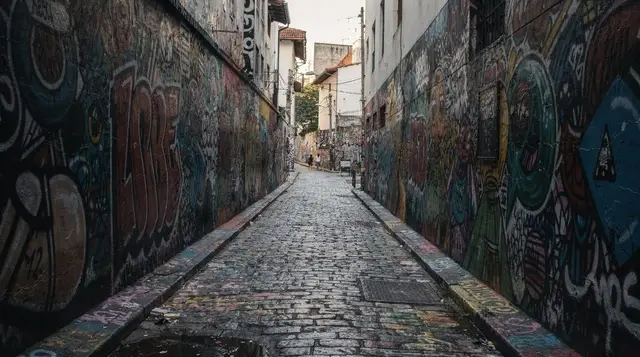
The first decision isn’t which company to book, it’s which format. A walking tour moves at a slow, conversational pace through a small radius — usually Beco do Batman, a few blocks of Rua Aspicuelta and Rua Wisard, and the murals around Largo da Batata. You’ll cover maybe six or eight blocks in two to three hours, but the guide has time to explain who painted what, when a wall was last repainted, and why. A bike tour trades that depth for breadth: you’ll see murals in Vila Madalena, Pinheiros, and sometimes further out toward Butantã or the river, but you’re rolling past most of them rather than standing in front of them. A spray or paint workshop is a different activity entirely — you’re not touring at all, you’re being taught technique on a small wall, a canvas, or a mug, usually by a working artist, and you leave with something you made rather than photos of something someone else made.
None of these is objectively better. They answer different questions. If your question is “what is this scene and why does it matter,” take a walking tour. If your question is “show me as much of the city’s murals as possible,” take the bike tour. If your question is “I want to try this myself,” book the workshop.
There’s also a practical difference in how each format handles crowds. Beco do Batman is small — one narrow lane and a handful of side streets — and by mid-morning on a weekend it can have three or four separate tour groups converging at once, all photographing the same wall from the same angle. A walking tour guide who knows the area will often route around the worst of it, timing the visit to the alley for a gap between groups or approaching from a quieter side street. A bike tour largely sidesteps the problem simply by not lingering anywhere long enough for it to matter. If you’re walking on your own with no guide to manage timing, aim for a weekday before 11am.
The tours compared
| Tour | Format | Typical length | What it’s for | Rough price |
|---|---|---|---|---|
| São Paulo street art tour | Small-group walking | 2–3 hours | General introduction to Beco do Batman and Vila Madalena, good first booking | R$120–180 (~US$25–35) |
| Afro-Brazilian culture and street art tour | Small-group walking | 2–3 hours | Street art read alongside Afro-Brazilian history and culture, not just visuals | R$140–200 (~US$28-40) |
| Street art bike tour | Bike, small group | 3–3.5 hours | Wider survey across several neighbourhoods for the same time budget | R$150–220 (~US$30–45) |
| Pinheiros street art and spray experience | Walking plus hands-on spraying | About 2 hours | A taste of actually painting, without a full workshop commitment | R$180–250 (~US$35–50) |
| Batman’s Alley paint workshop with an artist | Small workshop | About 2 hours | Paint your own canvas or mug alongside a working local artist | R$200–280 (~US$40–55) |
| Bar and street art crawl with local guide | Evening walking plus bars | 3–4 hours | Street art framed as part of a night out, not a standalone activity | R$150–220 (~US$30–45) |
| Coolest urban scenes bike tour | Bike, citywide | 3.5 hours | Broader city photography angle, street art as one stop among several | R$180–260 (~US$35–50) |
Prices vary by season, group size, and how far in advance you book — treat these as planning ranges, not quotes, and check the current listing for exact figures before you commit.
Who should book which tour
The budget-conscious independent walker. If you’re comfortable navigating on your own and mainly want to see the murals without paying for a guide, walk it yourself — see the section below. You’ll save the R$120–250 and still see almost everything a walking tour shows you, minus the context.
The first-time visitor who wants the story, not just the photos. A small-group walking tour is the right call. The São Paulo street art tour is the most general-purpose option — a guide who can point out which walls are protected commissions and which get painted over every few months, and explain the rough geography of Vila Madalena without you having to piece it together from a map. If you want that same walking format but weighted toward Afro-Brazilian history and culture rather than a pure art-history lens, the Afro-Brazilian culture and street art tour covers overlapping ground with a different emphasis.
Travellers who want to cover more ground. A bike tour makes sense if you’re only in São Paulo for a day or two and want a wider sample of the city’s murals rather than one deep look at Vila Madalena. It’s a reasonable trade of depth for breadth, and it doubles as a decent way to see parts of Pinheiros and the river corridor you wouldn’t otherwise walk to.
Anyone who wants to make something, not just look at it. The Pinheiros spray experience and the Batman’s Alley paint workshop are aimed at people who want an active souvenir rather than a passive viewing. Neither requires any prior skill. The workshop format tends to be more structured — you’re painting a specific object with guidance — while the spray experience is looser and closer to trying out the tool on a real wall.
Groups who want a night out built around the theme. The bar and street art crawl is the outlier here: it’s really a bar crawl with a street-art framing, timed for evening rather than daylight, when you’d actually see less of the murals themselves. Book it for the social format, not for mural-viewing — daylight tours will always show you more art.
Going without a guide: walking Beco do Batman yourself
You do not need to book anything to see Beco do Batman and the core of Vila Madalena’s street art. Take the metro to Vila Madalena station on Line 2 Green, walk roughly ten minutes to Rua Wisard and Rua Aspicuelta, and follow the alley signposted informally as Beco do Batman — it’s a genuine dead-end lane, not a curated attraction, and it’s free and open at all hours. The murals rotate constantly; whatever you see photographed online may already have been painted over. Budget 45 minutes to an hour for the alley itself, then wander the surrounding blocks toward Largo da Batata and Praça Benedito Calixto, where the street art continues in a looser, less concentrated way.
What you lose by skipping a guide: context about who painted specific walls and when, safe navigation to murals slightly off the main tourist path, and — for the workshop-style bookings — the actual hands-on component, which you obviously can’t replicate on your own. What you don’t lose much of: the core visual experience of Beco do Batman itself, which is genuinely free to see and doesn’t require a guide to appreciate at a basic level. If you’re on a tight budget or you’ve already read up on the scene beforehand — the Beco do Batman guide and the São Paulo street art guide both cover the geography and history in enough depth to make independent walking worthwhile — a guide adds polish more than it adds access.
Booking tips: timing, group size and what to bring
Book for a weekday morning if you can — Beco do Batman gets genuinely crowded with multiple tour groups converging by early afternoon, especially on weekends, and photos become difficult without strangers in frame. Small-group walking tours typically cap at 8–15 people; ask before booking if the group size matters to you, since a group of 15 moving through a narrow alley loses the intimate feel that makes a guided walk worth the money in the first place. Wear shoes you don’t mind getting a little spray paint on if you’re doing a workshop, and bring cash in small denominations — some workshop operators sell extra materials or take tips in reais rather than card. None of the tours listed here require advance vaccination, permits, or special gear; this is an urban walking activity in daylight, not an expedition.
Weather is worth checking too. São Paulo’s afternoon storms, common from December through March, tend to arrive fast and hard in the late afternoon, and a walking or bike tour caught mid-route has nowhere to shelter beyond a café doorway. Morning bookings dodge this almost entirely; if you’re stuck with an afternoon slot in summer, keep an eye on the sky and don’t be surprised if a guide cuts the route short. Outside summer, from April through August, the weather is drier and more predictable, which is also generally the more comfortable season to be walking around outdoors for two or three hours at a stretch.
One more honest note on value: don’t assume a higher price means a better tour. Some of the higher-priced listings are higher because they include transport, food, or a smaller group cap, not necessarily because the guiding itself is stronger. Read what’s actually included — pickup, materials, snacks, group size — rather than treating price as a proxy for quality, and check recent reviews for mentions of group size on the day, since caps aren’t always enforced strictly during busy periods.
If you’re weighing a guided tour against other guided experiences in the city more generally, is a guided tour of São Paulo worth it covers the broader case for and against, and how to book tours in São Paulo without overpaying has practical advice that applies here too — cross-shop between platforms, and don’t assume the first listing you find is the cheapest for the same itinerary.
Frequently asked questions about booking a street art tour in São Paulo
Is a graffiti tour in São Paulo worth the money?
It depends what you’re paying for. If you want context and a hands-on component, yes. If you just want to see the murals, you can walk Beco do Batman for free and get most of the same visual experience.
Which is better, a walking tour or a bike tour?
Walking gives you more depth in a smaller area; biking covers more neighbourhoods in the same time but at a faster pace. Pick walking if you want to understand a few specific murals well, biking if you want a broad sample of the city’s street art.
Can I do a graffiti tour and a paint workshop on the same day?
Yes, comfortably — most walking tours and workshops run two to three hours, so a morning walking tour and an afternoon workshop fit into one day without feeling rushed.
Do I need to book in advance?
For small-group tours, a day or two ahead is usually enough outside major holidays. Workshops with limited materials or artist availability are worth booking a few days out if your dates are fixed.
Is Beco do Batman safe to visit without a guide?
Yes, in daylight. It’s a well-trafficked, informally recognised attraction in a generally safe part of Vila Madalena. The usual city-centre precautions apply — keep your phone secured when not actively using it — but this isn’t a high-risk area.
How much does a typical street art tour cost in São Paulo?
Small-group walking tours generally run R$120–200 (roughly US$25–40). Bike tours and hands-on workshops run somewhat higher, R$180–280 (roughly US$35–55), reflecting equipment or materials costs.
Are these tours suitable for kids?
Walking tours are generally fine for older children who can manage a couple of hours of walking. Spray and paint workshops tend to appeal to kids more directly since they’re hands-on — check the specific listing for any age minimums before booking.
What’s the difference between this and the general São Paulo street art guide?
This page compares the bookable tours specifically. For the wider picture — the scene’s history, where else to see murals beyond Vila Madalena, and how it fits together with pixação — see the São Paulo street art guide.
Fitting a street-art tour into your trip
On a three-day São Paulo itinerary, a street-art walking tour or a free self-guided walk fits naturally into a Vila Madalena and Pinheiros day, paired with lunch and an afternoon of shopping around Rua Harmonia. On a five-day itinerary, there’s room to do both a guided walking tour early in the trip and a paint workshop later, once you’ve got your bearings and know whether the hands-on format appeals to you. A seven-day itinerary gives enough slack to combine a tour with independent exploration of the Vila Madalena and Pinheiros neighbourhoods on separate days, so you see the same streets both with a guide’s context and at your own pace. For general pacing advice, how many days you need in São Paulo covers how street art fits alongside the rest of a first visit, and the artists behind São Paulo’s walls is worth reading before or after any tour if you want to know more about who actually painted what you saw.
Street art tours in São Paulo on GetYourGuide
Verified deep-linked GetYourGuide tours. Book through these links and we earn a small commission at no cost to you.
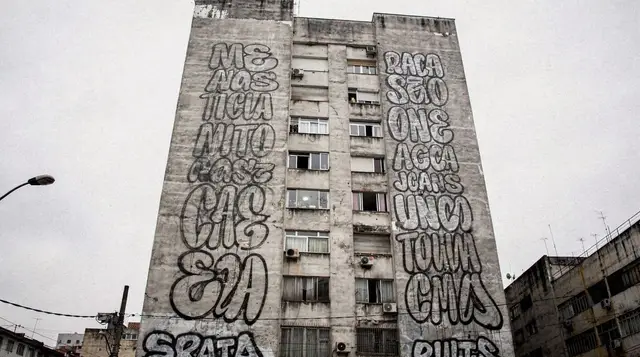
These are our own photographs of São Paulo, not the operator's pictures of this tour — open the tour page to see those.