São Paulo street art guide
Why is São Paulo considered one of the world's great street art cities?
A combination of scale, tolerance and homegrown tradition — São Paulo has thousands of murals across dozens of neighbourhoods, a distinct citywide culture of pixação tag-writing that predates the mural boom, and internationally recognised artists like Os Gêmeos and Eduardo Kobra who started here and still work here. Few cities combine that much volume with that much genuine local identity.
São Paulo is routinely named among the world’s most significant street art cities, and unlike some destinations where that reputation rests on a handful of famous walls, here it’s genuinely a citywide condition — murals cover buildings across Vila Madalena, Pinheiros, Cambuci and beyond, alongside a distinct, homegrown pixação tag-writing tradition that has nothing to do with the colourful murals tourists photograph. This guide is the overview: where the scene concentrates, the artists worth knowing, and the difference between the two very different traditions that make up “street art” here.
| Where | Concentrated in Vila Madalena, Pinheiros, Cambuci and along Avenida 23 de Maio |
| Cost | Free to see; guided tours R$100–250 |
| Time needed | Half a day for a focused tour, longer if you’re chasing specific pieces |
| Getting there | Metro Vila Madalena or Pinheiros, both Line 4 Yellow |
| Best time | Weekday mornings for the quietest viewing at key spots |
How the scene grew: from Cidade Limpa to global recognition
São Paulo’s modern street art boom has a specific, often-cited turning point: the 2006 “Cidade Limpa” (Clean City) law, which banned outdoor advertising billboards across the city almost entirely. The immediate effect was a dramatically emptier visual landscape — thousands of billboards came down within months — and one of the unintended long-term consequences was that murals and street art filled some of that newly available visual space with much less competition from commercial advertising than in most major cities. Combined with a homegrown graffiti and pixação culture that had already been building since the 1980s, heavily influenced by early hip-hop culture arriving from the United States, the conditions were unusually favourable for a mural scene to flourish and eventually draw the international artists, curators and tourists that define the city’s reputation today.
Beco do Batman, the essential single stop
Batman’s Alley in Vila Madalena is the most famous concentration of street art in the city — a narrow lane covered wall-to-wall in constantly repainted murals. It’s genuinely worth the visit despite the crowds, and it’s covered in full, including timing advice and what to expect, in the dedicated Beco do Batman guide. Treat it as the anchor of any street-art-focused day, not the whole day itself.
Avenida 23 de Maio: one of the world’s longest continuous mural walls
Running along a major arterial road connecting the centre toward the south zone, the retaining walls of Avenida 23 de Maio host what’s often described as one of the largest continuous graffiti panels in the world, stretching roughly 5km with contributions from dozens of artists. It’s not really a pedestrian experience — the wall faces a busy multi-lane road — so the best ways to see it are by bike, by car or bus passing along the avenue, or as part of a guided tour that factors in the logistics. A street art bike tour is the most practical way to actually get a proper look at a meaningful stretch of it.
Pinheiros, the less-hyped neighbour
Pinheiros, bordering Vila Madalena, has its own dense concentration of murals and spray-paint culture, generally with fewer crowds than Beco do Batman specifically because it’s less singularly famous. It also has a strong bar scene of its own worth exploring afterward; see the bars in Vila Madalena guide for the neighbouring nightlife. A Pinheiros street art and spray experience combines a walking tour of the neighbourhood’s murals with a hands-on spray-painting session, a good option if you want to participate rather than only observe.
Cambuci and the wider scene
Cambuci, an older, less gentrified neighbourhood near the centre, is closely associated with some of the city’s most significant muralists and has its own scattered concentration of large-scale work, generally seen by those specifically chasing particular artists rather than casual visitors. An Afro-Brazilian culture and street art tour weaves murals addressing Afro-Brazilian history and identity into a wider cultural walk, a genuinely different angle from the more purely visual tours elsewhere on this list.
The artists behind the biggest names
Eduardo Kobra is probably São Paulo’s best-known muralist internationally, recognisable for large-scale, hyper-colourful geometric portrait murals — several of his pieces are landmarks in their own right around the city. Os Gêmeos, twin brothers who began as graffiti writers in São Paulo in the 1980s and are now globally exhibited artists, are known for distinctive yellow-skinned figures rooted in Brazilian folklore and street culture, and are widely considered among the most influential figures in the city’s scene. Full profiles, along with the pixação-versus-grafite distinction explained in depth, are in the dedicated guide to the artists behind São Paulo’s walls.
Building your own self-guided route
If you’d rather explore independently than book a tour, a sensible one-day route runs: start at Beco do Batman in the morning while it’s quiet, spend the mid-morning wandering the surrounding Vila Madalena streets and into neighbouring Pinheiros for its own murals, break for lunch in Pinheiros, and finish the afternoon with a bike ride or rideshare pass along a stretch of Avenida 23 de Maio if you have transport arranged, since it’s not a practical walking destination. Cambuci is worth adding only if you have a specific artist or piece you’re chasing and don’t mind a longer, more scattered day — for most first-time visitors, Vila Madalena and Pinheiros alone provide more than enough density to fill a satisfying day without the extra travel time Cambuci requires.
Smaller spots most guides don’t mention
Beyond the headline locations, São Paulo’s murals turn up in genuinely unexpected corners — underpasses, school walls, and residential side streets across dozens of neighbourhoods, often uncatalogued and undocumented beyond word of mouth. Part of the appeal of a longer stay in the city is simply noticing these as you go about other business rather than treating street art purely as a scheduled activity; some of the best pieces genuinely aren’t on any tour route or map, discovered only by paying attention while walking between other destinations. See the best photography spots in São Paulo guide for more places worth this kind of attention.
Grafite versus pixação: not the same thing
It’s a common mistake to treat all of São Paulo’s wall-based art as one category. Grafite — colourful, figurative or abstract murals, generally created with permission or at least tolerance — is what most visitors mean by “street art” and what this guide mostly covers. Pixação is something else entirely: a distinctive, monochrome, angular tag-writing style, almost always illegal, applied at extreme heights on building facades across the city, and rooted in its own decades-old subculture with different values and a different relationship to authority than the mural scene. The two traditions coexist, sometimes overlap, and are sometimes in real tension with each other. The full picture, including why pixadores are often criminalised while muralists get city and brand commissions, is in the Pixação: São Paulo’s other street writing guide.
Grafite versus pixação at a glance
| Grafite (murals) | Pixação | |
|---|---|---|
| Style | Colourful, figurative or abstract | Monochrome, angular tag-writing |
| Legal status | Often tolerated or commissioned | Almost always illegal |
| Typical location | Ground-level walls, alleys | High building facades citywide |
| Public perception | Increasingly celebrated | Often criminalised |
Guided tour or self-guided walk?
Beco do Batman and much of Vila Madalena can be done self-guided with no real loss — the art speaks for itself and the area is compact and easy to navigate. Where a guided option earns its cost is coverage and context: reaching Avenida 23 de Maio properly, understanding which artists made which pieces, and connecting the scattered Pinheiros and Cambuci concentrations without wasted backtracking. A private street art tour covers that ground at your own pace with a guide who sets the route, a good option if you’d rather not stick to a fixed group departure. A full comparison of the available tour options is in the graffiti tours in São Paulo compared guide.
The deeper roots of pixação
Pixação’s history runs longer and stranger than most visitors realise. Its written style — tall, angular, cryptic lettering with roots in heavy metal album typography and punk fanzine aesthetics imported from the 1980s underground music scene — developed as a specifically São Paulo phenomenon, distinct from North American graffiti tagging even though both emerged around similar decades. Pixadores developed their own internal codes, crews and reputational hierarchies built almost entirely around risk: the higher and more dangerous a building facade climbed without permission, the greater the status earned within the subculture.
This risk-based value system is part of why pixação has historically drawn much harsher police and public response than grafite murals, even though both technically involve painting surfaces without ownership permission — the visible danger and the confrontational placement on prominent buildings reads to much of the public as a more direct challenge to authority than a colourful mural in an alley. Academic and art-world interest in pixação as a legitimate cultural form has grown over the past two decades, with some pixadores’ work eventually exhibited in galleries and museums, a genuinely contested development within the subculture itself between those who see gallery recognition as validation and those who see it as a betrayal of the practice’s anti-establishment roots.
São Paulo against other global street art capitals
São Paulo’s reputation holds up well against the cities most commonly cited in the same breath. Berlin’s East Side Gallery and wider mural scene grew out of a very different history — the fall of the Berlin Wall specifically — and remains more concentrated in a handful of well-known districts than São Paulo’s citywide spread. Melbourne’s laneway culture, often compared to São Paulo’s density, covers a much smaller total geographic area, meaning a visitor can realistically see a large share of Melbourne’s best work in a single afternoon in a way that isn’t true of São Paulo’s much larger canvas.
Bristol, home to Banksy and a strong regional scene, is smaller still and more centred on a single dominant artist’s legacy than São Paulo’s much broader base of internationally significant names. What sets São Paulo apart in most comparisons isn’t necessarily superior individual pieces but genuine scale combined with an unusually deep homegrown tradition — Os Gêmeos and the wider grafite movement developed with minimal early international influence, giving the scene a distinct visual identity rather than one imported wholesale from North American or European graffiti traditions.
Mistakes visitors make chasing São Paulo’s murals
A handful of avoidable errors come up repeatedly. Relying on outdated photos or blog posts as a fixed map is the most common — because murals here are genuinely temporary, a specific piece that made a location famous online may simply not exist anymore by the time you visit, and treating any single photo as a guarantee sets up disappointment. Underestimating the distances between concentration points is another: Vila Madalena, Pinheiros, Cambuci and Avenida 23 de Maio are spread across a meaningfully large area of the city, and trying to cover all of them in a single day without transport arranged in advance usually means cutting one or more short.
A third mistake is treating pixação sightings purely as a curiosity to photograph without understanding what you’re looking at — approaching it with the same casual tourist framing as a commissioned mural misses the subculture’s actual context and, at worst, can come across as dismissive of a tradition with real history and stakes for the people involved in it.
The corporate commission debate
One tension worth understanding before your visit: a meaningful share of São Paulo’s most photographed murals today are the result of paid commissions — from building owners, brands, or public initiatives — rather than purely independent artistic expression. This shift has been gradual and remains genuinely debated within the local scene itself: some artists and observers see commissioned work as validation and a sustainable way for muralists to earn a living from their craft, while others argue it dilutes street art’s original spirit of unauthorised, unpaid public expression.
Kobra’s large-scale, hyper-colourful portrait murals are among the most frequently cited examples of this commissioned, brand-adjacent model, in contrast to the more spontaneous, informally tolerated tradition still visible in spaces like Beco do Batman. Neither model is inherently more or less worth seeing as a visitor, but understanding the distinction adds useful context to what you’re looking at as you move between a corporate-sponsored landmark mural and a smaller, unofficial piece in a Pinheiros side street.
Frequently asked questions about São Paulo’s street art scene
Where should I start if I only have a few hours?
Beco do Batman in Vila Madalena — it’s the most concentrated, walkable introduction to the scene and easily reached by metro.
Is São Paulo’s street art legal?
Grafite murals are generally created with tolerance or explicit permission, particularly in well-known spots like Beco do Batman and along Avenida 23 de Maio. Pixação is a different matter and is almost always illegal.
Who are the most famous São Paulo street artists?
Eduardo Kobra and Os Gêmeos are the two names most likely to come up internationally, though the wider scene is far deeper than just these two.
What’s the difference between graffiti and pixação?
Grafite refers to the colourful murals most visitors mean by “street art.” Pixação is a distinct, monochrome tag-writing tradition, generally illegal, with its own separate history and subculture.
Is it safe to explore São Paulo’s street art neighbourhoods alone?
Vila Madalena and Pinheiros are generally safe to explore independently during the day. Areas further from the main tourist circuit, like parts of Cambuci, benefit from a guide or at least careful daytime planning.
Can I see Avenida 23 de Maio’s mural wall on foot?
Not comfortably — it faces a busy multi-lane road. A bike tour or a passing vehicle view works far better than trying to walk it.
How much does a street art tour cost?
Roughly R$100–250 depending on format — walking tours generally sit at the lower end, bike tours and hands-on spray workshops toward the higher end.
How did the 2006 billboard ban affect the street art scene?
It removed the vast majority of commercial advertising from the city’s visual landscape almost overnight, freeing up wall space that murals gradually filled — a factor widely cited in why São Paulo’s scene grew as fast and visibly as it did in the years that followed.
Fitting a street art day into a longer trip
On a three-day itinerary, a street art morning in Vila Madalena and Pinheiros pairs naturally with an afternoon of nightlife in the same neighbourhoods. On a dedicated art and architecture itinerary, street art is woven in alongside MASP and the city’s modernist buildings for a fuller cultural picture across the whole trip.
São Paulo culture, nightlife & street art experiences on GetYourGuide
Verified deep-linked GetYourGuide tours. Book through these links and we earn a small commission at no cost to you.
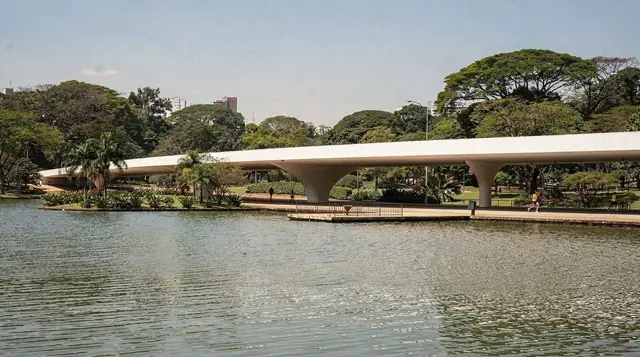
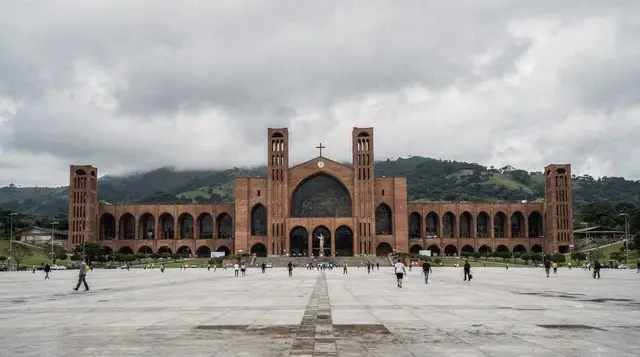
These are our own photographs of São Paulo, not the operator's pictures of this tour — open the tour page to see those.