Is a guided tour of São Paulo worth it
Is it worth booking a guided tour in São Paulo?
Yes, for Centro Histórico, street art, and favela visits, where local context genuinely changes what you understand about what you're seeing. Less necessary for Paulista, Ibirapuera Park or Liberdade, which are straightforward to navigate solo with a decent map. A private guide on day one is worth it for anyone overwhelmed by the city's scale.
The honest answer depends entirely on where you’re going and what you value from a trip. São Paulo isn’t a city where a guide is required to function — the metro is straightforward, signage is decent, and you won’t get meaningfully lost walking Paulista or Ibirapuera Park on your own. But it is a city where a guide adds real, specific value in certain districts, because so much of what makes it interesting sits below the surface: which mural is by an internationally recognised artist, why a specific building matters to the city’s immigration history, which favela tour operator actually puts money back into the community it’s showing you. This guide breaks down where a guide earns its cost and where it doesn’t.
| Where | Value varies significantly by district — see the breakdown below |
| Cost | Group tours R$80–200 (~US$14–36); private tours R$300–800+ (~US$55–145) |
| Time needed | Most tours run 2–6 hours |
| Getting there | Most tours have a fixed meeting point reachable by metro |
| Best time | Day one of your trip, if you’re booking a general orientation tour |
Where a guide genuinely changes the experience
Centro Histórico. The old downtown’s layered history — colonial origins, the coffee-boom architecture, waves of Jewish, Italian and Lebanese immigration through the same few streets — isn’t obvious from a self-guided walk. A Jewish history downtown walking tour is a good example of how a specific angle transforms a district you could otherwise walk through without understanding what you’re seeing.
Street art and pixação. Distinguishing a commissioned, internationally recognised mural from opportunistic tagging isn’t intuitive to visitors, and a guide who knows the scene adds genuine context that changes how you read the walls of Vila Madalena and Pinheiros.
Favela visits. This is the one place a guide isn’t optional — visiting Paraisópolis or any other favela without a guide connected to the community is both a poor experience and ethically questionable. A Paraisópolis favela tour run by an operator with genuine community ties is the only responsible way to do this; see the favela tours in São Paulo, honestly guide for how to vet operators.
A confusing, overwhelming first day. For visitors who find São Paulo’s scale genuinely disorienting on arrival, a private walking tour with a local on day one solves the problem efficiently — three or four hours with someone who can answer your specific questions does more for your orientation than a guidebook.
Where a guide is less necessary
Avenida Paulista. Wide, well-signposted, and straightforward to navigate with a map — the avenue’s landmarks (MASP, Trianon park, Casa das Rosas) are self-explanatory enough that a guide adds convenience more than genuine new understanding.
Ibirapuera Park. A large, clearly laid-out park with obvious paths — enjoyable solo, and a guide here is more about efficiency (seeing the whole park in less time) than unlocking hidden meaning.
Liberdade’s main street and market. Walkable and atmospheric on its own, though a dedicated guide adds real depth on the neighbourhood’s Japanese immigration history if that specifically interests you — see the earlier point on Centro Histórico for the same logic applied here.
Museums with audio guides. MASP and the Pinacoteca both offer solid audio guide options that cover much of what a human guide would explain, at a fraction of the cost.
Private versus group tours
Group tours are cheaper per person and follow a fixed itinerary at a fixed pace — fine if you’re comfortable moving with a group and don’t have specific priorities that differ from the standard route. Private tours cost significantly more but adapt entirely to your interests and pace; worth it if you have limited time and want to prioritise ruthlessly, are travelling with people who move at different speeds, or simply prefer not sharing the experience with strangers. A private custom tour with a local guide is the strongest fully-flexible option if your interests don’t map neatly onto any fixed-itinerary tour.
How to tell a good guide from a mediocre one
Look for specificity in the tour description — “walking tour of Centro Histórico” tells you less than “walking tour covering the Jewish immigrant history of Centro Histórico, including the former garment district around Rua José Paulino.” Reviews that mention the guide by name, rather than generic praise, are a reasonably reliable signal. For favela tours specifically, look for explicit mention of community reinvestment or local-guide employment — vague language here is a red flag rather than an oversight.
What a guide costs versus what it saves
A private half-day tour running R$400–600 (~US$73–109) sounds steep against a solo metro-and-map approach that costs almost nothing beyond transport. But weighed against the time lost to navigation confusion, missed context, and — in the case of favela visits — genuinely wasted or ethically compromised experiences, the cost often pencils out reasonably for a first visit, particularly on a trip where time is more constrained than money.
Tipping guides
Tipping isn’t obligatory for guided tours in Brazil, but it’s customary and appreciated — 10–15% of the tour cost, or a flat R$20–50 (~US$4–9) per person for a group tour, is a reasonable range. For private tours, particularly full-day ones, tipping toward the higher end of that range is standard practice if the guide went beyond the basic itinerary. See the tipping in Brazil guide for the fuller context across restaurants, hotels and transport.
Booking through a platform versus directly
Booking through an established platform gives you cancellation protection, verified reviews and a reasonably standardised experience — useful if you don’t have a personal recommendation to go on. Booking directly with a known local operator, often through a referral from your hotel or a previous traveller, can occasionally be cheaper and more flexible, but carries more risk if something goes wrong, since you lose the platform’s dispute resolution. For a first visit with no existing local contacts, a platform booking is the more reliable starting point.
Three scenarios where a guide’s judgment actually earns its cost
Abstract “context and expertise” claims are easy to write and hard to evaluate, so it’s worth being concrete about what a good guide actually does in the moment that a guidebook or map can’t. First: distinguishing a commissioned mural from opportunistic tagging on the same block in Vila Madalena or Pinheiros — see the pixação explained guide for why this distinction genuinely matters — is second nature to a guide who works the neighbourhood daily and takes maybe five seconds, versus a visitor who has no reliable way to tell the two apart without background reading first.
Second: a guide who works Centro Histórico regularly knows, in real time, which streets are comfortable to walk at a given hour and which aren’t worth the shortcut, a judgment call that changes hour to hour in ways no static safety guide can fully capture. Third: on a matchday or during a major event like Carnival, a local guide’s sense of which routes get crushed with crowds and which stay clear is the difference between a smooth transfer and an hour stuck in a crowd surge — timing knowledge that comes from repetition, not research.
How much English gets you without a guide
A fair question before deciding whether to book one: can you actually get by without much Portuguese? In tourist-facing contexts — hotels, major attractions, tour operators, most restaurants in Jardins, Vila Madalena and Paulista — English is common enough that language alone rarely forces a guide booking. Metro signage is bilingual, and most rideshare apps work identically to how they do at home. Where it gets harder is precisely in the districts where a guide adds the most independent value anyway: older botecos, smaller markets, and conversations with vendors in Centro Histórico or the Mercadão frequently happen entirely in Portuguese, and a phone translation app closes most of the gap but adds real friction to a fast-moving market interaction. The Portuguese phrases for travellers guide covers the specific phrases that go furthest with minimal effort — learning a handful of them measurably changes how market vendors and small restaurant staff respond, guide or no guide.
Freelance local guides versus agency-booked ones
Beyond the platform-versus-direct-booking distinction already covered above, it’s worth separating two different kinds of “local guide”: independent freelancers who build a following through Instagram, word of mouth or a personal website, and guides who work through an established local tour agency but still deliver a genuinely personal, small-group experience. Freelancers can be excellent — often the most knowledgeable, since guiding is their primary livelihood rather than one product among many — but vetting them requires more legwork: check for a real online history longer than a few months, ask for references from past clients rather than accepting a polished portfolio at face value, and be cautious of any freelancer asking for a large deposit via an untraceable payment method before you’ve had any direct contact confirming logistics.
Agency-affiliated guides carry less individual risk since the business itself has more at stake in a bad review, but you sometimes trade a bit of the freelancer’s deep personal expertise for a more standardised experience. Neither option is universally better; for a first visit with no existing local recommendation, the added protection of a platform or established agency booking is generally worth the modest premium over a freelancer found cold online.
What to ask before booking
A few questions separate a good booking from a disappointing one: how many people will be in the group, whether entry fees to specific sites are included in the price, what happens if it rains, and — for favela tours specifically — how the tour operator supports the community it visits. Operators who answer these clearly and specifically, rather than with vague reassurances, are generally the better choice.
Group size: what changes between a 4-person and a 20-person tour
Tour descriptions rarely make group size as prominent as price or duration, but it changes the experience more than either. A small group of four to six people, common on the pricier end of group tours and standard for anything marketed as “small-group,” lets you actually ask questions mid-walk and get a real answer rather than a rehearsed line, and a guide can adjust pace and route on the fly if half the group wants to linger somewhere specific. A larger group of fifteen to twenty, more typical of budget group tours and popular time slots, moves at a fixed pace dictated by the group’s slowest members, and meaningful guide interaction usually happens only during scheduled stops rather than continuously.
Neither is wrong for every traveller — a larger group is genuinely fine for a straightforward orientation walk where you mainly want the route and headline facts, and it’s usually the cheaper option by a meaningful margin — but for anything where nuance matters, favela visits and specialised history walks especially, a smaller group size is worth paying up for. If a tour listing doesn’t state a maximum group size, it’s a reasonable question to ask before booking rather than finding out on the day.
Comparing guided versus solo by district
| District | Guide value | Recommendation |
|---|---|---|
| Centro Histórico | High — layered history isn’t obvious solo | Book a guide |
| Favelas | Essential — solo visits are inappropriate | Only go with a reputable guide |
| Street art areas | Moderate-high — context changes the experience | Guide adds real value |
| Avenida Paulista | Low | Comfortable solo |
| Ibirapuera Park | Low | Comfortable solo |
| Liberdade | Low-moderate | Solo is fine; guide adds depth |
Frequently asked questions about guided tours in São Paulo
Is it safe to explore São Paulo without a guide at all?
Yes, for the districts and daylight hours covered across this site’s guides. A guide isn’t a safety requirement outside favela visits — it’s a value-add for context and efficiency.
How much should I budget for a private guide?
R$300–800+ (~US$55–145) for a half-day to full-day private tour, depending on group size and specific focus. Group tours run R$80–200 (~US$14–36) per person.
Can I hire a guide just for a couple of hours?
Yes, most private guide operators offer shorter windows, particularly for a focused district like Centro Histórico or Vila Madalena.
Do I need a guide to visit a football match?
Not strictly, but a guided match-day experience handles ticket logistics and stadium navigation that can otherwise be confusing for first-time visitors — see the how to buy football tickets guide for the solo approach.
Are audio guides a reasonable substitute for a human guide?
For museums, largely yes — MASP and the Pinacoteca both have solid audio options. For neighbourhood walks and favela visits, no substitute replaces a knowledgeable human guide.
What language are most guided tours conducted in?
English is widely available alongside Portuguese for tours aimed at international visitors — confirm at booking, since not every slot offers both.
Is a guide more important for solo travellers than for groups?
Somewhat — a guide adds a built-in social element and a second set of eyes on navigation and safety judgment calls that a group naturally provides for itself, which is part of why the solo travel in São Paulo guide leans more toward recommending at least one guided experience for solo visitors than this guide does for groups generally.
Is it worth booking a freelance local guide found on social media rather than through a platform?
It can be, and freelancers are often the most knowledgeable option, but vet them properly first — a real online history, references from past clients, and no large untraceable deposit requested before logistics are confirmed. For a first visit with no personal recommendation, a platform or established agency booking carries less risk.
Fitting this into your trip
A single guided experience — Centro Histórico or a favela tour — fits comfortably into the three days in São Paulo itinerary without crowding out solo exploration elsewhere. For a longer trip, the five days in São Paulo and around itinerary has room to mix two or three guided experiences with plenty of independent time.
São Paulo city highlights on GetYourGuide
Verified deep-linked GetYourGuide tours. Book through these links and we earn a small commission at no cost to you.
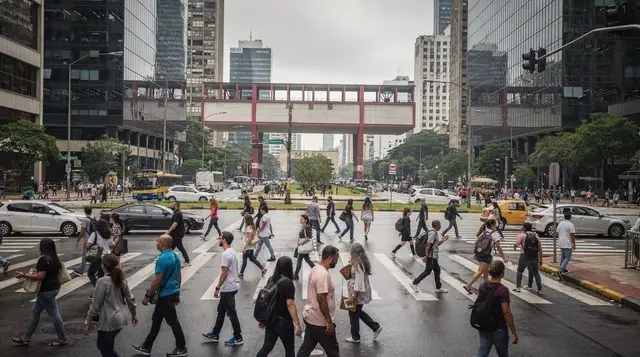
These are our own photographs of São Paulo, not the operator's pictures of this tour — open the tour page to see those.