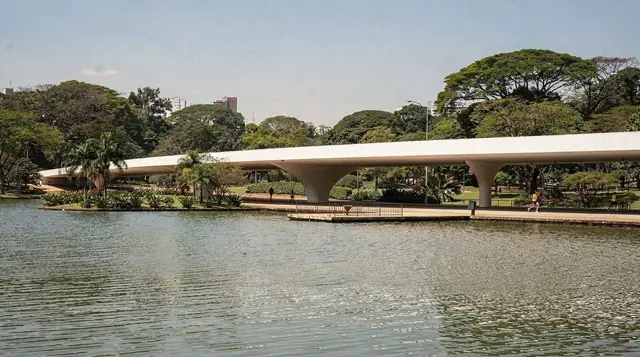
Jardins is the neighbourhood São Paulo’s wealth built for itself in the early 20th century, and it still looks the part: low-rise mansions and Art Deco apartment blocks, tree-lined streets on a gentle grid, and none of the high-rise density that defines most of the rest of the city, a contrast that becomes obvious within a single block of crossing in from any neighbouring district. It borders Avenida Paulista directly, which makes it easy to fold into the same day, but it’s a genuinely different register of neighbourhood once you cross over.
| Where | North of Paulista, between Pinheiros and Itaim Bibi |
| Cost | Restaurant mains R$60–200+, boutique prices at international rates |
| Time needed | 3 hours walking, more for a sit-down dinner |
| Getting there | Metro Consolação or Trianon-Masp, then a short walk |
| Best time | Weekday evenings for dinner, weekend mornings for a calm walk |
Rua Oscar Freire
The neighbourhood’s signature street is lined with the same luxury brands you’d find on Rodeo Drive or Fifth Avenue, plus a strong cluster of Brazilian designers who are less internationally known but worth a look for anyone interested in fashion, particularly given how strong São Paulo’s independent design scene has become over the past two decades. Even without buying anything, it’s a pleasant, shaded street to walk — genuinely one of the calmer, more attractive commercial streets in the entire city, and a useful benchmark for what “expensive” actually means in São Paulo compared to other parts of town.
The fine-dining cluster
Jardins holds the single highest concentration of serious restaurants in São Paulo, several with international reputations built over decades of consistent, ambitious cooking — this is where the city’s most accomplished chefs opened their flagship kitchens once they had the reputation to command Jardins rents. Reservations for the best-known spots need to be made weeks ahead, especially for weekend dinners. For a fuller map of the scene across price points, see fine dining in São Paulo.
Architecture worth slowing down for
Away from the shopping street, Jardins has some of the city’s best-preserved Art Deco and early-modernist residential architecture, largely because zoning here has historically resisted the high-rise redevelopment that reshaped most other central neighbourhoods, protections that have periodically come under pressure from developers over the decades but have mostly held. A private architecture tour covering Jardins alongside Paulista and downtown gives useful context on why this neighbourhood looks so different from its neighbours.
Casa das Rosas and the Paulista border
Jardins runs right up to Avenida Paulista, so it’s easy to combine a Jardins walk with the museums on the avenue itself — MASP and Casa das Rosas are both a short, pleasant walk from the neighbourhood’s northern edge, mostly along shaded residential streets rather than busy commercial ones. A skip-the-line MASP tour or a professional photo tour on Paulista both work as a natural continuation of a Jardins morning.
What it lacks
Jardins is quiet at night in a way that surprises first-time visitors expecting São Paulo energy — this is a residential, dinner-focused neighbourhood, not a nightlife destination. If you want bars and late energy after your meal, Itaim Bibi and Vila Olímpia are both a short taxi ride away, and Pinheiros is a calmer, cheaper alternative for a second dinner option on a longer stay.
Shopping beyond Oscar Freire
For a wider view of São Paulo’s shopping options — from Jardins’ boutiques down to the bargain stalls of Rua 25 de Março — see the shopping in São Paulo guide, and for the architectural story behind Jardins’ low-rise streets, the São Paulo architecture guide.
Jardins versus Itaim Bibi
| Jardins | Itaim Bibi | |
|---|---|---|
| Character | Old money, quiet, residential | Business towers, expense-account bars |
| Best for | Fine dining, architecture, shopping | After-work drinks, nightlife |
| Daytime energy | Calm, leafy | Busy with office workers |
| Evening energy | Quiet, restaurant-focused | Loud, bar-focused |
Full comparison in which São Paulo neighbourhood should you stay in.
A short history of Jardins
Jardins was developed from the 1910s onward as one of São Paulo’s first planned garden suburbs, modelled loosely on English garden-city principles — curved streets rather than a rigid grid, generous setbacks, and mandated greenery, all designed to appeal to a wealthy class moving away from the increasingly crowded and industrial centre. That planning legacy is why the neighbourhood still reads so differently from the rest of the city today: it was built from the start to prioritise light, space and calm over density, and unlike many similarly planned neighbourhoods elsewhere in Latin America, it has largely resisted the pressure to redevelop into high-rises.
Rua Augusta’s northern stretch
Where Rua Augusta cuts through the southern edge of Jardins on its way from Consolação, the street briefly picks up some of the same design-forward retail energy found further south near Baixo Augusta, before giving way to Jardins’ quieter residential blocks. It’s a useful transition point if you’re walking between Jardins and the livelier stretch of Augusta closer to the centre, and a handful of good cafés cluster around this junction.
The gallery scene
Beyond Rua Oscar Freire’s fashion retail, Jardins has quietly become home to a serious contemporary art gallery scene, with several internationally recognised galleries operating out of converted houses on the neighbourhood’s quieter streets. It’s a lower-key, appointment-optional alternative to the museum circuit on Paulista, and a worthwhile stop for anyone with a genuine interest in contemporary Brazilian art rather than just the historical collections.
Where the neighbourhood’s wealth actually lives
Jardins is technically an umbrella name covering several official sub-neighbourhoods — Jardim Paulista, Jardim América, Jardim Europa and a handful of smaller pockets — each with a slightly different character and, in some cases, a slightly different price bracket. Jardim América, closer to Pinheiros, has some of the largest and most secluded houses in the city, many hidden behind high walls and mature trees. Jardim Paulista, nearer Paulista itself, is denser and more commercial. Visitors rarely need to worry about the distinction day to day, but it explains why “Jardins” can feel like several different neighbourhoods depending on which block you’re standing on.
Frequently asked questions about visiting Jardins
Is Jardins expensive?
Yes, by São Paulo standards — it’s the city’s most expensive neighbourhood for both shopping and dining, though a walk through it costs nothing, and the calm, tree-lined streets are worth experiencing even on a tight budget.
Is Jardins walkable?
Very — it’s flatter and less dense than Vila Madalena or Centro, on a regular-enough grid that’s easy to navigate without a map, though the curved streets of Jardim América in particular can be disorienting without one.
Do I need reservations for Jardins restaurants?
For the well-known fine-dining spots, yes, often weeks in advance for weekend dinners, and sometimes further out for the most in-demand tables. Casual cafés and lunch spots take walk-ins without difficulty.
Is Jardins good for nightlife?
No — it’s a quiet, residential neighbourhood at night. Head to Itaim Bibi or Vila Madalena for bars, both a short taxi ride from any hotel in Jardins.
How does Jardins connect to Avenida Paulista?
Directly — the neighbourhood’s southern edge borders the avenue, an easy 5–10 minute walk from MASP, which makes combining a Paulista museum morning with a Jardins lunch or dinner one of the most efficient pairings in the city.
What’s the best way to see Jardins’ architecture?
A slow walk through the residential streets away from Rua Oscar Freire, particularly around Jardim América, or a guided architecture tour if you want the historical context behind why the neighbourhood looks the way it does.
Is Jardins a good place to stay?
Yes, for travellers prioritising restaurants and a calm base — see where to stay in São Paulo for how it compares to other options, particularly if proximity to fine dining outweighs a desire for late-night bar access.
Are there budget options in Jardins, or is everything expensive?
There are pockets — bakeries, juice bars and casual lunch counters exist alongside the fine-dining spots — but Jardins as a whole skews upscale, and travellers on a tighter budget will generally find better value a short walk away in Pinheiros.
Booking a table without overpaying
Jardins’ reputation for fine dining can make the neighbourhood feel intimidating to plan around, but it doesn’t have to be an all-or-nothing proposition. A reasonable middle path is a mid-range lunch at one of the neighbourhood’s better casual spots — several of the fine-dining kitchens run lower-priced lunch menus that offer a taste of the same cooking at a fraction of the dinner tasting-menu price — followed by a slow, free walk through Jardim América’s residential streets. See how to book tours in São Paulo without overpaying for related advice on avoiding markup elsewhere in the city, since the same instinct to compare and book directly applies to restaurant reservations too.
Jardins for a special occasion
If you’re marking a specific occasion during your trip — an anniversary, a milestone birthday — Jardins is the neighbourhood most visitors choose in São Paulo for exactly that reason. The concentration of serious kitchens means you can genuinely compare cuisines and price points within a few blocks of each other rather than committing to a single restaurant across town, and several of the best-known spots are used to arranging small celebratory touches for guests who mention the occasion when booking.
Fitting Jardins into a longer trip
On a three-day itinerary, Jardins works well as a late-afternoon walk into a dinner reservation, paired with an Avenida Paulista morning. On the food lover’s itinerary, it’s the natural splurge night, ideally scheduled early in the trip so you have time to book a table at whichever restaurant catches your interest once you’re on the ground. For longer trips, both the five-day and seven-day itineraries allow a full evening here without rushing, which is genuinely the better way to experience Jardins than trying to fit it into a single tight afternoon between other stops.