The best museums in São Paulo
Which São Paulo museums are actually worth prioritising if I only have time for two or three?
MASP for European art in an architecturally significant building, the Pinacoteca do Estado for Brazilian art specifically, and Museu Afro Brasil if you want a free, serious museum inside Ibirapuera Park. Add Instituto Butantan or Catavento if travelling with kids, and the Museu do Futebol if football matters to your trip.
São Paulo has more serious museums than most first-time visitors expect, spread across the city rather than clustered in one district, which is exactly why a lot of trips end up seeing only MASP and calling it done. That’s a reasonable choice if you have half a day, but it also means missing the country’s best collection of its own art, one of Latin America’s most important science museums for kids, and a genuinely moving museum on Afro-Brazilian history that most guidebooks barely mention. This guide sorts São Paulo’s museums by what they’re actually good for, not just by name recognition, so you can pick two or three that suit your trip instead of defaulting to the one everyone’s heard of.
| Where | Spread across Avenida Paulista, Luz, Ibirapuera Park, Ipiranga and Butantã |
| Cost | Free to around R$50 (~US$10) per museum; several are free on a specific weekday |
| Time needed | 1.5–2.5 hours per museum |
| Getting there | Metro covers most; Instituto Butantan needs a bus or rideshare from the nearest station |
| Best time | Weekday mornings, or the free day if budget matters more than crowds |
For European art: MASP
MASP is the obvious starting point and deserves its reputation — Lina Bo Bardi’s glass box on Avenida Paulista holds Latin America’s most important collection of European painting, displayed on distinctive freestanding glass easels rather than hung on walls. A skip-the-line private tour is worth booking specifically for a free Tuesday, when the queue routinely wraps the block by mid-morning.
For Brazilian art specifically: the Pinacoteca do Estado
If MASP is the museum everyone visits and the Pinacoteca do Estado is the one they skip, that’s backwards for anyone who actually wants to understand Brazilian art. Housed in a converted 19th-century building at the edge of Jardim da Luz, it holds the country’s most complete survey of its own painting, from 19th-century academic work through to the 1920s modernists — Tarsila do Amaral, Portinari, Anita Malfatti — who defined a distinctly Brazilian visual language.
For Afro-Brazilian history and art: Museu Afro Brasil
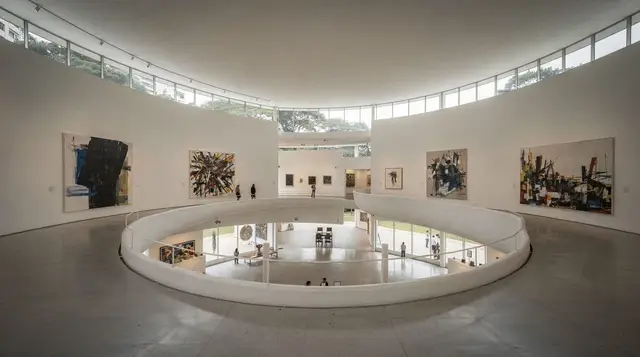
Inside Ibirapuera Park, in a building designed by Oscar Niemeyer, Museu Afro Brasil is free, serious, and covers ground most visitor itineraries never touch — African and Afro-Brazilian art, religious objects connected to Candomblé, and an unflinching section on the history of slavery in Brazil. It’s one of the best free things to do in the city and deserves more attention than it typically gets.
For families and kids: Catavento and Instituto Butantan
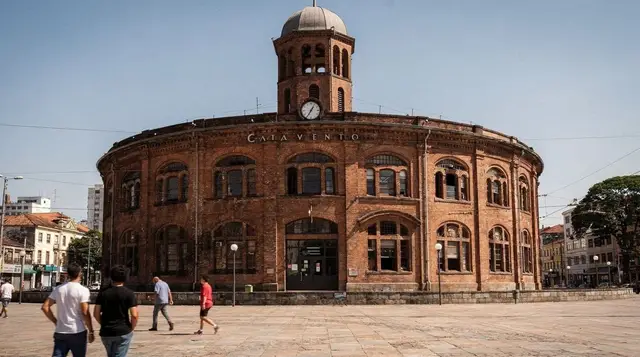
Two very different options here. Catavento is a hands-on science museum near Centro Histórico, organised into four themed wings, built for kids to touch and press rather than just look. Instituto Butantan, out in Butantã near the USP campus, is a working snake and venom research institute with a public museum attached — genuinely fascinating, though it needs a longer trip out from the centre and isn’t for anyone squeamish about live snakes.
For football culture: Museu do Futebol
If football is any part of why you’re in Brazil, the Museu do Futebol — inside the historic Pacaembu stadium — is worth the detour even for visitors who wouldn’t normally call themselves fans. See the complete football guide for how it fits alongside watching an actual match.
For Brazilian independence history: Museu do Ipiranga
Museu do Ipiranga, also known as Museu Paulista, sits in Parque da Independência and marks the site where Dom Pedro I is said to have declared Brazilian independence in 1822. A major restoration completed for the 2022 bicentennial modernised the exhibits considerably — worth revisiting even if you saw it years ago.
For language and Brazilian literature: Museu da Língua Portuguesa
Rebuilt after a 2015 fire and reopened in 2021, the Museu da Língua Portuguesa occupies the historic Estação da Luz train station and uses interactive digital displays to trace the Portuguese language’s path from Portugal to Brazil. It’s compact, free or close to it, and easy to pair with the Pinacoteca a short walk away.
For contemporary art beyond the big institutions: galleries and the Bienal
Jardins and Pinheiros host a genuine contemporary gallery scene worth a browse if commercial art interests you — see the São Paulo art galleries guide. Every odd-numbered year, the São Paulo Bienal takes over the Niemeyer-designed Ciccillo Matarazzo Pavilion in Ibirapuera Park with free, major international contemporary art — check the calendar before you assume it’s running, since it isn’t a permanent exhibition.
Comparing the main options at a glance
| Museum | Best for | Cost | Free day |
|---|---|---|---|
| MASP | European old masters | ~R$50 | Tuesday |
| Pinacoteca do Estado | Brazilian art | ~R$20 | Saturday |
| Museu Afro Brasil | Afro-Brazilian history | Free | Every day |
| Catavento | Kids, hands-on science | ~R$6 | Varies |
| Instituto Butantan | Snakes, venom research | ~R$10 | Varies |
| Museu do Futebol | Football history | ~R$15 | Varies |
| Museu do Ipiranga | Independence history | ~R$20 | Varies |
| Museu da Língua Portuguesa | Language, literature | Low-cost/free | Varies |
Always check current pricing and free-day schedules before you go — Brazilian museums adjust these more often than the guidebooks catch up with.
Building a museum day around Avenida Paulista
MASP anchors Avenida Paulista, and it’s realistic to combine it with Museu Afro Brasil or the Bienal pavilion in Ibirapuera on the same day, since both sit inside the park a short taxi or bus ride south of the avenue. A downtown museum day works differently: pair the Pinacoteca with the Museu da Língua Portuguesa around Praça da Luz, then walk toward Centro Histórico for lunch before Catavento, which is closer to the Mercado Municipal end of downtown. Trying to do a Paulista museum and a downtown museum in the same morning usually means fighting traffic for no good reason — pick one cluster per day. See the São Paulo traffic guide for why cross-town trips eat more time than they look like they should.
What travelling with kids changes about this list
A family trip reshuffles the priority order considerably. Catavento and Instituto Butantan both move to the top for anyone with children, since hands-on science and live animals reliably hold a kid’s attention longer than a room of 19th-century oil paintings, however good the collection. MASP and the Pinacoteca aren’t off-limits for families — both are manageable in under two hours, which is short enough for most children to handle without a meltdown — but plan them for the morning, while everyone’s patience is fresh, and save the more physically engaging Catavento or Instituto Butantan for the afternoon. Museu Afro Brasil sits in between: the art and cultural sections work fine for most ages, though the slavery-history section is dense enough that it rewards a slightly older or more prepared child. See the São Paulo with kids guide for a fuller family-specific itinerary that weaves museums in around park time and food breaks.
Booking, queues, and what actually needs advance planning
Most of São Paulo’s museums don’t require advance booking for a standard visit — this isn’t a city where you need to reserve a MASP slot three weeks out the way you might for a major European museum. The exception is timing around free days: MASP’s free Tuesdays and the Pinacoteca’s free Saturdays both draw meaningfully bigger crowds, and if a short queue would ruin your morning, either pay full price on a different day or arrive right at opening. A skip-the-line MASP tour is the more reliable fix specifically for a Tuesday visit, since it removes the ticket-queue variable entirely rather than just hoping for a quiet morning. For the smaller, less-visited museums — Museu Afro Brasil, Museu da Língua Portuguesa, Museu do Ipiranga — queuing essentially isn’t a concern at any point in the week.
A realistic two-day museum plan
If museums are a real priority rather than a single afternoon filler, here’s a plan that avoids the cross-town backtracking mentioned above. Day one: MASP first thing on Avenida Paulista, then a short trip south into Ibirapuera Park for Museu Afro Brasil and, if it’s running, the Bienal — both sit inside the same park, so there’s no additional cross-town travel involved once you’re there. Day two: a downtown morning covering the Pinacoteca and Museu da Língua Portuguesa around Praça da Luz, followed by lunch near the Mercado Municipal, then Catavento in the early afternoon if travelling with kids or simply curious about the hands-on science exhibits. This keeps each day’s travel contained to one or two general areas of the city rather than criss-crossing São Paulo’s considerable size for a single museum stop.
Smaller museums worth knowing about
Beyond the major names covered above, a couple of smaller, less-visited museums reward specific interests. Museu de Arte Sacra, housed in a former monastery near Luz, holds one of Brazil’s most significant collections of colonial-era religious art and objects — a useful counterpoint to the Pinacoteca’s more secular, modernist-leaning Brazilian art collection, and a natural pairing if you’re already spending a morning around Praça da Luz for the Pinacoteca and Museu da Língua Portuguesa. Museu da Casa Brasileira, in Jardim América, focuses on Brazilian design, furniture and architecture across the 20th century, a niche but genuinely well-curated stop for anyone specifically interested in how Brazilian modernism translated into everyday domestic objects rather than just buildings and paintings. Neither demands a dedicated half-day the way MASP or the Pinacoteca does, but both are worth folding into a day already built around a nearby major museum.
How São Paulo’s museum scene compares with Rio’s
Visitors arriving from Rio de Janeiro sometimes expect a similar museum landscape and are surprised by how different the two cities’ approaches are. Rio’s major museums lean more heavily on natural history, national history and a handful of iconic single buildings (MAM, the Museu Nacional’s ongoing rebuild after its 2018 fire); São Paulo’s scene is broader and more art-and-design-forward, with a genuinely stronger concentration of both European and Brazilian art collections spread across more individual institutions. Neither city’s scene is objectively better — they reflect different civic priorities and histories — but if you’re doing both cities on the same trip, it’s worth treating São Paulo as the art-and-design leg and Rio as more nature-and-history-focused, rather than expecting significant overlap between the two. See the São Paulo versus Rio de Janeiro guide for the fuller comparison.
Museum shops and cafés, an underrated part of the visit
Several of São Paulo’s major museums have genuinely worthwhile shops and cafés that are easy to skip if you’re moving quickly between exhibits. MASP’s café, on the lower level beneath the famous glass box, is a pleasant stop in its own right rather than just a rest point, and its shop carries a solid range of Brazilian art books and design objects that make for a more considered souvenir than typical tourist-market items. The Pinacoteca’s café, set within the converted 19th-century building’s courtyard-adjacent space, is a quiet spot worth a coffee break between wings of the collection. Building 15–20 minutes into your museum visit for the shop or café isn’t wasted time — it’s often where a museum’s curatorial identity shows up in a more approachable, purchasable form than the galleries themselves.
A guided architecture angle on the museum circuit
Several of São Paulo’s museum buildings are themselves significant works of architecture — MASP’s glass box, the Pinacoteca’s converted 19th-century structure, Museu Afro Brasil’s Niemeyer design inside Ibirapuera. A private four-hour architecture tour can be built around this specific angle, treating the museum circuit as much as a tour of significant buildings as a tour of their contents, a worthwhile reframe if architecture interests you as much as what’s hanging on the walls inside.
Frequently asked questions about São Paulo’s museums
Which museum should I prioritise if I only have time for one?
MASP, if European art and an architecturally significant building matter to you. The Pinacoteca do Estado, if you specifically want to understand Brazilian art rather than a global collection.
Is Museu Afro Brasil really free?
Yes, it’s a free museum inside Ibirapuera Park, and it’s one of the more serious, well-curated museums in the city regardless of price.
Are any São Paulo museums good for a rainy day?
All of them, since they’re indoors — see the what to do in São Paulo when it rains guide for how to build a full wet-weather day around two or three museums.
Is Instituto Butantan worth the trip out from the centre?
Yes, if you have a spare half-day and don’t mind snakes — it’s a working research institute with a genuinely interesting public museum, but it’s further out than the others, so budget more travel time.
Do São Paulo museums get crowded?
MASP on free Tuesdays and the Pinacoteca on free Saturdays both get noticeably busier. The others rarely feel crowded even on weekends.
Can I combine a museum visit with the Bienal if it’s running?
Yes — the Bienal pavilion sits inside Ibirapuera Park near Museu Afro Brasil, so if your visit lands in an odd-numbered year during the exhibition’s run, combining the two makes for a strong half-day.
Are São Paulo’s museums accessible for wheelchair users?
Most of the major ones, including MASP and the Pinacoteca, have step-free access and lifts, though older buildings vary — see the accessible São Paulo guide for specifics before you go.
Fitting museums into a longer trip
On a one-day itinerary, MASP alone is realistic alongside the rest of Avenida Paulista. A three-day itinerary comfortably fits MASP, the Pinacoteca, and Museu Afro Brasil across separate mornings without feeling rushed. For a trip built specifically around art and architecture, the art and architecture itinerary sequences the Niemeyer-designed buildings in Ibirapuera with MASP and the Pinacoteca in a logical order that minimises backtracking across the city.
Museum & art tours on GetYourGuide
Verified deep-linked GetYourGuide tours. Book through these links and we earn a small commission at no cost to you.
These are our own photographs of São Paulo, not the operator's pictures of this tour — open the tour page to see those.