Museu Afro Brasil
What is Museu Afro Brasil, and why is it worth visiting even on a short trip?
It's a free museum inside Ibirapuera Park covering African and Afro-Brazilian art, culture, and history, including an unflinching section on slavery in Brazil — the country that received the largest number of enslaved Africans of anywhere in the Americas. It's serious, well curated, and free, with no real reason to skip it if you're already in the park.
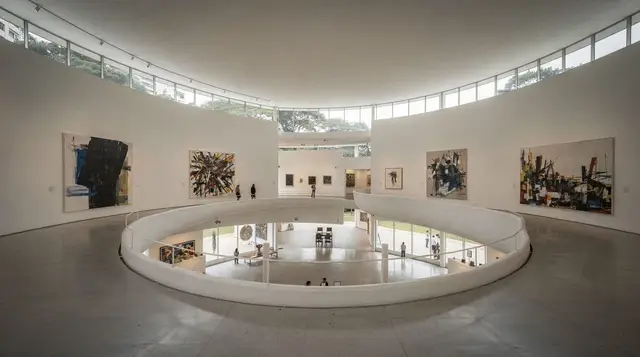
Museu Afro Brasil is the museum most São Paulo itineraries leave out, and it shouldn’t be — it’s free, it’s inside a park most visitors already plan to walk through, and it covers a part of Brazilian history that the country’s tourism image often skips over entirely. Founded by the artist and curator Emanoel Araujo and housed in a Pavilhão Padre Manuel da Nóbrega designed by Oscar Niemeyer, the museum holds a large collection of African and Afro-Brazilian art, religious objects connected to Candomblé, historical documents, and photography, alongside a section that addresses slavery in Brazil directly rather than glossing over it. Brazil received more enslaved Africans than any other country in the Americas, and its abolition, in 1888, came later than almost anywhere else — context that shapes a huge amount of the culture visitors experience elsewhere in the city, from Liberdade’s history to São Paulo’s music and food.
| Where | Ibirapuera Park, Pavilhão Padre Manuel da Nóbrega |
| Cost | Free |
| Time needed | 1.5–2 hours |
| Getting there | Bus or rideshare to Ibirapuera’s Portão 3 (Gate 3); a 10–15 minute walk inside the park |
| Best time | Tuesday to Sunday, weekday mornings for the quietest visit |
What’s inside, and why it doesn’t feel like a niche museum
The collection spans several thousand works — paintings, sculpture, textiles, masks, religious artefacts — and it’s organised to move visitors from African origins through the transatlantic slave trade, the long period of slavery in Brazil, and into the culture that Afro-Brazilian communities built afterward and continue to shape today. This isn’t a small side room tacked onto a bigger museum; it’s a full, purpose-built collection with real scale, and it holds up against any of the city’s other major art museums in terms of curatorial ambition. The slavery section in particular doesn’t soften the material — expect direct depictions of the conditions enslaved people endured, alongside objects and documentation that make the history concrete rather than abstract.
The building: another Niemeyer worth seeing
The Pavilhão Padre Manuel da Nóbrega is one of several Oscar Niemeyer-designed buildings inside Ibirapuera Park, alongside the Bienal pavilion and the Museu de Arte Moderna. Its long, low modernist form is easy to walk past without registering what it is, which is part of why this museum stays under-visited relative to what’s inside. A private architecture tour that includes Ibirapuera’s Niemeyer buildings is a good way to see this alongside the park’s other modernist landmarks with someone who can point out details you’d otherwise miss.
Founder Emanoel Araujo and the collection’s origins
The museum was founded by Emanoel Araujo, a sculptor, curator, and one of Brazil’s most prominent figures in Afro-Brazilian art and museum studies, who built much of the founding collection through decades of personal acquisition before the museum opened its doors in Ibirapuera Park. That background shapes the museum’s tone — this reads less like a government-commissioned civic project and more like a life’s work assembled by someone who understood exactly which gaps in Brazil’s cultural institutions needed filling. Araujo’s own sculptural work is represented in the collection alongside the pieces he collected from other artists, and the curatorial voice throughout feels more personal and less institutional than a typical state museum, which is part of what makes a visit here feel distinct from the city’s other major art institutions.
The Candomblé and religious objects section
One of the collection’s most striking sections covers religious objects and iconography connected to Candomblé and other Afro-Brazilian spiritual traditions that developed as enslaved Africans preserved elements of West and Central African religious practice, often blending it with Catholic imagery under conditions of forced conversion. Expect ceremonial garments, ritual objects, and artwork depicting orixás (deities) alongside explanatory context on how these traditions survived and evolved in Brazil despite centuries of suppression. This section connects directly to a part of Brazilian culture that remains visible today — Candomblé terreiros (temples) still operate across São Paulo and the wider country — and the museum handles the subject with a seriousness that’s rare to see presented this clearly for a general visitor audience.
Visiting as part of a wider conversation about Brazilian identity
Brazil is frequently described, sometimes uncritically, as a “racial democracy” — a framing many contemporary scholars and Afro-Brazilian activists have pushed back on given the country’s continuing racial inequality. Museu Afro Brasil doesn’t shy away from this tension; parts of the collection and its framing directly engage with the gap between Brazil’s self-image and the lived reality for Black Brazilians, both historically and today. Visitors who come away from São Paulo having only experienced the city’s wealthier, whiter neighbourhoods — Jardins, Itaim Bibi, much of Avenida Paulista — get a meaningfully more complete picture of the country after spending time here, which is arguably the strongest argument for treating this as more than an optional add-on to an Ibirapuera park day.
How it connects to the rest of the city
Visiting Museu Afro Brasil changes how several other parts of a São Paulo trip read. Liberdade’s Japanese immigrant history and Italian São Paulo are both well documented elsewhere in the city, but Afro-Brazilian history — despite being foundational to Brazilian culture, music, food, and religion — gets comparatively little dedicated museum space anywhere in São Paulo. This is effectively the city’s primary institution for that story, which is worth knowing before you decide it’s optional. See the Afro-Brazilian São Paulo guide for how this history shows up elsewhere in the city, from Carnival to samba to specific neighbourhoods.
The photography and documentary sections
Alongside painting and sculpture, the museum holds a substantial photography and documentary collection covering Afro-Brazilian life across different periods and regions of the country — portraits, street photography, and documentation of religious and cultural practices that give a far more textured, contemporary picture than the historical galleries alone. This section is worth setting aside dedicated time for rather than treating it as a quick pass-through on the way to the more visually dramatic painting and sculpture rooms; it’s often where the museum’s connection between historical injustice and present-day Afro-Brazilian life and culture is made most directly and concretely.
A note on visiting respectfully
Given the seriousness of the subject matter, it’s worth approaching this museum with the same care you’d bring to any museum addressing a difficult historical trauma — the slavery-era sections in particular aren’t designed as spectacle, and treating them with the same quiet attentiveness you’d bring to a Holocaust museum or similar institution elsewhere in the world is the right register here. Photography is generally permitted in most sections, though it’s worth checking current signage for any restrictions, particularly around specific religious objects connected to Candomblé, which some communities consider sensitive to photograph regardless of a museum’s own policy.
Practical details: free, uncrowded, easy to combine
Because it’s free and inside a park most visitors already plan to spend time in, there’s very little reason not to include Museu Afro Brasil on an Ibirapuera day. It’s closed Mondays like most of the city’s museums, and it rarely feels crowded even on weekends — a contrast to MASP’s free Tuesdays or the Pinacoteca’s free Saturdays, where the no-cost entry noticeably increases foot traffic.
| Museu Afro Brasil | MASP | |
|---|---|---|
| Cost | Free, every day it’s open | ~R$50, free Tuesdays |
| Crowds | Consistently light | Heavy on free days |
| Focus | African and Afro-Brazilian history and art | European old masters |
| Location | Inside Ibirapuera Park | On Avenida Paulista |
Quilombos and the history of resistance
A section of the museum that visitors often underrate on a first pass covers Brazil’s quilombos — communities formed by enslaved people who escaped captivity and built self-governing settlements, some of which survived for generations and a number of which still exist as recognised communities today. The most famous, Quilombo dos Palmares, led by the resistance leader Zumbi in the 17th century, gets dedicated treatment here as one of the most significant acts of organised resistance to slavery anywhere in the Americas, and Zumbi’s death on 20 November is now marked nationally as Dia da Consciência Negra (Black Consciousness Day), a date referenced elsewhere in the museum’s framing. This section reframes the collection’s broader narrative away from slavery purely as something endured toward something actively resisted, which is a meaningful curatorial choice and one of the reasons the museum reads as more than a catalogue of historical suffering.
How it compares in scale to other Afro-diaspora museums
Museu Afro Brasil is genuinely large by the standards of museums dedicated specifically to African and African-diaspora history and culture, holding several thousand works across painting, sculpture, textiles and documentary photography under one roof. It doesn’t attempt to match the budget or scale of a national institution like Washington’s Smithsonian National Museum of African American History and Culture, but within Latin America specifically, it’s regularly cited among the most significant collections of its kind on the continent — a notable claim given that Brazil, not the United States, received the largest number of enslaved Africans of any country in the Americas. That combination of historical weight and comparatively modest international name recognition is exactly why this guide treats a visit here as considerably more essential than its position on most visitor itineraries would suggest.
Guided visits, the library, and accessibility
Beyond self-guided browsing, the museum runs scheduled guided tours in Portuguese aimed partly at school groups but generally open to other visitors who ask at the entrance desk — worth checking on arrival if your Portuguese is strong enough to follow along, since the depth of context a guide adds is considerably more than the on-site signage alone provides. An on-site research library and archive supports the museum’s role as more than a purely public-facing institution, reflecting founder Emanoel Araujo’s own background as a curator and researcher as much as a collector.
The building is step-free and generally accessible for wheelchair users, in keeping with its status as a purpose-built modern pavilion rather than a converted historic building with the access limitations that sometimes come with older architecture. A small gift shop near the entrance stocks books on Afro-Brazilian history and art alongside crafts connected to the collection’s themes, a more thoughtful souvenir option than most standard museum shops in the city.
The contemporary art section and living artists
Beyond the historical galleries, a meaningful part of the museum’s collection is devoted to contemporary Afro-Brazilian artists working today, positioning the institution not just as a record of history but as an active participant in Brazil’s current art scene. This section rotates more frequently than the historical galleries and often features painting, sculpture and mixed-media work directly engaging with questions of race, identity and Brazilian society in the present day rather than exclusively the past. It’s worth deliberately setting aside time for this section rather than treating the museum purely as a historical archive — the throughline from the transatlantic slave trade galleries to contemporary practice is part of the curatorial argument the museum makes as a whole, and skipping the newer work misses that connection.
Comparing a visit here to MASP and the Pinacoteca
For visitors trying to decide how to allocate limited museum time across the city, it helps to know how Museu Afro Brasil’s focus differs from São Paulo’s two other major art institutions. MASP, on Avenida Paulista, holds a broad international collection anchored in European old masters alongside a growing Brazilian modernist section; the Pinacoteca do Estado focuses on Brazilian art more generally across multiple centuries and movements. Museu Afro Brasil is the only one of the three built specifically around African and Afro-Brazilian art, history and identity as its organising principle rather than a broader national or international survey — a genuinely distinct angle rather than a smaller or lesser version of what the other two offer. Visitors with time for only two of the city’s major art museums should treat this as a strong contender for one of those two slots rather than an optional extra once MASP and the Pinacoteca are covered.
Frequently asked questions about Museu Afro Brasil
Is Museu Afro Brasil really free?
Yes, entry is free every day the museum is open, with no ticket required.
How long should I budget for a visit?
1.5 to 2 hours covers the main collection at a comfortable pace, though the slavery history section is dense enough that some visitors linger longer.
Is the content appropriate for children?
The slavery history section is direct and unflinching, which is appropriate but worth previewing for younger children — it’s a serious museum rather than a light family stop, though the art and cultural sections are accessible for most ages.
Where exactly is it inside Ibirapuera Park?
Near Portão 3 (Gate 3), in the Pavilhão Padre Manuel da Nóbrega — ask park staff or check a park map on arrival, since Ibirapuera is large and the pavilion isn’t visible from every entrance.
Can I combine this with the Bienal or other Ibirapuera museums in one day?
Yes — Museu Afro Brasil, the Bienal pavilion (when its exhibition is running), and the Museu de Arte Moderna are all inside the same park, making a strong museum-focused day if you pace yourself. See the complete Ibirapuera Park guide for a route that covers all three without excessive backtracking.
Does the museum have English-language information?
Some signage includes English, though coverage is inconsistent by section — a guided tour is the more reliable way to get full context throughout.
Is Museu Afro Brasil connected to Liberdade’s Japanese history displays?
No, they’re separate and cover different immigrant and cultural histories — see the Liberdade guide and Japanese São Paulo guide for that side of the city’s story.
Is there a library or research centre on site?
Yes — the museum maintains a research library and archive supporting its role as an academic as well as public institution, reflecting founder Emanoel Araujo’s background as a curator and researcher.
Fitting Museu Afro Brasil into a longer trip
This museum fits naturally into any Ibirapuera-focused half-day — see the Ibirapuera Park guide for a full route through the park’s museums and gardens. On a three-day itinerary, pair it with the rest of Ibirapuera in a single morning, then move on to Vila Madalena or Pinheiros in the afternoon. Travellers following the art and architecture itinerary should treat this as a required stop alongside MASP and the Bienal pavilion — together they give a far more complete picture of Brazilian art and history than any one museum alone.
Museum & art tours on GetYourGuide
Verified deep-linked GetYourGuide tours. Book through these links and we earn a small commission at no cost to you.
These are our own photographs of São Paulo, not the operator's pictures of this tour — open the tour page to see those.