Art and architecture in São Paulo
São Paulo’s built environment is one of the most concentrated collections of 20th-century modernist architecture anywhere, and its street art scene is arguably the most significant in the world. This four-day plan moves chronologically in spirit if not in strict order — colonial-era downtown, Lina Bo Bardi’s Paulista-era modernism, Oscar Niemeyer’s Ibirapuera, and the murals of Vila Madalena that represent the city’s most recent and most visible artistic layer.
| Where | Avenida Paulista, Ibirapuera, Centro Histórico, Vila Madalena |
| Cost | R$400–700 per person over four days (about US$80–140), excluding tours |
| Time needed | Four full days |
| Getting there | Metro Lines 2 Green, 3 Red and 4 Yellow cover the whole route |
| Best time | Any weekday for museum hours; overcast days are actually preferable for photographing the Niemeyer buildings, which can wash out in harsh midday sun |
Day one: Avenida Paulista and Lina Bo Bardi
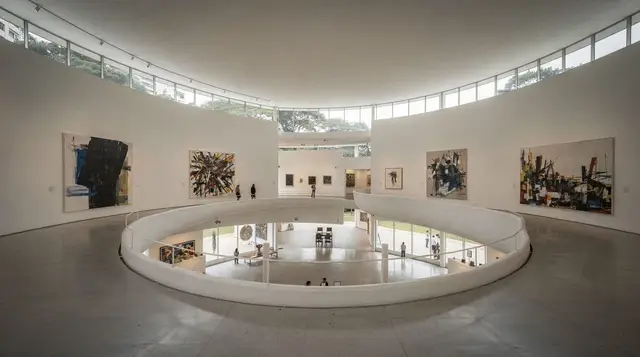
MASP — the Museu de Arte de São Paulo — is the centrepiece of this whole itinerary, not just this day. Lina Bo Bardi’s 1968 design, a glass-and-concrete box suspended above an open public plaza on two enormous red beams, is as significant architecturally as the collection inside is artistically. A skip-the-line MASP private tour is worth booking specifically because the collection’s glass-easel display system — paintings mounted on freestanding panes rather than walls, another Bo Bardi innovation — rewards having someone explain the curatorial logic rather than wandering without context. Budget the better part of a morning here. Full detail in the MASP guide.
In the afternoon, walk the avenue itself — a corridor of corporate towers from several architectural eras, plus Japan House a short walk off Paulista, a cultural centre with a striking wood-and-concrete design worth a look even from outside. Paulista’s mid-century towers reward a slower pace than most visitors give them; walk both sides of the avenue rather than sticking to one pavement, since several of the more interesting facades face each other across the street rather than lining up on the same side. Full context in the Avenida Paulista guide.
A note on how these buildings were made possible
None of this itinerary’s architecture happened in isolation — Brazil’s early-to-mid 20th-century wave of European and Japanese immigration brought both the labour and, in several cases, the design influences that shaped the city’s built environment. Understanding that context adds real depth to what can otherwise read as a checklist of famous buildings. See the how immigration built São Paulo guide for the fuller picture before or during this trip.
Day two: Ibirapuera and Oscar Niemeyer
Ibirapuera is São Paulo’s clearest concentration of Niemeyer’s work, designed for the city’s 400th anniversary in 1954. The Marquise — a long, sinuous concrete canopy — connects the Bienal pavilion, the Museu de Arte Moderna (MAM), and the Auditório Ibirapuera, whose distinctive red tongue-shaped protrusion was added decades later, in 2005, and remains one of Niemeyer’s last major built works.
Spend the morning walking the Marquise and its connected pavilions, then dedicate the afternoon to MAM’s rotating contemporary exhibitions — the collection changes enough that it’s worth checking current shows before you go rather than assuming a fixed highlight list. A private four-hour architecture tour is a strong option for this day specifically, since a guide with real architectural knowledge adds far more here than at a typical sightseeing stop — much of what makes these buildings significant isn’t obvious just from looking at them. Full detail in the Ibirapuera Park guide and the wider São Paulo architecture guide.
Ibirapuera has no direct metro station — take Line 1 Blue or 2 Green to Ana Rosa and walk 15–20 minutes, or take a short rideshare, ideally before 4pm to stay ahead of the traffic that builds on Avenida 23 de Maio from around 5pm.
Bring a proper camera or at least a phone with a wide-angle lens if photography is part of why you’re here — the Marquise’s long horizontal lines and the Auditório’s cantilevered form are both difficult to capture fully with a standard lens at close range, and the park’s open sightlines give you more room to step back than most of the tighter downtown streets on day three.
Day three: Centro Histórico, colonial to mid-century
Downtown São Paulo layers colonial-era remnants against Art Deco and mid-century modern towers in a way few other Latin American city centres do this densely. Start at Praça da Sé, then walk north through Vale do Anhangabaú, where the architecture visibly shifts era by era. The Farol Santander (1947, modelled on the Empire State Building) and the Theatro Municipal (1911, in the style of the Paris Opéra) sit within the same short walk as the Edifício Itália, one of the city’s tallest buildings for decades, and — a short detour south — the Edifício Copan, Niemeyer’s sinuous 1966 apartment tower that remains one of the largest residential buildings in the world. A downtown historical bike tour covers this ground efficiently if you’d rather not walk the full stretch on foot. Full route in the Centro Histórico walking guide.
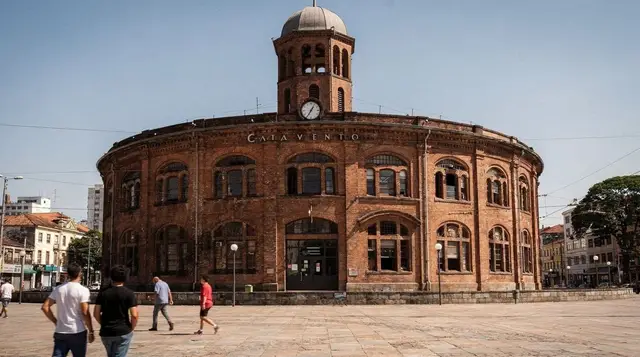
If there’s time, the Pinacoteca do Estado, a converted early-20th-century building housing Brazilian art from the 19th century to today, is a worthwhile detour near Luz station — see the Pinacoteca guide for what to prioritise inside. The building itself is part of the story: originally designed as a school in the 1900s, its later renovation deliberately exposed rather than concealed the original brick structure, a restoration approach that was itself influential on how later generations of São Paulo architects treated the city’s older building stock.
Day four: Vila Madalena and the murals
The final day shifts registers entirely — from planned, commissioned architecture to São Paulo’s largely unsanctioned street art scene, concentrated most visibly in Vila Madalena’s Beco do Batman alley and the surrounding blocks. A street art bike tour is the best way to see a genuinely wide range of work across the neighbourhood, since the murals extend well beyond the alley itself onto side streets easy to miss on foot. This is also the day to understand pixação, São Paulo’s distinct and much-debated tag-based street writing style, which coexists uneasily with the more widely celebrated muralism — the pixação explained guide covers the tension between the two. Full detail on the neighbourhood’s art is in the Vila Madalena guide and the Beco do Batman guide.
Four days, side by side
| Day one | Day two | Day three | Day four | |
|---|---|---|---|---|
| Era | 1968 (MASP) | 1954–2005 (Ibirapuera) | 1554–1966 (colonial to Copan) | Ongoing (street art) |
| Architect/movement | Lina Bo Bardi | Oscar Niemeyer | Multiple, layered | Uncommissioned muralists |
| Pace | Museum-focused | Park-paced, unhurried | Walking route | Neighbourhood wander |
Closures matter more on this itinerary than most
This is the one plan on this site where the day of the week genuinely changes what you should do, since three of the four days centre on museums. MASP closes on Mondays, and so does MAM (the Museum of Modern Art) inside Ibirapuera and the Pinacoteca do Estado on day three — if any of your four days falls on a Monday, do not schedule it as planned. Swap that day for Vila Madalena’s street murals instead, since outdoor street art has no opening hours, and move the affected museum day to whichever remaining day has the least other planned indoor content. Checking the specific week’s holiday calendar matters too: Brazilian public holidays sometimes shift museum hours further, so confirm current opening days before finalising which day goes where.
If it rains
Ironically, this is a good itinerary for a wet stretch of weather, since three of the four days are majority-indoor. If a storm hits on day two, the Ibirapuera pavilions themselves — the Bienal building, MAM, the Auditório — all have covered or indoor sections you can duck into rather than waiting it out on the open Marquise walkway, though the canopy itself does provide substantial cover even in a downpour, being designed in part for exactly that. Day four, Vila Madalena’s murals, is the one truly weather-exposed day; if the forecast looks bad specifically for day four, swap it with day one or day three, both of which move indoors easily.
What this trip costs, by day
| Day one (Paulista) | Day two (Ibirapuera) | Day three (Centro) | Day four (Vila Madalena) | |
|---|---|---|---|---|
| Transport | R$10–15 | R$10–20 (metro plus rideshare) | R$10–15 | R$10–15 |
| Food | R$80–150 | R$70–130 | R$80–150 | R$80–160 (bars included) |
| Entries | R$0–80 (MASP) | R$0–40 (MAM, if a paid exhibition is on) | R$0–30 (Pinacoteca) | R$0–30 (optional bike tour) |
This lands within the R$400–700 range from the summary table, with MASP’s entry fee the single biggest lever on the total.
What to sacrifice if a day runs long
On day two, if the Marquise walk and MAM both run long, cut the Auditório Ibirapuera to an exterior-only stop — its interior isn’t always open to casual visitors anyway, and the building’s exterior form is most of what makes it significant. On day three, the Pinacoteca is the easiest cut if you’re behind schedule, since its collection, while worthwhile, carries less architectural weight in this specific itinerary than the Edifício Copan and Theatro Municipal earlier in the walk.
Frequently asked questions about an art and architecture trip to São Paulo
Do I need to book MASP and Ibirapuera’s museums in advance?
Advance booking isn’t always required but is recommended for MASP, especially on free-entry days, when queues grow substantially. Check current entry policies before your visit.
Is four days enough to cover São Paulo’s architecture properly?
It’s enough for a strong overview across the city’s major eras and architects, not an exhaustive survey — São Paulo’s modernist and contemporary building stock is vast. This plan prioritises breadth and significance over completeness.
What’s the best light for photographing the Niemeyer buildings?
Overcast conditions or the golden hour before sunset both work better than harsh midday sun, which tends to wash out the concrete’s texture and flatten the Marquise’s curves in photographs.
Should I visit the Edifício Copan from outside only, or can I go in?
The building is residential with some ground-floor commercial space open to the public; respect that most of the tower is private homes and stick to the accessible areas rather than wandering into residential floors.
Is Vila Madalena’s street art considered fine art or vandalism, and does it matter for a visit?
Both framings exist locally, and the tension is part of what makes the neighbourhood interesting rather than a footnote — see the pixação explained guide for the fuller context rather than a single simple answer.
Can I combine this itinerary with the Pinacoteca and other museums not listed here?
Yes — see the São Paulo museums guide for a fuller list if art history interests you beyond what fits into four days.
What should I skip if I only have two days for this theme?
Combine days one and three into a single day covering MASP and a shortened Centro Histórico walk, and keep Ibirapuera and Vila Madalena as your two full days — those two sites carry the most architectural and artistic weight per hour spent.
Is this itinerary walkable, or does it require a lot of transit?
Each individual day is quite walkable once you’re in the neighbourhood — Centro Histórico and Vila Madalena especially reward walking rather than transit between stops. The transitions between days, particularly to and from Ibirapuera, are the parts that need a metro or rideshare leg.
Are there architecture-focused day trips outside the city worth adding?
Not within easy reach for a dedicated architecture trip — São Paulo’s modernist concentration is unusual even by Brazilian standards, and the closer day-trip towns lean more toward colonial or natural attractions than architectural ones. If architecture is your main interest, the city itself is where to spend the time.
Extending or adjusting this plan
If you’d rather add a general sightseeing day to this architecture-focused trip, the three-day itinerary covers similar ground with a broader lens. For the street art side specifically, the São Paulo street art guide and graffiti tours compared guide go considerably deeper than a single day allows.
Museum & art tours on GetYourGuide
Verified deep-linked GetYourGuide tours. Book through these links and we earn a small commission at no cost to you.
These are our own photographs of São Paulo, not the operator's pictures of this tour — open the tour page to see those.