São Paulo in winter
What is São Paulo like in winter, and is it worth visiting then?
Cool and dry — daytime highs of 18–22°C, nights that can drop close to freezing on the coldest snaps, and the driest, clearest stretch of the calendar. It's one of the most comfortable seasons for walking-heavy sightseeing and the peak season for Campos do Jordão's chalets-and-fondue mountain identity. The trade-off is shorter days and cooler evenings, easily solved with layers.
June through August is São Paulo’s winter, and it’s the most underrated season on this site’s calendar for one straightforward reason: it’s dry, comfortable and clear at exactly the time of year visitors from the northern hemisphere assume Brazil means heat and humidity — a mismatch of expectations that keeps this season quieter than it deserves to be, given how much easier it makes sightseeing. Temperatures are genuinely cool by São Paulo standards, sometimes cold at night, but nowhere close to a true European or North American winter — this is a season for a light jacket, not snow boots. It’s also peak season for Campos do Jordão, the mountain town three hours out that leans hard into a faux-alpine identity, and a strong stretch for the city’s indoor cultural calendar. This guide covers what to actually expect and how to make the most of it.
| Where | São Paulo city, plus a strong pull toward Campos do Jordão and the Serra da Mantiqueira |
| Cost | No major city-wide price spike; Campos do Jordão weekends get busy and pricier |
| Time needed | N/A — a seasonal planning guide |
| Getting there | N/A |
| Best time within winter | Weekdays for calmer Campos do Jordão visits; any day for the city itself |
What the cold actually feels like
Daytime highs typically run 18–22°C, mild and comfortable for walking, while overnight lows can drop into single digits Celsius on the coldest nights, occasionally close to freezing during a strong cold front (locally called a “frente fria”). This isn’t a season that requires serious winter gear, but layering matters — mornings and evenings genuinely need a jacket, while midday sun can still feel warm enough for short sleeves on a clear day. Humidity drops noticeably compared to summer, which is part of why the season feels so much more comfortable than the numbers alone suggest: dry cold reads as far milder than humid heat at a similar or even higher temperature. Many older buildings and some budget accommodation options in São Paulo aren’t built with heating in mind, on the assumption that the city rarely needs it — worth checking in advance if a cold-sensitive night’s sleep matters to you, particularly outside the newer hotels in Jardins and Itaim Bibi.
The driest, clearest stretch of the year
Winter is reliably the driest season, with rainfall dropping to a fraction of the summer’s storm-heavy pattern. That has a genuine practical upside beyond just staying dry: visibility improves noticeably from the city’s viewpoints, making this one of the better windows for Sampa Sky, Farol Santander or any rooftop bar with a skyline view. A city tour covering MASP and Paulista Avenue benefits from the same clear conditions. See the best viewpoints in São Paulo guide for the full list of where this pays off most.
Campos do Jordão: winter’s headline destination
Nowhere in the São Paulo region leans into winter as hard as Campos do Jordão, Brazil’s highest city at 1,628 metres, where genuinely cold nights (sometimes near freezing) support a whole identity built around chalets, fondue, hot chocolate and a European-village aesthetic that’s unusual for Brazil. This is unambiguously its peak season: the town’s famous Winter Festival (Festival de Inverno) runs classical and popular music performances through the season, and weekends see the heaviest crowds and highest accommodation prices of the year. A guided day tour to Campos do Jordão or a full-day private tour both make sense here, and a weekday visit avoids the worst of the crowding while keeping the cold-weather atmosphere the town is built around. See the Campos do Jordão day trip guide for the full breakdown, and the Campos do Jordão in July piece for a first-hand account of what peak winter there actually feels like.
The football calendar hits its stride
Winter sits in the middle of the Brasileirão, Brazil’s top-flight national league season, which runs roughly April through December — meaning winter visitors get a genuine shot at seeing Corinthians, Palmeiras, São Paulo FC or Santos in a competitive league fixture rather than the earlier-season state championship. Evening matches in cool, dry conditions are considerably more comfortable to attend than the same fixture in summer’s heat and humidity, both inside the stadium and on the walk to and from it. A skip-the-line visit to the Museu do Futebol pairs naturally with a matchday trip in this season. See the football in São Paulo guide for the full club-by-club picture.
Shopping streets and markets feel different in winter
Street markets and shopping districts take on a different rhythm in the cooler, drier months — the Saturday market at Praça Benedito Calixto and the weekend handicraft market in Embu das Artes are both noticeably more comfortable to browse at length without summer’s heat pushing you toward the nearest shaded café every twenty minutes. Rua 25 de Março, the city’s dense bargain-shopping district downtown, gets a seasonal boost of its own heading toward late winter as vendors stock up for the following spring and early Festa Junina-adjacent goods appear alongside the usual bulk imports and decorations. None of this is dramatic compared to the weather difference, but it’s a real, small upside to browsing São Paulo’s markets in this window rather than during a humid summer afternoon. See the Praça Benedito Calixto Saturday market guide and Rua 25 de Março guide for specifics.
Indoor culture takes centre stage
With shorter days and cooler evenings, winter naturally shifts more of the city’s cultural calendar indoors — museums, theatre, live music venues and the city’s strong restaurant scene all see steadier winter attendance, since the weather does less to compete for attention than a warm, inviting summer evening does. MASP, the Pinacoteca and Sala São Paulo (the city’s main classical concert hall, housed in a beautifully restored former train station) are all strong picks for a cool winter evening. See the theatre and cinema in São Paulo guide and live music in São Paulo guide for specific venues.
Festa Junina: winter’s genuine local tradition
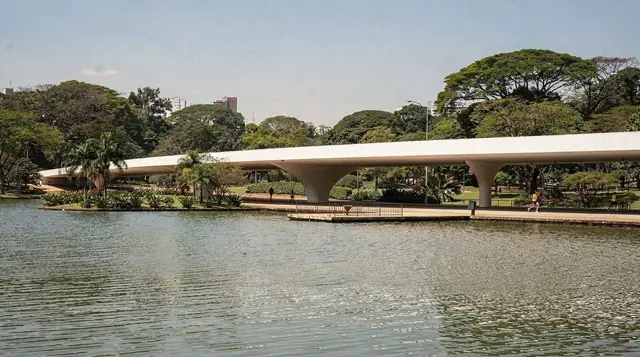
June brings Festa Junina, a countrywide tradition honouring São João and rooted in rural harvest celebrations, and São Paulo’s version is one of the most accessible ways to see an authentically local, non-tourist-oriented festival during a visit. Expect bonfires, quadrilha line dancing in gingham costumes, corn-based dishes like canjica and pamonha, and mulled wine-style quentão served at community events across parks, schools and cultural centres citywide through the month. It’s a much lower-key, more neighbourhood-level affair than Carnival — worth seeking out at Parque Ibirapuera or one of the city’s SESC cultural centres if the dates line up, and a genuine window into a side of Brazilian culture most visitors never encounter. See the Parque Ibirapuera guide for what’s typically running in the park through winter.
Beyond Campos do Jordão: other winter day trips
Campos do Jordão gets most of the attention, but winter’s dry conditions genuinely improve several other day trips too. Paranapiacaba, the preserved British-built railway village in the Serra do Mar, is famous for near-constant fog, and June to August is when that fog is at its thickest and most atmospheric — a very different, moodier appeal than a clear-sky day, and one photographers specifically time visits around. Hiking trails in Cantareira State Park and around the Serra da Mantiqueira are considerably more pleasant in the dry winter months than during summer’s storm risk, with firmer, less muddy paths and clearer long-distance views from the higher points. The São Roque wine route stays open year-round and makes a solid half-day trip regardless of season, even outside its Festa da Uva harvest peak. See the Paranapiacaba day trip guide and hiking near São Paulo guide for route specifics.
What winter costs, compared to summer
City accommodation prices stay largely flat through winter, without the Réveillon or Carnival spikes that define summer’s cost picture — a genuine advantage for budget-conscious travellers who don’t have a fixed event to chase. The exception is Campos do Jordão itself, where weekend rates during the Winter Festival period can run noticeably higher than an equivalent weekday, sometimes by 50% or more at the town’s most in-demand chalets and inns. Booking a Campos do Jordão weekend well ahead, or simply shifting the trip to a weekday, is the most reliable way to control cost in this season. See the how much does São Paulo cost guide for the year-round picture.
What to pack for winter in São Paulo
Layers are the whole strategy: a t-shirt or light shirt for midday sun, a jacket or warm layer for morning and evening, and something warmer still if a Campos do Jordão trip is on the itinerary, where nighttime cold is meaningfully sharper than in the city, sometimes a full ten degrees colder than central São Paulo on the same night given the town’s elevation. An umbrella is far less essential than in summer, though not entirely unnecessary — winter rain does happen, just far less often and less violently. Closed shoes are more comfortable than sandals for the cooler mornings and evenings, a genuine shift from the sandals-friendly summer months.
Air quality and the “queimada” haze
One honest caveat worth flagging: São Paulo’s dry winter season occasionally coincides with wildfire and agricultural burning smoke (locally, “queimadas”) drifting in from the interior of the state and neighbouring regions, which can hazy the skyline on the worst days and affect anyone with respiratory sensitivities. This isn’t a constant feature of the season — most winter days are simply clear and dry — but it’s more common in a particularly dry year, typically later in the season around August and September. Checking the São Paulo air quality index (CETESB publishes daily figures) on a hazy-looking morning is a reasonable precaution if you’re sensitive to it, though it rarely affects a general sightseeing trip.
Winter versus the rest of the year
| Winter (Jun–Aug) | Summer (Dec–Mar) | |
|---|---|---|
| Temperature | Cool, 18–22°C by day, cold nights | Hot, humid, 28–32°C |
| Rain | Driest season of the year | Frequent, intense afternoon storms |
| Best for | Comfortable walking, viewpoints, Campos do Jordão | Carnival, Réveillon, beach season |
| Football | Peak Brasileirão season, comfortable matchday conditions | Campeonato Paulista, hotter evening kickoffs |
| Crowds | Steady city, busy Campos do Jordão weekends | Peak coast crowding, event-driven city spikes |
Why São Paulo actually has a winter, climatically speaking
It’s a fair question for anyone whose mental map puts all of Brazil in the tropics: São Paulo sits at roughly 23°S, which is genuinely close to the Tropic of Capricorn, but its winter is real because of elevation rather than latitude. The city sits on a plateau around 760 metres above sea level, high enough that its climate is classified as subtropical highland rather than straightforwardly tropical, which is exactly why it cools noticeably more in winter than a coastal city at a similar latitude would.
Rio de Janeiro, at sea level and just a few hundred kilometres northeast, barely registers a winter by comparison — its coolest months still commonly see daytime highs in the mid-20s°C, while São Paulo’s plateau elevation knocks several degrees off both the daytime high and, more noticeably, the overnight low. Campos do Jordão takes this same elevation effect much further: at 1,628 metres, over double São Paulo city’s altitude, it’s cold enough for genuinely frosty mornings that the capital itself never quite reaches. Understanding this elevation-driven pattern also explains why the coast just a few hours from São Paulo stays considerably milder through the same winter months — Santos and Guarujá rarely feel as cool as the city itself, since they’re back down at sea level.
Winter in São Paulo versus winter in Rio
Visitors deciding between the two cities for a winter trip are often surprised at how differently the season plays out just a few hundred kilometres apart. São Paulo’s winter is drier, cooler and better suited to walking-heavy sightseeing without heat fatigue; Rio’s winter is barely a season change at all by comparison, staying warm enough for beach days most weeks, with the trade-off of a slightly higher chance of a cool, cloudy stretch than during Rio’s own peak summer. Travellers building a two-city trip around this time of year often do the São Paulo leg first for the comfortable walking weather, then head to Rio for beach time that São Paulo’s own winter simply can’t offer regardless of how clear the skies are. See the São Paulo vs Rio de Janeiro comparison guide for the fuller picture beyond just the seasonal weather difference.
Frequently asked questions about São Paulo in winter
How cold does it actually get in São Paulo in winter?
Daytime highs typically sit at 18–22°C; overnight lows can drop into single digits, occasionally near freezing during a strong cold front. It’s cool, not brutally cold.
Is Campos do Jordão worth visiting outside a winter weekend?
Yes, though the atmosphere is noticeably different — weekdays are calmer and cheaper, while summer strips away most of the cold-weather identity the town is built around.
Does it rain much in São Paulo in winter?
Rarely — this is the driest season of the year by a wide margin, one of the strongest arguments for visiting in this window.
Is winter a good time for a football match?
Very much so — winter sits within the main Brasileirão season, and cool, dry evening conditions make attending a match considerably more comfortable than in summer’s heat.
Do I need warm winter clothing, like I would for a European winter?
No — a jacket and layers cover it. Overnight cold in Campos do Jordão is the sharpest cold you’ll encounter in the region, and even that rarely drops far below freezing.
Are there fewer daylight hours in winter?
Yes, noticeably — sunset comes earlier, generally before 6pm through the season, which is worth factoring into any evening sightseeing plan.
Is Festa Junina worth planning a trip around?
If a genuinely local, non-touristic cultural event appeals, yes — it runs through June at parks and community centres citywide and offers a completely different flavour from Carnival’s street-party energy.
Does winter affect air quality in São Paulo?
Occasionally — dry conditions later in the season can coincide with agricultural burning haze drifting in from the interior, hazier on some days than others. It’s not a constant issue, but worth a quick air-quality check if you’re sensitive to it.
Is winter a good season for photography?
Yes, arguably the best — clear, dry skies improve visibility from viewpoints, and Paranapiacaba’s fog adds a completely different, moodier option for anyone chasing a different kind of shot.
Does winter change how the city’s outdoor markets and street food operate?
Not fundamentally — vendors and markets run through winter without major disruption, though the cooler evenings mean hot food and drink options (quentão, roasted corn, mulled wine-style drinks around Festa Junina time) get noticeably more attention than the cold drinks that dominate summer street stalls.
Fitting this into your trip
Winter suits almost any of this site’s itineraries well given its reliable, comfortable weather — the five days in São Paulo and around itinerary works particularly well in this season since it has room for a Campos do Jordão side trip. See the best time to visit São Paulo guide for how winter compares against the rest of the calendar, and the São Paulo in summer guide for the opposite end of the seasonal spectrum.
Seasonal experiences on GetYourGuide
Verified deep-linked GetYourGuide tours. Book through these links and we earn a small commission at no cost to you.
These are our own photographs of São Paulo, not the operator's pictures of this tour — open the tour page to see those.