The best viewpoints in São Paulo
What is the best viewpoint in São Paulo?
Sampa Sky, a glass-floor platform on top of the Mirante do Vale building, gives the highest and most dramatic view of the endless downtown skyline. Farol Santander is a close second for its restored 1940s Art Deco tower and slightly more central location. Both beat rooftop bars for pure viewing purposes, though bars add food and drinks to the equation.
São Paulo doesn’t have a beach, a harbour or a single dominant landmark to photograph — what it has instead is scale, an unbroken skyline of towers stretching to the horizon in every direction, and that scale is exactly what makes its viewpoints worth seeking out. Unlike Rio, there’s no single “must-see” lookout here; instead there’s a handful of towers and platforms, each with a slightly different angle on the city, and picking the right one (or two) makes a real difference to how you experience São Paulo’s size. This guide compares the main options — Sampa Sky, Farol Santander, Edifício Itália and the city’s rooftop bar scene — with what each actually costs and delivers.
| Best overall | Sampa Sky (Mirante do Vale), highest public viewpoint in the city |
| Cost | R$40-90 (~US$8-18) depending on platform and time slot |
| Time needed | 45 minutes to 1.5 hours per viewpoint |
| Getting there | Downtown viewpoints reachable by metro; rooftop bars scattered across neighbourhoods |
| Best time | Late afternoon into sunset, especially on clear-sky days in autumn (April-June) |
Sampa Sky: the highest view in the city
Sampa Sky sits atop the Mirante do Vale building in the historic centre, and at roughly 170 metres it’s the highest public viewpoint in São Paulo — a genuinely vertigo-inducing height once you’re standing on the glass floor sections built into the platform. The building itself dates from the 1960s and was for decades a mostly private office tower before its top floors were converted into this dedicated observation deck.
What you get for the ticket price is a full 360-degree view: the dense, chaotic downtown grid immediately below, Avenida Paulista’s towers rising in the middle distance, and on a clear day, the skyline fading into haze in every direction with no visible edge to the city at all — a view that communicates São Paulo’s scale better than almost anything else you’ll see on a trip here. a Sampa Sky entry ticket with glass platform access is the straightforward way to book, and arriving close to sunset gets you both daylight and lit-up night views within the same visit if the platform’s hours allow it. See the dedicated Sampa Sky guide for the full visitor breakdown.
Farol Santander: history plus a view
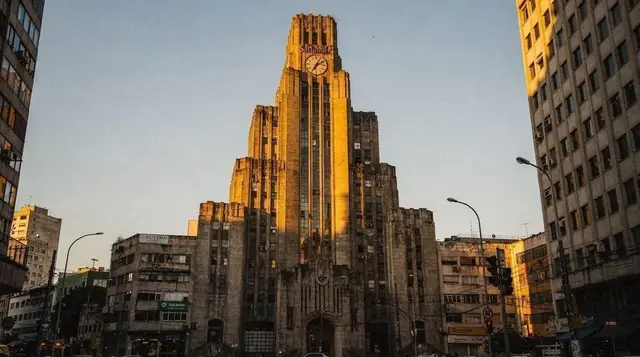
A close second, and arguably the more atmospheric choice, is Farol Santander — a restored 1940s Art Deco tower in the historic centre that was, for a period after its 1947 completion, the tallest building in South America. The building spent decades in disrepair before a major restoration reopened it as a cultural centre with exhibition floors, a café, and an observation deck near the top. The view here is lower than Sampa Sky’s but arguably more interesting for context, since you’re looking out over the historic centre — the Pátio do Colégio, the cathedral, the old commercial core — from a building that’s itself part of that same architectural story. a downtown walking tour with Farol Santander entry pairs the viewpoint with a guided walk through the surrounding historic streets, which is worth doing here specifically since the tower’s context matters as much as the view itself. The Farol Santander guide covers tickets, hours and exhibition details in full.
Edifício Itália and other downtown options
Edifício Itália, a 1965 skyscraper on Avenida Ipiranga near Praça da República, has a rooftop restaurant and bar (Terraço Itália) that doubles as a viewpoint without requiring a dedicated ticket — you pay through a meal or drink minimum rather than an entry fee, which makes it a reasonable combination of view and evening plans rather than a standalone attraction. A dinner reservation at the Terraço Itália restaurant is the straightforward way to lock in a table by the window rather than showing up and hoping for one. It’s a lower vantage point than Sampa Sky but sits more centrally, with good sightlines toward both the historic centre and Avenida Paulista. Because it’s restaurant-and-bar access rather than a dedicated observation deck, expect the crowd and pace to feel different — this is somewhere to linger over a drink rather than snap a few photos and move on.
| Sampa Sky | Farol Santander | Edifício Itália / rooftop bars | |
|---|---|---|---|
| Height | ~170m, highest in the city | Lower, mid-rise tower | Varies, generally mid-rise |
| Cost | R$40-90 entry ticket | R$30-60 entry, varies by exhibition | No entry fee, pay via food/drink minimum |
| Best for | Pure scale and photography | Historic-centre context, Art Deco architecture | Evening plans combined with a view |
| Crowds | Timed-entry, manageable | Moderate | Can be busy on weekend evenings |
Rooftop bars as viewpoints
São Paulo’s rooftop bar scene has grown substantially in recent years, particularly around Jardins, Itaim Bibi and Vila Olímpia, and several of these double as legitimate viewpoints even if photography and city-scale views aren’t their primary purpose. The advantage over a dedicated observation deck is obvious — you get food, drinks and a social atmosphere alongside the view — but the disadvantage is that most rooftop bars sit on mid-rise buildings without the dramatic height of Sampa Sky or even Farol Santander, so the view reads more as “nice backdrop” than “unmissable skyline moment.” a panoramic night tour with barbecue dinner is a good way to combine a view with an actual evening out rather than treating the lookout as a separate errand. The São Paulo rooftop bars guide covers the best specific venues by neighbourhood.
Photography tips for São Paulo’s viewpoints
A few practical notes if you’re shooting seriously rather than just taking phone snaps. Bring a lens cloth — downtown São Paulo’s air quality means glass viewing panels pick up smudges and haze film fast, and a quick wipe before shooting makes a visible difference in photo clarity. A polarising filter helps cut through the city’s characteristic haze on hotter days, particularly useful in the summer months when humidity is highest. For the classic “endless skyline” shot that captures São Paulo’s scale, a wider-angle lens works better than a zoom — the point of these photos is the lack of a horizon line, not any single building.
Blue hour, the 20-30 minutes after sunset when the sky still holds colour but the city lights are fully on, is consistently the best window for a dramatic shot at any of these venues, and it’s worth timing your visit specifically to catch it rather than leaving right at sunset. The São Paulo photography spots guide covers ground-level locations that complement these elevated shots if you’re building a fuller photography-focused day.
What you won’t see from up here
It’s worth being honest about what São Paulo’s viewpoints don’t offer compared with more famous city lookouts elsewhere. There’s no ocean horizon, no single dramatic natural landmark, and depending on air quality and season, distant haze can genuinely limit visibility on hotter, more humid days — a real contrast with the crisp, dramatic long-range views you’d get from Rio’s Sugarloaf or Corcovado on a clear day. What São Paulo trades for that is sheer density and scale: few cities anywhere let you see this much uninterrupted urban fabric from one spot, tower after tower with no green space or water breaking the pattern until the far horizon. Understanding that trade-off going in helps set the right expectations — you’re not here for a postcard shot of a single icon, you’re here to register just how big this city actually is.
Getting the timing right
São Paulo’s weather matters more to a viewpoint visit than almost anywhere else on your itinerary, since the whole point is visibility. Afternoon thunderstorms are common in the summer months (December-March), often rolling in fast in the late afternoon and clearing the view along with everyone’s plans — check the forecast the same day rather than booking a fixed slot too far ahead during this season. Autumn (April-June) offers the most reliably clear skies and is genuinely the best season for viewpoint visits, per the wider best time to visit São Paulo guide. Within a single day, late afternoon into early evening gives you both a daylight view of the skyline’s scale and, if you can stay through sunset, the transition into the city’s lit-up night grid — one of the more genuinely memorable moments available in São Paulo, and worth timing your visit around specifically.
How São Paulo’s skyline actually got this tall
The dense, unbroken tower field visible from any of these viewpoints is the product of a specific mid-20th-century building boom, when São Paulo’s rapid industrial growth and population expansion drove developers to build vertically across the city rather than concentrating height in a single financial district the way many cities do. Unlike New York or Hong Kong, where skyscraper density clusters in one or two recognisable zones, São Paulo’s towers spread across dozens of neighbourhoods with no single dominant cluster — which is exactly why the view from any of these platforms reads as endless rather than centred on an obvious skyline “peak.” Zoning rules have shifted over the decades, and some of the most aggressive vertical growth has more recently moved toward Faria Lima and Itaim Bibi rather than the historic centre, a shift you can actually trace by comparing the relative tower heights and construction ages visible from Sampa Sky’s downtown vantage point.
Edifício Copan, visible from every angle
One building shows up in nearly every skyline photograph taken from any of these viewpoints: Edifício Copan, the sinuous, wave-shaped residential tower designed by Oscar Niemeyer and completed in the 1960s, one of the largest single residential buildings in the world by number of units. Its distinctive curved silhouette makes it the easiest landmark to pick out from any elevated vantage point in the historic centre, a useful orientation point if you’re trying to match what you’re seeing to a map. It’s not open as a public viewpoint itself, but recognising it from Sampa Sky, Farol Santander or Terraço Itália adds real context to what would otherwise be an anonymous field of towers — worth pointing your camera at specifically once you know what you’re looking at.
Drone photography rules to know before you fly
If you’re travelling with a drone for skyline photography, Brazil regulates drone flight more strictly in dense urban areas than casual visitors sometimes expect — flights near airports, over crowds, and above certain building heights in central São Paulo generally require registration and, in many cases, specific authorisation from aviation authorities (ANAC) rather than being freely permitted. Given the density of controlled airspace around GRU, CGH and the city’s helicopter traffic, this isn’t a minor technicality: unauthorised drone flights in central São Paulo carry genuine legal risk rather than just a scolding. If aerial photography is a real priority for your trip, research current ANAC requirements well before you travel rather than assuming your home country’s more permissive rules apply here, and treat the ticketed observation decks covered in this guide as the reliable, hassle-free way to get an elevated skyline shot instead.
Viewpoints and accessibility
Sampa Sky and Farol Santander both rely on elevators for access, making the core viewing experience generally manageable for visitors with mobility limitations once past ground-floor security, though it’s worth confirming current accessibility provisions directly with each venue before visiting, since building maintenance and event scheduling can occasionally affect specific access points. Terraço Itália and most rooftop bars, being restaurant venues rather than dedicated observation decks, vary more in accessibility depending on the specific building’s lift and seating arrangements. See the accessible São Paulo guide for a fuller picture of accessibility considerations across the city’s main attractions.
Frequently asked questions about São Paulo’s viewpoints
Which is better, Sampa Sky or Farol Santander?
Sampa Sky has the higher, more dramatic view and the glass-floor feature; Farol Santander has more historical and architectural interest and sits within easier walking distance of other historic-centre sights. Both are worth it if you have time for two; Sampa Sky is the better single choice for pure view impact.
Do I need to book viewpoint tickets in advance?
It’s recommended for Sampa Sky and Farol Santander, both of which use timed entry and can sell out specific slots, especially weekend afternoons and around sunset.
Is there a free viewpoint in São Paulo?
Not a dedicated one at real height, but some rooftop bars and restaurants offer views without a separate entry fee, provided you buy food or drinks — see the rooftop bars guide for specific venues.
What’s the best time of day to visit a viewpoint?
Late afternoon into sunset, which gives you both daylight visibility for the skyline’s scale and the transition into the city’s lit-up night view.
Are São Paulo’s viewpoints affected by weather?
Yes, significantly — summer afternoon storms (December-March) can reduce visibility fast, while autumn (April-June) offers the clearest, most reliable skies.
Can I combine a viewpoint with a walking tour?
Yes — the Farol Santander tour pairs the tower with a guided historic-centre walk, which is a natural combination given the surrounding streets’ architectural interest.
Is Sampa Sky suitable for people afraid of heights?
The glass-floor sections are specifically designed to be dramatic and may be uncomfortable for anyone with real vertigo concerns, though most of the platform is solid flooring behind railings if you’d rather skip the glass panels.
Viewpoints beyond downtown
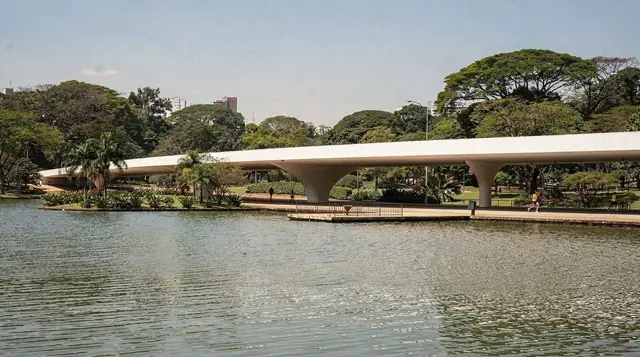
Not every good view in São Paulo comes from a dedicated observation deck. Ibirapuera Park’s open lawns give a low, ground-level view of the surrounding skyline framed by greenery — a genuinely different composition from the downtown towers, and worth a visit in its own right; see the Ibirapuera Park guide for the full picture. Avenida Paulista itself, especially from its car-free Sunday closure, offers long straight-street sightlines down one of the city’s most recognisable corridors, covered in the Avenida Paulista guide. And if you’re staying in the western neighbourhoods, the elevated streets around Jardins and Itaim Bibi offer their own lower-key skyline glimpses without needing a ticket at all.
Fitting a viewpoint into your trip
A single viewpoint visit fits into almost any itinerary length without disrupting other plans — on a one-day itinerary, slot Sampa Sky or Farol Santander into a downtown-focused afternoon; on a three-day itinerary, pair one with the historic centre guide for a full downtown day. If you want the view alongside dinner and drinks rather than a dedicated ticketed stop, build it into an evening from the rooftop bars guide instead, and see São Paulo’s best photography spots for how these viewpoints compare to ground-level shooting locations across the city.
Best viewpoints & lookout tours in São Paulo on GetYourGuide
Verified deep-linked GetYourGuide tours. Book through these links and we earn a small commission at no cost to you.
These are our own photographs of São Paulo, not the operator's pictures of this tour — open the tour page to see those.