The biggest mistakes visitors make in São Paulo
Most of the mistakes visitors make in São Paulo aren’t dramatic — nobody’s getting scammed at the airport or robbed on Paulista. They’re smaller, quieter planning errors that compound over a short trip: underestimating distances, trusting a maps app’s driving-time estimate at face value, or building an itinerary around landmarks instead of neighbourhoods. We’ve watched enough of these repeat themselves across different visitors that they’re worth listing plainly, with what we’d do instead.
| Where | Applies citywide, most acutely between neighbourhoods and to/from the airport |
| Cost | Most of these mistakes cost time, not money — though a few cost both |
| Time needed | Reading this takes ten minutes; avoiding the mistakes saves half a day |
| Getting there | N/A — this is a planning issue more than a logistics one |
| Best time | Plan before you land, not after the first frustrating afternoon |
Underestimating how big the city actually is
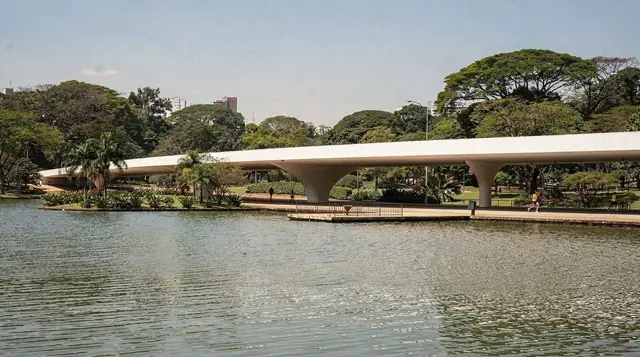
São Paulo’s metro area covers more than 20 million people across a sprawl that doesn’t compress into a single walkable core the way Buenos Aires or Lisbon does. Visitors regularly plan a day that includes Ibirapuera Park, the historic centre, and Vila Madalena, not realising these are 30–50 minutes apart by car in good traffic and considerably more during rush hour (07h–10h, 17h–20h). The neighbourhoods explained guide is worth reading before building a day plan, specifically to group activities by proximity rather than by attraction.
Trusting a maps app’s driving estimate
Google Maps and Waze give you a time estimate based on current conditions, and in São Paulo that number changes fast and dramatically once rush hour starts. A route that shows 20 minutes at 2pm can show 55 at 6pm. The safer habit is checking the estimate again right before leaving, not trusting the number you saw an hour earlier. See the São Paulo traffic guide for the specifics on which corridors are worst and when.
Skipping the metro out of unfamiliarity
A lot of visitors default to rideshares for everything, partly out of habit and partly because the metro map looks intimidating on first glance. This is usually a mistake — the metro is clean, safe, and dramatically faster than surface traffic for most cross-town routes, particularly during rush hour when a car trip can take three or four times as long. The São Paulo metro explained guide and the Bilhete Único transport card guide make this a non-issue within the first ride.
Treating Mercado Municipal as just a photo stop
The Mercadão gets rushed by a lot of first-time visitors who take a few photos of the stained-glass ceiling and leave without actually eating — which misses the point, and also means they never get warned about the marked-up stalls near the entrance. The Mercado Municipal guide covers exactly which stalls are worth it and which are pure tourist markup on the mortadella sandwich.
Booking a favela tour without checking who runs it
Favela tourism in São Paulo is a genuinely sensitive category, and the mistake we see most is booking whichever tour appears first in a search without checking whether it has real community involvement and revenue-sharing, versus one that’s essentially poverty tourism with none of the money staying local. The favela tours in São Paulo, honestly guide lays out how to tell the difference.
Assuming museums don’t need advance planning
MASP, the Pinacoteca and the Museu do Futebol all get genuinely busy on weekends and around free-entry days, and visitors who show up without checking hours or free days sometimes queue for far longer than necessary. A skip-the-line MASP tour solves this specifically for the museum that gets the worst queues. See the MASP guide for the full visiting logistics.
Not budgeting a coffee-and-farm day trip into a longer stay
Visitors doing five or more days often fill every one of them with city content and skip the countryside entirely, which undersells how different — and how close — the coffee and cheese country outside the city actually is. A coffee and cheese farm tour is a genuinely good use of a spare day on a longer trip. See coffee farm tours near São Paulo.
Overpacking the itinerary generally
Beyond the specific mistakes above, the broadest one is simply overplanning — building a five-stop day when São Paulo’s traffic and scale realistically support two or three well-chosen stops. Visitors coming from more compact cities tend to import an itinerary density that doesn’t translate here, and the result is usually a rushed, frustrated day rather than the immersive one they’d hoped for. Cutting your planned stops by a third relative to what feels reasonable elsewhere is a good rule of thumb, freeing up room to actually linger somewhere rather than checking a box and moving on.
Not building in a weather contingency
A related planning mistake, specific to the December–March window: assuming a fixed outdoor itinerary will simply proceed as scheduled regardless of weather. São Paulo’s afternoon storms are common enough in summer that a rigid, fully-booked day with no flexibility is a genuine risk. See living with São Paulo’s afternoon storms for how to build in the right amount of slack without over-planning around weather that may not even happen.
Ignoring the padaria in favour of “real” restaurants only
A smaller but common mistake: treating padarias as filler and saving the food budget entirely for sit-down restaurants. Padaria culture is a genuine, distinctive part of how paulistanos eat daily, and skipping it means missing an authentic slice of local life in favour of a more generically “restaurant” experience that could happen almost anywhere. See the padaria culture guide for why this matters more than it might seem on a quick glance at a menu.
Comparing the common mistake to the better move
| Common mistake | Better move | |
|---|---|---|
| Planning a day | Landmarks scattered across the city | Group activities by neighbourhood |
| Getting around | Rideshare for every trip | Metro for cross-town, rideshare for the last mile |
| Mercadão | Photo and leave | Sit down, eat, know which stalls to skip |
| Favela tours | Book the first result | Check for community revenue-sharing first |
| Museums | Show up without checking hours | Check free days and consider a skip-the-line option |
Frequently asked questions about avoiding common São Paulo mistakes
What’s the single biggest planning mistake?
Underestimating distances and travel time between neighbourhoods. São Paulo doesn’t compress into a single walkable core.
Is the metro really faster than a car during rush hour?
Yes, often dramatically so — a car trip that takes 45 minutes off-peak can take well over an hour during 07h–10h or 17h–20h, while the metro’s time stays roughly constant.
Are favela tours ethical to take at all?
Some are, if they’re run with real community involvement and revenue-sharing. The mistake isn’t taking one, it’s not checking which kind you’re booking.
Should I skip Mercado Municipal if I’ve heard it’s touristy?
No — it’s touristy in parts, but skipping it misses a genuinely good market experience. Just know which stalls are marked up before you order.
Do museums really need advance booking?
Not always required, but skip-the-line options meaningfully cut queue time at MASP in particular, especially on weekends.
Is it a mistake to rely on rideshares exclusively?
For cross-town trips during rush hour, yes — the metro is usually faster and immune to traffic.
What should I check before booking any tour?
Whether it’s run locally with genuine community benefit, particularly for favela and street art tours, and whether the group size and duration match what you actually want.
Fitting this into your trip
Avoiding these mistakes matters most on shorter trips where there’s no slack to recover a wasted afternoon — the three days in São Paulo itinerary is built with neighbourhood grouping already baked in. For a longer stay with a countryside day included, see the five days in São Paulo and around itinerary.
Trip-planning advice for São Paulo on GetYourGuide
Verified deep-linked GetYourGuide tours. Book through these links and we earn a small commission at no cost to you.
These are our own photographs of São Paulo, not the operator's pictures of this tour — open the tour page to see those.