Mercado Municipal: what to order and what to skip
Is Mercado Municipal worth visiting and what should I order?
Yes, for the building and the experience as much as the food — order the famous mortadella sandwich and a pastel de bacalhau, but know that stall prices run higher than equivalent food elsewhere in the city. Go on a weekday morning to avoid the worst crowds, and treat it as a one-hour stop rather than a full meal destination.
Mercado Municipal — universally nicknamed “Mercadão,” the big market — is a genuine São Paulo institution: a grand early-20th-century covered market in the historic centre, famous well beyond the city for one specific sandwich and for the sheer scale and colour of its produce stalls. It’s also, honestly, a place where prices at the food stalls run noticeably higher than equivalent quality elsewhere in the city, trading on its fame and steady tourist traffic. This guide covers what’s worth ordering, what to skip, and how to see the market without overpaying for a mediocre version of what you came for.
| Where | Rua da Cantareira 306, Centro Histórico, near Luz |
| Cost | R$25-50 (~US$5-10) for the mortadella sandwich; produce stalls vary |
| Time needed | 45 minutes to 1.5 hours |
| Getting there | Metro São Bento (Line 1 Blue) plus a short walk, or Luz station |
| Best time | Weekday mornings, ideally before 11am, to beat the worst crowds |
The building itself
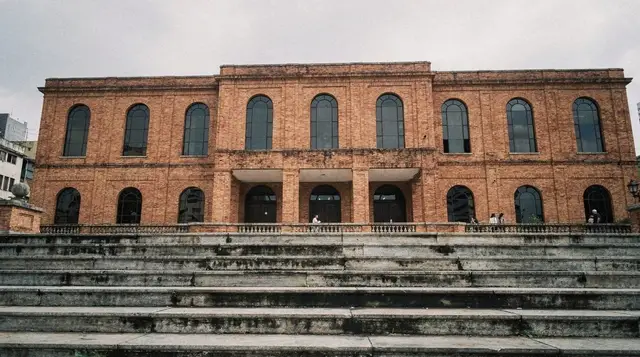
Completed in 1933, Mercado Municipal was designed in an eclectic historicist style with a striking set of stained-glass windows, several depicting scenes of rural food production, installed decades after the original construction. The building’s scale is genuinely impressive — a soaring iron-and-glass roof structure over a market floor packed with produce, dried goods, spice and food stalls — and it’s worth looking up as much as browsing the counters. It sits at the edge of the historic centre near Luz, in a part of downtown that’s seen mixed fortunes over the decades but remains a legitimate, well-trafficked stop during daytime hours. For the wider historic-centre context, see the historic centre guide.
The mortadella sandwich: worth the queue?
The market’s signature item is a thick mortadella sandwich, piled generously between two slices of bread, sold at a handful of competing stalls that have built decades-long reputations around this single dish. It’s genuinely worth trying once — the sandwich itself is simple but satisfying, and it’s become such a fixture of the São Paulo food identity that skipping it feels like missing something the city is specifically known for. The honest caveat: at R$25-50 for what’s fundamentally a cold-cut sandwich, you’re paying a real premium for the location and reputation rather than any exceptional ingredient quality. Expect a queue at the most famous stalls, especially on weekends, and know that several competing counters sell essentially the same product — you don’t need to wait specifically for the most Instagram-famous one. See the mortadella sandwich story for the fuller history and an honest verdict on whether the wait is worth it.
What else to order
Beyond the mortadella sandwich, pastel de bacalhau (a fried pastry filled with salt cod) is a genuinely good option at several stalls, and the market’s fruit stands sell an impressive range of Brazilian fruit, some of it unusual enough to visitors that it’s worth a browse even if you’re not buying — see the Brazilian fruit guide for what to look for. Dried fruit, nuts and spice stalls sell reasonably priced take-home items if you’re after edible souvenirs, generally at fairer prices than the prepared-food counters. a Liberdade street food tour is worth considering as a complementary stop if you want a wider, less tourist-marked-up food crawl on the same day, and a São Paulo food tour covering the flavors of Brazil often includes Mercado Municipal as one stop among several, which spreads the cost and gives useful context you’d miss browsing on your own.
What to skip
Be honest with yourself about the upstairs mezzanine food-court-style stalls in particular, which trade heavily on foot traffic and view rather than food quality — several serve unremarkable, overpriced versions of dishes done better elsewhere in the city. Fresh juice stands throughout the market are generally a safer, fairly priced bet than the prepared hot-food stalls if you want something quick and refreshing without the premium pricing. If you’re building a proper meal rather than a snack stop, the market isn’t really the place for it — treat Mercado Municipal as a browse-and-snack destination, then eat your actual lunch or dinner elsewhere in the city where prices better reflect quality.
| Worth it | Skip | |
|---|---|---|
| Mortadella sandwich | Yes, once, for the experience | — |
| Pastel de bacalhau | Yes | — |
| Fresh fruit and juice stands | Yes, fair pricing | — |
| Upstairs food-court stalls | — | Generally overpriced, mediocre |
| A full sit-down lunch | — | Better value elsewhere in the city |
A short history of the market
Mercado Municipal opened in 1933, built to consolidate São Paulo’s fresh produce trade into a single grand civic building at a time when the city was rapidly industrialising and its population growing fast on the back of immigration. The stained-glass windows, added later in the market’s history, depict rural scenes of food production — a deliberate visual reminder, even inside the dense urban centre, of where the city’s food actually comes from.
Through the mid-to-late 20th century the market’s surrounding neighbourhood went through periods of decline as São Paulo’s commercial centre of gravity shifted toward Avenida Paulista and the western districts, but the market itself remained a working institution throughout, never closing or converting to a purely tourist-facing model the way some historic markets elsewhere eventually do. That continuity is part of what makes it feel authentic rather than staged, even with the tourist-driven pricing at the food stalls — real produce vendors, wholesalers and everyday shoppers still use the market alongside the visitors snapping photos of the stained glass.
Produce stalls and the wholesale side
Beyond the famous food counters, a significant portion of the market’s floor is dedicated to serious produce and dried-goods wholesale trade — this isn’t purely a tourist market, and walking the aisles away from the sandwich stalls gives a genuinely different sense of the place. Spice vendors, dried fish and meat counters, and stalls piled with unfamiliar Brazilian fruit varieties are worth a browse even if you’re not buying, and pricing in this section tends to be considerably fairer than at the prepared-food counters, since it’s aimed at regular local customers and small business buyers rather than one-time tourist traffic. If photography interests you, this working, less polished side of the market often makes for more interesting images than the well-documented sandwich stalls.
Getting there and timing
Metro São Bento on Line 1 Blue is the most direct option, followed by a short walk; Luz station also works if you’re combining the market with a visit to the nearby Pinacoteca or Luz neighbourhood. This part of the historic centre is comfortably walkable and busy during the day, but avoid lingering into the evening — like much of the historic centre, the area empties out and feels less comfortable after dark. Weekday mornings before 11am offer the best balance of open stalls and manageable crowds; by midday on weekdays and throughout weekend afternoons, the market gets genuinely packed. The is São Paulo safe guide covers the historic centre’s day-versus-night dynamic if you’re planning a broader downtown day around the market.
How it compares to São Paulo’s street markets
If Mercado Municipal’s pricing puts you off, the city’s weekly feiras livres (street markets) offer a comparable, less touristy alternative for produce and prepared food, generally at prices better matched to what locals actually pay — see the São Paulo street markets guide for the best ones by neighbourhood and day. The Praça Benedito Calixto Saturday market, covered in the Benedito Calixto market guide, combines food stalls with antiques and live music in a more relaxed, less crowded setting than Mercado Municipal’s peak weekend hours.
The building’s architecture, in more detail
Designed by the architect Francisco de Paula Ramos de Azevedo, a figure responsible for several of São Paulo’s significant early-twentieth-century civic buildings, Mercado Municipal was conceived as a statement building as much as a functional one — a deliberate signal that the rapidly industrialising city deserved civic architecture on par with the great European markets many of its immigrant residents would have known from home.
The stained-glass windows, added over subsequent decades rather than all at once, were largely produced by Russian-born artist Conrado Sorgenicht Filho, whose rural agricultural scenes were intended to visually tie the market’s urban commerce back to the land the produce actually came from. The iron structural framework supporting the market’s roof reflects the same industrial-age engineering confidence visible in market halls built across Europe and the Americas in the same period, a genuinely international architectural style adapted to a specifically Brazilian civic purpose.
How Mercado Municipal compares to famous markets elsewhere
Visitors who’ve spent time at Barcelona’s La Boqueria, Mexico City’s Mercado de San Juan, or similar historic covered markets will find useful points of comparison here. Like La Boqueria, Mercadão trades heavily on its historic building and photogenic produce displays, and like La Boqueria, prices at its most famous stalls run noticeably higher than markets without the same tourist profile — a pattern common to almost every world-famous covered market once photography and reputation start driving footfall beyond the local customer base the market was originally built to serve. Where Mercadão differs from many of its international peers is scale relative to city size: São Paulo’s much larger population means the market’s role as an actual working wholesale and retail institution, not just a tourist-oriented food hall, remains genuinely significant, visible in the produce and dried-goods sections that see comparatively few tourists at all.
Mistakes visitors commonly make at Mercadão
A few recurring errors are worth naming. Arriving hungry and ordering the first sandwich you see, rather than glancing at two or three competing stalls first, routinely means paying the top of the price range unnecessarily. Treating the market as a full sit-down lunch destination, rather than the browse-and-snack stop it’s genuinely best suited to, leaves many visitors both overpaying and underwhelmed relative to what the same budget buys at a proper restaurant elsewhere in the city. Skipping the produce and dried-goods aisles entirely in favour of only the food-stall section means missing a genuinely different, less touristy side of the same building. And visiting during a Saturday lunch rush without a backup plan, rather than accepting a mid-morning weekday visit as the better strategy laid out earlier in this guide, is the single most common source of visitor frustration with the whole experience.
How prices shift through the year
Mercadão’s produce section reflects Brazil’s genuinely wide range of growing regions and climates, meaning the fruit and vegetable stalls show real seasonal variation worth knowing about if fresh produce interests you specifically. Tropical fruits with year-round cultivation zones somewhere in Brazil, like mango and papaya, stay reasonably consistent in price and availability throughout the year, while more climate-specific items can spike in price or disappear from stalls during their off-season. The market’s prepared-food pricing, by contrast, doesn’t fluctuate meaningfully by season — the mortadella sandwich costs roughly the same in January’s summer heat as it does in July’s cooler winter months, since its pricing reflects reputation and location rather than ingredient seasonality.
An underexplored side: the market’s smaller ethnic food stalls
Beyond the famous mortadella counters, a handful of smaller stalls scattered through the market’s edges sell food reflecting São Paulo’s immigrant history in less headline-grabbing ways — Japanese, Middle Eastern and other regional Brazilian specialities turn up if you wander beyond the main tourist-trafficked aisles. These stalls generally see far less foot traffic than the famous sandwich counters, which tends to mean both fairer pricing and a more genuine sense of who actually shops here day to day, alongside the tourists. If you’ve already tried the mortadella sandwich on a previous visit or simply want a less crowded corner of the market to explore, this is worth ten or fifteen minutes of wandering before you leave.
Frequently asked questions about Mercado Municipal
Is the mortadella sandwich actually good, or just famous?
It’s a solid, satisfying sandwich, but the reputation exceeds the food quality relative to price — worth trying once for the experience rather than expecting a transcendent meal.
How much does a visit to Mercado Municipal cost?
Budget R$25-50 for the sandwich plus a few smaller items like pastel or fresh juice; a light snacking visit for one person runs roughly R$40-80 total.
When is the best time to visit to avoid crowds?
Weekday mornings before 11am. Weekend afternoons, especially Saturday, are consistently the busiest.
Is Mercado Municipal safe to visit?
Yes, during daytime hours — it’s a well-trafficked, established attraction. Avoid the surrounding historic-centre streets after dark, when the area is quieter and less comfortable.
Can I buy souvenirs at the market?
Yes — dried fruit, nuts, spices and packaged goods make reasonable, fairly priced edible souvenirs, generally better value than the prepared hot-food stalls.
How long should I spend at the market?
45 minutes to 1.5 hours is enough to browse, snack and see the building properly without lingering in an increasingly crowded space.
Should I eat a full meal at Mercado Municipal?
Not really — treat it as a browse-and-snack stop rather than your main meal destination, since prices don’t match the quality you’ll find in the city’s actual restaurant neighbourhoods.
Fitting Mercado Municipal into your trip
Mercado Municipal fits naturally into a historic-centre morning alongside Farol Santander and the rest of the historic centre. On a one-day itinerary, it’s a strong lunch-adjacent stop before an afternoon elsewhere; on a food lover’s São Paulo itinerary, it’s one stop among several rather than the centrepiece. See the where to eat in São Paulo guide for where to have your actual sit-down meals afterward.
Shopping & market tours on GetYourGuide
Verified deep-linked GetYourGuide tours. Book through these links and we earn a small commission at no cost to you.
These are our own photographs of São Paulo, not the operator's pictures of this tour — open the tour page to see those.