Walking in a city built for cars
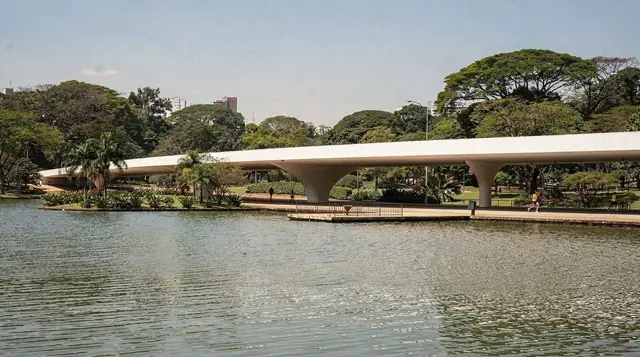
São Paulo’s urban fabric was shaped overwhelmingly around the car — wide arterial avenues, elevated highways cutting through the centre, and a sprawl that resists the kind of compact, walkable core you’d find in a European capital. And yet, paradoxically, walking is how the city’s best material actually reveals itself: the murals of Vila Madalena, the market stalls of Liberdade, the layered architecture of the historic centre. This is the tension we’ve spent the most time thinking about across repeat visits, and it’s worth explaining honestly rather than pretending São Paulo is more pedestrian-friendly than it is.
| Where | Best on foot: Vila Madalena, Centro Histórico, Liberdade, Jardins. Worst: the Marginais and most arterial avenues |
| Cost | Free, aside from the tour options below |
| Time needed | A neighbourhood typically rewards 2–4 hours on foot |
| Getting there | Metro to a neighbourhood’s edge, then walk the interior |
| Best time | Mornings and early evenings; midday sun is intense outside winter |
Why the city wasn’t built for this
São Paulo’s growth through the 20th century prioritised car infrastructure aggressively — the elevated Minhocão highway cutting through the centre is probably the most visible symbol of this, a raised road that displaced pedestrian street life for decades before being partially reclaimed as a public space on evenings and Sundays. Wide, multi-lane avenues designed for traffic flow rather than crossing comfort are the norm rather than the exception across much of the city, which makes some routes genuinely unpleasant or slow to walk even when the distance looks short on a map.
Where walking works brilliantly anyway
The paradox is that within individual neighbourhoods, once you’re off the arterial avenues and onto the smaller residential and commercial streets, São Paulo becomes genuinely excellent walking territory. Vila Madalena’s grid of narrow, mural-covered streets rewards slow, aimless wandering more than almost any neighbourhood we’ve covered anywhere. See the Vila Madalena guide and the best walking tours in São Paulo guide for where this works best across the city.
The historic centre, on foot
Centro Histórico is dense with architecture spanning more than a century — the Farol Santander tower, the Pátio do Colégio, the Mercadão — all close enough together to cover comfortably on foot within a few hours. It’s also one of the areas where walking with some local knowledge pays off more than elsewhere, given the mix of genuinely striking buildings and streets worth avoiding after dark. A main city sights walking tour covers this ground efficiently with a guide who knows which blocks deserve the time and which don’t. See the historic centre guide for the self-guided version.
When a bike beats walking
For longer, more spread-out routes — following the street art trail through multiple neighbourhoods, or crossing Ibirapuera Park’s full loop — a bike genuinely outperforms walking without sacrificing much of the on-the-ground texture that makes exploring on foot worthwhile in the first place. A downtown historical bike tour or a coolest urban scenes bike tour covers considerably more ground than walking in the same time window, while still stopping frequently enough to take everything in.
Crossing the arterial avenues
The one genuinely difficult part of walking in São Paulo is crossing its widest avenues — Paulista outside its Sunday closure, or the roads flanking the Marginais — where crosswalks can be sparse and traffic aggressive. The practical fix is simple: use the pedestrian bridges and signalled crossings even if they add a few minutes, rather than attempting a jaywalk across six lanes of moving traffic. This is one of the few places where a slightly longer, safer route genuinely beats the direct one.
The Minhocão, reclaimed
The Minhocão deserves its own mention as the clearest symbol of São Paulo’s uneasy relationship with car infrastructure and pedestrian life. Built in the early 1970s as an elevated expressway slicing directly through dense residential blocks downtown, it depressed property values and street life along its length for decades. Since the mid-2010s, the city has closed it to cars on evenings and weekends, and those closures have turned a stretch of raised highway into an unexpectedly good elevated park — joggers, cyclists, food stalls, and views over the historic centre’s rooftops that you simply can’t get at street level. It’s one of the more striking examples anywhere of a piece of car infrastructure being partially reclaimed for pedestrians rather than expanded further.
Footwear and pacing for a full day on foot
São Paulo’s uneven, sometimes cracked sidewalks — a byproduct of a city that prioritised road infrastructure over pedestrian maintenance for decades — reward proper walking shoes over anything flimsy or overly cushioned. Given the elevation changes in neighbourhoods like Vila Madalena and Pinheiros, and the summer heat and humidity outside winter, planning for a slower pace with regular café stops works better than treating a day on foot like a fitness challenge. See the São Paulo in summer guide for how the heat specifically affects a walking-heavy itinerary.
Comparing neighbourhood walking to arterial walking
| Neighbourhood interior (Vila Madalena, Liberdade) | Arterial avenues (Marginais, wide boulevards) | |
|---|---|---|
| Pedestrian comfort | High — narrow streets, low traffic speed | Low — wide, fast, sparse crossings |
| What you find | Murals, markets, small cafés, local life | Mostly a route between destinations |
| Best approach | Wander freely, no fixed route needed | Use signalled crossings, don’t linger |
| Time to enjoy | 2–4 hours rewards genuine exploration | Minimise time spent here |
Heat and sun exposure to plan around
Outside winter, São Paulo’s midday sun combined with humidity makes a full day of continuous walking genuinely tiring in a way that catches visitors from cooler climates off guard. Shade is inconsistent across the city — some streets in Jardins and Vila Madalena have mature tree cover, while others, particularly wider avenues, offer none for long stretches. Building in a midday café break rather than pushing through the hottest hours makes a longer walking day considerably more enjoyable, and it doubles as a natural opportunity to try one of the specialty coffee spots covered in coffee in the country that grows it.
The one route we’d recommend to anyone
If we had to pick a single walking route to recommend without qualification, it would be starting at Praça Benedito Calixto in Pinheiros, cutting through into Vila Madalena’s mural-covered streets, and finishing at Beco do Batman as the light starts to fade — roughly two hours at an unhurried pace, entirely within neighbourhood interiors, with almost no arterial crossings required. It captures most of what makes São Paulo worth exploring on foot in a single afternoon, and it’s forgiving enough for a first day in the city when you’re still getting your bearings. See the Beco do Batman guide for what to expect at the end point.
Frequently asked questions about walking in São Paulo
Is São Paulo a walkable city overall?
Not in the way a European capital is — the sprawl and car-oriented arterial roads work against it — but individual neighbourhoods are genuinely excellent on foot.
What’s the best neighbourhood for aimless wandering?
Vila Madalena, without much competition, thanks to its dense grid of narrow, mural-covered streets.
Is it safe to walk around at night?
In well-trafficked neighbourhoods, generally yes with normal precautions; the historic centre specifically warrants more caution after dark. See the safety reality check.
Should I combine walking with the metro?
Yes — this is the most effective approach, using the metro to jump between neighbourhoods and walking within each one’s interior.
Is a bike a better option than walking?
For covering more ground across a longer route, yes, without losing too much of the street-level detail that makes walking worthwhile.
What’s the hardest part of walking around São Paulo?
Crossing the city’s widest avenues, where crosswalks can be sparse — always use a signalled crossing rather than attempting a direct crossing.
Is walking a good way to see the historic centre?
Yes, and it’s one of the most reward-per-hour neighbourhoods to walk, though a guided option adds useful local context on which streets to prioritise.
Fitting this into your trip
Walking-heavy days work best when grouped by neighbourhood — the three days in São Paulo itinerary and art and architecture in São Paulo itinerary both lean into this, minimising arterial crossings in favour of neighbourhood-interior walking.
Local perspective tours & experiences in São Paulo on GetYourGuide
Verified deep-linked GetYourGuide tours. Book through these links and we earn a small commission at no cost to you.
These are our own photographs of São Paulo, not the operator's pictures of this tour — open the tour page to see those.