The best walking tours in São Paulo
What's the best walking tour in São Paulo?
For first-time visitors, a downtown-centre walking tour covering Centro Histórico's core landmarks in two to three hours gives the best return on time. For street art, a dedicated Vila Madalena and Pinheiros tour beats a general city tour. For food, a Pinheiros or Liberdade food-and-graffiti tour combines two of the city's strengths in one outing.
São Paulo rewards a guided walk more than most cities its size, mostly because the things that make it interesting — the layered immigration history, the difference between a commissioned mural and pixação tagging, which mortadella stall at the Mercadão is worth the queue — aren’t obvious from looking at them. A good local guide compresses weeks of context into a few hours. This guide compares the main walking tour options by district and focus, rather than just listing every tour that exists, because the right choice depends heavily on what you’re actually there to see.
For a self-guided version of the city’s core route, see the things to do in São Paulo guide; for the broader question of whether a guide is worth it at all, see the is a guided tour of São Paulo worth it guide.
| Where | Centro Histórico, Vila Madalena, Liberdade, Paulista |
| Cost | R$80–250 (~US$14–45) per person depending on group size and length |
| Time needed | 2–4 hours per tour, most run in the morning |
| Getting there | Most tours start with a meeting point reachable by metro |
| Best time | Weekday mornings, before heat and crowds build |
Downtown history: Centro Histórico
Centro Histórico is the most naturally suited district for a walking tour, since its landmarks — Praça da Sé, the Theatro Municipal, Pátio do Colégio, Edifício Copan — sit close enough together to cover on foot but far enough apart, and dense enough with layered history, that a guide adds real value over a self-guided map. A downtown-centre walking tour, two hours is the efficient option if your time is limited; a must-see sites walking tour runs longer and covers more ground, including the Farol Santander observation deck. See the Centro Histórico destination guide for the self-guided version if you’d rather walk it alone.
Street art: Vila Madalena and Pinheiros
Walking through Beco do Batman alone gets you photos; walking through it with a guide gets you the difference between the internationally recognised murals and the more recent additions, plus a proper explanation of pixação, the tagging style that covers much of the city and confuses most first-time visitors who assume it’s vandalism rather than a distinct cultural movement with its own history. A street art bike tour covers more ground than a walking version in the same time, useful given how spread out the best murals are beyond the one famous alley. See the São Paulo street art guide and pixação explained guide for background before you go.
Liberdade and Japanese heritage
A dedicated Liberdade walking tour covers ground a self-guided visit easily misses — the history of Japanese immigration into São Paulo starting in the early 20th century, the significance of specific temples and shrines tucked between shopfronts, and genuine restaurant recommendations beyond the obvious main-street spots. A guided walking tour of Liberdade and Templo Lohan is the strongest option here, including entry to a temple most visitors would otherwise walk past without realising its significance. See the Liberdade destination guide and Japanese São Paulo guide.
Paulista and modern architecture
Avenida Paulista’s walking tours tend to focus on the avenue’s role as the city’s financial and cultural spine, plus the specific buildings — MASP’s raised concrete box, the Conjunto Nacional — that define São Paulo’s brutalist and modernist streak. These pair well with a museum visit, since most Paulista walking tours end near or inside MASP. See the Avenida Paulista destination guide and the São Paulo architecture guide for the wider context.
Food-focused walks
Rather than a pure sightseeing walk, several operators run food-and-neighbourhood combinations, particularly in Pinheiros, where street art and food stalls sit close together, making a combined tour genuinely efficient rather than a forced pairing. These run longer — often three to four hours — and include multiple tastings along the route, which makes them a reasonable substitute for lunch as well as a sightseeing activity. See the São Paulo food tours compared guide for the full comparison against dedicated food tours.
Private versus group walking tours
Group tours run cheaper per person and follow a fixed schedule, which suits travellers happy to move at someone else’s pace. Private tours cost more but flex around your interests and energy level — worth the premium if you have specific things you want to prioritise, or if you’re travelling with people who walk at different paces. A private walking tour with a local is the strongest all-purpose private option if you want one guide who can adapt to whatever you’re most interested in on the day, rather than a fixed-focus tour.
What a typical tour actually includes
Most walking tours in São Paulo run two to four hours and include a guide’s commentary throughout, but entry fees to specific attractions — MASP, Farol Santander’s observation deck, a temple in Liberdade — are sometimes included and sometimes separate, so it’s worth checking the specific listing rather than assuming. Group sizes vary from small clusters of four to six people on niche tours up to fifteen or twenty on the most popular general city routes; smaller groups generally mean more chances to ask questions and a slower, more flexible pace. Most operators provide the meeting point via a message or email after booking rather than a fixed public address, so check your confirmation email or app notifications the day before.
When to book and how far ahead
Weekday mornings are the easiest to book last-minute, since demand is lower than weekends. Saturday street art tours and Sunday Paulista-focused walks, which coincide with the car-free avenue, are the most likely to sell out, particularly during Brazilian school holidays (July, and December through February) and around major events like Carnival or the Virada Cultural festival in May. If your trip includes any of those windows, book at least a few days ahead rather than relying on same-day availability.
Walking tours versus other ways to see the same ground
A walking tour isn’t the only way to cover Centro Histórico or Vila Madalena — a bike tour covers more ground in the same time, useful if your interest is broad rather than deep, and a private car-based tour suits anyone who wants to see the highlights without the physical effort of walking several kilometres in São Paulo’s heat and hills. The trade-off is context and immersion: walking tours let you stop, ask questions and notice details that a faster-moving tour skips past. For most first-time visitors focused on Centro Histórico or the street art scene specifically, walking remains the better format precisely because the details are the point.
Comparing São Paulo’s main walking tour options
| Tour focus | Best for | Typical length | Starts near |
|---|---|---|---|
| Centro Histórico history | First-time visitors, architecture fans | 2–3 hours | Praça da Sé or Theatro Municipal |
| Vila Madalena street art | Photography, culture, repeat visitors | 3–3.5 hours | Beco do Batman |
| Liberdade heritage | Culture and history-focused travellers | 3 hours | Praça da Liberdade |
| Paulista architecture | Design and architecture enthusiasts | 2–2.5 hours | MASP or Trianon metro |
| Food-and-neighbourhood | Anyone prioritising food over sights | 3–4 hours | Varies by operator |
A brief history of guided tourism in São Paulo
São Paulo hasn’t historically marketed itself as a tourist destination the way Rio has — for most of the 20th century, the city’s international reputation rested on industry, finance and its role as Brazil’s economic engine rather than sightseeing, and organised tourism infrastructure developed correspondingly late compared to beach cities or colonial-era towns like Salvador and Ouro Preto.
Dedicated walking tours aimed at international visitors are a relatively recent development, growing meaningfully only over roughly the past fifteen years alongside the city’s own recognition, including by paulistanos themselves, that its layered immigration history, street art and food scene were worth presenting deliberately to outsiders rather than assuming visitors would only ever pass through for business. This history is part of why São Paulo’s walking tour guides tend to lean heavily on personal, insider knowledge rather than a standardised script — the tourism infrastructure built up organically around individual guides and small operators with real neighbourhood knowledge, rather than top-down from a long-established tourism board the way it might in a city with a longer visitor history.
How São Paulo’s walking tour scene compares to other major cities
Compared to a city like Rome or Paris, where walking tours are a mature, heavily saturated market with dozens of operators covering the same handful of landmarks, São Paulo’s scene is smaller and less standardised — fewer operators overall, but correspondingly less competition driving down quality or turning tours into a rehearsed, interchangeable product. Compared to Rio de Janeiro, whose walking tours lean heavily on a handful of iconic, already-famous sights, São Paulo’s tours do more interpretive work, since the city’s appeal isn’t as immediately legible from a single viewpoint — a guide here is translating context (why this mural matters, what this building represents about a specific immigrant community) rather than simply narrating a view everyone already recognises. This makes the case for a guide arguably stronger in São Paulo than in a more visually self-explanatory destination, even though the tour market itself is less developed.
Common mistakes when choosing a walking tour
A few mistakes come up repeatedly among first-time visitors booking a São Paulo walking tour. The first is picking based purely on price without checking what’s actually included — some listings bundle attraction entry fees into the tour cost while others charge separately, and comparing two tours by sticker price alone can be misleading. The second is assuming a “city highlights” tour covers everything worth seeing in one go — São Paulo is genuinely too large and varied for any single tour to meaningfully cover Centro Histórico, street art and a neighbourhood like Liberdade in one outing, so a tour promising to show “all of São Paulo” in three hours is realistically covering one district well rather than the whole city. The third is booking a walking tour during the worst of a summer afternoon (roughly 1pm-4pm, December-March), when heat and storm risk are both at their highest — mornings are the more reliable choice across almost every operator and route covered here.
Tipping and etiquette for tour guides
Tipping isn’t strictly mandatory on a São Paulo walking tour the way it might be assumed on a US-based tour, but it’s increasingly customary for a good guide, particularly on smaller group or private tours where the guide’s income relies more directly on the experience they deliver. R$20-50 per person for a half-day tour is a reasonable range if the guide was genuinely good, more for an exceptional private tour; it’s fine to skip it if a tour fell short of expectations. Cash is the simplest way to tip directly, since card tipping infrastructure for independent guides is inconsistent. This is a smaller courtesy than restaurant tipping, where a service charge is often already included on the bill — walking tour tipping in São Paulo functions more like North American norms, an optional but appreciated gesture rather than an automatic addition.
Self-guided alternatives if a tour doesn’t fit your budget
If a paid tour doesn’t fit your trip’s budget, São Paulo’s better-documented districts do reward a self-guided walk with the right preparation — the destination guides on this site for Centro Histórico, Vila Madalena and Liberdade each lay out a sensible walking route with enough context to replicate much of what a guided tour covers, minus the guide’s live commentary and any included entry fees. The trade-off is real — you’ll miss the incidental stories a good local guide adds along the way, and you won’t have someone to answer an unexpected question on the spot — but for a tight budget or a traveller who prefers exploring independently, a well-prepared self-guided walk covers the physical ground and the headline sights just as effectively.
Frequently asked questions about walking tours in São Paulo
Are São Paulo’s walking tours in English?
Most operators run English-language tours alongside Portuguese ones — confirm the specific language when booking, since not every time slot offers both.
How much walking is actually involved?
Most tours cover 2–4km over two to three hours at a relaxed pace, with stops. Comfortable shoes matter more than fitness level for any of the tours listed here.
Should I book in advance or can I book on the day?
Popular tours, particularly street art tours in Vila Madalena, can sell out on weekends — booking a day or two ahead is safer than assuming same-day availability.
Are these tours suitable for kids?
Centro Histórico and Paulista tours generally work fine for older kids; street art tours’ subject matter is fine for any age but the pace and distance suit older children better. See the São Paulo with kids guide for family-specific alternatives.
What should I wear or bring?
Comfortable walking shoes, sun protection, and a water bottle — most tours run outdoors regardless of weather within reason. Check the what to do when it rains guide if your tour date coincides with a forecast storm.
Is a private tour worth the extra cost over a group tour?
Worth it if you have specific interests to prioritise or want flexibility on pace — otherwise a group tour covers the same ground for less per person.
Do walking tours operate in the rain?
Most run rain or shine, but heavy summer storms (December–March) can lead to rescheduling — check the operator’s weather policy at booking, and see the what to do when it rains guide for a backup plan.
Can I combine two walking tours in one day?
Yes, if they’re in reasonably close districts and timed with a break between — Centro Histórico in the morning and Vila Madalena in the afternoon works well, since both sit along a similar west-moving route across the city.
Fitting this into your trip
A single walking tour fits naturally into the two days in São Paulo itinerary without disrupting the rest of the plan, and a longer trip following the five days in São Paulo and around itinerary has room for two or three different tours across different districts.
São Paulo city highlights on GetYourGuide
Verified deep-linked GetYourGuide tours. Book through these links and we earn a small commission at no cost to you.
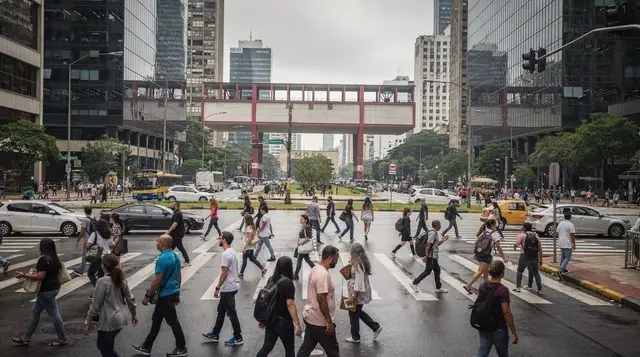
These are our own photographs of São Paulo, not the operator's pictures of this tour — open the tour page to see those.