Contemporary art galleries in São Paulo
Where should I go to see São Paulo's contemporary art gallery scene, and is it free to visit?
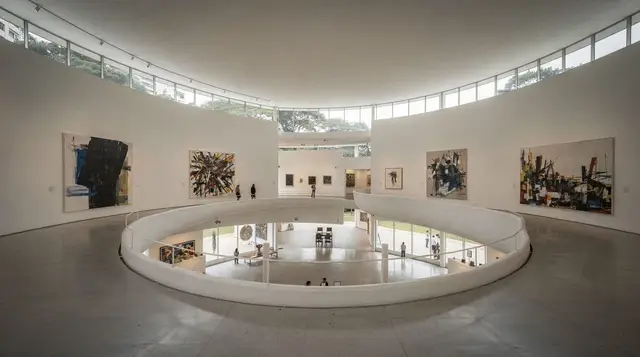
Rua Estados Unidos and the surrounding Jardins streets hold the highest concentration of established commercial galleries, with a newer, rougher-edged scene spread through Pinheiros and Vila Madalena. Almost all galleries are free to enter, though hours are limited compared to museums — most keep afternoon-only or Tuesday-to-Saturday schedules.
São Paulo runs one of Latin America’s most active contemporary art markets, and almost none of it happens inside the museums most visitors already have on their list. The commercial gallery scene is spread across a handful of neighbourhoods, free to enter, and largely ignored by first-time visitors who assume “art in São Paulo” means MASP and stops there. This guide covers where the scene actually lives, how it differs from a museum visit, and when to time a trip around SP-Arte, the city’s major contemporary art fair.
| Where | Rua Estados Unidos and Jardins (established galleries); Pinheiros and Vila Madalena (newer scene) |
| Cost | Free to enter almost everywhere |
| Time needed | 2–4 hours for a gallery crawl across several spaces |
| Getting there | Metro to Consolação or Fradique Coutinho, then walking |
| Best time | Tuesday to Saturday afternoons; check individual gallery hours |
Rua Estados Unidos: the established gallery row
Rua Estados Unidos, running through Jardins, is the closest thing São Paulo has to a formal gallery district — a stretch of converted houses and purpose-built spaces holding some of Brazil’s most internationally recognised commercial galleries, representing both established Brazilian modernists and contemporary artists with global reputations. Galleries here operate on museum-adjacent standards: professional installation, serious curatorial statements, and openings that function as genuine cultural events rather than just sales pitches. Most are free to walk into during opening hours, though don’t expect the crowds or wayfinding signage of a museum — these are commercial spaces, and a polite greeting at the door goes a long way.
Pinheiros and Vila Madalena: the rougher, newer scene
A different, younger gallery scene has grown up through Pinheiros and Vila Madalena over the past decade or so, often in smaller spaces and warehouse conversions, running alongside the neighbourhood’s better-known street art scene rather than separate from it. Several of these spaces show emerging Brazilian artists who haven’t yet crossed into the established Estados Unidos circuit, which makes for a genuinely different browsing experience — less polished, often more experimental, and a useful complement to a walk through Beco do Batman if you’re already in the area for the murals.
Why São Paulo’s gallery scene outweighs its international reputation
São Paulo runs the largest and most economically significant contemporary art market in Latin America, and several galleries based here — along Rua Estados Unidos and increasingly scattered further into Jardins and Pinheiros — represent artists shown at major international fairs and biennials well beyond Brazil. This scale surprises a lot of first-time visitors who arrive expecting a smaller, more provincial scene; in reality, São Paulo’s commercial gallery infrastructure rivals cities with far bigger international art-world reputations, largely because Brazil’s wealthy collector base and the country’s strong 20th-century modernist tradition — Tarsila do Amaral, Oscar Niemeyer, Lina Bo Bardi — created fertile ground for a serious contemporary market to grow out of it.
What to look for if you’re new to contemporary Brazilian art
If names like Tarsila do Amaral or Cândido Portinari from the Pinacoteca’s modernist rooms interested you, several contemporary galleries in Jardins represent artists working in a direct line from that same tradition — bold colour, distinctly Brazilian subject matter, and a willingness to blend folk and fine-art traditions that’s less common in more conservative Western gallery scenes. Look also for work engaging directly with Brazil’s Afro-Brazilian and Indigenous heritage, a growing and increasingly prominent strand of the contemporary market that runs in parallel with the historical reckoning underway at institutions like Museu Afro Brasil. Gallery staff are generally happy to talk through an artist’s background and context if you ask — much more so than a hushed museum setting typically allows.
Practical etiquette and what not to worry about
Visitors unfamiliar with commercial galleries sometimes feel like they need a reason to be there beyond curiosity, or worry that browsing without buying is somehow inappropriate. Neither is true — galleries depend on foot traffic and word of mouth as much as direct sales, and a curious visitor asking good questions is a normal, welcome part of how the scene functions. Dress code is casual to smart-casual; nobody expects gallery-opening formal wear for a standard weekday visit. The one genuine faux pas to avoid: touching artwork directly, which applies here as it would at any museum, even though the more casual gallery setting can make it feel less obviously off-limits than a roped-off museum piece.
How a gallery visit differs from a museum visit
Worth setting expectations before you go: galleries aren’t museums, and the etiquette is a little different. There’s no ticket, usually no coat check, and often no wall text explaining every piece — you’re welcome to ask gallery staff directly, and most are used to curious visitors rather than only serious buyers. Hours are also more limited than a museum’s; many Jardins galleries keep Tuesday-to-Saturday, early-afternoon-to-evening schedules and close entirely on Sundays and Mondays, the opposite of when most visitors have free time. Plan a gallery crawl for a weekday afternoon rather than assuming you can fit it in on a Sunday alongside Avenida Paulista’s car-free day.
A note on gallery openings
If your visit lines up with a gallery opening night, typically held in the early evening and often clustered on the same night across several nearby spaces to encourage a crawl between them, it’s worth attending even as a casual visitor — openings are generally open to the public, often with wine served, and they offer a genuinely social, lower-pressure way to see new work alongside collectors, artists, and regular gallery-goers. Openings tend to be busier and more social than a standard daytime visit, which suits some visitors better and others worse depending on whether you’d rather have a quiet look at the art or experience the scene itself. Gallery websites and social media accounts typically post opening schedules a few weeks ahead, so it’s worth a quick check before your trip if this interests you.
SP-Arte: the fair that pulls the international scene to town
Every April, SP-Arte brings galleries from across Brazil and internationally to a single fair, typically held at the Bienal pavilion in Ibirapuera Park — the same modernist building that hosts the São Paulo Bienal in odd-numbered years. If your visit happens to align with SP-Arte, it’s a concentrated way to see a huge cross-section of the contemporary Brazilian and Latin American art market in a single afternoon, with an entry fee unlike the free galleries themselves. Check current fair dates before you plan around it, since they can shift year to year.
| Jardins galleries | Pinheiros/Vila Madalena galleries | |
|---|---|---|
| Character | Established, museum-adjacent | Younger, more experimental |
| Best for | Recognised Brazilian and international artists | Emerging local artists |
| Combine with | Jardins shopping and dining | Street art walks |
| Hours | Tue–Sat, afternoons | Varies, often more limited |
Buying art as a visitor: what’s actually realistic
Some visitors browsing São Paulo’s galleries do end up buying, and it’s worth knowing the basics even if you’re only mildly curious. Established Jardins galleries handle international shipping routinely, since a meaningful share of their business is with overseas collectors, and staff can usually walk you through export documentation and shipping costs on the spot. Prices span an enormous range — from accessible prints and works on paper by emerging artists at a few hundred reais, up to significant pieces by established names running into the tens of thousands of dollars — and there’s no obligation to disclose a budget upfront if you’re just getting a feel for the market. If a specific piece genuinely interests you, asking directly about price and shipping is completely normal and expected gallery behaviour, not an awkward imposition.
Building a gallery-focused afternoon
A realistic route starts in Jardins, working along Rua Estados Unidos and the surrounding streets for two to three galleries, then a rideshare or metro connection over to Pinheiros for a contrast with the newer scene there. Trying to cover both in a single afternoon on foot isn’t realistic — the neighbourhoods aren’t adjacent enough to walk between comfortably, especially in afternoon heat. If gallery-hopping is a specific priority for your trip, treat it as its own half-day rather than squeezing it between other sights.
The modernist roots the whole scene grew from
São Paulo’s contemporary gallery market didn’t appear out of nowhere — it grew directly out of a specific historical moment: the Semana de Arte Moderna of 1922, a week-long series of exhibitions, readings and performances staged at the Theatro Municipal that’s widely credited as the founding event of Brazilian modernism. Tarsila do Amaral, Anita Malfatti and a circle of writers and painters around them broke deliberately from the academic European styles that had dominated Brazilian art until then, building a visual language that mixed European modernist technique with distinctly Brazilian subject matter and colour.
That break matters for understanding today’s galleries: the willingness to blend folk tradition with fine-art seriousness, still visible in Jardins gallery windows a century later, traces a direct line back to 1922. MASP’s founding in 1947 and the first São Paulo Bienal in 1951 built the institutional infrastructure on top of that early moment, and the commercial gallery scene expanded steadily in their wake through the second half of the twentieth century.
Mistakes first-time gallery visitors tend to make
A few recurring errors are worth flagging before you go. Showing up on a Sunday or Monday is the single most common one — most Jardins and Pinheiros galleries close both days, and visitors used to museum schedules are routinely caught out. Treating a gallery crawl like a museum sprint is another: cramming eight or ten spaces into an afternoon usually means rushing past the two or three that actually would have rewarded a slower look. A third mistake is skipping smaller, unfamiliar-name galleries in favour of only the most recognisable spaces — some of the more interesting work in Pinheiros and Vila Madalena comes from artists without an international reputation yet, and those rooms are often quieter and more willing to talk. Finally, don’t assume every gallery has English-language material on hand; a little curiosity and a willingness to ask goes further than expecting printed English guides everywhere.
Seasonal rhythm of the gallery calendar
Beyond SP-Arte in April, the gallery calendar has a genuine seasonal shape worth knowing before you plan a visit. Many Jardins galleries scale back or close entirely for stretches of the Brazilian summer, particularly late December through early February, when much of the city’s wealthier collector base is away at the coast or in the mountains — the same period covered in the São Paulo rain discussion of the wet season generally. Exhibition openings cluster more heavily in the milder autumn and winter months, April through August, which lines up with generally better weather for gallery-hopping on foot as well. If contemporary art is a genuine trip priority, avoid planning your visit for the deep summer holiday stretch, when you may find several major spaces between shows or closed for the season.
São Paulo’s gallery scene against its regional peers
It’s worth some context on how unusual São Paulo’s scale actually is regionally. Mexico City and Buenos Aires both run genuinely serious contemporary art scenes of their own, with strong gallery districts and their own major fairs (Zona Maco in Mexico City, arteBA in Buenos Aires), but most market analysts still rank São Paulo’s combined gallery, fair and auction infrastructure as the largest in Latin America by transaction volume, a position built on Brazil’s larger domestic collector base and its longer unbroken history of institutional support dating back to the Bienal’s 1951 founding.
That doesn’t make São Paulo definitively “better” than its regional peers — Mexico City’s scene in particular has grown enormously over the past fifteen years — but it explains why so many international collectors and curators treat a São Paulo stop as close to mandatory when following the Latin American contemporary art circuit, and why galleries here can support artists at a scale smaller regional markets sometimes can’t.
A concrete example: following one exhibition through the calendar
To make the abstract concrete, consider how a typical gallery show unfolds in Jardins: an exhibition usually runs four to six weeks, opens with an evening event featuring the artist in attendance, and closes quietly with little fanfare unless a specific closing event is scheduled. Visiting in the first two weeks after an opening generally means better stock availability if you’re seriously considering a purchase, since sought-after pieces from a well-received show can sell within days of the opening night. Visiting in the final week sometimes yields a small last-minute discount, since galleries occasionally prefer to close a show fully sold rather than ship unsold work back into storage. Neither pattern is guaranteed or something to rely on, but it’s a useful thing to understand about the rhythm underneath what otherwise looks like a static room of paintings on a wall.
Frequently asked questions about São Paulo’s gallery scene
Do I need to book ahead to visit galleries?
Almost never for a standard visit during posted hours — galleries are generally walk-in, though it’s worth checking a specific gallery’s website if you have one particular space in mind, since some keep appointment-only schedules for smaller shows.
Is it rude to browse a gallery without buying anything?
No — this is completely normal gallery etiquette everywhere, including São Paulo. Staff expect browsers, and a polite greeting on entry is all that’s typically expected.
Are the galleries free to enter?
Yes, almost universally, with the exception of ticketed fairs like SP-Arte.
What’s the best day of the week for a gallery crawl?
Tuesday through Saturday afternoons — most galleries close Sundays and Mondays, which catches visitors used to museum schedules off guard.
How does the gallery scene compare to the São Paulo Bienal?
Different scale and purpose entirely — the Bienal is a free, major international exhibition running every other year in one large pavilion; galleries are small, year-round, commercial spaces spread across neighbourhoods. Both are worth doing if your visit timing allows.
Is Rua Estados Unidos walkable, or do I need transport between galleries?
The core stretch is walkable, though Jardins is spread out enough that comfortable shoes matter — see the Jardins guide for the wider neighbourhood layout.
Can I combine a gallery visit with street art in the same day?
Yes, if you accept a cross-town connection between Jardins and Pinheiros or Vila Madalena — see the São Paulo street art guide for the specific murals and walking routes on that side of the split.
Fitting a gallery visit into a longer trip
A gallery afternoon fits naturally into a three-day itinerary alongside a Jardins shopping and dining day, or into the art and architecture itinerary as a contemporary counterpoint to MASP and the Pinacoteca’s historical collections. If your trip timing lines up with SP-Arte or a Bienal year, it’s worth adjusting your schedule to prioritise it — these are genuinely significant events on the international contemporary art calendar, not just local diversions.
Museum & art tours on GetYourGuide
Verified deep-linked GetYourGuide tours. Book through these links and we earn a small commission at no cost to you.
These are our own photographs of São Paulo, not the operator's pictures of this tour — open the tour page to see those.