São Paulo Botanical Garden
What is the São Paulo Botanical Garden and is it worth a visit?
It's a large botanical reserve in the southern zone, combining a landscaped garden with genuine remnants of Atlantic Forest, walking trails, a waterfall and a well-regarded orchid greenhouse. It's worth a half-day visit for anyone who wants a quieter, more nature-focused alternative to Ibirapuera, though it's less central and requires more planning to reach.
The Jardim Botânico de São Paulo sits in the city’s southern zone, a large protected area combining formal landscaped gardens with genuine Atlantic Forest remnants — trails, a waterfall, and a greenhouse holding one of the country’s more significant orchid collections. It’s quieter and less visited by tourists than Ibirapuera, which is exactly its appeal for anyone who’s already covered the city’s main highlights and wants something calmer and more nature-focused for a half-day. It rewards visitors willing to travel slightly further from the centre with an experience that feels genuinely distinct from anything else on a typical São Paulo itinerary.
| Where | Água Funda, southern zone, near Interlagos |
| Cost | Small entry fee, typically R$10 (US$2) |
| Time needed | 2–3 hours |
| Getting there | Car or rideshare recommended; further from the centre than Ibirapuera |
| Best time | Weekday mornings; dry season for easier trail walking |
What’s inside the garden
Give yourself time to walk the full grounds rather than heading straight for a single feature, since the transition between the cultivated entrance area and the wilder forest sections further in is itself part of what makes the visit worthwhile.
The layout combines several distinct zones: formal cultivated gardens near the entrance, a substantial greenhouse dedicated to orchids and bromeliads (many native to Brazil), and further in, genuine Atlantic Forest trails leading to a waterfall that’s the garden’s best-known feature. The contrast between the manicured entrance area and the wilder forest trails further in is part of what makes a visit worthwhile — it’s two different experiences within one site.
The orchid greenhouse
Set aside more time here than you initially plan — the density and variety of species on display tends to slow visitors down considerably once they actually start looking closely rather than walking straight through.
Brazil is home to an extraordinary diversity of native orchid species, and the garden’s greenhouse showcases a meaningful slice of that diversity in a controlled, easy-to-appreciate setting — worth a dedicated 20–30 minutes even for visitors who wouldn’t otherwise seek out a botanical collection. Flowering periods vary by species, so what’s in bloom changes through the year, though the greenhouse is worth visiting regardless of season for the collection itself.
The waterfall and forest trails
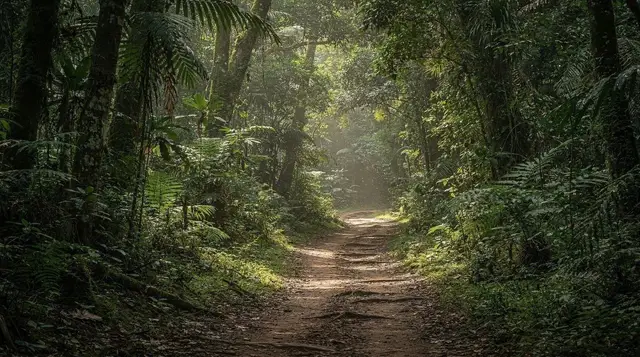
Even a short stretch of this trail is enough to feel a genuine drop in temperature and noise compared to the city outside, one of the more immediately noticeable effects of stepping under real forest canopy.
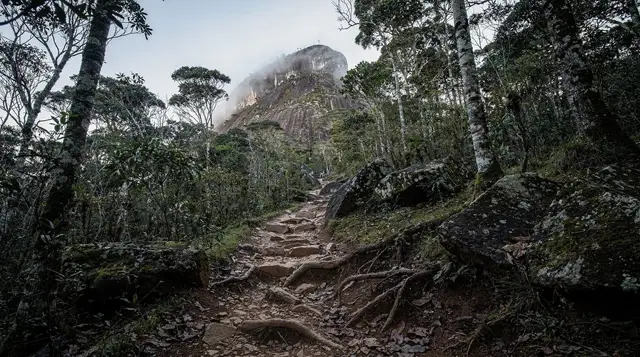
The trail leading to the garden’s waterfall passes through genuine forest cover, a smaller-scale but easier-to-reach version of the immersion Cantareira State Park offers further north — see the dedicated Cantareira State Park guide if you want the fuller forest-hiking experience elsewhere in the city. Here, the trail is shorter and better maintained, suitable for most fitness levels without requiring the same planning or time commitment as a full Cantareira hike. If this taste of the forest leaves you wanting the fuller version, the Cantareira state park hiking day trip or the longer guided rainforest hike both build directly on the same Atlantic Forest ecosystem at a larger scale.
How it compares to Ibirapuera
| Jardim Botânico | Parque Ibirapuera | |
|---|---|---|
| Character | Quieter, forest and garden focus | Busier, museums and social hub |
| Getting there | Car or longer rideshare | Metro, central |
| Time needed | 2–3 hours | Half day to full day |
| Best for | Nature, orchids, quieter pace | Culture, cycling, people-watching |
For most first-time visitors with limited time, Ibirapuera remains the priority — see the Parque Ibirapuera guide. The Botanical Garden is the better choice for a second park visit, or for anyone specifically drawn to a quieter, more nature-immersive experience without leaving the city.
Practical visiting tips
If you’re staying in the southern zone or already visiting nearby, it’s worth checking the Santo Amaro destination page for what else the surrounding area has to offer beyond the garden itself.
Wear comfortable walking shoes capable of handling the forest trail sections, which are less manicured than the garden’s formal areas near the entrance. Bring water, particularly in summer when humidity is high even under tree cover. The garden has limited food options on site, so eating beforehand or planning a meal afterward elsewhere in the southern zone is sensible rather than relying on in-park amenities. Buying a São Paulo Botanical Garden entry ticket online beforehand is worth doing on weekends, when the queue at the gate builds up more than the modest entry fee would suggest.
How the garden fits with the city’s other parks
For a fuller comparison against Ibirapuera and Villa-Lobos, see the best parks in São Paulo, and if a family day is the goal rather than a quiet solo visit, São Paulo with kids covers where this fits alongside more overtly kid-focused attractions.
The garden’s scientific role
Beyond its function as a visitor attraction, the São Paulo Botanical Garden operates as a genuine research institution, part of the city’s broader network of scientific and environmental conservation efforts. Ongoing research into native plant species, some threatened by habitat loss elsewhere in the state, happens alongside the areas open to the public, and informational signage throughout the garden reflects this — expect more detailed species information here than at a purely recreational park, appealing to visitors with a genuine interest in botany rather than a passing curiosity.
Comparing the garden to Instituto Butantan
Both sites sit in the same general southern zone and combine scientific research with public visiting, making them a natural pair to consider together if you’re interested in this side of São Paulo beyond conventional sightseeing. Instituto Butantan, better known for its snake and venom research, draws a different kind of visitor interest — more biology and medical science than horticulture — but the two share a similar spirit of institutional depth behind an accessible public visit. See the Instituto Butantan guide for the fuller picture on that option.
Best photography spots in the garden
The greenhouse interior, with its dense concentration of orchids and bromeliads under diffused light, offers some of the most rewarding close-up photography opportunities in the garden. The waterfall, particularly with a slower shutter speed to capture motion in the water, is the other standout spot, though it requires a slightly longer walk from the entrance. Morning visits generally offer better light throughout the garden than the harsher midday sun, consistent with photography advice for most of the city’s outdoor attractions.
Combining it with nearby attractions
The garden sits reasonably close to the Autódromo de Interlagos, home of the Brazilian Grand Prix — worth knowing if your visit coincides with race season, covered in the Brazilian Grand Prix at Interlagos. It’s a less obvious pairing than Ibirapuera’s museum cluster, so treat a Botanical Garden visit as its own dedicated outing rather than one stop among several in the same afternoon.
The Atlantic Forest connection
The forest fragment preserved within the Botanical Garden’s grounds connects to the same broader Atlantic Forest biome protected more extensively at Cantareira State Park further north, though the two sites developed under different institutional histories — one primarily as a botanical research and conservation garden, the other as a larger-scale forest reserve tied to the city’s water supply. Understanding this connection helps frame a visit to either site as part of a bigger picture: São Paulo, despite its size and density, sits within and depends on one of the most biodiverse and most threatened forest ecosystems on the planet, and both these green spaces represent active efforts to preserve fragments of it within an urban context most visitors don’t expect to find here at all.
A quieter alternative for a second park visit
For visitors who’ve already done Ibirapuera and want a genuinely different second park experience without the additional planning Cantareira requires, the Botanical Garden fills a useful middle ground — more nature-focused than Ibirapuera, less demanding than a full Cantareira hike, and consistently one of the least crowded major green spaces in the city even on weekends. It won’t replace either of those experiences, but it’s a legitimate way to add variety to a longer trip without a full day’s commitment.
When and why the garden was founded
The São Paulo Botanical Garden was established in the 1920s, part of a broader wave of scientific and civic institution-building in the city during a period of rapid growth funded substantially by coffee wealth. Its founding purpose leaned more toward applied botanical research than public leisure — cataloguing and studying native flora at a time when large stretches of the Atlantic Forest across São Paulo state were being rapidly cleared for agriculture, making the garden an early, if modest, act of documentation and preservation even before conservation was a widely shared civic priority. Over the following decades, as the surrounding Água Funda district urbanised around it, the garden’s role gradually broadened to include public visitation alongside its ongoing research function, arriving at the dual identity it holds today: a working scientific institution that also happens to be a genuinely rewarding half-day visit for anyone passing through the city.
How it compares to other major botanical gardens
Rio de Janeiro’s Jardim Botânico, founded in 1808 and considerably older than São Paulo’s, is the most natural regional comparison — Rio’s garden is more centrally located, more visited, and holds a more famous avenue of royal palms, but São Paulo’s version arguably offers a wilder, more genuinely forest-immersive experience given its larger area of preserved rather than purely cultivated land. Against internationally famous gardens like Singapore’s Botanic Gardens or London’s Kew, São Paulo’s garden is considerably smaller in scale and visitor infrastructure, reflecting a real difference in institutional funding and tourism investment rather than a difference in the underlying botanical richness — the Atlantic Forest fragment preserved here is, if anything, botanically denser and more biodiverse than the more manicured, horticulture-focused collections at some larger international gardens, even if the visitor experience feels more modest.
Mistakes visitors make at the Botanical Garden
A few recurring errors are worth flagging directly. Underestimating the distance from the city centre and treating it as a quick add-on to an already packed day is the most common — the garden’s southern-zone location genuinely requires dedicated transport time that a Sunday afternoon squeezed between other plans often doesn’t accommodate well. Visiting expecting Ibirapuera-level infrastructure — food options, crowds of joggers, a buzzing social atmosphere — sets up a mismatch with what’s actually a quieter, more contemplative site. Skipping the greenhouse because “it’s just flowers” is a mistake many visitors regret once they see the density and variety of the orchid collection close up. And visiting immediately after heavy rain, when the forest trails can become genuinely slippery and less enjoyable, is worth avoiding if your schedule has any flexibility at all.
Bloom seasons and what’s flowering when
Because the greenhouse houses species with staggered flowering periods across the year, what’s actually in bloom shifts meaningfully by season, even though the collection itself is worth seeing regardless of timing. Spring, September through November, tends to bring the widest concentrated bloom activity across both the greenhouse and the garden’s outdoor cultivated areas, coinciding with the broader citywide ipê-blossom season covered in the seasonal notes elsewhere on this site.
Summer’s heat and humidity, December through March, can make the forest trail sections considerably more strenuous, though the garden’s dense canopy offers real relief from direct sun compared to more exposed city parks during the same months. Winter, June through August, brings drier, more comfortable trail conditions overall, at the cost of a quieter bloom period in the outdoor beds — the greenhouse’s controlled environment means the orchid collection itself remains worth visiting in any season regardless of what’s happening outdoors.
Notable trees and species to look for
A handful of specific plants are worth pointing your camera at beyond the orchid greenhouse. Jequitibá trees, among the largest and longest-lived species native to the Atlantic Forest, are represented in the garden’s older growth areas and can reach genuinely enormous proportions, offering a tangible sense of what pre-colonial Atlantic Forest canopy once looked like across much of what’s now urbanised São Paulo state.
Pau-brasil, the tree that gave Brazil its name and was harvested to near-extinction for its valuable red dye during the colonial period, is represented in the garden’s collection as a specific piece of botanical and national history rather than just decorative planting — worth pausing at if you spot the identifying signage, given how directly this single species is tied to the country’s colonial economic history. Bromeliads growing epiphytically along the forest trail, similar to those described in the Cantareira guide, are visible without needing to leave the marked path, rewarding visitors who take the time to look up and along tree trunks rather than only ahead at the trail itself.
Frequently asked questions about the São Paulo Botanical Garden
How does it compare to a standard park visit?
It’s more nature-focused and less social than Ibirapuera or Villa-Lobos — fewer joggers and picnickers, more genuine forest and garden content, appealing to a different kind of visitor.
Is it suitable for a family visit?
Yes, the main trails and garden areas are manageable for most families, though the waterfall trail involves some uneven ground better suited to older children.
What’s the best time of day to visit?
Morning, both for cooler temperatures on the forest trails and for the best light in the orchid greenhouse.
Do I need a car to get there?
Not strictly, but public transport options are limited compared to Ibirapuera; a car or rideshare makes the visit considerably more straightforward.
How long is the waterfall trail?
A moderate walk of roughly 30–45 minutes round trip from the main entrance area, manageable for most fitness levels.
Is it crowded on weekends?
Less so than Ibirapuera — this remains one of the city’s quieter green spaces even on weekends, part of its appeal.
Can I combine a visit with Instituto Butantan?
Yes, both sit in the same general southern zone, making a combined half-day or full-day visit reasonably practical if you have your own transport or arrange a rideshare between the two.
Are guided tours available?
Not as commonly as at Ibirapuera or Cantareira, though some general city tours can incorporate a stop here on request — check directly with tour operators if a guided visit specifically interests you.
Fitting the Botanical Garden into your trip
This is a better fit for longer trips with room for a second, quieter park visit rather than a tightly packed short stay — on a five-day itinerary or seven-day itinerary, it’s a worthwhile half-day addition once you’ve covered Ibirapuera and the main city highlights. For the fuller picture of São Paulo’s green spaces and how they compare, see the best parks in São Paulo.
Parks & nature tours in São Paulo on GetYourGuide
Verified deep-linked GetYourGuide tours. Book through these links and we earn a small commission at no cost to you.
These are our own photographs of São Paulo, not the operator's pictures of this tour — open the tour page to see those.