The best parks in São Paulo
Which is the best park to visit in São Paulo?
Parque Ibirapuera for most first-time visitors, since it combines a proper park experience with several major museums inside its grounds. Parque Villa-Lobos is the best alternative for cycling and river views, and Cantareira State Park is the choice if you want genuine Atlantic Forest hiking rather than an urban park.
For a city famous for its concrete sprawl, São Paulo has a genuinely strong park system — the surprise for most first-time visitors is how much green space exists once you know where to look, from museum-filled urban parks to actual remnants of Atlantic Forest inside city limits. This guide compares the main options so you can pick based on what you actually want: culture and people-watching, cycling, or real hiking. None of this contradicts São Paulo’s reputation as a dense, built-up metropolis — it simply means that reputation is only half the picture, and the parks covered here are where the other half becomes visible.
| Where | Scattered across the city and its northern edge |
| Cost | Free entry to all parks; museums inside some charge separately |
| Time needed | 2 hours to a full day, depending on the park |
| Getting there | Metro for Ibirapuera; car or rideshare for Villa-Lobos and Cantareira |
| Best time | Weekday mornings for quiet, weekends for full local atmosphere |
Parque Ibirapuera: the essential one
If your visit to São Paulo only allows time for one park, this should be it — everything else on this list is a genuine bonus for longer stays or specific interests, not a substitute for the city’s single most complete green space.
If you visit only one park in São Paulo, this is it — a large, well-maintained space that also houses MAM, the Bienal pavilion, the Museu Afro Brasil and the city planetarium within its grounds, meaning a single visit can combine a walk with genuine museum-going. Full detail is in the dedicated Parque Ibirapuera guide and the Ibirapuera destination page.
Parque Villa-Lobos: the cyclist’s park
Weekend mornings here draw a serious cycling crowd, including groups doing genuine training rides rather than a casual leisure loop, worth knowing if you want either to join that energy or avoid it in favour of a quieter weekday visit.
Running alongside the Pinheiros river in the city’s west, Villa-Lobos is flatter, longer and better suited to a sustained bike ride or run than Ibirapuera’s more compact layout — it’s the park locals often name when cycling specifically is the goal rather than a mixed park-and-museum day. It’s less central and generally requires a car or longer rideshare to reach comfortably from most accommodation.
Cantareira State Park: real forest, not a manicured park
Treat this as a genuinely different category of activity from the other parks on this list, requiring its own dedicated planning rather than a spontaneous add-on to an already busy day of city sightseeing.
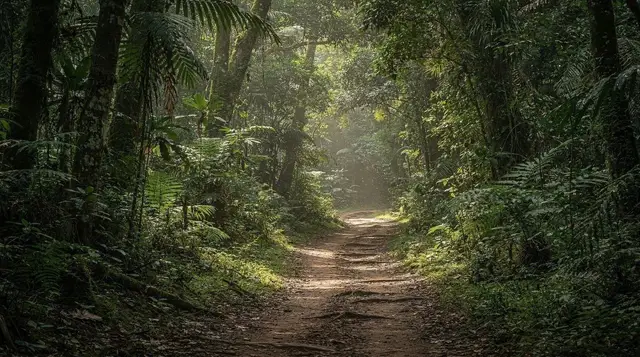
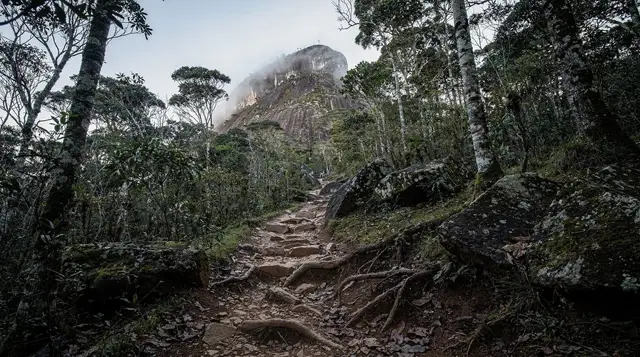
This is a different category entirely — a genuine remnant of Atlantic Forest on the city’s northern edge, offering real hiking trails, waterfalls and a noticeably different climate under the canopy compared to the urban heat elsewhere in the city. It requires more planning (a guided hike or a car, and a half or full day) but rewards visitors who want more than a stroll. Full detail is in the dedicated Cantareira State Park guide.
How the parks connect to other green São Paulo experiences
Parks are only part of São Paulo’s green picture — the dedicated Ibirapuera guide and São Paulo Botanical Garden guide both go deeper on their respective sites, and day trips from São Paulo covers nature further afield if the city’s own green spaces leave you wanting more.
Trianon Park: the pocket forest on Paulista
Easily overlooked precisely because of its small size, Parque Trianon sits directly alongside Avenida Paulista, offering a genuine pocket of Atlantic Forest within a few steps of MASP and the avenue’s busiest commercial stretch. It’s not a destination in the way Ibirapuera or Cantareira are, but it’s worth the five-minute detour if you’re already exploring Paulista and want a brief, shaded break from the avenue’s traffic and crowds — a small but real illustration of how green space is woven, however sparsely, through even the city’s most built-up corridor. See the guide to Avenida Paulista for the wider context of what surrounds it.
Parque da Água Branca and smaller neighbourhood parks
Beyond the three major options, smaller parks scattered through residential neighbourhoods — Parque da Água Branca near Barra Funda, Parque do Povo in Itaim Bibi — offer a quieter, more local experience without the crowds or scale of Ibirapuera. These aren’t destinations in themselves for most visitors but are worth knowing about if you’re staying nearby and want a green break without a special trip.
Comparing São Paulo’s main parks
Use this table as a quick reference rather than an exhaustive comparison — each park rewards a longer look once you’ve decided it fits what you’re after.
| Ibirapuera | Villa-Lobos | Cantareira | |
|---|---|---|---|
| Character | Urban park with museums | Riverside cycling park | Atlantic Forest, hiking |
| Time needed | Half day to full day | 2–3 hours | Half day to full day |
| Getting there | Metro, central | Car or longer rideshare | Car or guided tour, further out |
| Best for | First-time visitors, culture | Cycling, running | Hiking, nature immersion |
A guided hiking option for Cantareira
Booking ahead rather than showing up and hoping for a spontaneous match with a group is the more reliable approach, particularly for weekend dates when guided slots fill fastest.
Because Cantareira requires more logistics than a city park, a guided option like the Cantareira natural park guided rainforest hike or the shorter Cantareira state park hiking day trip solves both the transport and trail-navigation problem in one booking, which is worth it for most visitors over attempting it independently on a short trip.
Running and exercise culture in the parks
São Paulo has a genuinely strong running and fitness culture, and its parks are the backbone of it — Ibirapuera’s paths see a steady stream of runners from early morning through evening, while Villa-Lobos draws a similar crowd along its longer riverside stretches. Group fitness classes, informal running clubs and outdoor gym equipment (aparelhos de ginástica) scattered through most parks reflect how central these spaces are to everyday paulistano exercise routines, not just weekend leisure. Visitors who run or cycle at home will find both parks entirely welcoming to joining in, whether informally or via one of the organised group runs that several parks host on a regular schedule. Full detail on this culture specifically is in running and cycling in São Paulo.
How the city’s parks reflect its history
São Paulo’s major parks each carry their own piece of the city’s development history. Ibirapuera’s creation for the 1954 quadricentennial celebrations reflects a moment of civic ambition and modernist architectural confidence, visible in Niemeyer’s contributions to the park’s buildings. Villa-Lobos, named for Brazil’s most celebrated classical composer, opened decades later as the west zone urbanised and needed its own major green space. Cantareira predates the city’s expansion into a metropolis entirely, its protection as a forest reserve tracing back over a century to concerns about the city’s water supply — a reminder that not all of São Paulo’s green space exists purely for recreation.
Practical logistics for visiting multiple parks in one trip
If your itinerary has room to visit more than one park, sequencing matters — pairing Ibirapuera with a museum inside it makes efficient use of a single trip to that part of the city, while Cantareira and the Botanical Garden, both requiring more dedicated transport time, are better treated as their own separate outings rather than combined with unrelated sightseeing on the same day. Trying to combine Ibirapuera and Cantareira in a single day, for instance, is technically possible but rushed enough that neither gets a fair visit — better to spread park visits across separate days if your schedule allows it.
Parks in the east and south zones locals actually use
Every park covered so far sits in the city’s wealthier central and western belt, which is honest but incomplete — São Paulo’s east and south zones have their own significant parks that rarely make a visitor’s list simply because they’re further from the usual hotel districts. Parque do Carmo, in the east zone, is one of the city’s largest green spaces, with a planetarium, an equestrian centre and enough scale that it draws a genuinely local crowd on weekends rather than the more mixed local-and-visitor mix at Ibirapuera. Parque Ecológico do Tietê, running along the river of the same name, is less polished than the parks in this guide’s main comparison but offers a different, quieter kind of green space and a look at the city’s ongoing river-restoration efforts. Neither is a must-see for a first or second visit, but both are worth knowing about if you’re staying in or exploring the east zone and want a genuine local green space rather than a repeat trip to Ibirapuera.
Green space and the city’s inequality
São Paulo’s relationship with its parks isn’t evenly distributed, and it’s worth being honest about that rather than presenting the park system as a uniform citywide amenity. Green space per resident is markedly higher in the wealthier central and western districts — the same areas covered by Ibirapuera, Villa-Lobos and Trianon — than in the sprawling, denser periphery where most of the city’s population actually lives. This isn’t unique to São Paulo among large Latin American cities, but it’s a real pattern behind the parks a typical visitor sees, and it’s part of the same broader story covered in the São Paulo hidden gems guide: the postcard version of the city and the version most paulistanos live in day to day aren’t quite the same place.
Seasonal timing: when each park is at its best
São Paulo’s parks change meaningfully with the seasons, and timing a visit around this makes a real difference. Spring (September–November) is arguably the best window for Ibirapuera and Villa-Lobos specifically, when the city’s ipê trees bloom in bursts of yellow and purple against the parks’ green lawns — a genuinely striking sight that’s easy to miss if you don’t know the timing. Summer (December–March) brings intense heat and the city’s characteristic late-afternoon thunderstorms, which can turn a planned Cantareira hike into a washout with little warning; mornings are the safer window for outdoor plans during these months.
Autumn (April–June) is generally considered the most reliable season for all three parks — dry, mild and clear, particularly good for a full-day Cantareira hike without the summer storm risk. Winter (July–August) is cool and dry, comfortable for walking but with shorter daylight hours to plan around, especially for a Cantareira day trip where you don’t want to be finishing a trail after dark.
Park hours, safety after dark, and practical rules
Most São Paulo parks operate on set hours, typically opening around 5am–6am and closing between 6pm and 8pm depending on the season and specific park — Ibirapuera’s gates close earlier than its museums’ operating hours in some cases, so check the specific closing time rather than assuming the whole grounds stay open as late as an individual attraction inside it. None of the parks in this guide are places to be after closing, and none require an after-dark visit to get their value — plan around daylight hours rather than treating any of them as an evening destination.
Alcohol consumption is generally permitted in moderation in most parks during the day, particularly around casual weekend gatherings, though it’s not a bar-like atmosphere and public intoxication draws the same attention it would anywhere else. Dogs are welcome off-leash in designated areas of Ibirapuera and Villa-Lobos but should stay leashed elsewhere; Cantareira’s forest trails are less consistently dog-friendly given the terrain and wildlife, so check current rules before bringing a pet on that specific hike.
How São Paulo’s park system compares to other major cities
For a city with São Paulo’s reputation as a dense, concrete-heavy megacity, it’s worth a moment of honest comparison to other major world cities’ park systems. São Paulo doesn’t have a single dominant, centrally located park on the scale of New York’s Central Park or London’s Hyde Park — Ibirapuera comes closest, but it’s smaller and further from the historic centre than either of those famous examples.
What São Paulo does have is a genuinely strong protected-forest asset in Cantareira that few other megacities of comparable size can match, since most large cities cleared their surrounding native forest long before formal protection became a priority. That trade-off — no single grand civic park, but real Atlantic Forest reachable by metro and a short taxi — is a fair, if unglamorous, way to summarise how São Paulo’s green space compares internationally, and it’s worth setting expectations around rather than assuming this city offers a European-style grand park experience it was never built around.
Accessibility across the park system
Ibirapuera and Villa-Lobos both have paved, wheelchair and stroller-friendly paths across the majority of their grounds, reflecting their status as purpose-built, well-maintained urban parks rather than repurposed natural terrain. Cantareira is a different matter entirely — its trails involve genuine elevation change and uneven forest ground that isn’t accessible for wheelchair users or anyone with significant mobility limitations, a real constraint worth knowing before planning a visit around it specifically. If accessible nature time matters more than a genuine hiking experience, Ibirapuera’s more manicured grounds, including areas near its lake, offer a gentler green-space experience without the physical demands Cantareira’s trail network requires.
Frequently asked questions about São Paulo’s parks
Which park is best for a first-time visitor with limited time?
Ibirapuera, without much competition — it’s central, free, and combines a park visit with real cultural content.
Is Cantareira worth the extra travel time?
Yes, if you want genuine forest and hiking rather than an urban park experience — it’s a different kind of activity entirely, not simply “more park.”
Are São Paulo’s parks safe?
Yes, generally, particularly during daylight hours and in the busier, more established parks like Ibirapuera and Villa-Lobos.
Can I rent bikes at all these parks?
Ibirapuera and Villa-Lobos both have bike rental options; Cantareira is a hiking-focused park without bike infrastructure.
What should I bring to Cantareira specifically?
Sturdy shoes, water, sun protection and insect repellent — this is forest terrain with real elevation change, unlike the city’s paved parks.
Do any of the parks charge entry?
No, entry to all the parks covered here is free; only specific museums or activities inside some of them (like Ibirapuera’s museums) charge separately.
Is Parque Trianon worth a dedicated visit?
Not on its own — it’s small enough that it works best as a brief stop while already exploring Avenida Paulista, rather than a destination in itself.
Can I visit more than one park in a single day?
Technically yes for Ibirapuera and Villa-Lobos given their relative proximity, but Cantareira and the Botanical Garden are better treated as their own dedicated outings given the extra transport time involved.
Fitting São Paulo’s parks into your trip
Ibirapuera fits comfortably into any itinerary length as a half-day stop — see the three-day itinerary for how it pairs with other central sights. Cantareira is better suited to longer trips with room for a dedicated half or full day, such as the five-day itinerary or seven-day itinerary. For hiking specifically beyond Cantareira, see the broader hiking near São Paulo guide.
Parks & nature tours in São Paulo on GetYourGuide
Verified deep-linked GetYourGuide tours. Book through these links and we earn a small commission at no cost to you.
These are our own photographs of São Paulo, not the operator's pictures of this tour — open the tour page to see those.