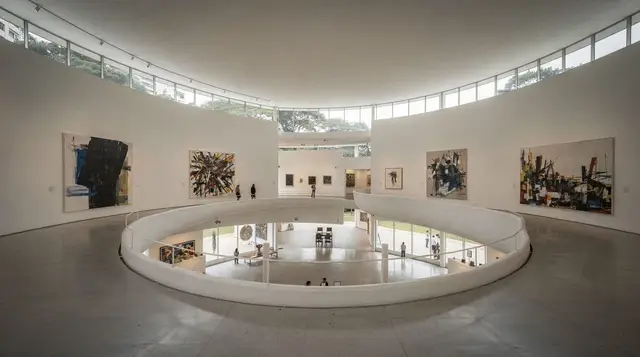
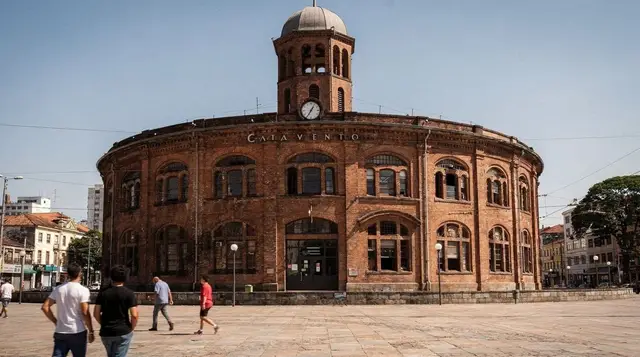
Museu do Ipiranga after the restoration
What actually changed at Museu do Ipiranga after the restoration, and is it worth a special trip?
The decade-long restoration modernised the exhibits with new digital scenography, added accessible ramps throughout the neoclassical palace, and reopened the surrounding gardens after decades of closure. It's worth the trip specifically for independence-era history and for the gardens, though it sits far enough from the centre that it works best paired with another south-zone stop rather than as a standalone half-day.
Museu do Ipiranga — officially the Museu Paulista, and still called “the Ipiranga museum” by most paulistanos — marks the spot where Dom Pedro I is said to have declared Brazil’s independence from Portugal in 1822, and it reopened in September 2022, timed to the bicentennial, after a restoration that took roughly a decade and shut the whole site to visitors for most of that time. What you’ll see now is a genuinely different museum from the one that closed: the same 19th-century neoclassical palace, but with new digital scenography, better climate control for the collection, accessible ramps that didn’t exist before, and formal gardens reopened after decades of neglect. This guide covers what’s actually changed and how to fit it into a São Paulo trip that doesn’t otherwise pull you this far south.
| Where | Parque da Independência, Ipiranga, south-east São Paulo |
| Cost | Around R$20 (~US$4); free on selected dates including Independence Day |
| Time needed | 2–2.5 hours for the museum and gardens |
| Getting there | Metro/CPTM to Ipiranga station, then a 15–20 minute walk, or a direct rideshare |
| Best time | Weekday mornings; avoid the crowds around 7 September, Independence Day |
Why the restoration took so long
The building itself is the reason the closure stretched on for years rather than months. The neoclassical palace, built in the late 19th century specifically to commemorate independence, needed structural work that any historic building of that scale requires, but the museum also used the closure to rethink the entire visitor experience rather than simply patch what was there before. The result leans more heavily on digital projection and interactive scenography than the older, more static room-by-room displays did, which is either a welcome modernisation or a loss of old-world museum atmosphere depending on what you were expecting — worth knowing going in so you’re not surprised by screens where you might have pictured glass cases.
What’s actually new inside
The most noticeable change is accessibility: ramps and lifts now connect floors that previously required stairs, a real improvement in a 19th-century building that wasn’t designed with that in mind. The exhibition itself has been reorganised around independence-era Brazil more broadly rather than just the single “Grito do Ipiranga” moment — expect rooms covering colonial society, the political run-up to 1822, and Brazil’s early monarchy under Dom Pedro I and later Dom Pedro II, alongside the famous paintings connected to independence itself, including Pedro Américo’s monumental “Independência ou Morte.” A guided downtown history walk pairs well with a Museu do Ipiranga visit if 19th-century Brazilian history is a specific interest — the two cover adjacent periods of the city’s development from different angles.
The gardens: reason enough on their own
Parque da Independência’s formal gardens, laid out in a French neoclassical style around the museum, were closed to the public for years alongside the building and have now reopened as part of the same restoration. They’re a genuinely pleasant place to spend 30–45 minutes after the museum — geometric hedges, fountains, and long sightlines up toward the palace facade that make for some of the better formal-garden photography in the city. If you’re travelling with people who’d rather skip the museum entirely, the gardens alone are a reasonable stop.
The Monumento à Independência, next door
Immediately adjacent to the museum grounds stands the Monumento à Independência, a large sculptural monument marking the exact spot of the 1822 declaration, with a crypt beneath it holding the remains of Dom Pedro I and his wife. It’s free to view from outside and worth five minutes even if you don’t go into the museum itself.
The 1822 story, and why São Paulo claims it
Brazil’s independence from Portugal is dated to 7 September 1822, when Dom Pedro I — son of the Portuguese king, acting as regent of Brazil at the time — is said to have declared “Independência ou Morte” (“Independence or Death”) on the banks of the Ipiranga stream, exactly where the museum and monument now stand. The event’s historical accuracy has been debated by historians for generations — how staged the moment actually was, how much of the popular account was shaped decades later by nationalist painters and writers — and the museum doesn’t shy away from this nuance, presenting the declaration alongside the messier, more gradual political process that actually produced Brazilian independence. This is worth knowing before you go, since the museum’s new scenography leans into that complexity rather than presenting a single simplified national myth, which makes for a more interesting visit than the “great man declares independence” version most visitors arrive expecting.
Comparing a visit before and after the restoration
For anyone who visited Museu do Ipiranga before its long closure, the difference is substantial enough to be worth a return trip rather than assuming you’ve already “done” this museum.
| Before the restoration | After (2022 reopening) | |
|---|---|---|
| Circulation | Stairs only in most areas | Ramps and lifts throughout |
| Display style | Static cases, dense text panels | Digital scenography, interactive elements |
| Gardens | Closed to the public | Reopened, formal French-style layout |
| Framing | Focused narrowly on 1822 itself | Wider context: colonial society through early monarchy |
Combining Museu do Ipiranga with Ipiranga’s other sights
Beyond the museum and monument, the Ipiranga district has a handful of other reasons to justify the trip out, mostly connected to the same independence-era history. The neighbourhood takes its name from the Ipiranga stream itself, much of which has since been built over as the city expanded, and the area retains a quieter, more residential character than most of the places visitors spend time in São Paulo. If you’re making the trip specifically for the museum, there’s little reason to extend the visit much beyond the museum grounds and gardens themselves — this isn’t a neighbourhood with a wider tourist draw the way Vila Madalena or Pinheiros is, and it’s more efficient to treat it as a focused half-day rather than looking for other stops nearby.
Practical tips for visiting with limited Portuguese
Signage in the main galleries includes English translations for the core exhibits, though the depth and consistency vary by room — some of the newer digital displays include multilingual toggles, while older wall text in secondary rooms may be Portuguese-only. If detailed historical context matters to you and your Portuguese is limited, consider timing your visit around an English-language guided walk elsewhere in the city beforehand — the short history of São Paulo guide gives useful background on the broader independence-era period that makes the museum’s exhibits easier to follow even without translating every panel.
Getting there and what to expect around it
Ipiranga sits well south-east of the centre, and it isn’t on the main tourist circuit the way Avenida Paulista or Centro Histórico are — that’s part of its appeal if you want a break from crowds, but it also means budgeting real travel time. The nearest CPTM station is Ipiranga, on the same line that connects to Luz downtown, followed by a 15–20 minute walk through a residential neighbourhood; a rideshare direct to the museum entrance is more comfortable if you’re short on time. Traffic on the approach roads can be slow during the morning and evening peaks (roughly 7am–10am and 5pm–8pm), so factor that into a rideshare trip.
| Museu do Ipiranga | Centro Histórico museums | |
|---|---|---|
| Distance from centre | ~7km south-east | Central |
| Best for | Independence history, gardens | General downtown culture |
| Crowds | Light except around 7 September | Moderate |
| Combine with | A dedicated half-day trip | Other downtown stops in one visit |
The Grito do Ipiranga in art: how the scene became iconic
The image most people associate with Brazilian independence — Dom Pedro I on horseback, sword raised, declaring “Independência ou Morte” before a crowd — comes from a single painting, Pedro Américo’s “Independência ou Morte,” completed in 1888, sixty-six years after the actual event and now the centrepiece of the museum’s collection. Américo, a Brazilian academic painter trained partly in Europe, composed the scene as a grand, theatrical history painting in the 19th-century European tradition, complete with dramatic lighting and a crowd of onlookers that almost certainly wasn’t present at the actual, much smaller and more improvised moment on the banks of the Ipiranga stream.
The painting was commissioned decades after independence specifically to give the young nation a suitably heroic founding image, and it succeeded so completely that most Brazilians today picture the 1822 declaration exactly as Américo painted it rather than as any contemporary account described it. The museum’s newer scenography addresses this directly, placing the painting alongside material explaining how and why it was created, rather than presenting it as straightforward historical documentation — a useful corrective for visitors who arrive assuming the canvas is a factual record rather than a carefully constructed national myth.
Museu Paulista and USP: a research institution as much as a museum
Officially, Museu do Ipiranga is Museu Paulista da Universidade de São Paulo — it’s administered by USP, Brazil’s leading public university, rather than operating as a standalone municipal or private museum. This connection shapes the institution beyond the exhibits on display: the museum functions as an active research centre for Brazilian history, with its own archive and academic staff, and part of the decade-long restoration budget went toward modernising research and conservation facilities that visitors never see, not just the public-facing galleries.
It’s a similar model to how Instituto Butantan operates as both public attraction and working research institution, though the two sit at opposite ends of the sciences-versus-humanities spectrum. For visitors, the practical upshot is a museum with genuine academic rigour behind its exhibits rather than a purely tourism-oriented presentation — worth knowing if you want to dig deeper into any specific topic covered on-site, since the museum can usually point toward further academic sources in a way a purely commercial attraction couldn’t.
The gardens across São Paulo’s seasons
Because Parque da Independência’s formal gardens are as much a reason to visit as the museum itself, it’s worth timing a visit around São Paulo’s seasons rather than treating the gardens as identical year-round. Autumn (April-June) — widely considered São Paulo’s best season generally — gives the clearest skies and most comfortable temperatures for the geometric hedges and long sightlines toward the palace facade, and it’s the strongest season for photography. Winter (July-August) stays dry and gives similarly clear conditions, though cooler mornings mean the gardens are quietest and least crowded before mid-morning.
Spring (September-November) brings flowering trees into the mix, including ipês, but also the return of rain, so afternoons carry more risk of a shortened visit. Summer (December-March) is the season to actively plan around rather than default into — the combination of intense midday heat and near-daily late-afternoon storms means a summer visit works best scheduled for the morning, wrapped up well before the storm window that typically builds from mid-afternoon onward.
Comparing Museu do Ipiranga to Brazil’s other independence-history museums
For visitors who’ll also pass through Rio de Janeiro, it’s worth knowing how Museu do Ipiranga’s version of the independence story compares to what’s told elsewhere. Rio’s Museu Histórico Nacional covers Brazilian history far more broadly, from colonisation through the republic, giving 1822 a comparatively small slice of a much larger narrative. Petrópolis, in the mountains above Rio, holds the Museu Imperial, focused on Dom Pedro II’s later reign rather than independence itself. Museu do Ipiranga is the only major Brazilian museum built specifically around the independence moment and sited on the spot where it’s said to have happened, which gives it a focus and physical authenticity the others can’t match, even though its exhibits now present that founding moment with considerably more nuance than the version most visitors arrive expecting.
Visiting with a broader interest in Brazilian monarchy history
For visitors whose interest extends beyond the 1822 declaration itself into Brazil’s brief experience as a monarchy — genuinely unusual among former Portuguese and Spanish colonies, most of which became republics immediately — Museu do Ipiranga’s collection includes material tracing the Brazilian Empire through both Dom Pedro I’s short reign and Dom Pedro II’s much longer one, which lasted until the monarchy’s abolition in 1889.
This period is often glossed over quickly in general Brazil overviews in favour of either the colonial era or the 20th century, but it’s a genuinely distinctive stretch of Latin American history — Brazil was the only country in the Americas to maintain a monarchy through most of the 19th century, a direct legacy of the Portuguese royal family’s relocation to Rio de Janeiro during the Napoleonic Wars. The museum doesn’t require prior knowledge of this history to be enjoyable, but visitors who arrive with some context get noticeably more out of the imperial-era rooms than those seeing it cold.
Frequently asked questions about visiting after the restoration
Is Museu do Ipiranga worth visiting if I already went before the restoration closed it?
Yes, if your last visit was more than a few years ago — the digital scenography, accessibility improvements, and reopened gardens make this a substantially different experience from the older static displays.
How long should I budget for the museum and gardens together?
2 to 2.5 hours covers both comfortably without rushing.
Is it worth the trip out from the centre?
If independence-era Brazilian history interests you specifically, yes. If your museum time is limited, prioritise MASP or the Pinacoteca first and treat Ipiranga as an add-on for a longer trip.
Is the museum crowded around Independence Day?
Very — 7 September draws large crowds and official ceremonies at the adjacent monument. Visit on a different date if you want a calmer experience.
Is the neighbourhood around the museum safe?
Yes, Parque da Independência and the immediate area around it are calm and low-traffic; it’s a residential, unremarkable part of the city rather than a tourist zone, which comes with its own quiet appeal.
Can I combine Museu do Ipiranga with other south-zone sights?
It pairs reasonably with a longer day that also includes Instituto Butantan, though the two aren’t close to each other — check current travel times before assuming you can do both in one afternoon. See the Instituto Butantan guide for details.
Are there English-language materials at the museum?
Signage includes English in the main galleries, though the depth of translation varies by room — a guided tour is a more reliable way to get full context if your Portuguese is limited.
Is the museum run by USP?
Yes — officially it’s Museu Paulista da Universidade de São Paulo, administered by the university as both a public museum and an active research institution, similar in spirit to how Instituto Butantan combines research with public access.
Fitting Museu do Ipiranga into a longer trip
This isn’t a stop for a rushed one-day itinerary — it sits too far from the main circuit to justify the travel time when you only have hours in the city. On a three-day itinerary or longer, it fits well as a dedicated half-day for visitors specifically interested in Brazilian history, ideally paired with a relaxed lunch back in Moema or São Paulo’s broader history on the way back into the centre. For history-focused travellers, this is a natural complement to the São Paulo museums guide’s other historical stops.
Museum & art tours on GetYourGuide
Verified deep-linked GetYourGuide tours. Book through these links and we earn a small commission at no cost to you.
These are our own photographs of São Paulo, not the operator's pictures of this tour — open the tour page to see those.