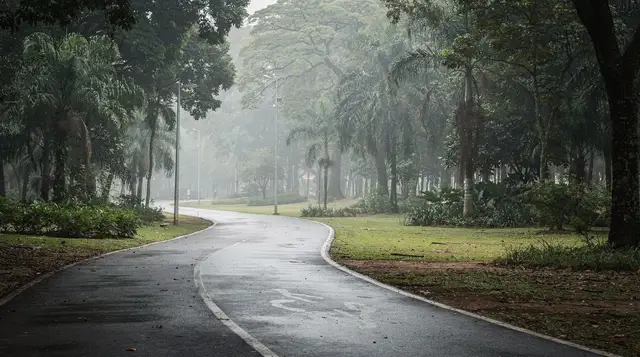
Running and cycling in São Paulo
Where is the best place to run or cycle in São Paulo?
Ibirapuera Park's roughly 8.2 km loop is the default answer — closed to cars, well-lit, busy enough to feel safe, with water fountains and a bike-share dock. Parque Villa-Lobos on the west side is quieter and larger. Sunday mornings add Avenida Paulista, which closes to traffic and becomes a genuine urban running and cycling route through the city centre.
São Paulo isn’t an obviously runner-friendly city at first glance — narrow, uneven sidewalks, aggressive traffic, and a general lack of the dedicated bike lanes you’d find in a city like Copenhagen. But underneath that, there’s a genuinely strong running and cycling culture, built around a handful of excellent large parks, a growing network of protected bike lanes (ciclofaixas), and a Sunday tradition of closing major avenues to cars entirely. Knowing where paulistanos actually run and ride, rather than trying to jog along a random sidewalk, makes a real difference to how enjoyable and safe this side of a trip feels.
| Where | Ibirapuera Park, Parque Villa-Lobos, Avenida Paulista on Sundays |
| Cost | Free; bike-share from R$8-15/day (~US$1.50-3) |
| Time needed | 30 minutes to 2+ hours depending on route |
| Getting there | Metro Lines 1, 2 and 4 reach the main parks directly |
| Best time | Early morning (before 9am) year-round; avoid midday heat Dec-Mar |
Climate and what to wear
São Paulo’s altitude — around 760 metres above sea level — keeps mornings noticeably cooler than the city’s summer daytime highs would suggest, which makes early runs genuinely pleasant even in the December-March summer, when a midday run would be uncomfortably hot and humid. Layer for a cool start that warms quickly: a light long-sleeve you can tie around your waist works better than committing to shorts and a t-shirt at 6am and regretting it by 6:30. Year-round, sun protection matters more than the temperature suggests, since São Paulo sits close enough to the tropics that UV levels climb fast even on a mild-feeling morning. In the April-August dry season, mornings can be genuinely chilly, particularly in June and July — a windbreaker is worth having for a pre-dawn start.
Races and organised events
São Paulo has a substantial organised race calendar, and visitors whose trip happens to overlap with one can join as a genuinely memorable way to experience the city’s running culture from the inside rather than the sidelines. The São Paulo Marathon typically runs in spring (around April-May), drawing tens of thousands of runners along a route that passes several of the city’s landmarks, and smaller weekend 5K and 10K events happen through Ibirapuera and along the Pinheiros riverside most months of the year. Registration for international visitors is usually possible online in the weeks before an event, though it’s worth checking the specific race’s website well ahead of your trip rather than assuming late registration will be open.
Gyms as an indoor alternative
For days when the weather or schedule doesn’t allow an outdoor run, São Paulo’s fitness culture extends well beyond parks — international-standard gym chains have multiple locations across Jardins, Itaim Bibi and Moema, and most offer day passes for visitors without requiring a membership, typically R$40-80 (~US$8-15) for single-day access. It’s a reasonable backup for a wet-season afternoon when an outdoor run isn’t appealing, and several of the larger gyms include pools and sauna facilities that add a genuine wellness element beyond just cardio equipment.
Ibirapuera Park: the default route
Ibirapuera is where most of São Paulo’s serious runners and cyclists train, and for visitors it’s the obvious first choice — a roughly 8.2 km paved loop around the park’s perimeter, closed to cars, well-lit, with water fountains at regular intervals and consistently busy enough with other exercisers that safety concerns are minimal during daylight hours. Early morning, from around 6am, is when the park is at its best: cooler temperatures, softer light, and a genuine cross-section of the city out training before work. A guided Ibirapuera Park bike tour is a good option if you’d rather explore with context than just log laps, and it includes a rental bike as part of the booking. The Ibirapuera Park guide has the full layout, including where the loop connects to bike-share docks.
Parque Villa-Lobos: quieter and larger
West of the centre near the Pinheiros river, Parque Villa-Lobos is less visited by tourists than Ibirapuera but arguably better for a longer, quieter run or ride — its paths run longer and straighter, the park is less crowded outside weekend afternoons, and its riverside setting gives a different feel from Ibirapuera’s more manicured, monument-dense landscape. It’s a better pick if you’re staying on the west side near Pinheiros or Vila Madalena, or if you specifically want fewer people on the path for a faster training run. The Parque Villa-Lobos guide has the details.
Avenida Paulista, Sundays only
Several kilometres of Avenida Paulista close to car traffic every Sunday, and the avenue transforms into one of the best urban running and cycling routes in the city — flat, wide, and running straight through the heart of São Paulo past MASP and the avenue’s landmark towers. It’s a genuinely different experience from a park loop: you’re running through the city rather than around its edge, with street performers, food stalls and a real cross-section of paulistano life around you rather than a dedicated exercise crowd. If your trip includes a Sunday, it’s worth building a morning run or ride around this specifically. The Avenida Paulista guide has the exact closure times and blocks.
São Paulo’s bike-share system
São Paulo runs a city bike-share scheme with docking stations across the central and southern zones, including directly at Ibirapuera and along Avenida Paulista — a genuinely convenient option if you don’t want to rent a dedicated bike for a single ride. Pricing runs roughly R$8-15 (~US$1.50-3) for a day pass depending on the current provider and promotion, paid through an app with a credit card. It works well for a single loop of a park but isn’t really built for longer training rides beyond the docked network’s coverage area, which is concentrated in the wealthier, more central zones rather than citywide.
Protected bike lanes beyond the parks
Outside the parks, São Paulo’s ciclofaixa network of protected bike lanes has expanded substantially over the past decade, particularly along the Pinheiros riverside and connecting several central neighbourhoods. It’s genuinely usable for a confident city cyclist, but it’s not a complete network — lanes end abruptly in places, and mixing with traffic on unprotected stretches requires real defensive riding. A guided urban bike tour covering the city’s coolest scenes is a far easier way to see more of the city by bike than trying to self-navigate the incomplete lane network, particularly on a first visit. The getting around São Paulo guide has more on how the bike lane network fits into the wider transport picture.
Cantareira State Park, for trail running and hiking
For something beyond flat park loops, Cantareira State Park on the city’s northern edge is the largest urban forest in the world and offers genuine trail running and hiking within a reasonable trip from the centre — a real change from road running, through preserved Atlantic Forest with actual elevation and wildlife. A guided rainforest hike through Cantareira is the easiest way to access the trails properly, since navigating the park’s less-marked routes alone isn’t recommended. The Cantareira State Park guide and hiking near São Paulo guide cover trail options in more depth.
Hydration and practical logistics
Ibirapuera and Villa-Lobos both have public water fountains along the main loops, but they’re not universally reliable — treat them as a bonus rather than your sole water source and carry a bottle, particularly in the warmer months. Public restrooms exist at both parks near the main entrances but thin out along the quieter stretches, worth factoring into a longer run’s route planning. If you’re staying somewhere without easy walking access to a park, a short ride-app trip to Ibirapuera before 7am is usually quick given lighter traffic at that hour, one of the few times of day São Paulo’s roads move freely — see the taxis and ride apps guide for how this compares across the rest of the day.
Safety notes for runners and cyclists
Daylight running and cycling in Ibirapuera, Villa-Lobos and along the Sunday Paulista closure is genuinely low-risk given how busy these routes stay with other exercisers. The picture changes after dark — stick to well-lit, populated stretches if running early morning before sunrise or in the evening, and avoid Centro’s quieter streets at night entirely, regardless of activity. Standard urban-running caution applies: keep valuables minimal, don’t run with headphones at full volume in unfamiliar areas, and if cycling on any street-level lane, ride assertively and assume drivers may not see you, since Brazilian driving culture doesn’t always extend the courtesy to cyclists that some European cities have built into their driving norms. The is São Paulo safe guide has the fuller picture beyond exercise specifically.
Comparing the main routes
| Distance | Best for | Crowd level | |
|---|---|---|---|
| Ibirapuera loop | ~8.2 km | First-time visitors, reliability | High, especially weekends |
| Parque Villa-Lobos | Variable, longer straight paths | Quieter, longer training runs | Moderate |
| Avenida Paulista (Sunday) | A few km, out-and-back | A genuine city-centre run | High but spread out |
| Cantareira trails | Variable, guided | Trail running, elevation | Low (guided groups only) |
What doesn’t work well
A few running and cycling plans that sound reasonable in theory don’t hold up in practice. Trying to run along Centro’s sidewalks, uneven and frequently obstructed by street vendors and construction, is worse than it sounds and not particularly scenic either — stick to the parks. Cycling citywide using only the bike-share system without checking the lane network first tends to end with an unplanned stretch of riding in mixed traffic, which is fine for a confident cyclist but not for someone expecting a fully protected ride throughout. And running in the December-March wet season’s midday and afternoon heat, on top of the daily storm risk, is genuinely unpleasant — shift to early morning if your trip falls in that window.
Frequently asked questions about running and cycling in São Paulo
Is it safe to run alone in São Paulo?
During daylight in the main parks (Ibirapuera, Villa-Lobos) and along the Sunday Paulista closure, yes — these routes are consistently busy with other runners and cyclists. Avoid running alone after dark outside well-lit, populated areas.
Is São Paulo a good running city compared to other South American capitals?
Its best parks compare well to anywhere on the continent — Ibirapuera in particular rivals major city parks worldwide for a loop run. The wider city is less consistently runner-friendly than somewhere like Buenos Aires’ boulevards, given narrower sidewalks and heavier traffic outside the parks, so stick to the dedicated routes covered here rather than improvising citywide.
Do I need to bring my own bike?
No — São Paulo’s bike-share system covers the main parks and central routes for casual riding, and guided bike tours provide a rental bike as part of the booking if you want a longer, more structured ride.
What time of day is best for running?
Early morning, from around 6am, year-round — it’s cooler, the parks are at their liveliest with other exercisers, and in the December-March wet season it avoids the midday heat and the risk of an afternoon storm building by 3-4pm.
Is Avenida Paulista really closed to cars every Sunday?
Yes, several blocks close from morning until evening every Sunday, rain or shine (though heavy rain thins the crowds). It’s one of the most distinctive urban running and cycling experiences in the city and worth timing a Sunday visit around if running matters to your trip.
Are there running clubs visitors can join?
Several informal running groups meet at Ibirapuera on weekend mornings and welcome visitors, though joining requires some local knowledge or a hotel concierge’s help to find the current meeting point and time, since groups organise mostly through local social media.
How hilly is São Paulo for cycling?
The city centre and most parks are relatively flat, but the wider metro area has real elevation change, especially heading toward the outer zones. Ibirapuera and Villa-Lobos are both flat, beginner-friendly routes.
Can I combine a run with sightseeing?
Yes, particularly at Ibirapuera, where the loop passes several of the park’s landmark pavilions and museums, and along Avenida Paulista’s Sunday closure, which runs past MASP and the avenue’s main architectural landmarks.
Is trail running available near São Paulo?
Yes, at Cantareira State Park on the city’s northern edge, though a guided hike or run is strongly recommended over navigating the trails independently, given limited signage in parts of the park.
São Paulo versus Rio for runners and cyclists
Visitors comparing the two cities often assume Rio, with its famous beachfront Copacabana and Ipanema running paths, must be the stronger destination for runners — and for a purely scenic, ocean-adjacent run, it is. But São Paulo’s parks offer something Rio’s beachfront doesn’t: genuinely large, tree-covered green space with real distance between you and traffic, rather than a promenade running directly alongside a busy coastal road.
Ibirapuera’s 8.2 km loop is comparable in popularity and infrastructure to Rio’s Lagoa loop around Lagoa Rodrigo de Freitas, and São Paulo’s ciclofaixa network, while incomplete, has expanded faster in recent years than most Brazilian cities including Rio. Where Rio clearly wins is atmosphere and scenery — running with an ocean or Sugarloaf view is hard to match with anything São Paulo offers — but for a purely practical, well-organised urban running and cycling experience, São Paulo holds its own better than its reputation as a pure concrete megacity might suggest. See São Paulo versus Rio de Janeiro for the broader city comparison.
Accessibility: wheelchair users and jogging strollers
Ibirapuera Park’s main loop is paved, flat and wide enough to comfortably accommodate a wheelchair or a jogging stroller, and it’s genuinely one of the more accessible outdoor exercise spaces covered anywhere on this site, with ramped entrances at multiple points around the perimeter. Parque Villa-Lobos is similarly flat and paved along its main paths, though some of its quieter secondary trails are narrower and less consistently maintained. Avenida Paulista’s Sunday closure runs along an already-paved, flat city avenue, making it fully accessible for wheelchair users and families with strollers without any special planning beyond normal Sunday crowd navigation. Cantareira State Park is the clear exception among everything covered here — its trails involve real elevation and uneven forest terrain, and it isn’t a realistic option for wheelchair users or stroller-based visitors regardless of guide support.
Building this into a trip
A morning run or ride fits easily into almost any São Paulo itinerary without needing a dedicated day — most visitors slot it in before breakfast on a day that otherwise includes sightseeing or a day trip. The three days in São Paulo itinerary and perfect São Paulo weekend itinerary both have natural early-morning slots for exactly this. For a more complete wellness-focused stay, pair this guide with the spas and wellness in São Paulo guide for an active-morning, relaxed-afternoon combination, or the Ibirapuera Park guide for the fuller picture of the city’s best all-round park.
Spa & wellness experiences near São Paulo
Verified deep-linked GetYourGuide tours. Book through these links and we earn a small commission at no cost to you.
These are our own photographs of São Paulo, not the operator's pictures of this tour — open the tour page to see those.