The best photography spots in São Paulo
Where should I go for the best photos in São Paulo?
MASP's glass-and-red-concrete building on Avenida Paulista, the Sampa Sky and Farol Santander viewpoints for skyline shots, Beco do Batman for murals, and Ibirapuera Park for Niemeyer's white curves. Shoot the skyline at blue hour rather than after full dark, since São Paulo's light pollution flattens night shots fast, and keep gear low-key in Centro and around Cracolândia.
São Paulo doesn’t photograph the way Rio does. There’s no single postcard shot — no Christ the Redeemer silhouette, no Sugarloaf at sunset — and visitors who arrive expecting one usually leave disappointed. What the city actually offers is texture: a concrete skyline that goes on further than the eye can resolve, brutalist and modernist buildings still doing their original job, and street art that covers entire blocks rather than a wall here and there. The best photos here come from understanding what’s genuinely distinctive, not from chasing a shot that doesn’t exist.
| Where | Avenida Paulista, Centro Histórico, Vila Madalena, Ibirapuera Park |
| Cost | Free at street level; Sampa Sky and Farol Santander decks run R$30–45 (about US$6–9) |
| Time needed | A full day to cover the main spots properly, or two half-days |
| Getting there | Metro Line 2 Green (Paulista stations), Line 1 Blue (Ibirapuera area), Line 3 Red (Centro) |
| Best time | Golden hour (roughly 5–6pm) and blue hour (20–30 minutes after sunset) for skyline shots; midday for MASP and murals |
MASP: the shot everyone tries and few get right
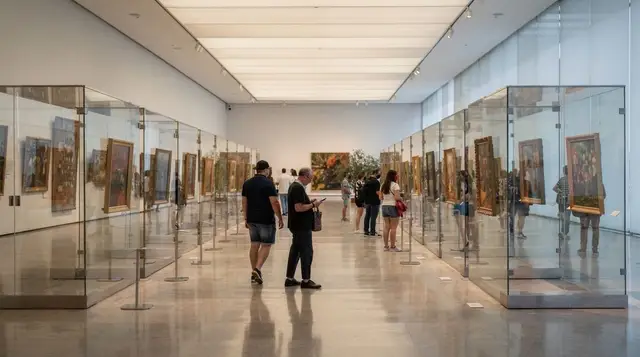
The Museu de Arte de São Paulo, on Avenida Paulista, is the single most photographed building in the city, and for good reason. Lina Bo Bardi’s 1968 design suspends a glass exhibition box on four red concrete columns, leaving a completely open ground floor — a civic gesture as much as an architectural one. The obvious shot is from the plaza looking up through the columns, but it’s also the most crowded angle by mid-morning. Cross to the median of Avenida Paulista instead, or shoot from the MASP Sunday antiques market underneath the building looking out, which frames the columns against street life rather than empty pavement. For the full building history, ticket prices and collection details, see the MASP guide.
MASP’s main collection with a guide is worth combining with a photo stop, since the guide will usually know when the ground floor is emptiest — generally right at opening, before 11am on weekdays.
Skyline viewpoints: Sampa Sky versus Farol Santander
São Paulo has no single dominant peak or waterfront to shoot the skyline from, which is exactly why it needs an elevated platform. Two compete for this job, and they’re not interchangeable.
Sampa Sky sits atop Edifício Itália in Centro, 41 storeys up, with a partially open-air deck that gives an unbroken 360-degree view — this is the shot that actually captures how far the concrete sprawl extends, since on a clear day you can pick out Avenida Paulista’s towers on one side and the Serra da Mantiqueira foothills as a hazy line on the other. Sampa Sky entry tickets run around R$45–60 (US$9–12), and the deck stays open into the evening, which matters for blue hour.
Farol Santander, the restored 1947 Banespa tower a few blocks away, gives a lower and more architecturally framed view — you’re photographing the historic centre’s own rooftops and Art Deco detail rather than the wider megacity. It closes earlier, usually around 8pm, so it isn’t the play for a true night shot. Full practical details for both are in the São Paulo viewpoints guide and the dedicated Farol Santander guide.
| Sampa Sky | Farol Santander | |
|---|---|---|
| Height | 41 floors, partially open-air | 26 floors, enclosed with outdoor sections |
| Best for | Full 360° skyline, blue-hour and evening shots | Historic-centre architecture, daytime detail |
| Closing time | Later, good for blue hour | Earlier, daytime-focused |
| Cost | R$45–60 (~US$9–12) | R$30–40 (~US$6–8) |
Neither deck is cheap for what’s a 45-minute visit, and both get busy on weekends after 4pm — go on a weekday if your schedule allows it, and check the sky forecast before committing, since São Paulo’s afternoon storms in summer (Dec–Mar) can close outdoor sections without warning.
Avenida Paulista on a Sunday
Avenida Paulista closes to cars every Sunday and holiday, and this is the single best recurring photo opportunity in the city for street life rather than architecture. Skateboarders, food carts, buskers and the full cross-section of paulistano life fill four lanes of tarmac that are gridlocked with traffic every other day of the week. Shoot from the MASP steps looking down the avenue for the classic composition, or walk the full closed stretch between Paraíso and Consolação for candid street photography. The Avenida Paulista destination guide covers the rest of what’s on the street; the Avenida Paulista guide goes deeper on timing and events.
a professional photo tour of Avenida Paulista is genuinely useful here if you want more than phone-camera results — it’s led by a working photographer who knows the avenue’s angles and light at different hours, which is hard to replicate from a guidebook.
Edifício Copan’s curves
Oscar Niemeyer’s Edifício Copan, a ten-minute walk from Praça da Sé in Centro Histórico, is the other unmissable modernist subject. Its sinuous 38-storey wave shape reads completely differently depending on the angle — flat and geometric from directly below, fluid and sculptural from across Rua Ipiranga. The building isn’t open for interior tours, but the ground-floor galeria gives you a legitimate reason to be standing close enough for detail shots of the brise-soleil facade. Pair a Copan stop with the wider Centro Histórico walk covered in the Centro Histórico destination guide, and if Niemeyer and Brazilian modernism are the actual reason you’re shooting here, a private architecture tour will take you to several more buildings from the same era in one outing.
Beco do Batman and Vila Madalena’s murals
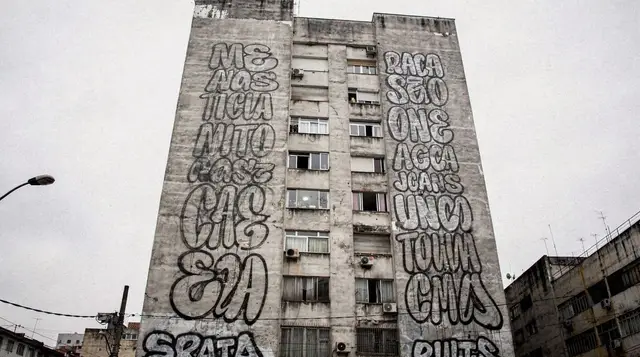
Beco do Batman (Batman’s Alley) in Vila Madalena is a short pedestrian lane whose walls have been repainted continuously since the 1980s, so the murals you shoot today won’t be there in a year — that’s part of the point, and part of why it photographs so well. Go on a weekday morning if you want the alley without fifty other people in every frame; weekends bring tour groups and street vendors that make wide shots difficult. The full backstory and etiquette (don’t paint over an artist’s work, don’t photograph residents’ homes without asking) is in the Beco do Batman guide, and the wider scene — Vila Madalena’s other murals, Pinheiros’ newer walls, and how the movement relates to São Paulo’s separate and illegal pixação tagging — is covered in the São Paulo street art guide.
a street art bike tour covers Beco do Batman plus several less-photographed walls in Pinheiros and Vila Madalena in a single afternoon, which is more efficient than walking if you’re trying to cover ground before the light goes.
Ibirapuera Park and Niemeyer’s white curves
Ibirapuera Park, São Paulo’s answer to Central Park, holds several more Niemeyer buildings — the Oca dome, the Bienal pavilion, the long curved marquise that runs through the park’s spine. Shoot the Oca and the marquise columns in the mid-morning light, when the white concrete reads clean against the sky rather than blown out by midday glare. The park is also one of the few genuinely green, open spaces in the city centre, which makes it useful for portraits and wider environmental shots that don’t fit São Paulo’s usual concrete-and-traffic frame. Full details on the park’s layout and buildings are in the Ibirapuera Park guide.
Golden hour, blue hour, and São Paulo’s actual light
São Paulo sits close enough to the Tropic of Capricorn that day length swings noticeably by season — long summer evenings (Dec–Mar) versus short winter ones (Jun–Aug) — so check sunset time for your dates rather than assuming a fixed golden hour. More importantly: this is not a low-light-pollution city. Once full dark sets in, the skyline photographs as an orange-grey haze rather than crisp individual lights, because the atmosphere over 12 million people holds onto ambient glow. The sweet spot is blue hour — the 20 to 30 minutes after sunset when the sky still holds deep blue and building lights have come on — not an hour after dark. If you’re planning a viewpoint visit specifically for photography, time your entry so you’re already on the deck 15 minutes before sunset, since queues at Sampa Sky can eat that window.
Practical settings and gear notes for São Paulo’s light
São Paulo’s midday sun is harsh and close to overhead for most of the year, which is exactly why the classic advice to shoot early or late applies here more than usual — buildings like MASP and Copan lose their texture in flat noon light and regain it within an hour of sunrise or sunset, when shadows pick out the concrete grain. For skyline shots from Sampa Sky or Farol Santander, bring something to stabilize a longer exposure once you’re past blue hour — a small tabletop tripod or even resting the camera on the deck railing works, since a handheld shot at full dark will blur against the ambient glow. A polarizing filter helps cut haze on the hazier, muggier days that are common in summer (Dec–Mar), when humidity sits visibly over the skyline by afternoon; it’s less necessary in the drier, clearer autumn and winter months (Apr–Aug), which is arguably the best season for skyline photography specifically because the air is cleaner.
For street photography in Vila Madalena, Beco do Batman and around Avenida Paulista’s Sunday closure, a standard zoom in the 24–70mm range covers most of what you’ll want without drawing attention the way a long lens can. If murals are the priority, go wide — many of Vila Madalena’s best walls are on narrow streets where you can’t back up far enough for a standard lens to capture the full piece.
Gear safety: an honest note
São Paulo is a large city with real, documented street crime, and a visible camera is a visible target in some areas. This doesn’t mean leaving the good gear at the hotel for the whole trip, but it does mean being deliberate. Centro Histórico around Praça da Sé is fine for photography by day but not somewhere to wander with gear out after dark — daytime foot traffic and police presence make opportunistic theft less likely, but that changes fast once shops close in the early evening. Keep well clear of the Cracolândia area near Rua Helvétia and Luz station entirely; it isn’t a photogenic subject and isn’t safe to approach. Avenida Paulista, Jardins, and Ibirapuera Park are comparatively low-risk even with a visible DSLR, since they’re busy, well-lit, and heavily walked by both locals and tourists. For a broader read on what’s actually risky versus overblown, see is São Paulo safe.
Building a one-day photography route
A realistic single day: start at MASP and Avenida Paulista around 9–10am while the light is workable and the plaza is still quiet, move to Beco do Batman and Vila Madalena’s murals over lunch (the neighbourhood also has good coffee if you need a break), then head to Ibirapuera Park in the mid-afternoon for the Niemeyer buildings and some green-space variety. Finish at Sampa Sky or Farol Santander for golden hour into blue hour. Traffic between these points is genuinely bad in the late afternoon (5–8pm), so budget rideshare time generously, or use the metro where it connects — Line 2 Green covers Paulista and Vila Madalena is a short taxi from its western stations, while Line 1 Blue serves the Ibirapuera area. See getting around São Paulo for the full transport picture.
Frequently asked questions about São Paulo photography spots
Is São Paulo a good city for photography compared to Rio?
Differently good, not less good. Rio has natural drama — mountains, beach, harbour. São Paulo’s subject is built density: modernist architecture, street art at scale, and skyline that keeps going past the frame. If you’re expecting Rio’s postcard views, adjust expectations; if you’re into architecture, street photography, or urban texture, São Paulo is arguably the richer subject.
What’s the best single viewpoint for a skyline photo?
Sampa Sky, for the 360-degree view and later closing time that lets you catch blue hour. Farol Santander is better if your subject is the historic centre’s own rooftops rather than the wider city.
Is it safe to carry a DSLR or mirrorless camera around São Paulo?
Yes in most areas frequented by visitors — Avenida Paulista, Jardins, Ibirapuera, Vila Madalena — during the day and early evening. Be more careful in Centro Histórico after dark, and avoid the Cracolândia area near Luz entirely regardless of the hour.
Do I need a permit to photograph street art like Beco do Batman?
No permit is needed for personal photography. Commercial shoots involving models or crews sometimes need permission from the local artists’ association — ask locally if you’re planning anything beyond casual photos.
When does Avenida Paulista close to traffic for photos?
Every Sunday and public holiday, generally from early morning until evening. It’s the single best planned photo opportunity in the city if your dates line up.
What time should I arrive for blue hour at a viewpoint?
Aim to be on the deck 15–20 minutes before sunset, since ticket queues and elevator waits at Sampa Sky can easily eat that window if you arrive right at sunset.
Are drones allowed for photography in São Paulo?
Recreational drone use is heavily restricted in central São Paulo airspace due to the density of buildings and nearby Congonhas airport traffic. Don’t plan a drone shoot without researching current Brazilian civil aviation rules for the specific area first.
Fitting a photography day into a longer trip
A dedicated photography day slots naturally into a three-day São Paulo itinerary as day two, once you’ve got initial orientation from day one on Avenida Paulista and Centro. On a five-day itinerary, spread the viewpoints and street art across two half-days rather than one long one, which gives you flexibility if weather or light doesn’t cooperate on a given afternoon. If architecture specifically is your focus, the art and architecture itinerary builds a fuller route around MASP, Ibirapuera’s Niemeyer pavilions, and Centro’s modernist towers. For general trip-length planning, see how many days you need in São Paulo.
São Paulo culture tours on GetYourGuide
Verified deep-linked GetYourGuide tours. Book through these links and we earn a small commission at no cost to you.
These are our own photographs of São Paulo, not the operator's pictures of this tour — open the tour page to see those.