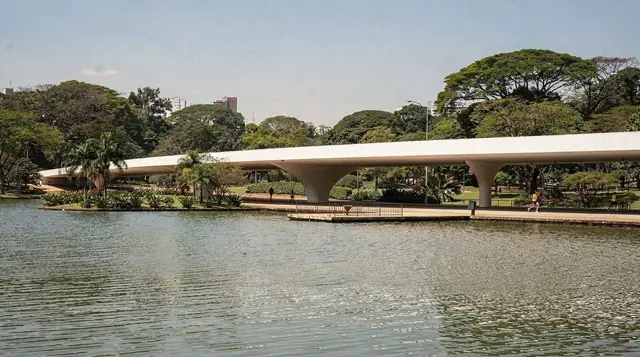
Butantã is a west-zone district built around a university, and it feels like it: wide green campus grounds, student cafés, and none of the density of central São Paulo. Most visitors know the name from one specific institution — the Instituto Butantan, a research centre and public museum that has studied snake venom and produced antivenom since 1901, and remains one of the more genuinely educational, kid-friendly stops in the city.
The district takes its name from the wider area, and while the institute is the reason most visitors come, the neighbourhood itself extends well beyond the campus into ordinary residential streets serving students, university staff and long-term residents. It’s not a neighbourhood most guidebooks spend much time on, and honestly that’s fair — outside the two anchor institutions, there’s little here built for a casual visitor to wander through the way there is in Pinheiros or Vila Madalena just a short ride away.
| Where | West zone, around the USP campus, bordering Morumbi and Pinheiros |
| Cost | Instituto Butantan museum ~R$ 20 (US$ 4); USP campus grounds are free |
| Time needed | Half a day |
| Getting there | Metro Butantã, Yellow Line, then a short bus or walk |
| Best time | Weekday mornings; the museum can be crowded with school groups midweek during term |
Instituto Butantan: more than a novelty stop
The Instituto Butantan’s public-facing museum houses live snake and spider collections alongside exhibits on the antivenom research that made the institute internationally known — it remains a major producer of vaccines and serums for Brazil’s public health system, not just a tourist attraction dressed up as one. The biological museum (Museu Biológico) is the main draw for visitors, with terrariums holding species found across Brazil, from jararacas to rattlesnakes, plus explanations of what the research actually does. It’s genuinely more interesting than “snake zoo” makes it sound, and it’s one of the better rainy-day options in the city — see our what to do in São Paulo when it rains guide for other options on a stormy afternoon, and our dedicated Instituto Butantan guide for the full visitor breakdown.
The grounds also include a small historical museum covering the institute’s founding during a bubonic plague outbreak in 1901, and a scorpion and spider collection that tends to get less attention than the snakes but is, for some visitors, more unsettling. Signage is bilingual in the main exhibits, which makes it accessible without a guide, though a guided visit adds context — particularly around how antivenom is actually produced, a process most visitors have never had explained to them before.
Universidade de São Paulo (USP)
USP’s main campus (Cidade Universitária) sprawls across a large stretch of the west zone, and while there’s no single must-see landmark, walking through it gives a different read on the city than the postcard neighbourhoods — leafy, quiet, academic, full of student life during term time. It’s free to walk, and worth 30–45 minutes if you’re already in the area for the Instituto Butantan. See our wider best museums in São Paulo guide for how the campus’s own small collections compare to the city’s major institutions.
A green edge to a dense city
Butantã sits at the point where São Paulo’s dense urban grid starts to give way to more forested, hillier terrain heading toward the Pinheiros river and beyond. It’s not a park destination in its own right, but it’s noticeably greener and quieter than the centre, which some visitors find a welcome contrast after a few days of Paulista traffic. If you want a structured overview of the west side that includes stops like this alongside the bigger sights, a seven-hour small-group city tour is a practical way to see it without arranging your own transport between spread-out stops, or opt for a private walking tour with a local if you’d rather go at your own pace with someone who knows the area.
The antivenom that matters far beyond São Paulo
It’s worth pausing on what the Instituto Butantan actually does, because it’s easy to reduce the visit to “snake museum” and miss the bigger picture. Founded in 1901 during a plague outbreak, the institute became one of the world’s leading centres for venom research, and its antivenom production remains critical to Brazil’s public health system today — a country with a significant number of snakebite cases each year, particularly in rural areas. The museum visitors see is a public-facing slice of a much larger working research and pharmaceutical operation, which is part of why it feels more substantial than a typical roadside reptile attraction.
A university city within the city
USP’s Cidade Universitária campus is large enough to have its own internal bus system, cafeterias, a botanical collection, and student housing — effectively a self-contained small city embedded in the larger one. Visitors with an academic or architectural interest sometimes make a point of seeking out specific faculty buildings, several of which reflect distinct eras of Brazilian modernist design. For most visitors, though, the value is simpler: a genuinely quiet, green, walkable stretch that contrasts sharply with the traffic and density everywhere else nearby.
| Stop | Time needed | Best for |
|---|---|---|
| Instituto Butantan museum | 1.5–2 hours | Kids, science, rainy days |
| USP campus | 30–45 min walk | A quiet green break |
Planning around school groups
The Instituto Butantan is a fixture of São Paulo school field trips, and during term time — particularly mid-morning on weekdays — the museum can fill with groups of uniformed schoolchildren, which changes the pace and noise level of a visit considerably. If a calmer experience matters to you, aim for an early opening-time visit or a weekend, when the crowd skews more toward families visiting independently rather than organised school groups. Weekday afternoons after the main school groups have left are another reasonably quiet window.
Combining Butantã with the rest of the west zone
Because Butantã sits between Morumbi and Pinheiros, it’s a natural link in a longer west-zone day rather than a destination requiring its own dedicated round trip from the centre. A sensible sequence is Instituto Butantan and USP campus in the morning, lunch and a walk in Pinheiros, and — if there’s a match — Morumbi in the evening. This kind of pairing makes better use of the drive or metro time out to the west side than treating each district as a separate excursion on separate days.
Frequently asked questions about Butantã
Is the Instituto Butantan good for young children?
Yes, with supervision — the terrariums are behind glass and the museum is designed with school groups in mind, though very young children may find some exhibits intense.
How long should I plan for a Butantã visit?
1.5–2 hours for the Instituto Butantan museum, plus 30–45 minutes if you want to walk part of the USP campus.
Is Butantã easy to reach without a car?
Yes — Metro Butantã on the Yellow Line gets you close, with a short bus ride or 15–20 minute walk to the institute itself.
Can I combine Butantã with Morumbi in one day?
Yes, they’re neighbouring west-zone districts — a reasonable pairing if you’re also going to a São Paulo FC match or the Fundação Maria Luisa e Oscar Americano gardens in Morumbi. See our São Paulo neighbourhoods explained guide for how the west zone fits together as a whole.
Is there anywhere to eat near the Instituto Butantan?
Simple student cafés and lanchonetes around the USP campus; for a proper meal, head to nearby Pinheiros, a short ride away.
Does the Instituto Butantan still produce medical antivenom today?
Yes — it remains a major producer of antivenom and other biological products for Brazil’s public health system, alongside its role as a public museum.
Is Butantã a good rainy-day option?
Yes, one of the better ones in the city — the Instituto Butantan’s exhibits are almost entirely indoors, making it a solid choice when São Paulo’s afternoon storms roll in during the summer months.
Are there guided tours specifically for the Instituto Butantan?
Independent visits are straightforward with bilingual signage, but a broader city tour that includes Butantã as one stop among several — such as the seven-hour option covering the city’s main sights — is a practical way to combine it with other west-side destinations without arranging separate transport for each. See our is a guided tour of São Paulo worth it guide for the fuller decision.
How does Butantã compare to the Catavento science museum for kids?
Catavento, in the historic centre, is more hands-on and interactive, better suited to younger children; the Instituto Butantan skews slightly older, with live animals rather than interactive exhibits, and works well for kids with a specific interest in wildlife or biology.
Fitting Butantã into a longer São Paulo trip
Butantã works best as a half-day add-on rather than a full day. On a four-day itinerary with kids, it’s a strong midweek slot. On a general five-day trip, pair it with Morumbi or Pinheiros to make a fuller west-zone day. Families planning a broader children’s itinerary should also check our São Paulo with kids guide, which sequences Butantã against the city’s other family-friendly stops like the Catavento science museum and Ibirapuera Park so a single trip doesn’t end up crossing the city back and forth unnecessarily.