Sampa Sky glass platform
What is Sampa Sky and how high is it?
Sampa Sky is an observation deck on top of the Mirante do Vale building in downtown São Paulo, roughly 170 metres up — the highest public viewpoint in the city — with glass-floor sections that let you look straight down. Tickets run roughly R$40-90 and a visit takes 45 minutes to an hour.
Sampa Sky sits on top of the Mirante do Vale building in São Paulo’s historic centre, and at roughly 170 metres it’s the highest public observation deck in the city — higher than Farol Santander a few blocks away, and higher than any rooftop bar you’ll find in Jardins or Itaim Bibi. The deck’s defining feature is a series of glass-floor panels that let you look straight down at the street, a deliberately dramatic touch that’s made it one of the more talked-about newer attractions in the city. This guide covers what a visit actually involves, what it costs, and whether the glass floor lives up to the hype.
| Where | Mirante do Vale building, Rua Líbero Badaró, Centro Histórico |
| Cost | Roughly R$40-90 (~US$8-18) depending on time slot and season |
| Time needed | 45 minutes to 1 hour |
| Getting there | Metro São Bento or Sé (Line 1 Blue / Line 3 Red), short walk |
| Best time | Late afternoon into sunset for both daylight and night views in one visit |
The Mirante do Vale building
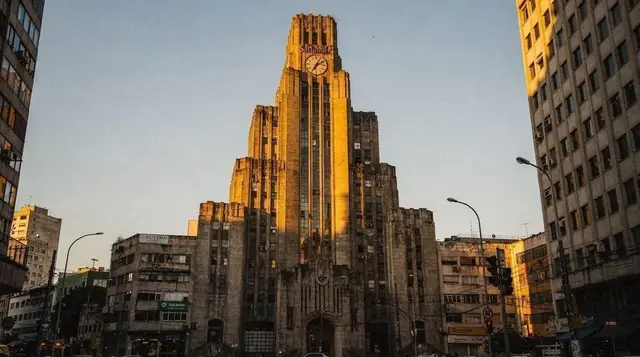
Before it housed a tourist attraction, the Mirante do Vale was, for decades, one of São Paulo’s tallest buildings, an office tower dating from the 1960s in the dense heart of the historic centre. Converting its upper floors into a dedicated observation deck is a relatively recent development, opened to bring a proper high-altitude viewpoint to a part of the city that, despite its density of towers, had lacked a purpose-built lookout on this scale. The building’s height puts you above almost everything else in the immediate historic centre, with clear sightlines toward Avenida Paulista’s towers in one direction and the sprawl of the eastern and southern zones in others — on a genuinely clear day, you can see far enough that the skyline simply fades into haze rather than ending at any visible edge. The immediate neighbourhood below is Centro Histórico, worth its own dedicated exploration once you’re back at street level.
The glass floor
Sampa Sky’s signature feature is a set of reinforced glass panels built into sections of the platform floor, engineered to let you stand — or, for the more hesitant, crouch and look — directly down roughly 170 metres to the street below. It’s a genuinely vertigo-inducing experience even for visitors who don’t consider themselves afraid of heights, and it’s clearly designed as the platform’s headline attraction rather than an afterthought; expect a queue to form specifically for photos on the glass sections during busy periods. If heights are a real concern, most of the deck is solid flooring behind standard railings, and skipping the glass panels doesn’t meaningfully reduce the overall view — it just removes the specific vertical-drop effect that makes for the platform’s signature photo.
Booking and pricing
a Sampa Sky entry ticket with glass platform access is the straightforward way to book, and doing so in advance is worth it for popular time slots — sunset in particular sells out on clear-weather days, since it’s the single best window for photography here. Standard entry runs roughly R$40-90 depending on the time slot and season, with sunset and evening slots generally priced at the higher end given demand. Children and seniors typically receive a discount; check current pricing tiers when booking. Entry is timed, meaning you’re allocated a specific window to arrive rather than a full-day pass, so plan the rest of your day around your booked slot rather than the other way around.
| Daytime slot | Sunset slot | Night slot | |
|---|---|---|---|
| Visibility | Full skyline scale in daylight | Both daylight and lit-up transition | City lights, less clear on hazy nights |
| Crowds | Lighter, easier photos | Busiest, book ahead | Moderate |
| Best for | Photography of the daytime skyline | The single best all-round experience | A calmer, less crowded visit |
| Price | Standard | Premium | Standard to premium |
What to expect on arrival
Security and entry procedures are standard for a modern observation deck — bag checks, a dedicated elevator bank taking you up in stages, and a brief safety briefing before you’re allowed onto the glass floor sections specifically. The deck itself is open-air in places and covered in others, so dress for wind at height even on a warm ground-level day; it’s noticeably breezier up top than it is on the street. Staff are generally used to photographing visitors on the glass panels if you’re travelling solo and want a shot of yourself rather than just the view — worth asking if that’s something you want, since the platform’s specific glass-floor angle is hard to capture well with a self-timer.
Combining with Farol Santander
Sampa Sky and Farol Santander are close enough together in the historic centre that doing both in the same day is entirely realistic, and they complement each other well: Farol Santander for restored Art Deco architecture and historic-centre context at a lower height, Sampa Sky for the highest, most dramatic pure-scale view in the city. a downtown walking tour with Farol Santander entry is a natural pairing if you want a guided historic-centre walk between the two viewpoints rather than navigating on your own. See the Farol Santander guide for the full comparison.
Photography tips specific to Sampa Sky
The glass-floor sections are the platform’s signature shot, but they photograph better with a second person taking the picture from a slight angle rather than a straight-down phone selfie, which tends to flatten the drama of the height. If you’re shooting the skyline itself rather than the glass floor, arrive with enough time before your slot ends to work around the crowd — the platform gets busy at popular hours, and the best unobstructed skyline angles are often at the edges rather than the most obviously central spots.
A lens cloth is worth carrying, since the glass panels and surrounding windows pick up fingerprints and haze film quickly given how many visitors touch and lean against them each day. For blue hour — the 20-30 minutes after sunset when the sky still holds some colour and the city’s lights are fully on — a sunset-or-later slot is essential; a pure daytime booking misses this window entirely. The São Paulo photography spots guide has more location-specific tips if this is a dedicated part of your trip.
Is it worth visiting on a hazy or overcast day?
São Paulo’s air quality and humidity mean visibility varies more than you might expect for a viewpoint this high — on a hazy or overcast day, distant skyline detail can wash out significantly, even though the glass-floor experience itself is unaffected by weather. If clear photography of the far skyline is your main goal, check the forecast and, where your ticket type allows flexibility, choose a clearer day. If the glass floor and the general experience of being up that high matter more to you than photographic clarity, weather is less of a dealbreaker — the platform is still worth visiting on a moderately overcast day, just with different expectations for what you’ll see and photograph.
Getting there
Metro São Bento (Line 1 Blue) or Sé (Line 1 Blue / Line 3 Red) both put you within a short walk of the Mirante do Vale building, and the metro is genuinely the better option over driving — this part of the historic centre has narrow, congested streets and limited parking, and traffic here during rush hour (7-10am, 5-8pm) can turn a short trip into a long one. If you’re combining Sampa Sky with a wider historic-centre day, walking between sights is entirely realistic; most of the area’s major attractions sit within a 10-15 minute walk of each other. For a broader sense of downtown navigation, see the getting around São Paulo guide, and if you’re travelling with children, the platform’s short visit length and dramatic glass floor tend to be a genuine hit — see São Paulo with kids for how it fits into a family day.
Sampa Sky versus rooftop bars
It’s worth being clear about the difference between a dedicated observation deck like Sampa Sky and the city’s rooftop bar scene, since both get grouped together as “views” in casual conversation. Rooftop bars, concentrated in Jardins, Itaim Bibi and Vila Olímpia, sit on lower buildings and prioritise food, drinks and atmosphere over sheer height — see the São Paulo rooftop bars guide for specific venues. Sampa Sky trades that social atmosphere for raw altitude and the glass-floor novelty. Neither is a strict upgrade on the other; they serve different parts of an evening or afternoon.
How Sampa Sky compares to other glass-floor observation decks worldwide
Sampa Sky isn’t the first attraction to use a glass floor as its signature draw — Chicago’s Willis Tower Skydeck and Toronto’s CN Tower both popularised the format internationally well before Sampa Sky’s version opened, and visitors who’ve done either of those will find the basic concept familiar: reinforced glass panels, a genuinely vertiginous look straight down, and a deliberately engineered photo moment built around the feature.
What distinguishes Sampa Sky within that international category is less the glass floor itself and more what’s beneath it — rather than a single iconic building or a harbour view, you’re looking down onto São Paulo’s dense, chaotic historic-centre street grid, arguably a more visually complex and less conventionally “scenic” sight than the water views common to many of the world’s other glass-floor attractions. If you’ve done Willis Tower or the CN Tower before, expect a comparable thrill with a genuinely different, more urban-fabric-focused view beneath your feet.
The building’s life before it became a viewpoint
Mirante do Vale had a long working life as a conventional office tower for decades before its conversion into an observation deck, housing a rotating mix of commercial tenants in the historic centre’s dense business district through periods when downtown São Paulo’s office market waxed and waned relative to newer commercial corridors like Avenida Paulista and, later, Faria Lima. Its conversion into a dedicated tourist attraction reflects a broader pattern playing out across São Paulo’s historic centre more generally — ageing mid-century towers, no longer as competitive for premium office tenants who’ve moved toward newer corridors, finding a second life as cultural or visitor-facing spaces instead, a pattern also visible in Farol Santander’s own transformation from bank headquarters to cultural centre a few blocks away.
Accessibility for visitors with mobility needs
Sampa Sky’s core visitor path — elevators to the platform, solid flooring around the glass-floor sections, standard railings — is generally accessible to wheelchair users and visitors with mobility limitations, since the experience doesn’t require navigating stairs or uneven surfaces once you’re past ground-floor security. That said, accessibility specifics can change with building maintenance or event scheduling, so it’s worth confirming current accessibility provisions directly when booking if this is a firm requirement rather than assuming based on this description alone. The glass-floor sections themselves are optional to approach — nothing about the platform layout requires stepping onto them to experience the rest of the view, which matters both for visitors with mobility considerations and for anyone who’d simply rather skip that specific feature.
Gift shop and souvenirs
The platform includes a small gift shop near the exit, stocking São Paulo and Brazil-themed souvenirs alongside a few Sampa Sky-branded items specific to the glass-floor experience — postcards, magnets, and the kind of small, packable souvenirs that suit a brief observation-deck stop rather than a dedicated shopping outing. It’s a reasonable last-minute stop if you haven’t sorted souvenirs elsewhere on your trip, though pricing runs at the premium end typical of attraction gift shops rather than street-market rates — see the what to bring home from São Paulo guide for better-value alternatives if souvenir shopping is a bigger priority than a quick, convenient stop on your way out.
Frequently asked questions about Sampa Sky
How high is Sampa Sky?
Roughly 170 metres, making it the highest public observation deck in São Paulo.
Is the glass floor actually see-through to the street below?
Yes — the reinforced glass panels are built into sections of the platform and give a direct view straight down to street level, a genuinely dramatic effect even for visitors comfortable with heights.
How long does a visit take?
45 minutes to an hour is typical, including time for photos on the glass floor sections, which often involves a short wait during busy periods.
When is the best time to visit?
Sunset gives you both daylight visibility and the transition into the city’s lit-up night skyline, making it the single best (and most in-demand) slot — book ahead if you want it.
Is Sampa Sky suitable for people afraid of heights?
The glass floor specifically may be uncomfortable for anyone with real vertigo concerns, but most of the deck is solid flooring behind standard railings, so a visit is still possible while skipping the glass panels.
Do I need to book in advance?
Yes, particularly for sunset and weekend slots, which can sell out. Entry is timed rather than a flexible full-day pass.
How does Sampa Sky compare to Farol Santander?
Sampa Sky is higher and more purely view-focused, with the glass-floor feature as its signature draw; Farol Santander is lower but adds restored Art Deco architecture and rotating exhibitions, making it the more culturally rich of the two.
Fitting Sampa Sky into your trip
Sampa Sky fits easily into a downtown-focused morning or afternoon on any itinerary. On a one-day itinerary, it pairs naturally with a historic-centre walk before heading to Avenida Paulista later in the day; on a three-day itinerary, combine it with Farol Santander and the rest of the historic centre for a full dedicated day downtown. For photographers building a dedicated shooting day, see the São Paulo photography spots guide for how it fits alongside the city’s other best vantage points, and the wider São Paulo viewpoints guide for the full comparison across all of the city’s lookouts.
Best viewpoints & lookout tours in São Paulo on GetYourGuide
Verified deep-linked GetYourGuide tours. Book through these links and we earn a small commission at no cost to you.
These are our own photographs of São Paulo, not the operator's pictures of this tour — open the tour page to see those.