São Paulo for first-time visitors
What should first-time visitors to São Paulo know before they go?
There's no single centre — plan by neighbourhood, not by landmark. Base yourself in Jardins, Paulista or Vila Madalena, use the metro for anything it reaches, budget extra time for traffic, and treat this as a food-and-culture city rather than a sightseeing checklist. Three days is a reasonable minimum; five lets you add a day trip.
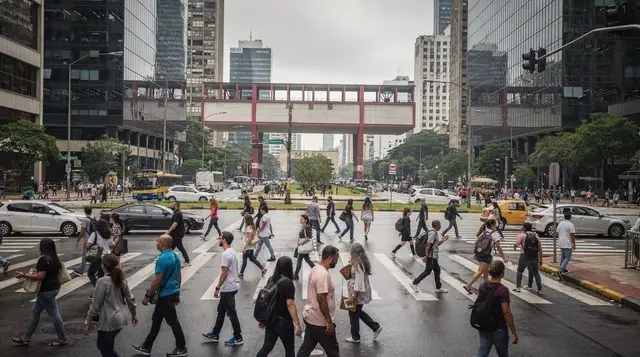
Most people arrive in São Paulo expecting a scaled-up version of Rio — beaches, a headline landmark, a compact tourist zone — and none of that is here. What is here takes a day or two to click into place: a city of roughly 12 million people in the municipality and over 21 million in the metro area, spread across hundreds of neighbourhoods with no single downtown in the way visitors usually mean it. Centro Histórico is the historic core, but the real centre of gravity for most travellers is Avenida Paulista, three kilometres away and connected by metro. Understanding that split early saves a confusing first afternoon.
This guide is for the trip-planning stage, before you’ve picked specific sights — it’s about setting expectations correctly, choosing where to stay, and understanding how the city actually works, so the sightseeing guides make more sense once you’re here. Think of it as the layer underneath the “what to do” lists: the logistics, the mental map and the small cultural context that make the rest of the trip click faster once you land.
| Where | No single centre — Paulista, Jardins, Vila Madalena and Centro Histórico are the four reference points |
| Cost | Mid-range trip: R$250–400/day (~US$45–75) per person including hotel |
| Time needed | 3 days minimum, 5 to see the city properly |
| Getting there | GRU airport (international), 40km from centre; Congonhas (CGH) for domestic flights, inside the city |
| Best time | April–June (autumn) for dry, mild weather |
The city has no postcard, and that’s the point
If you’re expecting a single view that says “São Paulo” the way the Sugarloaf says “Rio,” recalibrate. The closest things are the MASP building on Paulista and the concrete towers of the Minhocão overpass, and neither is a conventional beauty shot. What São Paulo has instead is depth: one of the best food scenes in Latin America, museums that rival European capitals, a street art scene with genuine international standing, and neighbourhoods — Vila Madalena, Pinheiros, Liberdade, Bixiga — each with a distinct character built by a different wave of immigration. A personalized city tour built around the highlights and the city’s hidden gems is a good way to get past the postcard version in a single day. The things to do in São Paulo guide covers the specific sights; this one is about the bigger picture.
Getting oriented: think in neighbourhoods, not landmarks
São Paulo works on a mental map of bairros rather than a walkable centre-out radius. The practical core for first-timers runs roughly from Avenida Paulista in the east to Pinheiros and Vila Madalena in the west, connected by metro Line 2 (Green) and a short taxi or rideshare ride. Centro Histórico sits north of Paulista and is best treated as a separate half-day trip rather than something you wander into from your hotel. Everything south — Moema, Itaim Bibi, Vila Olímpia — is more residential and business-oriented, good for restaurants and nightlife but lighter on sights. The São Paulo neighbourhoods explained guide breaks all of this down properly.
Where to base yourself
For a first visit, Jardins or Avenida Paulista are the safest choices: central, walkable, well connected by metro, with a high density of restaurants and a short ride to almost everything else on a typical itinerary. Vila Madalena is a good alternative if nightlife and street art matter more to you than being near the museums — it trades a slightly longer commute to Centro for being in the middle of the city’s best bar scene. The full trade-offs, including which areas to avoid for a first trip, are in the where to stay in São Paulo guide.
A private walking tour with a local on day one is one of the more useful things you can book for a first visit — it does in three hours what would otherwise take you two confused days to work out on your own.
Getting from the airport
Guarulhos (GRU) handles almost all international arrivals and sits about 40km from the centre — budget 45 minutes in light traffic, 90 minutes to two hours during evening rush (5pm–8pm). Congonhas (CGH) is much closer, inside the city, and handles domestic flights and some regional international routes; it’s a 20–30 minute ride to Jardins or Paulista outside peak hours. Viracopos (VCP), near Campinas, is the low-cost hub and is genuinely far — over 100km — so factor an extra hour-plus each way if a cheap flight routes you through there. A private GRU airport transfer is worth the cost after a long-haul flight; the full comparison of options is in the São Paulo airport transfers compared guide and the Guarulhos GRU airport guide.
What actually surprises first-time visitors
The size. Nothing about the map prepares you for how the city keeps going — 40 minutes by metro can still be within the same municipality. Plan fewer things per day than you would in a smaller city.
The traffic. São Paulo has some of the worst congestion in the world, concentrated in the 7am–10am and 5pm–8pm windows. A cross-town trip that takes 20 minutes at 11am can take an hour at 6pm. The São Paulo traffic guide covers how to plan around it.
How good the food is. Visitors who come with Rio-level expectations for the food scene are consistently surprised — São Paulo has more restaurants per capita than almost any city in the world, and the range from R$15 padaria breakfasts to serious fine dining is genuinely wide. Start with the São Paulo food guide.
The weather swings. Depending on when you visit, expect either summer storms that arrive with almost no warning most afternoons (December–March) or dry, mild, genuinely pleasant conditions (April–June, the best window). Check the best time to visit São Paulo guide before booking.
How little English gets you. More than in Rio or the beach resorts — a lot of hospitality staff, especially outside hotels, speak limited English. A handful of Portuguese phrases go a long way; see the Portuguese phrases for travellers guide.
A realistic first three days
Day one: arrive, settle in, and keep it light — Paulista, MASP if it’s a Tuesday (free entry), an early dinner in Jardins. Day two: Centro Histórico in the morning before it empties out, Mercado Municipal for lunch, Vila Madalena and Beco do Batman in the afternoon and evening. Day three: Ibirapuera Park in the morning, then a museum or a food-focused afternoon in Liberdade or Pinheiros depending on your interests. The three days in São Paulo itinerary lays this out hour by hour, and the two days in São Paulo itinerary is the version to use if you only have a weekend.
A skip-the-line MASP tour is worth booking ahead for day one or two — the ground-floor queue on weekends can eat 30–45 minutes you’d rather spend elsewhere.
Money, safety and the practical basics
Card is accepted almost everywhere, including small purchases, and Pix (Brazil’s instant payment system) is ubiquitous if you happen to get a Brazilian bank account through a local contact — most visitors will simply use cards and withdraw cash from bank-branded ATMs when needed. Avoid airport currency exchange counters; the rates are poor. On safety: it’s a real city with real crime, concentrated in specific, identifiable situations — don’t display your phone on the street, avoid Cracolândia near Luz, and take a rideshare rather than walk after dark in Centro. It is not the constant threat some guides imply. The is São Paulo safe guide gives the honest, unpanicked version, and the money in Brazil guide covers cards, cash and Pix in detail.
Apps and tools worth installing before you land
A few apps make the trip noticeably smoother. Uber and 99 (a Brazilian ride-hailing app that’s often cheaper and has better coverage in some neighbourhoods) both work well and are the default way most visitors get around outside the metro. Google Maps handles transit routing reliably, including bus lines the metro doesn’t reach. For payments, most international cards work fine at contactless terminals, but it’s worth telling your bank you’re travelling to Brazil beforehand to avoid a blocked card at the worst possible moment. An eSIM bought before you land — see the eSIM and internet in Brazil guide — solves the connectivity question the moment you land at GRU, which matters if you’re relying on Maps and a ride app from the airport onward.
Culture and etiquette that aren’t obvious from outside
Paulistanos (the demonym for the city, distinct from paulistas, who are from the wider state) have a reputation among other Brazilians for being more reserved and work-focused than Cariocas from Rio, and there’s some truth to it — service can feel brisker, small talk less automatic. That doesn’t mean unfriendly: ask a genuine question about the city and most people will happily talk for ten minutes. Meal times run later than in North America or northern Europe — lunch from noon to 2:30pm, dinner rarely starting before 8pm, later on weekends. Tipping isn’t obligatory but a 10% service charge is often already included on restaurant bills (look for “serviço” on the check); if it isn’t, 10% in cash is appreciated. The tipping in Brazil guide covers the specifics for taxis, hotels and tour guides.
What a realistic daily budget looks like
Costs vary widely by choice, but a workable mid-range framework: R$40–70 (~US$7–13) for a good lunch, R$80–150 (~US$15–28) for a solid dinner with a drink, R$5–7 (~US$1–1.30) for a single metro fare, and R$250–500 (~US$45–90) per night for a comfortable three or four-star hotel in Jardins or Paulista. Add R$50–150 (~US$9–28) per day if you’re booking guided activities. The full breakdown, including how costs shift if you’re travelling on a tighter budget, is in the how much does São Paulo cost guide.
A short history of how the city got this way
São Paulo’s sprawl and its lack of a single centre aren’t accidental — they’re the direct result of how the city grew. Founded in 1554 by Jesuit priests on a plateau far from the coast, it stayed a modest colonial town for nearly three centuries, eclipsed by Rio and the coastal sugar and gold economies. That changed with coffee: by the late 19th century, São Paulo state had become the world’s dominant coffee producer, and the wealth funnelled through the city itself, paying for the first wave of grand avenues, railways and immigration. Millions of Italian, Japanese, Portuguese, Spanish, Lebanese and later internal Brazilian migrants arrived over the following century, each wave settling into a different set of neighbourhoods rather than blending into one downtown — which is a large part of why the city today reads as a patchwork of distinct districts instead of a single urban core radiating out from a historic square.
Industrialisation through the 20th century accelerated the same pattern: factories and the workers they needed pushed the city outward in every direction at once, with no natural boundary — no bay, no ring of hills — to contain it the way Rio’s geography does. Knowing this before you arrive reframes the “why is there no centre” surprise from a planning failure into the logical outcome of 150 years of specific economic history. The short history of São Paulo guide covers this in more depth, including the more recent story of the city’s Japanese, Italian and Lebanese immigrant districts.
Accessibility for first-time visitors
If you’re travelling with a wheelchair or reduced mobility, plan around a mixed picture rather than assuming either extreme. Newer infrastructure — shopping malls, the metro’s Line 4 and most of Line 2, MASP, the Pinacoteca — is genuinely well equipped, with lifts, ramps and accessible restrooms as standard. Older infrastructure is the opposite: colonial-era Centro Histórico has narrow, cracked pavements and kerbs without dropped edges, and a meaningful minority of older Line 1 and Line 3 metro stations still rely on stairs alone. Uber and 99 are a reliable workaround for the gaps the metro leaves, and most mid-range and upscale hotels in Jardins and Paulista have step-free access as a matter of course, since a large share of their business clientele expects it. It’s worth checking a specific station or venue ahead of time rather than assuming — the accessible São Paulo guide has the fuller breakdown, including which neighbourhoods are easiest to navigate on wheels.
Travelling with kids, or entirely on your own
The right first-visit approach changes depending on who you’re travelling with. Families should lean on Ibirapuera Park, the Catavento science museum and Instituto Butantan’s public wing — all genuinely engaging for children and forgiving of shorter attention spans — and build in downtime after lunch, since the afternoon heat and the risk of a sudden storm between December and March both argue for an indoor or low-key stretch mid-afternoon.
Solo travellers tend to do better than expected: São Paulo’s food and coffee culture makes eating alone unremarkable rather than awkward, hotel-organised walking tours are an easy way to meet other travellers on day one, and the main safety adjustment is leaning more on rideshares than walking after dark, simply because there’s no one else to flag a bad situation with. Couples and small groups have the most flexibility and can safely default to walking between venues in areas like Vila Madalena or Jardins in the evening. None of this changes the core advice — base yourself centrally, plan fewer things per day than feels natural — but it does change the pace: families need more buffer time, solo travellers benefit most from a guided first day, and groups can move faster and more spontaneously than either.
Comparing how first-timers usually spend their time
| Rushed 2 days | Comfortable 3-4 days | Full week | |
|---|---|---|---|
| City coverage | Paulista, MASP, Centro | Add Vila Madalena, Ibirapuera, Liberdade | Full neighbourhood spread |
| Day trips | None | Maybe one (Santos or Embu) | Coast or Campos do Jordão |
| Pace | Tight | Comfortable | Relaxed |
| Best for | Layovers, business add-ons | First proper visit | Combining city and region |
Frequently asked questions about visiting São Paulo for the first time
Is three days enough for a first visit?
It’s a reasonable minimum — enough for Paulista, MASP, Centro Histórico and Vila Madalena. Five days lets you add a museum, a food-focused day and a short day trip without rushing.
Should I stay near the airport or in the city centre?
In the city — Jardins, Paulista or Vila Madalena. Airport-area hotels add a daily 45–90 minute commute each way and put you nowhere near the food or neighbourhoods that make the trip worthwhile.
Do I need to speak Portuguese?
Not to get by, but it helps more than in Rio. Basic phrases for ordering food, asking directions and handling transport go a long way — see the Portuguese phrases guide.
Is São Paulo walkable?
Individual neighbourhoods are, but the city as a whole isn’t — you’ll use the metro or rideshares to move between districts. See the getting around São Paulo guide.
What’s the single biggest mistake first-timers make?
Treating São Paulo like a smaller city and planning too much per day. Traffic and distances mean two or three solid activities is a realistic daily target, not five.
Can I combine São Paulo with Rio in one trip?
Yes, and many visitors do — a direct flight is about an hour. See the São Paulo to Rio de Janeiro guide and the São Paulo vs Rio de Janeiro comparison for how to split your time.
Is São Paulo expensive?
Mid-range by South American standards, cheaper than most of Western Europe or North America for food and transport. The São Paulo budget guide has real numbers.
What’s the best way to handle the language barrier at restaurants?
Most menus in Jardins, Paulista and Vila Madalena have some English or picture menus, but smaller local spots often don’t. A translation app plus a handful of memorized phrases — “a conta, por favor” (the bill, please), “sem pimenta” (without chili) — covers most situations. Staff are generally patient with visible effort.
Do I need to plan a day trip on a first visit?
Not essential, but worth it if you have five or more days. Santos is the easiest option — under two hours away and doable as a half-day add-on rather than requiring a full dedicated day. See the best day trips from São Paulo guide for the full comparison against Campos do Jordão and Embu das Artes.
Is it better to travel solo, as a couple, or with a group for a first visit?
Any of the three work well. Solo travellers should lean slightly more on rideshares after dark rather than walking, and a private guided walk on day one is worth more if you’re on your own, simply because there’s no one else to bounce questions off. Groups and couples have more flexibility to explore on foot together in areas like Vila Madalena in the evening.
Fitting this into your trip
A weekend covers the essentials — see the perfect São Paulo weekend itinerary. With three to five days you can add neighbourhoods and a museum properly, following the three days or five days in São Paulo and around itineraries. A full week, per the seven days in São Paulo and the coast itinerary, lets you pair the city with Santos or Campos do Jordão without feeling rushed.
São Paulo city highlights on GetYourGuide
Verified deep-linked GetYourGuide tours. Book through these links and we earn a small commission at no cost to you.
These are our own photographs of São Paulo, not the operator's pictures of this tour — open the tour page to see those.