Why São Paulo is worth more than a stopover
We’ve lost count of the number of people who told us, before their first trip, that they were flying into São Paulo only because it had the cheapest connection to Rio, and that they planned to leave within a day, maybe two. Some of them changed their minds once they arrived. A lot of them didn’t, because they’d already booked the connecting flight and there wasn’t much to do about it. This piece is for the ones who still have a choice: São Paulo is not a warm-up act for the rest of Brazil. It’s arguably the most interesting city in South America to actually live inside for a few days, and it gets almost none of the credit for it.
| Where | Greater São Paulo, 20+ million people, no beach, no postcard skyline |
| Cost | A genuinely good 3-day stay runs R$1,200–2,500 (~US$220–460) excluding flights |
| Time needed | Minimum 3 days to see the case being made here; 5 to feel it |
| Getting there | GRU or CGH airport, both closer to the centre than Rio’s GIG |
| Best time | April–August for reliable weather; any month for the food |
Not Rio, and that’s the point
São Paulo has no beach, no Christ the Redeemer, no single skyline photo that sells the city in one frame. It compensates for that by being interesting in a completely different register — dense, layered, built by immigration rather than by conquest, and organized around neighbourhoods rather than monuments. If you arrive expecting Rio’s postcard version of Brazil, you’ll be disappointed within an hour. If you arrive expecting a serious, difficult, quietly rewarding city that hides its best material behind unremarkable façades, you’ll start finding it by the second day. See the São Paulo vs Rio de Janeiro comparison for the fuller version of this argument, but the short version is: they’re not competing for the same trip.
The food alone justifies a longer stay
This is the case we make most often, because it’s the easiest to prove. São Paulo has the largest Japanese population outside Japan, a century of Italian immigration baked into its bakeries and pizzerias, a serious Middle Eastern food scene around the historic centre, and a homegrown fine-dining movement that regularly places restaurants on world’s-best lists. You cannot get a real sense of any of that in a single overnight stay. The São Paulo food guide covers the full landscape, and the Mercado Municipal guide is a good starting point if you only have one meal to spend on convincing yourself. A flavors-of-Brazil food tour compresses a lot of this into a single afternoon if your schedule really is tight.
Neighbourhoods instead of landmarks
Ask someone what to see in São Paulo and they’ll usually name a handful of buildings — MASP, the Pinacoteca, Farol Santander. Those are worth doing, but they’re not really the point. The point is that São Paulo works as a collection of distinct, walkable, wildly different neighbourhoods: Vila Madalena’s street art and bars, Pinheiros’ newer restaurant scene, Liberdade’s Japanese quarter, Bixiga’s Italian roots, Jardins’ quiet upscale streets. The neighbourhoods explained guide is the map for this; the Vila Madalena and Pinheiros destination pages are good places to start walking. None of this comes across from a single night near the airport.
Street art on a scale most cities can’t match
São Paulo’s relationship with graffiti and pixação — the city’s own aggressive tag-writing style — is different from anywhere else we’ve covered. Beco do Batman is the famous stop, but the real story is citywide: entire blocks repainted, a semi-tolerated legal status that shifts by administration, and a visible argument playing out on walls about who gets to claim public space. The street art guide covers where to look. A street art tour with a local guide makes the context legible in a way that walking past on your own doesn’t.
Football, taken seriously
Four major clubs — Corinthians, Palmeiras, São Paulo FC, and (an hour south) Santos — each with genuinely different fan cultures, packed stadiums most weekends, and a level of local passion that puts most European leagues to shame in atmosphere if not always in quality. The football in São Paulo guide covers how to actually get to a match without overpaying scalpers, which is its own small skill.
Museums and architecture, beyond the obvious
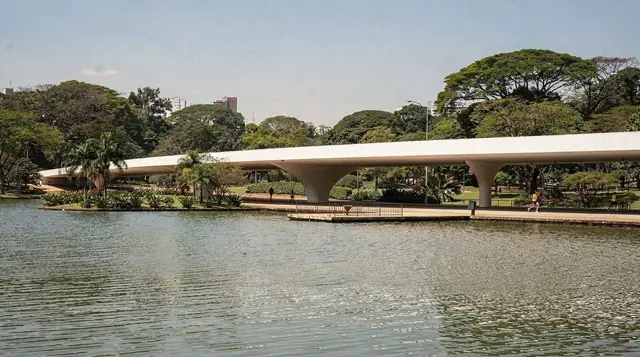
MASP gets the attention, deservedly, but the wider museum and architecture landscape rewards a longer stay too — the Pinacoteca’s converted 19th-century building, Oscar Niemeyer’s modernist contributions across the city, and a contemporary gallery scene that a single overnight simply can’t accommodate. See the the best museums in São Paulo guide and the São Paulo architecture guide for how much depth exists beyond the one building most visitors already know to see.
What a short stopover actually gets you
| Overnight stopover | 3+ day stay | |
|---|---|---|
| Food | One restaurant, probably near your hotel | A real cross-section of the city’s food traditions |
| Neighbourhoods | One, usually Jardins or Paulista | Three or four distinct areas on foot |
| Football | None — matches don’t align with a layover schedule | A realistic chance of catching a match |
| Street art | A drive-by photo of Beco do Batman | A proper guided walk through multiple districts |
| Overall impression | ”Big, loud, no beach” | A city that rewards the time you gave it |
Frequently asked questions about giving São Paulo real time
Is São Paulo worth visiting if I’m not staying for a beach?
Yes — there’s no beach in the city itself, but the food, neighbourhood culture, museums and football scene stand entirely on their own. The nearest good beaches (Santos, Guarujá) are a two-to-three-hour drive if you want to add one.
How many days does São Paulo actually need?
Three days is the minimum to get past the “big and loud” first impression. Five lets you add a day trip. See how many days do you need in São Paulo for the full breakdown.
Isn’t São Paulo just a business city with no personality?
That reputation comes from its skyline and its role as Brazil’s financial capital, but it undersells a city with more restaurants, galleries and music venues per block than almost anywhere else in the country.
Should I do São Paulo before or after Rio?
Either works. Doing São Paulo first tends to set a more grounded, less postcard-driven expectation for the rest of the trip, which some travellers prefer.
What’s the single best argument for staying longer?
Food, without much competition. A city with this level of immigrant-driven culinary depth rewards multiple days in a way a single meal can’t capture.
Is São Paulo more expensive than Rio?
Roughly comparable for most categories — accommodation and dining are similar, with São Paulo’s higher-end restaurant scene pulling the top end up slightly. See how much does São Paulo cost.
What do people regret skipping?
Vila Madalena at night and a proper sit-down meal outside the hotel district come up most often in what visitors wish they’d made time for.
Fitting this into your trip
If you’re deciding how long to stay, the three days in São Paulo itinerary is the minimum version of the argument made above in practice. The five days in São Paulo and around itinerary adds a coastal or mountain day trip, and the seven days in São Paulo and the coast itinerary is the full case, food, neighbourhoods, football and a proper break at the beach included.
Local perspective tours & experiences in São Paulo on GetYourGuide
Verified deep-linked GetYourGuide tours. Book through these links and we earn a small commission at no cost to you.
These are our own photographs of São Paulo, not the operator's pictures of this tour — open the tour page to see those.