A guide to Pinheiros
What is Pinheiros known for?
A strong, varied food scene, its own street art along Rua Fradique Coutinho and the surrounding blocks, the Saturday antiques market at Praça Benedito Calixto, and a slightly more residential, less touristy feel than neighbouring Vila Madalena, which it borders directly.
Pinheiros sits directly beside Vila Madalena, and the two blend together enough at the edges that many visitors treat them as a single neighbourhood — but Pinheiros has its own distinct identity worth understanding separately: a more residential feel, a food scene arguably as strong as its more famous neighbour’s, and its own pockets of street art that don’t get the same attention as Beco do Batman despite being just as good. This guide treats Pinheiros on its own terms rather than as an appendix to Vila Madalena.
For the neighbouring district, see the guide to Vila Madalena; for the wider city context, see the São Paulo neighbourhoods explained guide.
| Where | West São Paulo, metro Line 4 (Yellow), Faria Lima or Fradique Coutinho station |
| Cost | Free to walk; R$30-80 (~US$5-15) for a proper meal |
| Time needed | Half a day covers the main highlights |
| Getting there | Metro Line 4 to Faria Lima or Fradique Coutinho, or Line 2 to Vila Madalena and walk over |
| Best time | Weekday afternoons for a calmer pace; Saturday for the market |
The food scene: Pinheiros’ real strength
Pinheiros has one of São Paulo’s best concentrations of restaurants across a wide range of styles and price points, from casual botecos to some of the city’s more ambitious kitchens. A São Paulo food tour: the flavors of Brazil often routes through this neighbourhood specifically because of that density. See the where to eat in São Paulo guide and São Paulo food guide for specific picks.
Street art beyond Beco do Batman
While Vila Madalena’s alley gets the international attention, Pinheiros carries the city’s street art scene further along Rua Fradique Coutinho and the surrounding blocks, with large-scale murals covering entire building facades. A Pinheiros street art and spray experience lets you try painting yourself rather than just viewing it, a genuinely different way to engage with the scene than a standard walking tour. A street art bike tour covers more ground across both neighbourhoods if you want the fuller picture. See the São Paulo street art guide.
Combining food and street art in one outing
Because Pinheiros’ strengths — food and street art — sit close together geographically, a combined outing makes more sense here than almost anywhere else in the city. A Pinheiros food and graffiti tour is built specifically around this pairing, covering murals and tastings along a single walking route rather than treating them as separate activities requiring separate trips.
Praça Benedito Calixto’s Saturday market
This antiques, crafts and vintage market sits right on the border between Pinheiros and Vila Madalena, and it’s one of the best Saturday activities in the wider area — furniture, vinyl, jewellery, and a reliable live samba and choro corner in the afternoon. It’s a genuinely local scene, drawing far more paulistanos than tourists relative to its quality. See the Praça Benedito Calixto Saturday market guide.
A more residential, quieter feel
Compared to Vila Madalena’s concentrated bar strip, Pinheiros feels more like a normal, lived-in neighbourhood punctuated by excellent restaurants rather than a destination built specifically around nightlife. This makes it a good choice if you want proximity to the same general area’s energy without staying directly in the busiest nightlife blocks — a meaningful distinction if noise and late-night street activity matter to your choice of base.
Getting around and connecting to nearby areas
Pinheiros connects easily on foot to Vila Madalena (15-20 minutes’ walk or a short rideshare) and sits on metro Line 4 (Yellow), which gives faster access toward Faria Lima’s business district and, via connections, other parts of the city than Vila Madalena’s Line 2 alone provides. This makes Pinheiros a slightly more practically connected base if your trip includes business meetings or destinations along the Faria Lima corridor.
A brief history of the neighbourhood
Pinheiros takes its name from the river that runs along the city’s west side, and like Vila Madalena, it grew from a fairly ordinary residential district into a more dynamic, mixed-use neighbourhood over recent decades — though its transformation leaned more toward food and design than the bar-and-gallery scene that defined Vila Madalena’s rise. The neighbourhood’s proximity to Faria Lima, one of São Paulo’s key business corridors, has also pulled in a younger professional population over the past twenty years, adding a layer of polish to some of its newer restaurants and shops without displacing the older, more residential character that still defines most of its side streets.
Shopping and design beyond the market
Beyond Praça Benedito Calixto’s Saturday market, Pinheiros has a growing concentration of independent design shops, concept stores and small galleries, particularly along Rua Purpurina and the streets branching off Rua Teodoro Sampaio — the latter also known locally for its cluster of musical instrument shops, an unexpected but long-standing neighbourhood specialty worth a browse even if you’re not shopping for an instrument. This side of Pinheiros rewards an unhurried afternoon wander in a way that’s easy to miss if you’re only passing through for a meal.
The Faria Lima connection
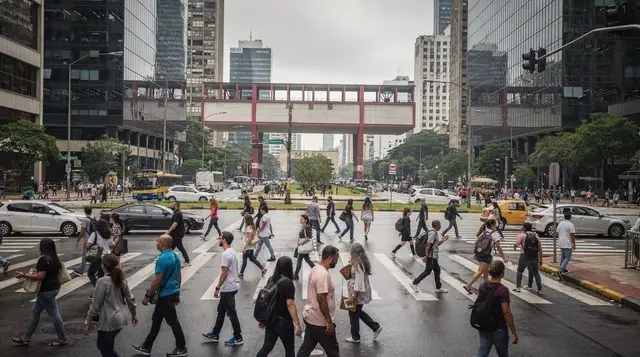
Pinheiros’ eastern edge blends into Faria Lima, one of São Paulo’s key financial and business corridors — glass towers, corporate headquarters, and a noticeably different energy from the neighbourhood’s quieter residential streets just a few blocks west. This proximity is part of why Pinheiros has a slightly more polished, professional-adjacent feel than Vila Madalena, and why it’s a genuinely practical base if your trip includes any business component alongside sightseeing and food.
Practical tips for visiting
Pinheiros’ main sights and restaurants are spread over a wider area than Vila Madalena’s more concentrated core, so plan on more walking or short rideshares between stops rather than assuming everything sits within a five-minute radius. Weekday lunchtimes see the neighbourhood’s business-adjacent restaurants fill with the Faria Lima office crowd, which can mean a wait at popular spots between noon and 2pm — arriving slightly earlier or later smooths this out. Evenings are calmer and more spread out than Vila Madalena’s concentrated bar strip, which suits a slower-paced dinner over a bar crawl.
Should you stay here?
Pinheiros is a solid alternative to Vila Madalena if you want a similar general area with a calmer evening atmosphere and arguably better food options within immediate walking distance. See the where to stay in São Paulo guide for how it compares against Jardins, Paulista and Vila Madalena directly.
What to skip
Not everything in Pinheiros is worth your time — a handful of restaurants along the busier stretches of Rua dos Pinheiros trade on foot traffic rather than quality, similar to the tourist-facing spots on Avenida Paulista. Checking recent reviews before committing to a restaurant here matters more than in Vila Madalena’s more consistently reliable core streets, simply because Pinheiros’ wider spread includes more variance in quality block to block.
Comparing Pinheiros to Vila Madalena
| Pinheiros | Vila Madalena | |
|---|---|---|
| Character | Residential, food-forward | Bohemian, nightlife-focused |
| Street art | Rua Fradique Coutinho and surrounding blocks | Beco do Batman (the famous alley) |
| Evening scene | Restaurants, quieter | Bars, louder, later |
| Best for | Food-focused visits, a calmer base | Nightlife, the classic photo spots |
A brief history of Pinheiros’ transformation
Like much of west São Paulo, Pinheiros developed initially as a fairly ordinary residential district serving the growing city through the mid-20th century, its name and identity tied to the Pinheiros River running along its edge — a river that, like much of São Paulo’s waterways, was heavily channelled and built over as the city industrialised, losing most of its natural character in the process.
The neighbourhood’s more recent transformation into a food-and-design destination tracks closely with Vila Madalena’s parallel rise but took a somewhat different path: where Vila Madalena’s identity formed around bars, nightlife and street art from the 1980s and 90s onward, Pinheiros’ shift came more gradually and more recently, driven substantially by the Faria Lima business corridor’s growth from the 1990s and 2000s pulling in a younger, higher-earning professional population that supported an increasingly ambitious restaurant scene.
This is part of why Pinheiros today feels less like a bohemian district that happened to develop good restaurants, and more like a professional-adjacent neighbourhood whose dining scene grew to match the aspirations of the people increasingly living and working around it — a genuinely different origin story from its more famous neighbour, even though the two now blend together at street level.
Rents and prices: Pinheiros versus Vila Madalena, by the numbers
For anyone considering an extended stay or apartment rental rather than a hotel, it’s worth knowing how the two neighbourhoods actually compare on cost. Short-term rental prices in Pinheiros run broadly similar to Vila Madalena for equivalent apartment sizes and quality, though buildings closer to the Faria Lima corridor specifically — roughly the eastern third of the neighbourhood — carry a premium of perhaps 10-20% over Vila Madalena’s typical range, reflecting proximity to the business district rather than anything about the apartment itself.
Restaurant pricing follows a similar pattern: a casual meal in either neighbourhood runs comparably, R$30-80 per person, but Pinheiros’ newer, more design-forward restaurants near Faria Lima can push toward the higher end of that range or beyond more consistently than Vila Madalena’s more boteco-heavy core, where cheaper, no-frills options remain more common. Neither neighbourhood is meaningfully cheaper as a blanket rule — the honest answer is that price depends more on which specific blocks and venues you choose than on the neighbourhood label itself.
A common mistake: assuming Pinheiros is as walkable as Vila Madalena
The single most common planning mistake visitors make with Pinheiros is assuming it works the same way Vila Madalena does — a compact, walkable core where everything worth seeing sits within a few blocks. It doesn’t. Pinheiros’ restaurants, the Rua Fradique Coutinho street art, and Praça Benedito Calixto’s market are spread across a meaningfully larger area, and treating them as a single tight walking loop the way you might plan a Vila Madalena evening leads to either a lot of unplanned walking or a schedule that runs later than expected.
The practical fix is picking one specific focus per visit — food, or street art, or the Saturday market — rather than trying to combine all three into a single afternoon on foot, or budgeting for short rideshares between the more distant points if you do want to cover multiple threads in one outing. This is a real, structural difference from Vila Madalena’s dense core, not a minor inconvenience, and it’s worth factoring into how much time you allocate for a Pinheiros visit relative to its more compact neighbour.
The Teodoro Sampaio instrument shops, a genuine local specialty
Rua Teodoro Sampaio’s cluster of musical instrument shops deserves a slightly closer look than a passing mention, since it’s a genuinely unusual concentration for a city this size — dozens of small shops selling and repairing guitars, brass instruments, drums and traditional Brazilian instruments like the cavaquinho and pandeiro, many family-run for multiple generations.
It’s not aimed at tourists in any way, which is part of its appeal: this is where working musicians across the city actually shop and get instruments repaired, and browsing the street gives a genuine, unfiltered slice of São Paulo’s music culture that a curated cultural attraction can’t replicate. Even without buying anything, it’s a worthwhile ten-minute detour if you’re already in the neighbourhood and have any interest in music or craftsmanship, and it says something about Pinheiros’ character that this kind of specialist trade street sits comfortably alongside its restaurant and design scenes rather than feeling out of place.
Coworking spaces and Pinheiros’ digital-nomad appeal
Pinheiros’ proximity to Faria Lima and its concentration of good coffee shops and casual restaurants have made it a genuine draw for longer-staying remote workers and digital nomads over the past several years, alongside Vila Madalena. Several dedicated coworking spaces operate in the neighbourhood, generally offering day passes as well as monthly memberships, a practical option if you’re working through part of a longer São Paulo stay rather than treating the trip as pure holiday. This is worth knowing even for a shorter visit, since it means Pinheiros’ cafés are generally well set up for someone wanting to work for an hour or two with a laptop — reliable wifi and a reasonable tolerance for lingering over one coffee — in a way that’s less consistent in more purely residential parts of the city.
Frequently asked questions about visiting Pinheiros
Is Pinheiros the same as Vila Madalena?
No, though they border each other and blend at the edges. Pinheiros is more residential and food-focused; Vila Madalena is more nightlife and street-art-famous.
How do I get to Pinheiros?
Metro Line 4 (Yellow) to Faria Lima or Fradique Coutinho station, or Line 2 to Vila Madalena and a short walk over.
Is Pinheiros walkable from Vila Madalena?
Yes, about 15-20 minutes on foot between the two neighbourhoods’ main areas, or a short rideshare.
What’s the best day to visit Pinheiros?
Saturday for the Praça Benedito Calixto market; any weekday for a calmer food-and-street-art visit without the weekend crowds.
Is Pinheiros good for a first-time visitor’s base?
Yes — it’s a reasonable alternative to Jardins or Paulista if food is a high priority, though slightly further from Centro Histórico and the main museums.
Does Pinheiros have its own nightlife, or is it all in Vila Madalena?
Pinheiros has a genuine but calmer bar and restaurant scene of its own — less concentrated and louder than Vila Madalena’s, but real nonetheless.
Is Pinheiros more expensive than Vila Madalena?
Broadly similar, though Pinheiros’ proximity to the Faria Lima business corridor means some of its newer restaurants sit at a slightly higher price point than Vila Madalena’s more casual boteco-heavy scene.
Do I need to walk far between Pinheiros’ main sights?
More than in Vila Madalena — the neighbourhood’s highlights spread over a wider area, so budget for some short rideshares between the market, the street art blocks and dinner if you’re covering all three in one day.
Is Pinheiros worth visiting if I’ve already seen Vila Madalena?
Yes — the food scene and the Rua Fradique Coutinho murals are distinct enough from Vila Madalena’s highlights to justify a separate visit rather than treating one neighbourhood as a substitute for the other.
Is Pinheiros suitable for a business traveller with limited free time?
Yes — its proximity to the Faria Lima corridor and its own metro line make it easy to fit a good meal or a short walk into a tight schedule between meetings.
Fitting this into your trip
Pinheiros pairs naturally with Vila Madalena in the São Paulo in one day guide and the three days in São Paulo itinerary, and it fits well as a food-focused stop in the food lover’s São Paulo itinerary.
São Paulo neighborhood tours on GetYourGuide
Verified deep-linked GetYourGuide tours. Book through these links and we earn a small commission at no cost to you.
These are our own photographs of São Paulo, not the operator's pictures of this tour — open the tour page to see those.