Rainy days in São Paulo with kids
What should families do in São Paulo when it rains?
Head for Catavento science museum, Museu do Futebol, MASP or Instituto Butantan, all of which are built for a full indoor visit rather than a quick stop. Large malls in Jardins and Moema work as a backup with food courts and cinemas. Ibirapuera Park's covered pavilions are a middle option if the rain is more drizzle than downpour.
São Paulo’s wet season runs roughly December through March, and the rain that falls isn’t the gentle, all-day kind — it’s a short, violent afternoon storm, usually between 3pm and 6pm, that can dump more water in an hour than some cities see in a week. Outside that window, showers can hit any month, since this is a city where an umbrella belongs in the bag regardless of season. Travelling with kids means the question isn’t whether it will rain during your trip, but what you do when it does, and that’s a real planning problem in a city where a lot of the appeal — street art walks, park picnics, open-air markets — depends on dry weather.
The good news is that São Paulo has one of the best indoor scenes for families in South America, built around genuinely excellent science and history museums rather than generic soft-play centres. The trick is knowing which indoor options are worth a rainy afternoon and which will have a bored eight-year-old within twenty minutes.
| Where | Citywide — museums cluster around Ibirapuera, Centro and Butantã |
| Cost | R$0-70 per person (~US$0-13) depending on the venue |
| Time needed | 2-4 hours per stop |
| Getting there | Metro reaches most options; taxis or ride-apps for the rest |
| Best time | Any rainy afternoon, ideally arriving before the worst of the 3-6pm downpour |
Catavento Cultural e Educacional
Catavento is the single best rainy-day answer for families with kids roughly six to fourteen. It’s a hands-on science museum inside a restored 1920s building near Centro, with four floors organised loosely around universe, life, invention and society, and almost everything is designed to be touched, cranked or climbed into rather than read about behind glass. Plan for two to three hours minimum — kids tend to want to redo their favourite stations rather than move through once. The Catavento museum guide covers ticket prices, the best entry times to avoid school-group crowds, and which floors to prioritise if you’re short on time.
Museu do Futebol
For football-mad kids, Museu do Futebol at the historic Pacaembu stadium is an easy sell — interactive exhibits on the history of the Brazilian game, recreated commentary booths, and enough noise and video content to hold attention for a solid ninety minutes to two hours. It works well paired with lunch nearby rather than as a full-day plan on its own. A skip-the-line Museu do Futebol tour with tickets included removes the queue on the museum’s busier weekend afternoons, which matters more when you’re managing kids’ patience than it would on a solo visit. The Museu do Futebol guide has the full layout.
MASP
MASP isn’t the obvious kids’ pick, but its glass-and-concrete building on Avenida Paulista and the striking way the collection is displayed — paintings on transparent glass easels, floating free of the walls — tends to hold younger visitors’ attention better than a conventional museum layout. It’s free every Tuesday, which is worth building a rainy day around if your dates allow it. A private, skip-the-line MASP tour is worth considering with younger kids specifically because a guide can pitch the commentary at their level and keep the pace moving, rather than letting a slow self-guided visit turn into restlessness. Full details are in the MASP guide.
Instituto Butantan
Instituto Butantan, out in Butantã in the west of the city, combines a biological research institute with a museum built around Brazil’s snakes, spiders and the antivenom programme that made the institute famous worldwide. It sounds like a hard sell for younger kids, but the live-animal elements and the sheer strangeness of the collection usually win them over fast, and the surrounding gardens give somewhere to run around between rain showers. The Instituto Butantan guide has visiting hours and which sections close on weekends.
Aquário de São Paulo
The city’s aquarium, in Ipiranga, doesn’t get talked about as much as the newer attractions, but it fills three or four hours reliably for families with younger kids, and being fully indoor makes it close to rain-proof. It’s smaller and more dated than aquariums in some other South American capitals — set expectations accordingly rather than expecting Barcelona-level scale. The São Paulo zoo and aquarium guide covers both this and the (partly outdoor, so rain-dependent) zoo.
Shopping malls, as a genuine backup plan
São Paulo’s shopping malls are not an afterthought here — Shopping Iguatemi in Jardins, Shopping Ibirapuera and Shopping JK Iguatemi in Itaim Bibi all have cinemas, arcades, food courts with a genuine range of Brazilian food beyond fast-food chains, and enough scale to burn two or three hours without repeating yourself. It’s not a cultural experience, but on a day when the rain simply won’t let up, it’s a legitimate way to reset a tired, wet family before trying something else. The shopping in São Paulo guide has the mall-by-mall breakdown.
Hopi Hari, only if the forecast is genuinely mixed
Hopi Hari, São Paulo’s main theme park about an hour outside the city, has covered areas and indoor attractions, but it’s fundamentally an outdoor park and a wasted trip on a day of confirmed heavy rain. It only makes sense as a rainy-day fallback if the forecast shows scattered, short showers rather than the classic afternoon downpour — check the radar that morning rather than planning it in advance for a wet-season date. Hopi Hari theme park tickets are worth booking ahead regardless, since queue times drop with pre-purchased entry. The theme parks near São Paulo guide covers Hopi Hari and its smaller alternatives.
Ibirapuera Park’s covered spaces
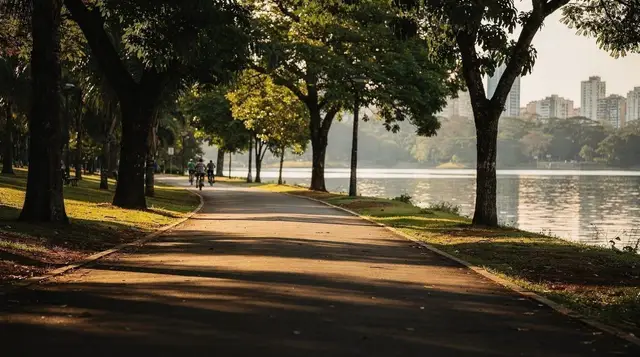
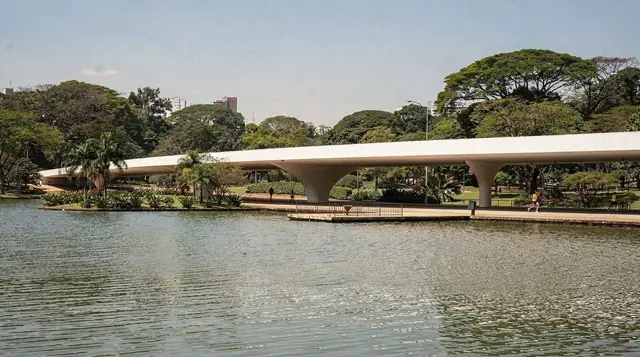
If the rain is more drizzle than downpour, Ibirapuera Park still works thanks to its covered walkways and pavilions — the Oca and the Bienal pavilion both have overhangs wide enough to shelter under, and several of the park’s museums (including a planetarium) sit inside the park boundary as an indoor pivot if the sky opens up properly. It’s a reasonable middle-ground plan for a day with uncertain weather, since you’re not committing fully indoors or outdoors. The Ibirapuera Park guide has the layout of covered areas.
Packing for São Paulo’s rain
A few small packing decisions make a real difference on a family trip that spans the wet season. A compact umbrella per adult beats a poncho for most situations, since ponchos trap heat in a city that’s warm and humid even during a storm. Waterproof covers for strollers are worth bringing from home — they’re harder to find locally than you’d expect for a city this size. And a change of shoes for kids matters more than it sounds: São Paulo’s storm drains struggle with the volume of a real downpour, and streets in low-lying areas like parts of Centro can flood ankle-deep within twenty minutes. Keep a spare pair of socks and shoes in the day bag rather than the hotel room.
A sample rainy-day schedule
For a family based centrally, a workable rainy-day plan looks like this: breakfast at the hotel, then Catavento or Museu do Futebol from 10am, aiming to beat the late-morning crowd. Lunch nearby — Centro and the area around Pacaembu both have solid, kid-friendly options that aren’t tourist-priced. Early afternoon, check the radar: if the worst of the storm has passed by 2 or 3pm, a short walk somewhere covered like Ibirapuera’s pavilions works as a wind-down; if it’s still pouring, a mall with a cinema is the easier call. This kind of half-and-half day tends to work better than committing fully to one plan, since São Paulo’s storms are usually short enough that the back half of the afternoon often clears.
Rainy days during school holiday periods
Brazilian school holidays (January, July, and around Carnaval) bring noticeably bigger crowds to the main indoor attractions, and that effect compounds on a rainy day when everyone pivots indoors at once. If your trip overlaps with local school holidays, book skip-the-line options where they exist and aim for opening time rather than a leisurely mid-morning start — the difference in queue length between 10am and noon at Catavento or MASP on a wet holiday Saturday can be well over an hour.
Comparing the main rainy-day options
| Best for | Time needed | Crowd level | |
|---|---|---|---|
| Catavento | Ages 6-14, hands-on science | 2-3 hours | High on weekends |
| Museu do Futebol | Football fans of any age | 1.5-2 hours | Moderate |
| MASP | Older kids, art-curious families | 1.5-2 hours | High on free Tuesdays |
| Shopping malls | A full reset day, any age | 2-4 hours | Variable |
A realistic cost scenario for a rainy day with a family of four
Budgeting matters more on an improvised rainy day than a planned sightseeing day, since you’re often making decisions on short notice rather than comparing prices in advance. A workable estimate: Catavento entry runs roughly R$6-30 (~US$1-6) per person depending on age and category, so a family of four might spend R$60-100 total including a simple lunch nearby. A mall backup day costs less directly — food-court lunch for four typically runs R$120-180 (~US$22-33) — but adds up if a cinema trip gets added on top, typically another R$25-40 (~US$5-8) per person for tickets plus snacks. Museu do Futebol and MASP sit in a similar range to Catavento once you factor in transport. Across a full wet-season week with two or three rainy days built in, budgeting roughly R$150-250 (~US$27-45) per rainy day for a family of four, including transport, covers most realistic combinations without surprises. See the how much does São Paulo cost guide for how this compares to a dry-weather sightseeing day.
Getting between indoor stops without getting soaked
The logistics of moving a family between indoor attractions during an actual downpour deserve their own thought, since this is exactly when transport gets hardest. Rideshare demand spikes citywide the moment a storm hits, which means both longer wait times and surge pricing right when you most want a quick, dry pickup — building in an extra 10-15 minutes of buffer before you actually need to leave avoids the worst of this.
An umbrella stroller with a rain cover is more practical than a full-size pram for exactly this kind of day, since it’s faster to fold into a car during a downpour and easier to manoeuvre through a crowded mall entrance where everyone else has had the same idea to come inside. If you’re moving between two indoor stops that are within a few blocks of each other — MASP and a Paulista-area mall, for instance — a short, brisk walk with a shared umbrella can beat waiting for a surge-priced ride, but check the radar first, since São Paulo’s storms can intensify within minutes rather than settling into a steady, walkable drizzle.
Rainy days beyond the main tourist zone
Families staying further out — in Moema, Vila Olímpia or Itaim Bibi rather than Centro or Jardins — have their own set of easy rainy-day options without a long taxi ride. Shopping JK Iguatemi in Itaim Bibi and Shopping Ibirapuera in Moema both have full cinema complexes and food courts that skew toward real Brazilian food rather than fast-food chains, and both sit close enough to Ibirapuera Park that a short covered walk is possible if there’s a break in the rain. It’s a less culturally rich option than Catavento or Museu do Futebol, but it removes the cross-city trip that can eat an hour each way in wet-season traffic, and with tired kids that trade-off is often worth it.
What doesn’t work well as a rainy-day plan
A few things get suggested for rainy days that don’t actually hold up. Street art walks around Vila Madalena and Beco do Batman are one of the city’s best family activities in dry weather but genuinely miserable in a downpour — the murals are outdoors with no shelter along most of the route, so reschedule rather than push through. Open-air markets like the Saturday antiques fair at Praça Benedito Calixto shut down stalls at the first sign of serious rain, so don’t plan around them on a day with a storm forecast. And a full day at Ibirapuera Park sounds appealing but the covered areas are genuinely limited — treat it as a two-hour drizzle option, not a full wet-afternoon plan.
Accessibility: strollers, lifts and mobility needs
Most of the recommendations above hold up well for accessibility, but not equally. Catavento is spread across four floors of a restored historic building with lifts installed, though the building’s original 1920s bones mean a few connecting sections are narrower than a modern museum — manageable with a stroller or wheelchair, but budget a little extra time for lifts during busy periods. MASP has full lift access to every floor, one of the more genuinely accessible major museums in the city. Shopping malls are the most reliably accessible fallback across the board — wide flat floors, lifts everywhere, and accessible restrooms as standard — worth remembering if a family member’s mobility needs make a museum’s older infrastructure a real concern rather than a minor inconvenience. The accessible São Paulo guide covers the citywide picture in more depth.
Managing a rainy day solo with kids
A single parent or solo adult managing kids through a rainy day in São Paulo faces a slightly different set of trade-offs than a two-adult family. Malls solve more problems at once in this situation than museums do — everything is under one roof, restrooms and nursing rooms are close together, and there’s no risk of a stroller getting stuck between a museum’s floors while managing a child alone. If a museum visit is the priority, Catavento and MASP both have staff and information desks near the entrance who are used to helping a solo parent get oriented quickly, and pre-booking a skip-the-line option removes one layer of queue-management stress that matters more without a second adult to hold a place in line. Building in more buffer time than the schedule above suggests — treating each stop as slightly longer than planned — tends to reduce the friction of managing a rainy day alone more than any single tactical fix.
Frequently asked questions about rainy days in São Paulo with kids
How likely is it to rain during my trip?
It depends heavily on the season. December through March sees near-daily short afternoon storms, usually 3pm to 6pm; April through August is much drier. See the best time to visit São Paulo guide for a month-by-month breakdown before you commit to an itinerary.
Is Catavento worth it if my kids are younger than six?
It’s still workable, but the exhibits are pitched more at ages six and up. Toddlers can enjoy the noise and colour, but expect a shorter visit than with older kids, and bring a stroller for the between-floor gaps.
Are there any rainy-day options in the south or east zones, away from Centro?
Fewer than in the centre, but Aquário de São Paulo in Ipiranga (east) and the malls in Moema and Vila Olímpia give reasonable indoor coverage outside the Centro/Butantã cluster. Most families base themselves centrally partly for this reason — see where to stay in São Paulo.
Do museums get more crowded on rainy days?
Yes, noticeably — everyone has the same idea. Arrive at opening time if you can, particularly at Catavento and MASP on a free Tuesday, since both fill up by late morning on wet days.
What about rainy days with a baby or toddler rather than older kids?
Shopping malls with nursing rooms and lifts are the easiest option with very young children, since museum pacing and stairs work less well with a stroller. Shopping Iguatemi and Shopping JK Iguatemi both have baby-care facilities.
Is it worth booking museum tickets in advance for a rainy day?
For MASP and Museu do Futebol, yes, especially in wet season when everyone pivots indoors at once — a pre-booked, skip-the-line option saves real queue time on the worst days. Catavento rarely needs advance booking outside major holidays.
Can we combine a rainy museum morning with something outdoors in the afternoon?
Often, yes — São Paulo’s storms are usually short and violent rather than all-day, so a museum morning followed by a park walk once the rain clears by early evening is a realistic plan for much of the wet season.
Are taxis and ride-apps reliable in heavy rain?
Expect longer waits and surge pricing during and just after a storm, when demand spikes citywide. Build in extra time either side of a downpour. The taxis and ride apps guide and getting around São Paulo guide cover what to expect.
Building this into a longer family trip
A single rainy day is easy to absorb into a longer itinerary without derailing it — treat it as a flexible museum day and swap it in whenever the forecast turns, rather than trying to predict it weeks in advance. The São Paulo with kids four-day itinerary is built with this kind of flexibility in mind, and the broader São Paulo with kids guide covers the full range of family activities, indoor and outdoor, to mix and match around the weather. For adults travelling without children who get caught in the same storms, the what to do in São Paulo when it rains guide has the non-family version of this list, and living with São Paulo’s afternoon storms gives a first-hand account of how the wet season actually feels on the ground.
Family-friendly tours
Verified deep-linked GetYourGuide tours. Book through these links and we earn a small commission at no cost to you.
These are our own photographs of São Paulo, not the operator's pictures of this tour — open the tour page to see those.